After being beset by delays and hiking in cost due to soaring inflation, the realignment of the A59 at Kex Gill is finally set to be built.
The project, which is North Yorkshire County Council’s most expensive and ambitious, will reroute a landslip-blighted road between Harrogate and Skipton.
For councillors and government officials, the route is a key east to west link.
As such, the money set aside – some £69 million – is justified and for ministers the deal they struck with the county council is seen as sensible financially.
Richard Holden, the roads minister in Prime Minister Rishi Sunak’s government, echoed the sentiment on a visit to Kex Gill this week.
The site on Thursday morning had yet to have a spade hit the ground, but Mr Holden was confident that in two years’ time it would be a justified expense.
He said:
“It’s an important route here between Skipton and Harrogate on a local level. But, actually, it’s more significant for the north of England really.
“I grew up in east Lancashire, the A59 goes all the way through to York. It is a really important road. It’s one which we want to see thrive and it is an important tourist route as well during the summer.
“It’s also important for heavy goods vehicles.”

(Left to right) Cllr Carl Les, leader of county council, Richard Holden, minister for roads, and Cllr Keane Duncan, executive councillor for highways.
Part of the reasoning behind the reroute is the number of landslips on the road.
According to council documents published in 2021, the cost to taxpayers for maintaining the road has been “increasing over the last ten-year period”.
Between October 2000 and May 2019, five landslides were recorded at the site and the retaining wall failed four times.
In January 2016, the road was closed for eight weeks and traffic diverted through Ilkley and Otley after heavy rain caused a landslide.
Meanwhile, an instability issue in May 2018 caused road closures for several months, which council officials said led to a “complex repair scheme” being carried out at a cost of £1.42 million.
Following numerous landslips and millions of pounds of taxpayers’ money spent on the A59, the county council decided in 2016 to do something about the problem.
How the new road will look
The reroute itself will see the existing road, which has blighted motorists for decades, returned back to moorland.
Richard Binks, head of major projects at the county council, explained that the scheme will be built in two phases.
The road to the west of Blubberhouses will be built first and include a climbing road at the junction near to Fewston reservoir car park.

The reroute of the A59 at Kex Gill which has been proposed by North Yorkshire County Council.
The second junction will be built at the bottom of what is now a single track road and will exit near to Kex Gill.
Mr Binks said the idea is to get the new road ready for traffic before moving cars from the existing A59 onto it.
He said:
“We want to build the new road first and then move traffic onto the new highway. Then we will focus on the old road to downgrade it and plant it up.”
Read more:
- Council warns of ‘high risks’ as Kex Gill cost soars to £69m
- Minister ‘open’ to inflation funding discussions for A59 Kex Gill
- Government gives final go-ahead for £69m Kex Gill reroute to start
Once the junctions are ready to be connected to the old road, temporary traffic lights will be put in place.
Meanwhile, as part of the realignment, new wetlands will be created near to one of the junctions and biodiversity will be returned to the moorland.
While it is unclear when the lights will be in place to connect the junctions, Mr Binks said it is expected the project will be nearing completion in summer 2025.
The council intends to enter into its contract with John Sisk & Son (Holdings) Ltd, which is an Irish civil engineering and construction company, in April to start the scheme.
Tackling inflation
One concern over the future of the scheme is the rate of inflation in the construction industry.
Mr Holden acknowledged that soaring costs were an issue, but remained confident that funding offered by the government was “sensible”.
The scheme has faced numerous delays and, following tender returns, the estimated cost of the scheme increased by £7.2 million to £68.8 million, which the council attributed to inflation affecting constructions costs.
The project will be funded by a £56.1 million grant from the Department for Transport, with the council covering the rest from its reserves.
Cllr Keane Duncan, executive councillor for highways at the county council, told the Stray Ferret that the authority had put “built in” funding into the contract to cover inflation.
The council has set aside £11 million to be factored into the budget to cover any issues with ground conditions or bad weather.
Cllr Duncan said:
“We have built in inflation, we know that that is a risk and that is something that is built into the contract.
“It is something that we are now hoping will not be an issue for us looking ahead.”
All major projects come with risks and barriers which need to be overcome.
But county council officials will take brief comfort that they can now finally put spades in the ground on the multi-million pound scheme before before tackling those hurdles over the next two years.
North Yorkshire bus funding ‘cannot continue in perpetuity’, warns senior councillorA senior county councillor has warned that funding designed to save under-threat bus services in North Yorkshire “cannot continue in perpetuity”.
The Department for Transport recently announced an extension of the £2 cap on bus fares plus £80 million worth of grants to routes at risk of being reduced or scrapped.
The move comes as the 24 services from Pateley Bridge to Harrogate was recently saved until April next year.
Cllr Keane Duncan, executive councillor for transport at North Yorkshire County Council, said that extra government funding was welcome and the council would look to target it at services in need of support.
However, he added that the funding would not continue in perpetuity.
He said:
“News of the £2 bus fare cap extension and additional £80million support package is very welcome. These measures will be vital to the council’s ongoing efforts to protect bus services through this difficult period.
“Exact details of how much funding we will receive is expected shortly and we will ensure this is targeted at services in need of support.
“While this extra funding will act as a critical lifeline to at-risk services at a time when passengers numbers are down and costs are up, we know funding cannot continue in perpetuity.
“Passengers remain key to the long-term viability of services, and we must use the coming months to work with operators to promote services and invest in the marketing, ticketing and infrastructure needed to encourage more people to choose the bus.
“It is only by doing this that we will have a sustainable network of services, responsive to passenger needs and free from the uncertainty that comes with long-term reliance on taxpayer funding.”
Read more:
- Bilton bus services to merge under new route changes
- Public control of North Yorkshire bus network ‘not realistic’, says transport chief
- 24 bus from Pateley Bridge to Harrogate saved
Cllr Duncan has previously warned that up to 79 services faced reduced frequency or ceasing altogether when central government funding comes to an end in March.
The comments come as the county council negotiated funding to secure the 24 bus route between Pateley Bridge and Harrogate until April next year.
Transdev, which operates the service, had initially planned to withdraw most services on the route.
Trial bus service costs North Yorkshire taxpayers £4 more per journey to subsidiseAn “innovative” bus service in North Yorkshire is costing taxpayers about £4 per passenger journey more to subsidise than traditional timetabled buses, it has emerged.
North Yorkshire County Council’s executive member for transport Councillor Keane Duncan said the latest available figures for the authority’s Yorbus demand-responsive pilot scheme, around Ripon and Masham, showed a “financial mismatch”, despite successful efforts to increase patronage.
Ahead of reviewing data from the trial the council believes there are about ten zones across the county where a Yorbus-style service would be viable to operate.
A meeting of NYCC’s executive was told Yorbus journeys were costing between £11 and £13, which compared with £8 to £9 on routes the county council subsidised in the same area.
Despite the figures, Cllr Duncan underlined his intention to continue developing what he described as an “innovative” alternative to fixed bus services, which he said had been welcomed in the trial area.
He said:
“Passenger numbers are up, loyalty is there, people are coming back and using Yorbus time and time again which is a really positive sign for us.
“Conventional timetabled services may have a lower subsidy, but they operate on a fixed timetable. This means they can only benefit those lucky enough to live along a bus route with a bus stop available to them.”
Yorbus has been heralded as the potential solution to the dearth of public transport in rural areas of England’s largest county.
The success of the pilot scheme is being viewed as crucial by campaigners fighting for rural transport services, particularly after the authority’s £116m bid to the Government’s Bus Back Better scheme was last year rejected in its entirety, with Whitehall officials citing a lack of ambition.
Read more:
- YorBus: Transport chief defends service after ‘blank cheque’ concern
- YorBus: On-demand service’s running costs are twice as much as regular buses
The meeting this week heard transport user groups had recently highlighted concerns about the lack of transport in rural areas.
The concerns follow the executive last summer approving spending nearly £230,000 of taxpayers’ money on trialling its Yorbus demand-responsive bus service for a further year.
They also come three months after Cllr Duncan warned the county’s bus network was “facing a really grave situation”, partly due to rising costs.
The meeting was told the council had relaxed restrictions on using its on-demand bus service since last summer amid fears restrictions were deterring key potential customers and would make the Yorbus unsustainable.
He said the council had expanded Yorbus’s times of operation, the number of villages to which it travels, and, following numerous complaints, introduced the ability to pre-book journeys.
Cllr Duncan said recent months had seen patronage rise by about 30% on the year before.
However, he said the cost per passenger journey on Yorbus, which has been operating in the Masham, Bedale and Ripon area since July 2021, remained relatively high, even compared with journeys on buses with fixed timetables.
Cllr Duncan said the value to residents of Yorbus was greater than traditional buses as it maximised the number of people who could use it – some 40,000 residents in the pilot zone – and was more flexible.
He said the authority would examine the pilot scheme in the coming months, including how to address the high cost per journey.
Council bids for £3m for cycling projects in Harrogate and KnaresboroughNorth Yorkshire County Council is set to bid for £3.19 million from the government to help fund two cycling schemes in Harrogate and Knaresborough.
Cllr Keane Duncan, executive councillor for highways at the council, confirmed that the authority had approved a submission for the funding from tranche four of the Department for Transport’s active travel fund.
The county council has been allocated £1.08 million of funding, although it has been invited to bid for an additional £2.16 million.
It will see the funding go towards improvements to public spaces, pedestrian crossings and segregated cycleways on Victoria Avenue in Harrogate.
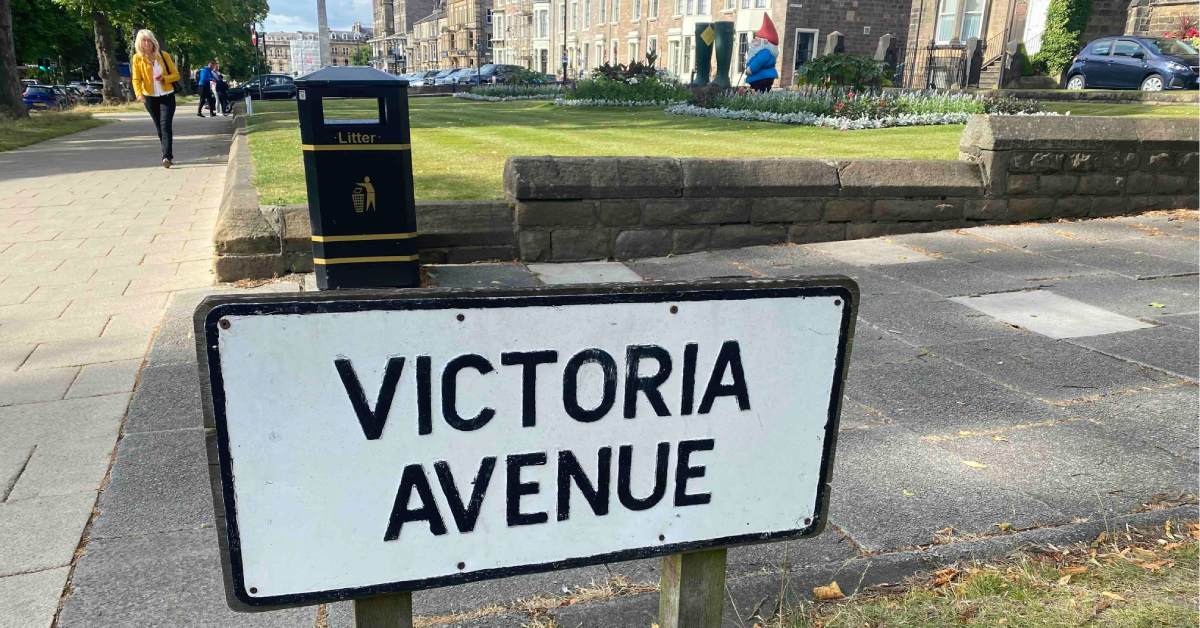
Segregated cycling lanes would be created on Victoria Avenue in Harrogate.
This would use the full £1.08 million of the tranche four funding already awarded and would require a further £492,000 from the remaining tranche two funds. The Victoria Avenue project is described by the council as its ‘priority scheme’.
A further scheme would see segregated cycle lanes created in Knaresborough at a cost of £1.65 million. They would be created on the A59 Forest Lane Head/Harrogate Road starting around Maple Close toward Knaresborough, ending close to Knaresborough High Bridge.
The council has said this would “deliver improved crossing facilities to link existing cycle routes, Knaresborough town centre and the railway station”.
Today’s announcement appears to amount to the council reviving previously announced plans to improve cycling on Victoria Avenue and the A59 at Knaresborough — if it can secure funding.
The council has also earmarked a scheme in Richmond as part of the bid.
Cllr Duncan said:
“We want to enable more people in North Yorkshire to have the option of safely and conveniently walking, wheeling and riding.
“Our latest bid, worth more than £3 million, is another significant milestone in our efforts to deliver a more balanced approach to travel in the county, which will reduce emissions, cut congestion and promote healthier lifestyles.
“The new infrastructure in Harrogate, Knaresborough and Richmond would significantly improve road safety and unlock an estimated 579 additional walking and cycling trips per day.
“The bid builds on our efforts to encourage more sustainable travel, which in recent years has seen us secure more than £55m of central government funding.”
Read more:
- Confirmed: second phase of Harrogate’s Otley Road cycle route scrapped
- Harrogate’s Otley Road to be dug up again
The move comes after the county council scrapped plans for the second phase of the Otley Road cycle route this month.
The council, which is the highways authority, also revealed it would not be bringing back restrictions for motorists on nearby Beech Grove.
Instead it will propose new measures to tackle speed in the streets surrounding Otley Road, improved crossings for cyclists, better signage for cycle routes and improvements to bus infrastructure.
A decision on bids submitted for the active travel fund is expected from the government on March 17.
Construction must begin on successful projects before March 31, 2024.
North Yorkshire bus routes may avoid financial ‘cliff edge’, says transport bossBus services in North Yorkshire may avoid a “cliff edge” over funding next month, according to the county’s transport boss.
Cllr Keane Duncan, executive councillor for highways at North Yorkshire County Council, had previously warned that up to 79 services faced reduced frequency or ceasing altogether when central government funding comes to an end in March.
It comes as a drop in passenger numbers and increased costs for operators has put some routes at risk.
Some services, such as the 24 service in Pateley Bridge, have been secured for another year.
However, in a statement to next week’s full council meeting, Cllr Duncan has suggested others may be saved.
He said:
“North Yorkshire’s bus network remains in a fragile position, with lower passenger numbers and increased costs continuing to affect the profitability of several services.
“However, there are positive signs that the council’s close cooperation with operators will allow us to avoid the feared March ‘cliff edge’ when post-covid government funding is expected to end.”
Read more:
- Bilton bus services to merge under new route changes
- Public control of North Yorkshire bus network ‘not realistic’, says transport chief
- 24 bus from Pateley Bridge to Harrogate saved
Cllr Duncan added that the county council intends to focus on securing funding for other services after recently securing bus routes in Selby and Scarborough.
He said:
“Our focus now shifts to other parts of the county.
“It is our hope that we can find funds to protect services here too until at least 2024.”
The comments come as the county council negotiated funding to secure the 24 bus route between Pateley Bridge and Harrogate until April next year.
Transdev, which operates the service, had initially planned to withdraw most services on the route.
£69m Kex Gill realignment beset by further delayWork on a major realignment of the A59 at Kex Gill has been further delayed as the scheme awaits sign off from government.
North Yorkshire County Council had earmarked work on the scheme to finally start in January.
The project will see a diversion built west of Blubberhouses on a stretch of road blighted by a history of landslips.
The scheme has faced numerous delays and following tender returns, the estimated cost of the scheme increased by £7.2 million to £68.8 million, which the council attributes to inflation affecting constructions costs.
In a statement to full council next week, Cllr Keane Duncan, executive councillor for highways, will say:
“We are almost ready to begin construction work to realign Kex Gill, which is amongst the council’s biggest ever infrastructure projects.
“The council has awarded preferred bidder status to John Sisk & Son (Holdings) Ltd, a family-owned international civil engineering and construction contractor with a strong track record.
“We are in the final stages of completing land acquisition processes ahead of a decision on our full business case which was submitted to the Department for Transport in August.
“A decision is expected very soon to coincide with a planned start on site.”
Read more:
- Council warns of ‘high risks’ as Kex Gill cost soars to £69m
- Council sets aside £11m for A59 Kex Gill contingency funding
The project is due to be funded by a £56.1 million grant from the Department for Transport, with the council covering the rest from its reserves.
A further £11 million has been factored into the £68 million budget to cover any issues with ground conditions or bad weather.
It comes as senior county council officials have warned about the risk involved with the authority’s major projects amid soaring inflation.
Gary Fielding, the council’s director for strategic resources, warned previously that the “burden of risk” for major projects, such as the realignment of the A59 at Kex Gill, will fall on the authority amid soaring inflation.
The A59 at Kex Gill, near Blubberhouses, is the main route between Harrogate and Skipton. Since 2000, the route has been closed 12 times following landslips.
The estimated completion date for the scheme is May 2025.
Harrogate’s Otley Road cycleway has cost £2.2m so farThe Otley Road cycleway in Harrogate has cost £2,234,000 so far — almost triple the amount awarded to contractors to construct the first phase.
Hull civil engineering firm PBS Construction was awarded £827,000 in 2021 to build phase one from Harlow Moor Road to Cold Bath Road.
The much-criticised route opened in January last year but subsequent remedial work and design fees for phase two of the project — which has since been scrapped — increased the cost significantly.
The widening of the Otley Road and Harlow Moor Road junction was the main remedial work.
The figures are contained in a North Yorkshire County Council report, which raises questions over whether the council had sufficient funds to complete the second phase of the scheme.
Councillor Keane Duncan, the Conservative executive member for highways and transportation at North Yorkshire County Council, said phase two had been dropped because it lacked public support.
But the report reveals the council has just £565,000 remaining of the £4,275,000 it secured in 2018 from the government’s National Productivity Investment Fund for measures that enabled development and business growth in west Harrogate
The funding and spending figures contained in the report are reproduced below.


According to the document, council officers received “multiple reports” about the design and construction of the cycleway from residents and groups such as Harrogate District Cycle Action after it opened. It adds:
“These were then reviewed with our design consultants WSP, and a list of remedial works have now been prepared.
“These remedial works were planned to be completed in the early part of 2023. However, in May 2022 the fibre optic network company City Fibre contacted North Yorkshire County Council with a request to install fibre optic cables down the full length of the newly constructed cycleway.
“We have negotiated with City Fibre to reinstate the full width of the cycleway at their expense. We will therefore carry out our outstanding remedial works once City Fibre have installed their apparatus.”
The report adds £60,000 of the remaining funds are expected to cover these remedial works.
Read more:
- Harrogate’s Otley Road to be dug up again
- Confirmed: second phase of Harrogate’s Otley Road cycle route scrapped
The council has said it will come up with new traffic calming measures in the west of Harrogate to compensate for scrapping phase two of the scheme, which would have extended the cycleway from Cold Bath Road towards Beech Grove.
It still has aspirations to construct phase three out of town to Cardale Park at an unspecified time in the future.
North Yorkshire County Council’s highways area manager Melisa Burnham said:
“Although construction costs increased to £970,000 following completion, this was still within our anticipated budget. The increase was a result of additional design works and remedials found whilst on site.
“The remaining costs include design, feasibility, surveys and utility diversions required to deliver phase one and two of the cycleway, and the Harlow Moor Road junction improvement to date.”
Confirmed: second phase of Harrogate’s Otley Road cycle route scrapped
The second phase of Harrogate’s Otley Road cycle way has been scrapped, North Yorkshire County Council confirmed today.
The council, which is the highways authority, also revealed it would not be bringing back restrictions for motorists on nearby Beech Grove.
Instead it will propose new measures to tackle speed in the streets surrounding Otley Road, improved crossings for cyclists, better signage for cycle routes and improvements to bus infrastructure.
Cllr Keane Duncan, the Conservative executive member for highways and transportation at North Yorkshire County Council, hinted last month the second of three proposed phases for Otley Road would not proceed after none of three options put forward proved popular with cyclists, walkers or motorists.
Today the council issued a statement saying “an alternative package of measures for Otley Road will be outlined and presented to the Harrogate and Knaresborough area constituency committee this summer”.
The area constituency committee advises North Yorkshire County Council on local issues although its powers are expected to be beefed-up when North Yorkshire Council comes into existence on April 1.
The statement said:
“After listening to public concerns, it is proposed that construction of phase two of Otley Road cycle way is not advanced, and the Beech Grove restrictions are not made permanent.
“Instead, it is proposed that the remaining funding of up to £500,000 in the National Productivity Investment Fund package is used for other measures to encourage active travel, support growth and address safety concerns along the Otley Road corridor.”

Otley Road cycle path
Phase one of the Otley Road cycle way, which was completed in January last year, links Harrogate Grammar School, residential areas and Cardale Park. It has been widely criticised for its design.
The proposed phase two would link Arthurs Avenue to the town centre, and phase three Harlow Moor Road to Cardale Park.
The experimental traffic restrictions on Beech Grove and Lancaster Road, which prevented non-residential through traffic, ran from April 2021 to August last year.
‘Listening to feedback’
Cllr Duncan said today:
“Our proposal to consider an alternative package of sustainable transport measures demonstrates how we are listening to public feedback. Halting construction of phase two allows us the opportunity to prepare new measures with local input and support.
“The constraints of Otley Road meant it was always going to be difficult to meet government cycle infrastructure design standards without infringing on the Stray, widening the road or removing trees.
“We consulted on a number of options, but these were not fully compliant and attracted criticism. Cyclists have expressed concerns that the proposed cycle way would not encourage more cycling due to its design, while pedestrians said they were concerned about their safety.
“Given the concerns, it is right that we think again and explore alternative measures to promote walking, cycling and use of public transport.”
Concerns were expressed about possible conflict between cyclists and pedestrians because an entirely segregated cycle way could not be created due to constraints such as protected trees, Stray land and carriageway width.
The next steps will be considered at a meeting of North Yorkshire County Council’s business and environmental services corporate director and executive member on Friday.
Road safety charity lodges complaint against North Yorkshire transport chief
A war of words has erupted over calls to introduce a default 20mph zone across North Yorkhire’s built-up areas, with the founder of a campaign group lodging a standards complaint against the county’s transport chief.
Road safety charity 20’s Plenty is focussing pressure on Cllr Keane Duncan after he questioned the group’s claims, accused them of using increasingly ruthless tactics and asked for time to thoroughly consider whether 20mph zones should become standard in towns and villages.
The authority’s executive member for highways and transport issued the statement ahead of a meeting of Conservative-led North Yorkshire County Council’s Thirsk and Malton Constituency Committee on February 3.
The meeting is scheduled to see a notice of motion proposed by opposition councillors considered, which calls to extend a proposed trial of default 20mph zones across the vast constituency.
The council, which last year sought to relax rules about setting up 20mph zones, is already examining a proposal to trial default 20mph zones in built-up areas around Harrogate, but its leaders have warned introducing it would cost about £1m and impact on its ability to fund road repairs across the county.
The charity’s founder and campaign director Rod King has declined to specify the nature of the complaint to the council. Campaigners in the group have stated it is based on criticisms Cllr Duncan made about the campaign group’s claims.
A 20s Plenty for North Yorkshire spokesperson said the complaint was “on the grounds of Cllr Duncan’s attempts to influence the due democratic process in the committee ahead of this Friday’s meeting by means of unfounded claims on our integrity”.
Read more:
- 20mph speed limits to be investigated in Harrogate and Knaresborough
- Majority of residents want 20mph speed limit, councillor says
- North Yorkshire transport chief accuses 20mph campaigners of ‘misleading’ tactics
Members of the campaign group have suggested the outstanding standards issue would mean Cllr Duncan will not be able to vote on a notice of motion about 20mph limits at Friday’s Thirsk and Malton constituency committee meeting.
Responding to the suggestion, a county council spokesman said:
“In the event of any complaint against a councillor, we would follow the relevant members complaints procedure.
“It would usually be a matter for a member to determine themselves whether they take part in a debate.”
‘Exaggerating opposition’
Ian Conlan, 20’s Plenty campaigner, who is also Mayor of Malton, said the group had consistently had 70% support over the years and its local surveys in North Yorkshire had backed that up and that Cllr Duncan was exaggerating the opposition to 20s Plenty.
He said 20s Plenty were pushing the issue at the moment in the hope of getting funding agreed for the pilot scheme in this year’s council budget.
Cllr Conlan said the council had had years to consider default 20mph zones and did not need more time to consider the issue and that Cllr Duncan was trying to influence the democratic process by spreading misinformation about 20s Plenty.
Cllr Duncan said rather than welcoming democratic challenge, the leadership of 20’s Plenty had “resorted to issuing a formal complaint against me and are attempting to block me from voting at Friday’s meeting”.
He added:
North Yorkshire transport chief accuses 20mph campaigners of ‘misleading’ tactics“I will not be intimidated by what I consider to be heavy-handed tactics and I will continue to publicly challenge any misleading and exaggerated claims made.
“Most importantly, I will not allow the council’s review of 20mph limits to be rushed or unduly prejudiced. We will look at all factors thoroughly and only then will we make considered recommendations to improve road safety in North Yorkshire.”
North Yorkshire’s transport chief has accused the 20’s Plenty group of using “misleading” tactics in its pursuit of a new 20mph default speed limit in the county.
20’s Plenty for Us consists of 600 local groups campaigning for a speed limit of 20mph to be normal on residential streets and in town and village centres.
Councillor Keane Duncan said leading members of the group appear “blindly ideological” and are demanding a default 20mph limit be agreed before the council has been able to fully consider key issues such as enforcement, value for money and road safety implications.
Cllr Duncan, who is North Yorkshire County Council’s executive member for highways and transport, was asked by the council’s executive in November to investigate the approach to 20mph speed limits.
But the Conservative said this detailed work was being undermined by 20’s Plenty campaigners demanding his review be cut short prematurely and for £1m to be agreed as part of this year’s budget to roll-out the new default limit.
He also said 20’s Plenty were “exaggerating” levels of public support, and motions submitted by opposition councillors, such as one considered at the Harrogate and Knaresborough area constituency committee calling for a 20mph pilot, were creating confusion due to “unclear” language.
Cllr Duncan said:
“20’s Plenty appear blindly ideological with just one aim and objective – 20mph as the default limit in every town and every village in North Yorkshire.
“This is a one-size-fits-all approach that cannot take into account the diversity of North Yorkshire’s local communities and their wishes.
“Such a radical proposal rightly deserves thorough consideration and public consultation. We do not know the views of the police. We do not know detailed costs. We do not know the road safety implications.”
Read more:
- 20mph speed limits to be investigated in Harrogate and Knaresborough
- Majority of residents want 20mph speed limit, councillor says
Cllr Duncan accused campaigners of “using increasingly ruthless tactics” to get him to cut short his investigation prematurely and award them £1m before it has completed its investigations. He added:
“I am concerned that 20’s Plenty are preying on legitimate public concerns about road safety and presenting a default 20mph as the only possible solution, when improved enforcement and crossing facilities might be preferred in the first instance.
“I am also concerned that 20’s Plenty are misleading the public by exaggerating and misrepresenting the levels of support for their campaign.
“I take my responsibility for road safety in North Yorkshire very seriously. I am appealing for the council to be allowed to come to considered and well thought out conclusions.”