The River Nidd has been granted bathing water status at Knaresborough Lido.
Environment minister Robbie Moore is expected to announce the news this morning.
The Department for Environment, Food and Rural Affairs received 27 applications for bathing water status this year.
Decisions were expected in spring and well placed sources have told us that the application for the Nidd, which was submitted by Andrew Jones, the Conservative MP for Harrogate and Knaresborough, is among those approved.
It means the Environment Agency will be obliged to undertake measures to improve water quality at the Lido, which will impact the rest of the river.

Andrew Jones (right) and Environment Secretary Steve Barclay discussing the bid.
As part of the Defra submission, Mr Jones’ office ran surveys last summer on the number of bathers using the Lido, which revealed the venue attracted 276 bathers a day on average during summer.
Water sampling work was carried out along the river by Nidd Action Group, which was formed by fly-fishermen concerned about water quality and now also includes academics, charities and volunteers.

Volunteers involved in water sampling.
Achieving bathing water status will mean that during the bathing water season from May to September, the Environment Agency will test the Lido for pollutants and designate it either ‘excellent’, ‘good’, ‘sufficient’ or ‘poor’.
If it is not rated highly, the government agency will create a plan to tackle the sources of pollution.
Only two rivers, including the Wharfe at Ilkley, currently have bathing water status and the water quality of both is currently rated ‘poor’ so there are concerns about how effective designation is.
The state of the Nidd came under sharp focus last year.
Nidd Action Group sampling revealed high levels of the faecal bacteria E.coli.
Last year Knaresborough Bed Race competitors were advised to keep their heads above water to avoid the risk of swallowing water containing sewage.
Read more:
- Government opens two-week consultation on Nidd bathing water status
- Pierce Brosnan ‘borrows screwdriver’ from Knaresborough optician
- Knaresborough pulls together to help flood victims
Editor’s Pick of the Week: Naked in Ripon, live sewage and Labour joy
It was, by far, our most commented-on story of the week. An event that drew gasps.
Not the mayoral election, of course, but news that a naked walk is returning to the Himalayan Garden and Sculpture Park this summer.
British Naturism, which is organising the event, helpfully sent us PG-rated, buttock-only photos of naturists along with the request that ‘they must be used exactly as they are. No censorship — blurring, pixellation or covering with clip-art for example’.
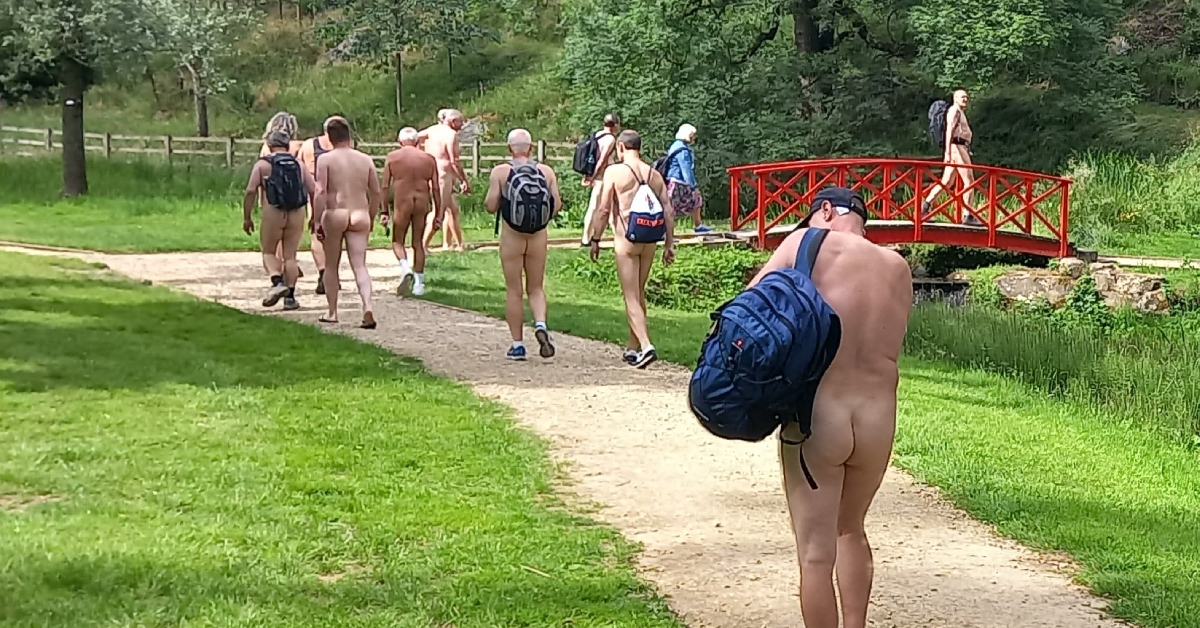
Pic: British Naturism
The most shocking angle for me was not the nudity but the prospect of freezing to death between Ripon and Masham.
The Conservatives were stripped of their political ambitions this week when Labour’s David Skaith swept to victory in the North Yorkshire mayoral election.
Two hours later, Mr Skaith popped up on TV alongside Labour leader Keir Starmer on the pitch at Northallerton Football Club.

It was a great day for Labour and a crushing first ever electoral defeat for Tory Keane Duncan, who instead of sloping out a side door as many politicians do took it on the chin and answered every question posed by a long line of journalists.
The bathing season gets underway this month and those making a beeline for Knaresborough Lido on the River Nidd will be delighted to know they can now check almost real time data on sewage being pumped into rivers by Yorkshire Water. Perhaps naked walks are safer…
Read more:
- Tense day ends in clear victory for Labours Harrogate-born mayor
- Ripon campaigners prepare for post D-Day battle with the bulldozers
- Brew York to open today in historic Knaresborough pub
Local river bathers to get live data on sewage
Outdoor bathers at places such as Knaresborough Lido will be able to get almost real time data this summer on sewage being pumped into rivers.
There has been widespread concern about the state of local rivers, especially the Nidd and Ure.
Yorkshire Water announced yesterday it had launched an interactive map that will provide current information on the operation of storm overflows.
Water companies use storm overflows to release extra rainwater and wastewater into rivers when the sewerage system is at risk of being overwhelmed.
This usually happens during heavy rainfall but there has been concern about the overflows operating at other times and pumping more sewage into waterways.
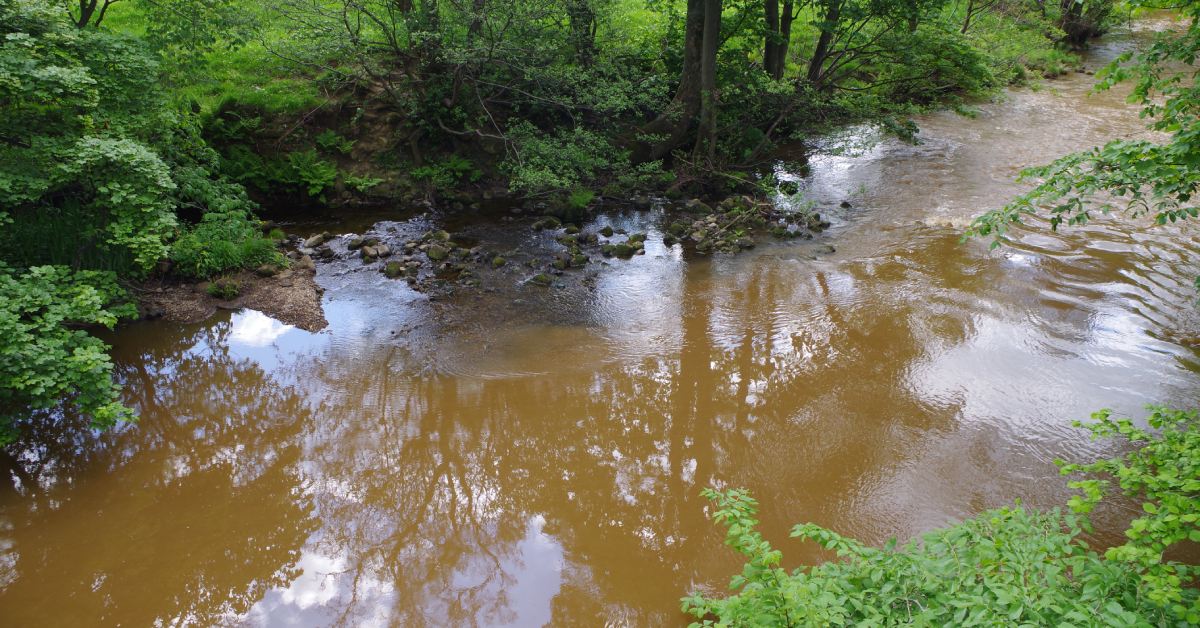
River Nidd
The interactive map has been launched ahead of the 2024 bathing water season, which runs from May 14 to September 30.
It shows the live status of each of Yorkshire Water’s storm overflows, when they last discharged into a watercourse and for how long. The information refreshes at 15-minute intervals,
Yorkshire has 2,180 storm overflows and Ben Roche, director of wastewater at Yorkshire Water, said the map would increase transparency for customers:
Mr Roche said:
“All the data will be available to anyone accessing the map. We have decided to launch now, ahead of the bathing water season to ensure customers are better informed about our operations in their area.
“We know replumbing the whole of Yorkshire is not a quick fix as it would be both significantly disruptive and costly to customers. The map shows just how big an engineering challenge this is from the vast numbers of overflows we have.”
He added Yorkshire Water was “investing £180m by the end of April 2025 to tackle 134 of the more frequently discharging overflows”.
The £180m investment is split into four areas, he added. They are: increasing storage at Yorkshire Water’s wastewater treatment works and within the sewage network; separating surface water from the combined sewer system; reducing groundwater infiltration into sewers; and changes to the operation of treatment works.
You can view the storm overflow map here.
Read more:
- Sewage in Nidd and Ure: local politicians react to increase
- Rivers Nidd and Ure named among UK’s most polluted rivers
- Environment secretary ‘impressed’ by River Nidd bathing water bid
Environmentalists respond to Nidd and Ure sewage spill figures
Two environmental groups have responded to the news of sewage spills more than doubling in the River Nidd and Ure last year.
It comes after the Environment Agency last week revealed sewage discharge figures for all water and sewage companies in England, including Yorkshire Water.
The Stray Ferret analysed the data for the two main rivers in the Harrogate district and found sewage spills not only more than doubled in 2023, but also saw a total of 27,838 hours of spills.
Investment into infrastructure ‘coming too late’
We contacted Nidd Action Group (NAG), which spearheads the iNidd campaign for improved water quality, about the recent figures.
The group appear less than impressed about the significant increases.
David Clayden, the chair, last week told the Stray Ferret:
“From NAG’s quick look at the Nidd data, there seems to be at least 30% more spills this year for almost double the hours of spilling sewage than last year.
“Bear in mind that Yorkshire Water’s plan, determined by the government, is to reduce the average number of spills per asset to less than 10 per year by 2050 (quicker for Knaresborough if we get Safe Bathing Water Status). Yorkshire Water’s considerable investment in infrastructure is coming too late and won’t get the safe bathing and ecological balance in our river right for many years.
“The numbers are going the wrong way. NAG is looking for reduction year-on-year — not upward blips!
“Of course, it has rained a lot this winter but we need to be prepared for changed weather patterns, not just hoping for the best.”
Mr Clayden said the group will “continue to scrutinise what is being planned and what is being achieved for the Nidd”.
NAG will also press Yorkshire Water and the Environment Agency for effective and rapid ways to reduce this tide of sewage, he added.
Rivers trust says figures are ‘distressing’
We also contacted the Yorkshire Dales Rivers Trust (YDRT), a charity that works to protect local rivers, about the data.
Charlotte Simons, catchment partnership manager for YDRT, said the figures come as “distressing news” to the organisation, adding:
“As our population grows and we experience more extreme weather events as a result of climate change, the frequency of these discharges will only increase, unless action is taken. We want to see an end to the practice of discharging raw sewage into our rivers.
“We want to be able to swim, paddle, fish and play in our rivers without risk of getting sick. We want to give our native wildlife a chance to recover, and see our rivers full of life.
“Yorkshire Water has pledged investment over the next five years to tackle this problem. Now we need the government to play their part and approve that spending, to hold Yorkshire Water to account, and to ensure that good decisions are made for long-term environmental and societal benefit.
“This means working with nature as much as possible, looking for integrated solutions that tackle the sewage problem along with other sources of pollution, and deliver more benefits to society too.”
The Stray Ferret reported on the Nidd and Ure statistics last week, which also recorded a total of 2,799 counted continuous spills between the rivers.
Political rivals Andrew Jones MP and Tom Gordon also shared their rather opposing views on the figures at the time.
Read more:
- Sewage in Nidd and Ure: local politicians react to increase
- Sewage spills in Nidd and Ure more than doubled in 2023
Knaresborough’s Marigold Café expansion plans approved
Plans to extend the Marigold Café in Knaresborough have been approved.
The café, situated alongside the River Nidd on Waterside, is one of the most familiar sights in the town. The business also provides rowing boats for hire.
The owners applied to North Yorkshire Council for a single storey extension for toilets.
The council has now approved the planning application, saying it “will enhance the service offered by the existing building to the district’s visitor economy”.
The café consists of two main buildings. The former boat house building provides seats and a single disabled toilet. The kitchen block and servery is located in a separate block.
The extension will create an additional toilet next to the existing disabled toilet.
A design and access statement, submitted in support of the application, said the existing buildings have undergone extensive refurbishment, adding:
“It has a slate tiled pitched roof and vertical timber weather cladding to walls with a waterproof render finish as flood defence at low level.”
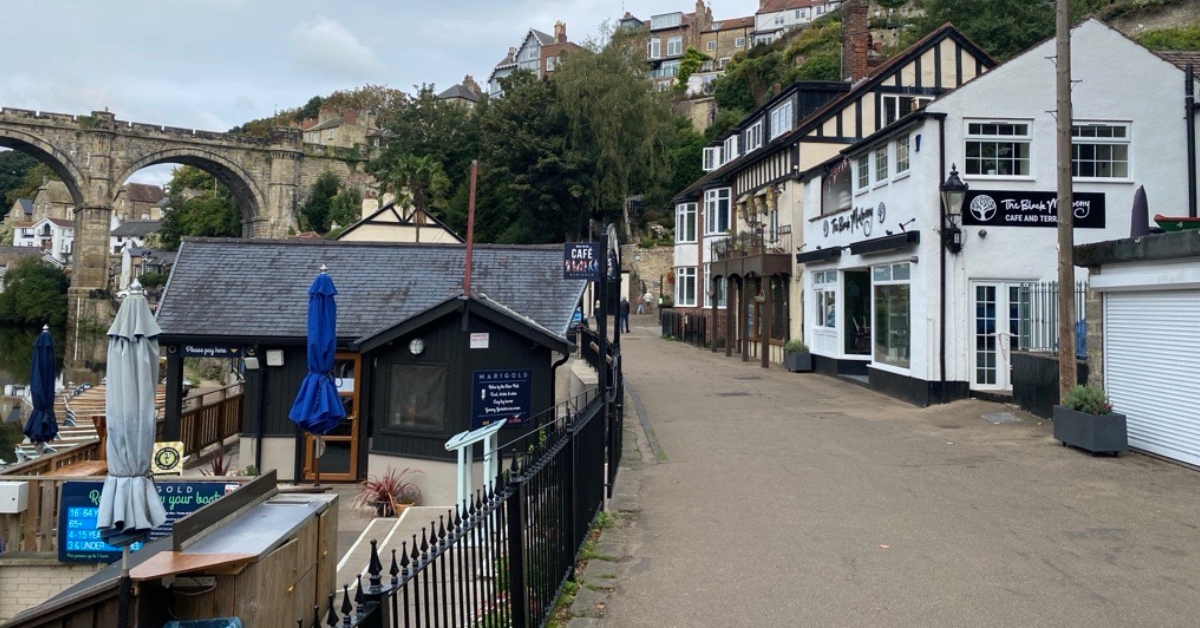
Marigold Cafe (left) on Waterside
The “small” extension, the statement added, would “create a much needed additional toilet”.
“It is proposed that the building will have a flat roof to keep its height and impact on the street scene and the residences opposite to a minimum. The impact of the proposal is further mitigated by the existing high hedge which completely conceals the extension from Waterside.
“The walls will be clad in weatherboarding and render to match the existing building.”
The council’s decision notice said the proposed extension “is not considered to be a detrimental impact to the surrounding conservation area, nor to the character of the surrounding landscape”.
It added:
“Yorkshire Garden’s Trust have commented that they would not consider the proposal to harm the setting of the Grade II registered Garden ‘The Long Walk’ and have no objection to the scheme.
“The extension to the café will enhance the service offered by the existing building to the district’s visitor economy.”
Read more:
- School holiday frustration as Knaresborough play area remains closed
- Knaresborough man jailed for racially aggravated verbal abuse
Sewage in Nidd and Ure: local politicians react to increase
Leading Harrogate and Knaresborough politicians have reacted to the news that sewage spills in the River Nidd and River Ure more than doubled last year.
The Environment Agency published sewage discharge figures for all the water and sewage companies yesterday. The Stray Ferret analysed the data to discover the amount of recorded incidents had more than doubled for the Nidd and Ure.
Water quality is likely to be a key issue at the next general election.
Andrew Jones, the Conservative MP for Harrogate and Knaresborough, has led a campaign to achieve bathing water status at Knaresborough Lido on the Nidd.
Tom Gordon, the Liberal Democrat parliamentary candidate for Harrogate and Knaresborough, has attacked the government for its record on pollution and called for a ban on water company directors’ bonuses.
The rivals gave different reactions to yesterday’s figures.
‘A complex picture’
Mr Jones told the Stray Ferret sewage “isn’t the only cause of pollution in rivers – particularly the Nidd”, adding run-off from farmlands also contributed to the issue.
Mr Jones said:
“The combined storm overflows are designed to discharge the contents of sewers into waterways when the sewers are blocked or overloaded. In 2023 there was exceptionally heavy rainfall which meant the overflows operated more often, stopping sewage backing up into our properties. We need solutions that mean the storm overflows operate less and I am pleased that significant investment is happening and I am pushing for more.
“This shows the importance of a joint effort between water companies, the Environment Agency, house builders and many others to ensure that rainwater run-off into our sewer system is lessened through tree planting, on-site water storage on new estates and separation of clean water and wastewater sewage streams.
“Water quality is a complex picture and to tackle it we need to tackle all the underlying causes. This underlines the importance of gaining bathing water status for the Nidd. This will mean a five-year plan is developed encompassing all the causes of pollution and engaging all partners in finding a solution. That is what I have been championing with the local community and I hope to learn the outcome of our bid soon.”
‘A complete scandal’
Mr Gordon went on the front foot by attacking the Conservative’s record on pollution.
The party yesterday claimed the Conservative MPs have “consistently voted against measures which would have helped to tackle the crisis – including Andrew Jones”.
Mr Gordon told the Stray Ferret:
“It is a complete scandal that filthy sewage is being pumped into our River Nidd. Despite our Conservative MP claiming to be campaigning on sewage we have seen the total number of hours of sewage dumped into the Nidd skyrocket, more than doubling.
“It’s beggars belief that Conservative MPs have allowed water firms to get away with this environmental vandalism. Local people are furious that Conservative politicians blocked tougher action on these disgraced firms.
“Here in Harrogate and Knaresborough we have a Conservative MP who has consistently voted against measures to stop the sewage scandal, local residents deserve better. Local residents and our precious environment need actions not words.
“The Liberal Democrats are calling for tougher action to stop sewage being dumped in local rivers/beaches including replacing Ofwat with a regulator that has real teeth to clamp down on these polluting firms. We have also called for a ban on bonuses for water company fat cats whose firms have pumped filth into our waterways.”
Read more:
- Sewage spills in Nidd and Ure more than doubled in 2023
- School holiday frustration as Knaresborough play area remains closed
Yorkshire Water to spend £2.7m to improve Kirkby Malzeard beck
Yorkshire Water is set to spend £2.7 million on work to improve the water quality of a Kirkby Malzeard beck.
The firm said today the project, which will take place at the village’s wastewater treatment works, aims to reduce the levels of phosphorus in Kex Beck, which eventually joins the River Laver near Ripon.
High phosphorous levels, which are caused by issues such as sewage and agricultural run-off, can reduce water quality and lead to fish deaths.
The project, which will be delivered by engineering firm Tilbury Douglas, is part of Yorkshire Water’s £500 million investment into phosphorus removal across Yorkshire.
Project manager Simon Balding said:
“The quality of the water in our local rivers is incredibly important for the environment and to our customers.
“Reducing the amount of phosphorus entering the watercourse within treated wastewater is one of the ways in which we are committed to continuing to improve the health of our rivers.”
Phosphorus is often found in household products, including washing detergents and shampoo, as well as in land fertilisers.
The firm said it is an “essential part of many ecosystems” but can become damaging to human and animal life if left unmanaged.
The project, which Yorkshire Water said will “positively impact” around 7.5 miles of the Kex Beck watercourse, is set to begin next month and be completed by spring 2025.
It comes months after the firm announced a similar scheme at the Killinghall wastewater treatment works.
It said in November it would spend £19 million on new technologies to reduce phosphorous levels in the river Nidd.
Read more:
- Harrogate Greens accuse Lib Dems of ‘blatant lie’ on by-election leaflet
- North Yorks mayor election: 600,000 poll cards being sent out tomorrow
Reader’s photo: Mandarin duck on River Nidd
Amateur photographer Mike White has sent this photo of a Mandarin duck on the River Nidd at Birstwith.
The brightly coloured waterbirds were introduced to the UK from China and escaped captivity. With their elaborate plumage, they are easily distinguishable but are shy creatures who like to hide.
Mr White, who has photographed the birds annually, said he has seen one pair — a male and a female — at Birstwith so far this year.
He also sent us these two photos he took recently at Staveley Nature Reserve.


Send us your photographs of the Harrogate district to contact@thestrayferret.co.uk
Read more:
- Bettys extends opening hours in Harrogate and York
- Harrogate Spring Water denies claims it could expand again
Driver rescued from Ripon ford as flood threat continues
Police and firefighters were called to Ripon last night when a vehicle got stuck in floodwater in a ford across the River Skell.
The ford at Firs Avenue is notoriously difficult to cross when water levels are high.
The Stray Ferret reported in September that a Fiat had to be towed out.
Now another vehicle — ironically a Ford — has also encountered difficulties. It was still awaiting recovery this morning.

The car awaiting rescue this morning.

North Yorkshire Fire and Rescue Service was alerted at 6.21pm to a similar incident.
Its incident report said a single vehicle had become stuck in floodwater after attempting to cross the ford.
“On the arrival of crews, the driver of the vehicle had been assisted out of the water by a member of the public.
“The driver was checked over by police officers and given advice.
“Crews closed off the ford and footbridge with assistance from the police.”

The footbridge was closed following the incident.
The Met Office forecasts a drier day today but flood warnings remain in place for Boroughbridge camping and caravanning site on the River Ure, Swinney Beck at Masham and the the River Nidd at Hunsingore. Flood warnings indicate flooding is likely.
Less severe flood alerts are active for the lower River Ure and the lower River Nidd catchment areas.
[the_ad id=”182785″]
Read more:
- Firefighters rescue people from car stuck in Ripon ford
- Harrogate Ice Rink organiser responds to complaints
Harrogate trains cancelled as flood threat remains
Rail replacement buses are operating between Harrogate and Leeds this morning due to flooding.
Rail operator Northern said this morning some lines were blocked due to the wet conditions.
It added rail replacement were in place for the 6.30 Leeds to Harrogate 7.30 Leeds to Harrogate 8.30 Leeds to Harrogate, 9.30 Leeds to Harrogate, 7.00 Harrogate to Leeds, 8.00 Harrogate to Leeds. 9.00 Harrogate to Leeds and 10.00 Harrogate to Leeds.
A Met Office weather warning for rain remains in place for the Harrogate district until 9pm until tonight.
Environment Agency flood alerts are active for the upper and lower River Nidd catchments areas and for the Lower River Ure.
More severe flood warnings — which indicate flooding is expected — have been installed for Swinney Beck at Masham and the River Nidd at Hunsingore.
The Swinney Beck warning at 1.54am this morning said:
“Flooding is forecast to affect locations and properties near the Swinney Beck, with low lying land expected to be most affected, particularly around Masham including properties situated off the A6108, Fearby Road, Westholme Road, Leyburn Road, The Avenue, Avenue Bank, Quaker Terrance, Silver Street and College Lane.”
Read more:
- What has happened to Knaresborough’s new £6 million primary school?
- Pharmacy closure prompts concerns about future of Jennyfields retail