Yorkshire Water has sparked outrage by appearing to suggest pollution in rivers such as the Nidd was partly down to a “change in expectations” from residents.
A study by Professor Peter Hammond revealed the equivalent of 317 Olympic pools of raw sewage were discharged into the Nidd at four sewage treatment works in 2020.
Prof Hammond said the sewage was released into the river at Pateley Bridge, Harrogate, Darley and Kirk Hammerton.
Nidd Action Group and Harrogate and Knaresborough Conservative MP Andrew Jones are campaigning for a stretch of the Nidd at Knaresborough to be granted bathing water status, as part of a drive to clean up the watercourse.
The figures prompted Ouseburn Green Party councillor Arnold Warneken to say water companies should be obliged to produce accurate figures on sewage discharge or face prosecution.
The Nidd saw 870 sewage dump incidents last year, according to Environment Agency figures. Recent testing of water pollution in the river has shown the harmful bacteria E. coli is at “concerningly high” levels.
Yorkshire Water’s chief executive apologised last month for sewage being discharged into the region’s rivers and promised to invest £180m in reducing leaks from storm overflows.
However, councillors told a North Yorkshire Council meeting in Skipton on Thursday that Yorkshire Water’s response to water quality concerns raised by Skipton and Ripon Conservative MP Julian Smith had been “profoundly inadequate”.
The firm wrote:
“Whilst storm overflows have been in use for many decades, since well before the sewer network entered private ownership, society is no longer content with their use and government, regulators and the water sector have responded to that change in expectations.”
Councillors said the firm was blaming the apparent lack of sewage infrastructure near waterways “on the fact that people’s standards had increased and the firm’s monitoring processes improving”.
Flooding concerns
In a separate response, to Harrogate and Knaresborough councillors, Yorkshire Water said “climate change and changes in land use have had a huge impact” on the sewage network.
The firm wrote:
“There is a misapprehension that discharges from overflows have increased dramatically in recent years. Instead, the recording of discharges has increased as we have installed event duration monitoring devices on our network.”
Nevertheless, many North Yorkshire councillors say they have been inundated with sewage-related complaints, with Bishop Monkton Conservative councillor Nick Brown saying Yorkshire Water had promised an action plan to stop sewage flooding in six of his parishes.
Read more:
- 317 Olympic pools of raw sewage pumped into River Nidd, study claims
- Yorkshire Water chief executive apologises for sewage failures
Aire Valley Green Party councillor Andy Brown told Mr Smith there had been “a gradual drift towards releasing sewage when the weather isn’t particularly bad”.
He added:
“The law is very clear. You cannot release sewage unless there is exceptional weather. I have photographs of sewage being released into the Aire on dry days.”
When asked about who should pay for extra sewage infrastructure, Mr Smith replied:
“Inevitably, the cost does have to be borne somewhere, and I accept the point, but the huge cost of fixing this problem is a challenge.”
Councillors told Mr Smith the government should be pressuring water firms to spend more of their profits on improving infrastructure.
Sick after swimming
The firm did not directly respond to Prof Hammond’s findings or claims made by councillors that children have become sick with suspected E coli after swimming in the Nidd.
Instead, Yorkshire Water stated storm overflows had not been identified by the Environment Agency as the reason why the ecological status of the river is poor.
It stated:
Photo of the Week: River Nidd Wildlife“Where Yorkshire Water can make a difference is in reducing phosphorus from all final effluent wastewater and that is why we are investing £790m by 2025 in phosphorus removal as part of our overall investment programme which has been in place for some time.
“Our shareholders are funding the majority of our plans for a £180 investment in storm overflow improvements in the next two years. They are supportive of our environmental commitments and this latest funding announcement takes our total investment in river water quality between 2020-2025 to almost £1bn.
“The additional national investment of £10bn announced recently by Water UK will be paid by shareholders up front, with the costs then paid back in tiny increments each year through bills. We won’t know the precise impact on bills for some time. It is clear that huge investment is needed, but precise levels are for the regulator to determine.”
This week’s photograph was taken by Douglas Young, capturing a pair of otters in the River Nidd, near Hampsthwaite.

Photo of the Week celebrates the Harrogate district. It could be anything from family life to capturing the district’s beauty. We are interested in amateur and professional photographs, in a landscape format.
Send your photographs to letters@thestrayferret.co.uk for a chance to be featured next week, we reserve the right to adjust and crop images to fit into our format.
317 Olympic pools of raw sewage pumped into River Nidd, study claimsThe equivalent of 317 Olympic pools of raw sewage were discharged into the River Nidd at four sewage treatment works in 2020, according to a study.
The sewage was released into the river at Pateley Bridge, Harrogate, Darley and Kirk Hammerton.
Professor Peter Hammond, a mathematician who analyses data on sewage discharges, conducted the research, according to an article in the Guardian.
It says Prof Hammond studied four of seven sewage treatment works on the Nidd so the amount of raw sewage pumped into the river could be significantly higher.
The study aimed to reveal the volume of discharged effluent released from storm overflows by water firms.
Water companies are currently required to reveal the number of discharges and how long they lasted — not the actual volume of raw sewage discharged.
Prof Hammond studied 30 treatment works in 2020 run by nine of England and Wales’ 10 water companies in England and Wales to calculate the volume of raw sewage discharged.
Four of those were on the Nidd, which is currently the subject of a clean-up campaign following reports of bathers falling ill last summer.
Harrogate and Knaresborough MP Andrew Jones and the Nidd Action Group are leading the campaign to achieve designated bathing water status at Knaresborough Lido, which would oblige agencies to take action.
David Clayden, secretary of Harrogate Flyfishers’ Club and a member of the Nidd Action Group, told the Guardian he saw no reason water companies could not reveal the volume of raw sewage being discharged into rivers.
He said.
“It is extraordinary to see estimates of the volume being discharged. I am very disappointed that the government did not follow the recommendations of the environmental audit committee and make water companies fit volume monitors.”
Read more:
- Andrew Jones MP appeals for help at ‘critical time’ for River Nidd bathing water bid
- Yorkshire Water chief executive apologises for sewage failures
The MP aiming to win his fifth election in Harrogate and Knaresborough
Today marks 4,762 days since Andrew Jones was elected Conservative MP for Harrogate and Knaresborough.
Mr Jones wrestled the seat off the Liberal Democrats with a slim 1,039 majority in May 2010.
Since then has successfully defended it three times, achieving more than 50% of the vote on each occasion and securing a 9,675 majority in 2019.
But this month’s local elections, in which the Conservatives lost more than 1,000 councillors, and Labour’s lead in the opinion polls suggest the next election could be closer.
In his first interview with the Stray Ferret, Mr Jones gives his thoughts on the looming general election, which is likely to happen next year, as well as key local issues including the Harrogate Station Gateway and devolution.
Mr Jones, who has been a transport and Treasury minister, says he had “no hesitation whatsoever” in putting forward his name for re-selection in the Harrogate and Knaresborough constituency. He says:
“The opportunity to speak up for my home area at the highest possible level is absolutely fantastic.”
The constituency, and the previous Harrogate constituency that included Knaresborough, has been held by Conservatives continuously since 1950 except when the Liberal Democrat Phil Willis was MP from 1997 to 2010.
But Mr Jones insists he’s never regarded it as “anything other than a marginal”, adding no seat has been safe for a decade. He says:
“The election is about who offers the best future – will it be Rishi or Keir Starmer. The answer is Rishi. Who will be the best local champion? Me.”
Asked how many marks out of 10 he’d give so far for Rishi Sunak’s performance as Prime Minister, he says ’11’.
His Lib Dem opponent
Mr Jones, who turns 60 in November, will be up against Liberal Democrat Tom Gordon, who at 29 is half his age.
Both men were born in West Yorkshire but while Mr Jones has lived in Harrogate for almost 25 years, Mr Gordon has just moved in.
Mr Gordon portrays himself as a fresh and energetic alternative but Mr Jones says he has “plenty of fuel in the tank” and points out he had a career in business before becoming a Harrogate borough councillor in 2003, representing High Harrogate for two terms before becoming an MP.
By contrast, Mr Gordon, who has twice stood as a prospective parliamentary candidate as well as a councillor in Wakefield and Newcastle has “done an enormous amount of politics” for a 29-year-old, says Mr Jones, who adds:
“I had 25 years in business. I had done two terms as a local councillor in this area before being elected. I haven’t stood anywhere else.
“I have not sought to represent anything other than the seat I live in. I don’t think this is just a notch on someone’s political bedpost and I hope this constituency isn’t being used in this way.”
Supporting the Station Gateway
Few issues have divided Harrogate more in Mr Jones’ time as an MP than the £11.2 million Station Gateway, which looks set to go ahead after all five Conservative councillors and five of eight Liberal Democrat councillors on North Yorkshire Council’s area constituency committee supported it.
Mr Jones supports the scheme but has reservations, which include the positioning of taxi ranks, unloading outside shops and disabled parking spaces.
He says town centres are changing, with less retail and more hospitality and homes.
“They’ve got to be more attractive places to go to where the quality of life is very high. That’s the big picture in which the gateway ought to be considered.”
He insists the town centre is “vibrant” despite pro-gateway supporters presenting the scheme as a way to regenerate a run-down area blighted by shop closures.
Read more:
- Harrogate business survey reveals opposition to Station Gateway
- £11.2m Station Gateway set to go ahead after crucial Harrogate area vote
He also accused Conswrvative-run North Yorkshire Council of not defending the scheme rigorously enough. He says:
“There have been all kinds of concerns and indeed some misinformation about it and, quite frankly, the council hasn’t done a great job at countering some of the misinformation.”

Andrew Jones in Harrogate
What misinformation? He mentions claims traffic will back-up to Ripley and that the scheme is a form of back-door Big Brother by increasing CCTV. He says:
“If I look at the scheme, as a whole, I think improvements to the street scene in the area are welcome. The focus on integrated public transport is also welcome. And the cycle paths are properly segregated, providing more safety for cyclists, which is probably a good thing too.”
Does he cycle?
“No. I live right in the town centre, I walk everywhere.”
He adds he “much prefers the train” to driving but this has been compromised by recent train strikes.
Many businesses oppose the gateway and a recent Harrogate District Chamber of Commerce survey generated three times more responses opposed to the scheme than in favour. Are they wrong?
“I’ve had comments from businesses that have been both for and against.”
Sewage and the River Nidd
With the owner of Knaresborough Lido
Mr Jones is leading a high profile campaign alongside the Nidd Action. Group to achieve designated bathing water status on the River Nidd at Knaresborough Lido, which would oblige agencies to clean-up the river.
The Lib Dems have criticised the government’s record on tackling the state of rivers. Mr Jones says:
“This is the first government in British history which has sought to improve and tackle the sewage overflows so I don’t think the political blame game improves water quality. Positive action does.”
Two hundred people have volunteered to help monitor Nidd usage at the Lido. Mr Jones says:
“This weekend sees the start of the bathing water season and also sees start of surveying at the Lido.”
How confident is he the campaign will achieve bathing water status and will it happen this year?
“I am always confident and always travel hopefully. It’s too early to say about timings. All I can say is this will have full energy from me.”
Harrogate town council concerns
North Yorkshire is undergoing its biggest political upheaval for half a century.
Harrogate Borough Council was abolished at the end of March and a mayor for York and North Yorkshire is likely to be elected next year.
Mr Jones supported devolution but preferred the east-west model that lost out. Was he sorry to see Conservative-controlled Harrogate Borough Council, whose council leader Richard Cooper is his office manager, disappear?
“I did have a bit of a pang when the council finished. I spent two terms as a councillor in Harrogate and I thoroughly enjoyed it. I thought we got a lot done.”
He says the big issue now is ensuring local voices are heard at Northallerton, where North Yorkshire Council is based.
Read more:
- Second consultation to be held on whether to form Harrogate town council
- Zoë Metcalfe confirms bid to become North Yorkshire’s first mayor
He sounds far from convinced about a Harrogate town council, which looks set to be created next year, adding another layer of council tax.
Mr Jones again seems unimpressed by North Yorkshire Council’s approach, which has involved consulting on whether people support a town council without specifying what its powers will be. He says:
“Creating a public body and then worrying about what it will have responsibility for is the wrong way to approach the question.
“Those supporting it need to articulate a vision of what it will do, how much it will cost and why it should be supported and why it’s different to the area constituency committee.”
Won’t stand for mayor
Mr Jones flatly ruled himself out of the race to become mayor. “I am not putting my name forward,” he says.
Zoe Metcalfe, the Conservative North Yorkshire Police Fire and Crime Commissioner has put her name forward — will he support her?
“It’s early days so we’ll see. I don’t doubt there will be a lot of interest in the position.”
What about Richard Cooper, who he was worked alongside effectively since the 1990s? Mr Jones says Mr Cooper understands how the political systems and structures work and how to get things done, adding:
“If he wants to put his name forward he was a very effective leader at the council but I think he has already said he has retired from seeking elected office. I think he’s ruled himself out.”
1,000 items of correspondence a week

Mr Jones receives 1,000 items of correspondence each week.
Mr Jones, who employs six staff at his constituency office on East Parade in Harrogate, receives about 1,000 pieces of correspondence a week.
He travels to London late on Sunday or early Monday and returns for constituency work on Thursday evening.
Mr Jones, who opposed Brexit, is regarded as being more on the centre ground of the Conservatives than some. Does he agree with the strong language used by Home Secretary Suella Braverman on immigration? He says:
“Immigration is something that brings out very strong feelings but not in a good way. Some of the language used on all sides of this debate is regrettable.”
One of Mr Jones’ pre-local election newsletters didn’t mention he was a Conservative. Why?
“There was no plan behind that. I think everybody knows I am the Conservative MP.”
Cricket and classical music
Born in Ilkley, Mr Jones father worked in the textile industry in Bradford, and he attended the town’s grammar school.
A party loyalist, he is sometimes described as amiable but bland. Is this fair?
“People should just look at what we’ve actually got done. I think there is merit in civilised discussion and debate. Those who shout loudest aren’t always shouting wisely.
“I don’t think it’s bland in the slightest. I’ve been hugely enthusiastic about what I’ve been doing and managed to get enormous amounts done locally and also on a national basis.”
He cites improved rail services first when asked to name what he’s most proud of.
“If we just look at the rail services we had in our area when I became a MP. Now we have more services, later services, faster services, newer services, new rolling stock, London trains – direct services I’m talking about there – these refurbished stations. These are significant changes.
“We have electric buses in the area and more on the way.”
And his biggest regret or disappointment?
“Interesting question. If I look at our area I look around and I see high performing public services both in education and in health. What would be a disappointment? I’m not sure really.”
Away from politics, he has been a member of Yorkshire County Cricket Club since his Leeds University student days 40 years ago.
He hopes to attend a couple of days of the Ashes Headingley Test and “get to a couple of county matches as well”. He enjoys classical music and says Beethoven and Mahler are “high on the list” but describes himself as a musical “omnivore”.
He also likes reading and walking in the Yorkshire Dales. But with the election approaching, his spare time is likely to be in short supply.
Yorkshire Water chief executive apologises for sewage failures
The chief executive of Yorkshire Water has apologised today for its record on sewage and said she will refuse any bonus this year.
Nicola Shaw admitted the company has not done enough to tackle storm overflows, which release raw sewage into rivers at times of high rainfall.
Yorkshire Water has been widely criticised for its record on storm overflows and was fined £233,000 in January for discharging 20 million litres of raw sewage into Tong Beck at Bradford.
Ms Shaw joined the company in May last year and has yet to receive an annual bonus. Her predecessor Liz Barber’s last bonus was £679,000 in the 2021/22 financial year.
In a letter to customers, Ms Shaw said:
“There has been a huge amount of criticism of, and anger at, the water industry over recent months.
“I get why people are angry – seeing sewage in our rivers and seas isn’t right. We should have a system that befits the 21st century. So, on behalf of Yorkshire Water, I am sorry.
“We should have acted more quickly to change the situation. That’s why I have decided to refuse any bonus this year as I want us to make progress.”
Read more:
- Council leader backs River Nidd bathing water campaign
- Yorkshire Water discharged sewage into River Nidd 870 times in 2022
Ms Shaw pledged the company would “up its game” by improving the 190 storm overflows “that we know are operating much more than they should” and by “delivering our largest environmental investment ever”.
Yorkshire Water will spend £180m on storm overflow improvements in the next two years, which it said would help to reduce discharges by at least 20%.
The £180m investment will be spent on:
- Increasing storage within Yorkshire Water’s wastewater treatment works
- Preventing surface water entering the sewer system
- Reducing infiltration into sewers
- Small changes to the operation of treatment works.
Conservative MP Andrew Jones has issued a plea for volunteers to help in the campaign to achieve bathing water status on the River Nidd.
Mr Jones plans to submit an application for bathing water status at Knaresborough Lido after reports of numerous bathers falling ill last summer.
If successful, it would oblige government agencies to take action to improve water quality.
In a three-minute video on his Community News website, the Harrogate and Knaresborough MP blamed the Victorian-era sewage system, run-off from agricultural land and drainage from housing estates for polluting the Nidd.
He asked for volunteers to help with the campaign. He said:
“May this year is a critical time as it marks the start of the bathing season when evidence must be collected for the bathing water application that I’m leading.
“This campaign is building momentum but we can’t let it slide. That’s why I’m calling out to anyone who is passionate about our environment or who uses the River Nidd to come forward and help with the volunteer work.”
Mr Jones said data would be collected over summer and urged anyone interested in helping to get in touch.
He said he would be working alongside Nidd Action Group between now and September to apply for bathing water designation.

Steve Kirkley, from Blenkhorn’s Boats
Steve Kirkley, from Blenkhorn’s Boats, which operates boat hire on the Nidd, told the video improved water quality would “lead to more enjoyable surroundings” while David Clayden, secretary of Harrogate Fly Fishers’ Club, said it would create “a better environment for the river”.
Nicola Shaw, chief executive of Yorkshire Water, said it was important to work in partnership to improve water quality.
‘Nidd plagued by foul sewage’
This week Tom Gordon, the Liberal Democrat prospective parliamentary candidate for Harrogate and Knaresborough, accused Conservative MPs of “blocking new tough measures on water companies” to tackle sewage discharge.
Mr Gordon said the Sewage Discharge Bill would have introduced automatic fines on water companies breaking their sewage dumping permits but Conservative MPs voted to block it.
Mr Gordon, said:
“The Nidd has been plagued by foul sewage discharges. People across Harrogate and Knaresborough are furious about this, yet the Conservative government keeps blocking new laws to get tough on water companies.”
Read more:
- River Nidd testing begins as clean-up campaign gathers pace
- Yorkshire Water discharged sewage into River Nidd 870 times in 2022
Yorkshire Water discharged sewage into River Nidd 870 times in 2022
Yorkshire Water discharged sewage into the River Nidd 870 times last year.
The Environment Agency published 2022 monitoring data on Friday from all 10 water and sewerage companies in England.
It reveals the 870 sewage discharges into the Nidd lasted for a total of 6,177 hours. Dacre sewage pumping station alone saw 87 spills and 1,014 hours of sewage discharged.
By comparison, there were 318 spills into Oak Beck and Coppice Beck, which lasted for 438 hours.
Water companies are legally allowed to release sewage through overflow pipes when the sewage system becomes too full, which can happen during increased rainfall.
In a statement, Yorkshire Water said it was working to improve the number of times sewage is discharged into rivers in the county.
A spokesperson said:
“While 2022’s figures on overflows show improvement we understand they happen more than our customers would like, and we are determined to tackle this issue and do our bit for river health.”
Read more:
- Andrew Jones MP ‘confident’ of achieving bathing water status for River Nidd
- Harrogate and Knaresborough MP says sewage criticism ‘ridiculous’
However, the latest figures prompted Tom Gordon, the Liberal Democrats’ prospective parliamentary candidate for Harrogate and Knaresborough to call for a ban on sewage discharges in protected waters.
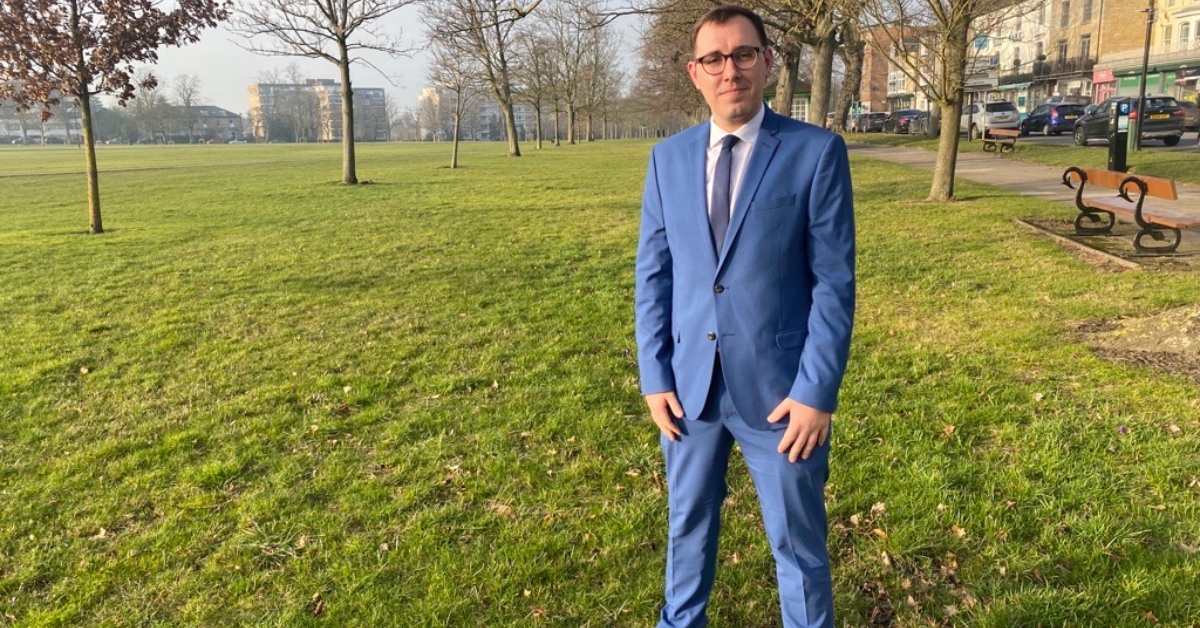
Tom Gordon
Mr Gordon also called for a ban on water company executives being paid multi-million pound bonuses.
He said:
“These figures are a damning verdict on the government’s attempt to stop Yorkshire Water from dumping sewage into our waterways.
“Local people are furious that our swimming locations and previous wildlife habitats have become poisoned with raw sewage. The Conservative government just doesn’t seem to care. I think it’s time the Environment Secretary resigned and was replaced with somebody who actually cares about our rivers and lakes.
“It is time ministers got tough with Yorkshire Water. They are raking in massive profits all whilst destroying the environment. Frankly, the whole thing stinks.”
The Stray Ferret approached Andrew Jones, Conservative MP for Harrogate and Knaresborough, for comment, but did not receive a response.
Water minister Rebecca Pow said:
“The volume of sewage being discharged into our waters is unacceptable and we are taking action to make sure polluters are held to account.
”By bringing in comprehensive monitoring – up from just 7% in 2010 to the most extensive level ever now being at 91% – this government and its regulators have enabled the extent of sewage discharges to be revealed, so that we are better equipped to tackle this challenge.”
River Nidd testing begins as clean-up campaign gathers pace
There is no shortage of concern about the state of the River Nidd, as a busy public meeting in Knaresborough demonstrated this week.
About 70 people turned up at Gracious Street Methodist Church on Tuesday to listen to academics, anglers, environmentalists and politicians and to find out how they could get involved in the attempt to achieve bathing water status.
Just two rivers in England — the Wharfe in Ilkley and Wolvercote Mill Stream in Oxfordshire — currently have bathing water status, which obliges the Environment Agency to put plans in place to monitor and protect the water.
Nidd Action Group has been set up to coordinate the initiative.
James McKay, a Knaresborough resident and manager of the Water-Wiser centre at the University of Leeds, told the Stray Ferret at last week’s meeting Nidd sampling had begun and the campaign had the funds and expertise to achieve its goal.
Mr McKay said the group needed to demonstrate enough people used the river recreationally for the campaign to be successful.

James McKay speaking at the meeting
He said the process of achieving bathing water status wasn’t easy but “it’s the only thing we can do to make a real difference to water companies”.
Mr McKay said water companies were obliged in 2023 to update their water resource management plans for the next five years and the goal was to achieve bathing water status by then. He added:
“If we succeed it won’t have an immediate effect. The first thing that would happen is Yorkshire Water would have to do its own sampling. But over the next couple of years it could start to make a big difference.”
Untreated sewage
Although Knaresborough Lido is the focus of the campaign, if bathing water status is achieved it would bring improvements to the upper reaches of the 56-mile Nidd, including around Pateley Bridge, which flow into the Lido.

Alan Paterson addressing the meeting
Alan Paterson, of Nidd Action Group, told the meeting the three main causes of river pollution were sewage, agricultural contaminants and urban run-off. He said the first two were the main issues affecting the Nidd.
In 2021, Yorkshire Water pumped untreated sewage from 81 locations into the River Nidd 2,552 times – for 18,346 hours, or 764 days.
Mr Paterson said Yorkshire Water’s plans to clean-up the Nidd were “good but would take far too long” and bathing water status would oblige it to act sooner.
Andrew Jones, the Conservative MP for Harrogate and Knaresborough, has led on the campaign to achieve bathing water status and has been looking for volunteers to undertake surveys before he can submit an application. He has also raised the matter in Parliament.
Mr Jones wasn’t at the meeting but Stephen Culpin, a member of his office, was. Mr Culpin said afterwards the intention was to finalise and submit the application by the end of October.
Mr Jones (left) with Frank Maguire, the owner of Knareborough Lido.
The government’s record on sewage discharge has been fiercely debated. Mr Paterson said declining funding to key regulators such as the Environment Agency suggested ministers did not take the issue that seriously but he added that although the action group was “entirely apolitical”, Mr Jones deserved praise for his efforts.
“If he gets some brownie points then fair play to him because we need that bathing water status to improve the quality of water Yorkshire Water is discharging. I’d be deliriously happy if my MP, Julian Smith (the Conservative for Skipton and Ripon) got involved but he hasn’t.”
Mr Paterson added “rivers should be safe and clean to play and bathe in — it’s a right, not a privilege” and people attending the meeting were encouraged to volunteer by undertaking roles such as counting river users.
Wild swimming
Numerous groups attended the meeting but some river users, such as wild swimmers and kayakers, weren’t and some felt the campaign still needed joining-up more.
But the turnout and enthusiasm generated widespread optimism that people might soon be able to swim in the Nidd without a high risk of falling ill, as happened last summer.

Tuesday’s meeting at Gracious Street Methodist Church
Shan Oakes, a Knaresborough town councillor and member of Harrogate and District Green Party said:
“It was a hugely successful event and I feel confident that more like it will follow, bringing the community together to try to stop the pollution and bring back life to our lovely river.”
Yorkshire Water ‘keen to work in partnership’
Two days after the meeting, councillors on North Yorkshire County Council’s Harrogate and Knaresborough area constituency committee questioned a representative of Yorkshire Water as the issue of bathing water status was aired again.
Monika Slater, the Liberal Democrat councillor for Bilton Grange and New Park, told the meeting Leeds University researchers were now taking Nidd samples monthly and this would increase to fortnightly in May.
But she added the samples had so far discovered the harmful bacteria E. coli was at “concerningly high” levels.
Bilton Conservation Society is also sampling at Oak Beck, which empties in the Nidd at Bilton.
Sarah Robinson, from the corporate affairs team at Yorkshire Water, told the meeting:
“There are lots of influences on bathing water quality. It isn’t just about our assets — in some ways that would be easier because we could control that. “
The big issue for the Nidd, Ms Robinson added, was going to be agriculture, such as chemical run-off caused by farmers’ sprays. Dogs running in water also had “a massive impact”, she added. But she said the company was “very keen to work in partnership” to address problems.
The next six months will determine whether the good intentions, and the disparate interests, can be harnessed to achieve real change for the Nidd.
Bacteria linked to sewage at ‘concerningly high’ levels in River NiddRecent testing of water pollution in the River Nidd has shown the harmful bacteria E. coli is at ‘concerningly high’ levels.
The testing is taking place to support a campaign to clean up the river so a section of it can eventually be designated Bathing Water Status.
This would mean people could enjoy wild swimming in the river by the Knaresborough Lido caravan park without falling ill.
Currently in England, only two rivers, including a section of the River Wharfe in Ilkley, have achieved the status.
Scientists say E. coli in water is a strong indicator of sewage or animal waste contamination and consuming it can lead to severe illness.
Last week in the House of Commons, MPs said raw sewage and micro plastics in the UK’s rivers were putting health and nature at risk.
The campaign in the Harrogate district is gathering momentum and is being led by Andrew Jones, the Conservative MP for Harrogate and Knaresborough, who secured a debate on the topic in Parliament in November.
Anglers and other concerned groups have set up Nidd Action Group and a meeting was held in Knaresborough this week about how to clean up the river.
A cross-party working group of councillors has also formed to help tackle the problem.
Cllr Monika Slater, Liberal Democrat councillor for Bilton Grange and New Park, updated councillors at North Yorkshire County Council’s Harrogate and Knaresborough area constituency committee today about how the campaign is going.
She said several councillors attended the Nidd Action Group meeting, adding:
“It was a really good turnout. There’s a lot of community support and estimates are around 70 people attended.”
Cllr Slater said anglers as well as scientists at the University of Leeds are testing the river once a month for pollutants and have found that E. coli is at “concerningly high” levels.
Read more:
- Campaign launched to achieve bathing water status on River Nidd
- Andrew Jones MP ‘confident’ of achieving bathing water status for River Nidd
- Harrogate and Knaresborough MP to ‘submit case’ for River Nidd bathing water status in 2023
Testing will be increased to every fortnight from May 15, which is the beginning of the bathing season.
Earlier in the meeting, councillors heard from Sarah Robinson, corporate affairs advisor at Yorkshire Water.
Ms Robinson gave details about the scale of the problem in the Nidd and what the company is doing to improve its infrastructure.
Water companies are allowed to release sewage into rivers when the sewerage system is at risk of being overwhelmed, such as during heavy rainfall, through what are called storm overflows.
Ms Robinson said Yorkshire Water had 2,221 storm overflows during 2022 — a figure that is down slightly on last year’s number.
She said the company is set to spend up to £39 million by the end of the decade to improve its infrastructure in Harrogate and Knaresborough.
Ms Robinson added:
Knaresborough’s Riverside Cafe owners bid farewell after 13 years“We’ve got a long way to go before we’re up to the standard our customers expect.
“We will work out where best to spend our money to reduce our impact and spill less. That process is ongoing. The goal is to reduce the average spills by 20% by 2025.”
The owners of Knaresborough’s Riverside Cafe have sold the business after 13 years.
The independent cafe, situated under cliffs alongside the River Nidd on Waterside, is a favourite haunt for numerous tourists and cyclists, as well as local people.
Partners Phil Smith and Tim O’Hara will serve their last coffee and cake as owners tomorrow before Michael and Louise Bland, who own Vivido Bar and Restaurant on Cheltenham Crescent in Harrogate, take over.
The cafe is expected to close for a week before reopening, with the previous owners helping out for a short period.
Mr Smith said it felt like the right time to go, adding:
“We had no experience in catering when we took over but we have worked hard and learned by our mistakes to make it a successful business.
“It’s a beautiful place to work, overlooking the viaduct, and we have made lifelong friends.
“But it’s grown and grown and has become a bit of a monster.”
Mr Smith said regular customers from Wakefield, York and Lincoln were due to visit today to bid farewell and he expected tomorrow to be emotional.
But he said Mr and Mrs Bland would “breathe new life” into the business and he and Mr O’Hara would support them before taking life easier. The six staff will stay on under the new owners.
Read more:
- Public meeting to save River Nidd in Knaresborough from ‘ecological disaster’
- Knaresborough town crier Roger Hewitt to retire
Ms Bland, who lives in Leeds, said she and her husband had been friends with Mr Smith and Mr O’Hara for years and they “fell in love with the place” when they visited and later jokingly said they would like first refusal if the cafe ever came up for sale.
Vivido celebrated its fourth anniversary last week and Ms Bland, who lives in Leeds, said the Italian and Mediterranean venue was now running well and she and her husband were excited by the prospect of operating daytime and nighttime businesses.
She said she hoped to reopen the cafe next week but no date has yet been finalised. Ms Bland said:
“It’s a successful business so the plan is not to change too much. We need to have a little time to see how things work and we will only change things if we feel it can be improved.”