Harrogate and Knaresborough Liberal Democrats have called on the government to introduce a sewage tax to raise money to clean rivers.
The party said a 16% tax on water companies would help to create an emergency fund to improve rivers which had sewage dumped into them.
The Stray Ferret reported in November that Yorkshire Water released raw and untreated sewage into Harrogate district rivers and becks on 3,800 different occasions in 2020.
The worst affected local river is the River Nidd, prompting health concerns from wild swimmers that use the river in Knaresborough.
Water companies are legally allowed to release sewage through overflow pipes when the sewage system becomes too full, which can happen during increased rainfall.
Read more:
- River Nidd a ‘potential health risk’ after MPs’ vote on sewage
- Raw sewage released into Harrogate district rivers for 36,000 hours last year
The Liberal Democrats highlighted that Yorkshire Water made an operating profit of £241 million last year.
Hannah Gostlow, the Liberal Democrat councillor for Scriven Park in Knaresborough, said:
“Rivers should be safe for sustaining wildlife, swimming and leisure. They are a precious source of drinking water for some.
“So why are they filled with raw sewage and human waste, destroying them for decades to come?
“It is disgraceful to see a company which pollutes our local rivers with sewage make so much money last year. I think Yorkshire Water should pay to clean up the mess they make here. This Conservative government is once again too slow to act and doing nothing to protect our local rivers.”
The Stray Ferret contacted the Conservative leader of Harrogate Borough Council, Cllr Richard Cooper, to ask for his response to the proposal. He referred us to the council press office. We await a response.
Harrogate headteacher ‘concerned’ by Cold Bath Road pollution dataWestern Primary School installed a pollution sensor in June last year, amid concerns about heavy traffic on Harrogate’s Cold Bath Road.
Headteacher Tim Broad was worried about the sheer volume of traffic plus the fact he could tase diesel in his mouth when larger vehicles passed.
Six months on, The Stray Ferret has reviewed the data, which suggests levels of pollutants meet national objectives but exceed guidelines set by the World Health Organisation.
The sensor, which was installed within the school grounds, revealed concentrations of PM2.5, PM10 and nitrogen dioxide (NO2) all fell within the national objectives’ limits for short and long-term exposure.
However, a local pollution campaigner expressed concern that PM2.5 and NO2 levels exceeded WHO guidelines both short- and long-term.
PM2.5 particles are man-made particles suspended in the air, produced by woodburning stoves and transport, as well as industrial processes. When breathed in, these particles can get into the blood and lodge themselves in organs.
NO2 is a gas produced by combustion of fossil fuels. Eighty percent of roadside NO2 pollution is caused by road vehicles. Exposure to the gas can cause inflammation to the airways and exacerbate pre-existing heart and lung conditions.
‘No safe threshold for air pollution’
We showed our findings to Western headteacher Tim Broad, who said he was “concerned” by the exceedance of WHO guidelines, Mr Broad added:
“I intend to follow up with an investigation in school, with a view to passing on the findings to the appropriate people at Harrogate Borough Council and North Yorkshire County Council.”
Read more:
- Western Primary School in Harrogate gets second speed sign
- St Aidan’s school in Harrogate rated ‘inadequate’ by Ofsted
Local campaigner Brian McHugh claimed the national objectives were too weak, and children were at risk. He added:
“The concern with using numbers and limits sometimes can be that there is a belief formed that anything up to that level is ‘safe’. There is no safe threshold for air pollution.
“The harm of air pollution on humans is well documented. The increased harm to children, with developing lungs, cannot be overstated.”
Better monitoring needed
Western Primary School is believed to be the only school in the district with an air pollution sensor, and live measurements from the sensor are available to the public online here.
Mr McHugh called for better monitoring of pollution in and around schools. He said:
“It is incredibly useful that we are even able to have this data and analyse it. Huge thanks must go to Western Primary for having the foresight to install an air quality sensor and it is hoped that other schools in the Harrogate district follow their example, so we have accurate information on which to base policies and initiatives.”
In its 2021 Air Quality Annual Status Report, Harrogate Borough Council used 63 monitors throughout the district to measure NO2 levels but had no monitors for PM2.5 particles.
The council itself stated PM2.5 can have a significant impact on health, including “premature mortality, allergic reactions, and cardiovascular diseases”, but it relied on council data from Leeds and York to estimate levels of the pollutant in the district.

Yorkshire Water says it is investigating an unusual incident where bubbles filled a section of Hookstone Beck today.
Two Stray Ferret readers contacted us with photos of the beck this morning when what appeared to be a sea of washing-up liquid bubbles appeared on the surface.
Andrew Mann said he was out for a walk near the Yorkshire Event Centre when he noticed “something clearly had gone wrong”.
He said bubbles had risen 10-feet-high and raised concerns about any fish that might be swimming in the beck, which feeds into Crimple Beck.
A spokesman for Yorkshire Water said the incident was not related to sewage pollution. He suspected somebody had poured detergent down a drain that is intended for rainwater and runs off into the beck.
An investigation is underway to find the source of the problem and whether the substance is harmful to wildlife. Yorkshire Water will then share its findings with the Environment Agency.
Read more:
- A1(M) southbound finally reopens at Boroughbridge six hours after crash
- Harrogate Convention Centre boss warns big events ‘at risk’ unless £47m refurbishment is accelerated
Wild swimmer says River Nidd pollution levels ‘concerning’
Wild swimming has become more popular in recent years among people who prefer swimming in rivers and lakes than inside buildings.
Knaresborough woman Miranda Newbery is among those who have taken up the sport. She started last year during lockdown and says feeling connected to nature whilst exercising gives a sense of freedom and changed her life.
Ms Newbery currently swims in the River Nidd with friends once or twice a week but says pollution levels have become an increasing concern.
Last summer she introduced her children to wild swimming. They later fell ill and although she cannot be sure it was due to pollution she has since bought them snorkel-like masks to wear.
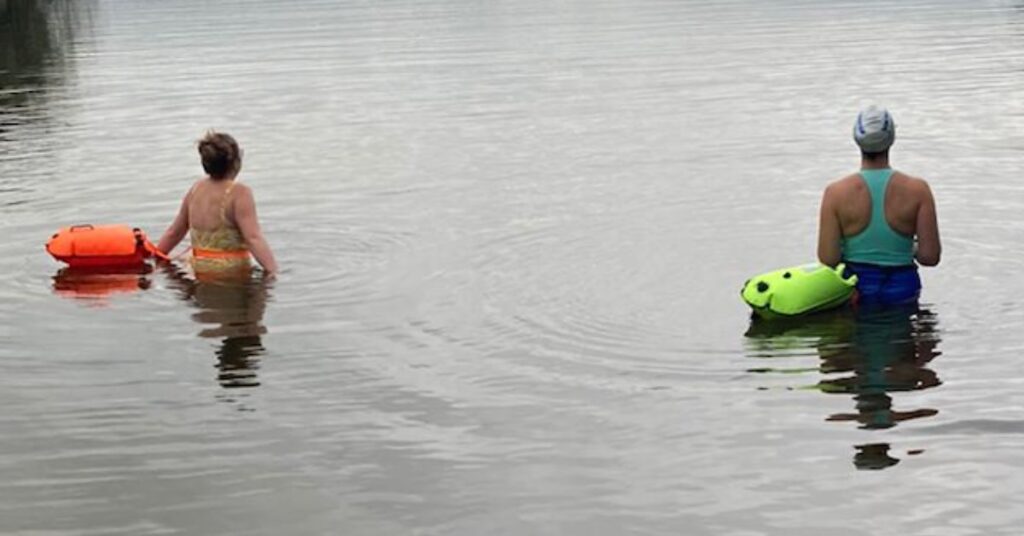
Swimming with a friend in Ullswater
She said:
“It makes me nervous, of course I couldn’t prove it was because of the water but it gives us all so much pleasure I don’t want to stop the kids doing it.
“The river is key to Knaresborough and used by so many. It is something we should look after with our politicians working to protect it too.”
The state of rivers has been a hot topic since MPs voted last month against an amendment to stop water companies, such as Yorkshire Water, pumping raw sewage into British rivers.
Andrew Jones, the Conservative MP for Harrogate and Knaresborough was among those who voted against the amendment. He later said he would support a new amendment to the Environment Bill that would reduce sewage in waterways.
Read more:
- Harrogate firm EnviroVent sets 2030 net-zero target
- Cycling campaigners stop in Harrogate on 500-mile tour to Glasgow
Failed pollution tests in Nidd
The Stray Ferret spoke to other local residents last week who echoed Ms Newbery’s views and called for action to reduce pollution in local rivers.
Jacqui Renton, from Knaresborough, who swims in the Nidd as part of her training for a British championships open water swimming competition, said the Nidd had failed water pollution tests and was “a potential health risk”.
Nevertheless the swimmers plan to keep plunging into the Nidd.
Ms Newbery says she’s shared laughter and heartbreak with other wild swimmers over the last year and encourages people to give it a go.
“There is something about the combination of the cold water and being in the beautiful natural surroundings that we are blessed with in Knaresborough that is truly restorative.”
“It’s a mindful practice and sharing that with friends is so special.”
River Nidd a ‘potential health risk’ after MPs’ vote on sewage
Residents have said MPs voting against an amendment to stop raw sewage being pumped into rivers have created a “potential health risk” in the River Nidd.
Last week, MPs voted 268 to 204 against the Lords amendment, which means water companies such as Yorkshire Water can continue pumping raw sewage into British rivers.
Andrew Jones, the Conservative MP for Harrogate and Knaresborough was among those voting against the amendment.
Last year, every section of the Nidd that runs through the Harrogate district failed water pollution tests due to wastewater contamination – including raw sewage.
The Nidd is used for recreation by families, swimmers and even competitors in Knaresborough Bed Race. Some have expressed disappointment at the MPs’ vote.
Jacqui Renton, from Knaresborough, who swims in the Nidd as part of her training for a British championships open water swimming competition, said:
“Last year the River Nidd failed water pollution tests due to the river being contaminated with wastewater. This included raw sewage, making swimming in it a potential health risk.
“More worryingly, raw sewage being discharged into our rivers of course has a bigger consequence for wildlife, threatening the biodiversity and ecosystem health, which is why urgent action is needed.”
Read more:
- £1.2bn Knaresborough incinerator has never met recycling targets
- £740,000 awarded as part of Knaresborough incinerator fund
A section of the river in Knaresborough is also used by competitors in the annual bed race. Kevin Lloyd, chairman of the bed race committee, urged Yorkshire Water to stop pumping sewage into the river on the day of the event.
However, Mr Lloyd said more action was needed:
“Any initiative that protects the environment is a good thing so I am disappointed at this defeat.
“Yorkshire Water are sympathetic to the event and do what they can but there’s always more that can be done to protect the environment.”
Nidd a ‘huge leisure attraction’
Cllr Hannah Gostlow, a Liberal Democrat who represents Knaresborough Scriven Park on Harrogate Borough Council, also raised concerns as a councillor and local resident.
She said the Nidd was a “huge leisure attraction” used by paddle boarders and young children.
She added:
“The River Nidd is already polluted with wastewater, including with raw sewage, and failed recent pollution tests. The government should be stopping sewage going into our rivers full stop.”
The Stray Ferret contacted Mr Jones about the issue but he declined to reply.
However, he said on his Community News website that he would support a new amendment to the government’s Environment Bill providing a costed plan to reduce sewage in our waterways. He said:
River Nidd pollution: hopeful signs for fish and wildlife“It would not be sensible to support such a complicated change without having a costed plan. This is what the Lords amendment lacked and why I did not support it.”
Clean water is being pumped into the River Nidd amid hopeful signs that most fish survived last weekend’s category one major pollution incident.
A 12-mile stretch between Gouthwaite reservoir and Hampsthwaite turned chocolate brown on Saturday, prompting fears for the predominantly trout and grayling that inhabit the water and other forms of river life.
Yorkshire Water issued a statement on Sunday saying it had suspended safety work at Gouthwaite by its contractor Mott MacDonald Bentley, which it is thought may have stirred up huge quantities of silt.
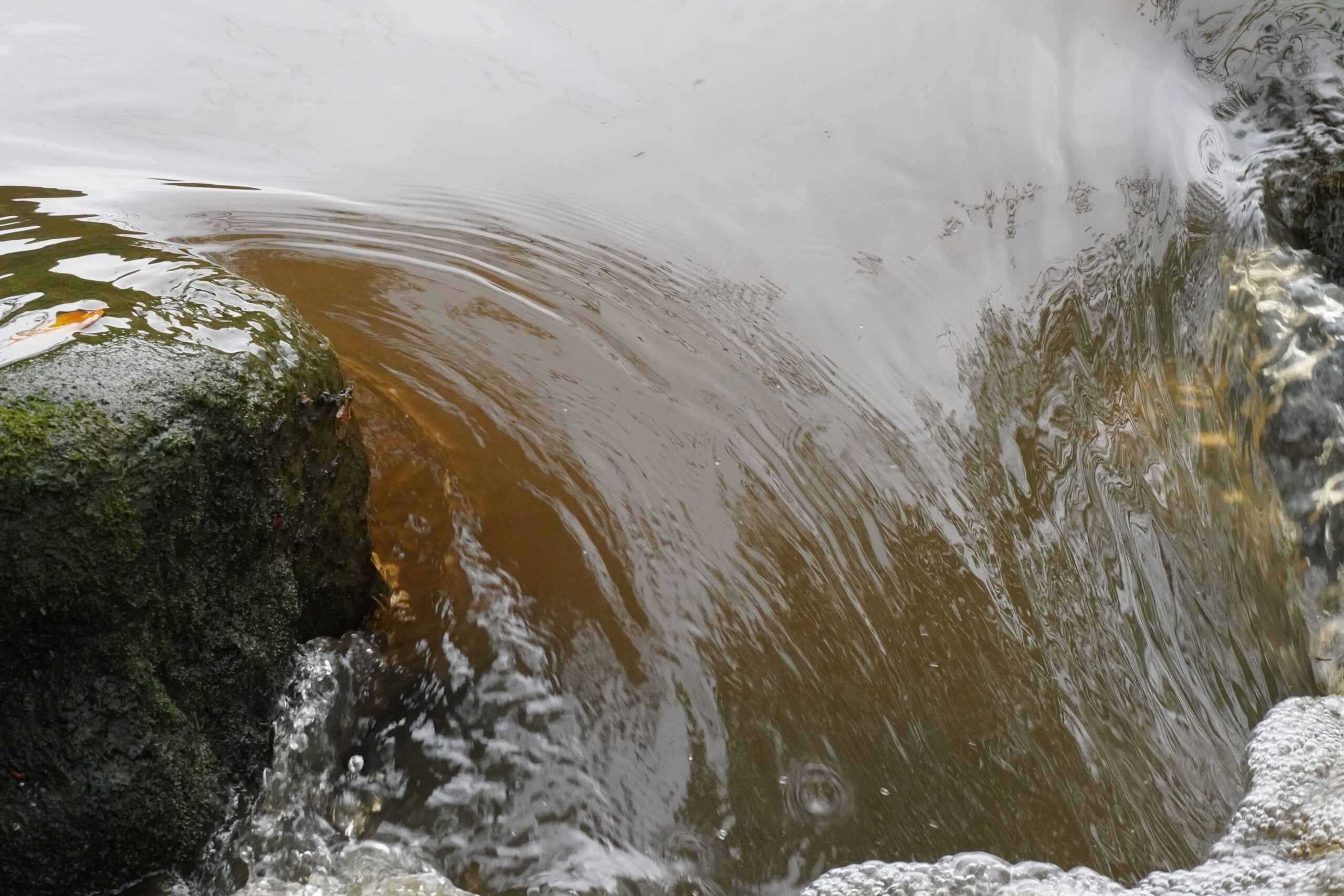
The River Nidd turned chocolate brown.
The company is excavating a trench as part of a long-term project to install a siphon at Gouthwaite dam to enable it to rapidly reduce water levels in an emergency.
Yorkshire Water has declined to comment since the weekend when asked by the Stray Ferret what action it has taken this week and whether it had conducted an environmental impact assessment before the project began.
John Shillcock, president of Nidderdale Angling Club, last night told the Stray Ferret he had heard from multiple sources Yorkshire Water has installed a pipe and was pumping in clean water from further up the reservoir and over the dam. He added:
“The river is much clearer and the cloudiness has passed on downstream.
“The Nidderdale AC secretary and I visited the river today and were much relieved to see that fish were rising and there was evidence of aquatic insect life.
“So this is good news for now, but Yorkshire Water have not made any attempt to let us or other interested parties know what measures they are intending to take to enable them to continue with the siphon installation without the same thing happening again.”
No fish deaths reported
The Stray Ferret asked the Environment Agency, which declared a category one major pollution incident, if it could clarify what action had been taken this week.
A spokesman said it was an ongoing investigation that would take a while to conclude and no further details were available. He added there were no reports of any fish deaths so far.
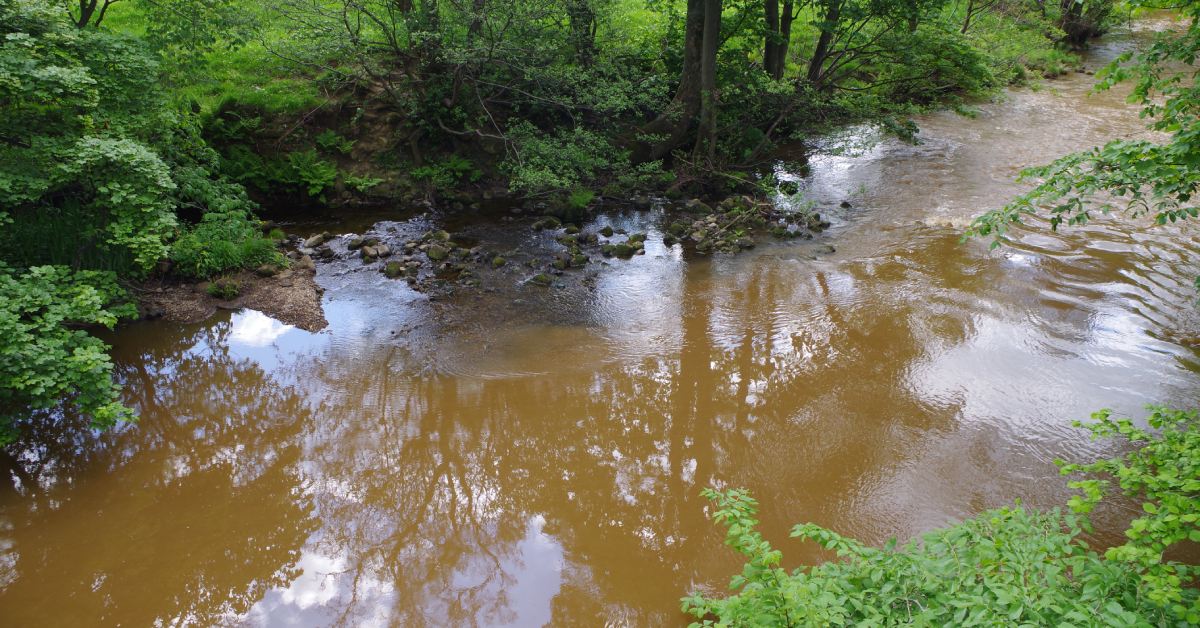
The River Nidd last weekend.
Gouthwaite, which is three miles north of Pateley Bridge, is one of three reservoirs in upper Nidderdale, along with Scar House and Angram, which are further upstream.
The other two supply water but Gouthwaite was built to regulate the flow of the upper Nidd.
Gouthwaite is also a designated Site of Special Scientific Interest in Nidderdale Area of Outstanding Natural Beauty
Major incident opened into River Nidd ‘disaster’
The Environment Agency has opened a category 1 major pollution incident after a 12-mile stretch of the River Nidd turned chocolate brown.
Experts are still trying to assess the extent of the damage to fish and other river life between Gouthwaite reservoir and Hampsthwaite after huge quantities of silt flowed downstream on Saturday.
Anglers and ecologists are calling for action against whoever is responsible and urging the Environment Agency and Yorkshire Water, which was carrying out safety work at Gouthwaite, to come up with a recovery plan.
An Environment Agency spokesman said today it “continued to investigate” the Yorkshire Water works, which is is thought may have stirred up the silt that flowed downstream on Saturday.
The spokesman added:
“Large quantities of silt in a river can harm fish and smother aquatic plants and invertebrates, starving them of light and oxygen.
“Whilst there is no longer any silt entering the river system, it may still be visible as it moves downstream. The Environment Agency continue to monitor the situation and assess the impacts to determine what further action may be necessary.”
With the water still discoloured, it remains difficult to assess the impact on river life.
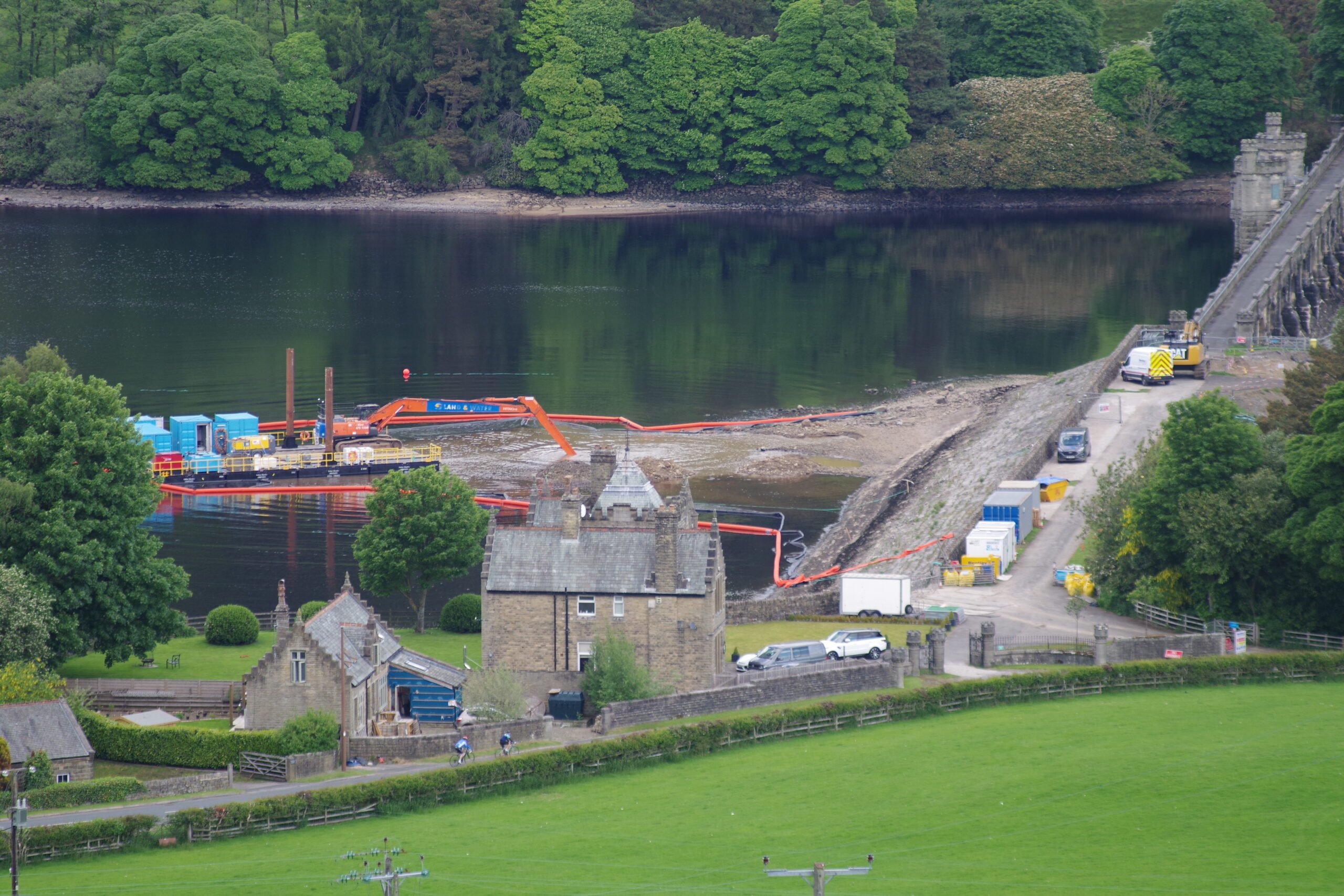
The work at Gouthwaite dam
Dr. John Shillcock, president of Nidderdale Angling Club and a former ecology officer in the area, said:
“In my past experiences, quantities of sediment of this type block out light and can reduce oxygen levels in the river, harming or even killing river life including invertebrates and other organisms on which fish and other river life depend.
“We are awaiting reliable data on the level of sedimentation before we can assess what damage has been done to an extremely precious river system.
“We would like Yorkshire Water to work closely with the Environment Agency to collect as much data and samples as to work out the best course of action to minimise the immediate danger to river life, and to build a deliverable long-term strategy to enable the river to recover from this avoidable incident as quickly as possible.”
Read more:
- River Nidd turns brown after environmental ‘disaster’
- Who is the mystery Good Samaritan carving seats in Nidd Gorge?
The affected stretch of the Nidd is known for grayling and trout.
One angler, who asked not to be named, said the amount of silt would harm oxygen levels on which fish depend. He added:
“There should be some sort of action against whoever is responsible for this. It is an environmental disaster.”
‘Heartbreaking to see’
Alastair Ferneley, vicar of Holy Trinity Church, Dacre Banks, said:
“It’s just heartbreaking to see at the moment — it makes me feel sick in the pit of the stomach.
“As I understand it the slit could choke all the bottom dwelling invertebrates and take out the entire food chain — all the things I watch for: dippers, kingfishers, otters, most of the flying insects that spawn in the rivers, the birds and bats that feed on them.
“I’m hoping it won’t be as bad as a I fear it could be. What we need is a good flood to two to clear the silt out and quickly, but not sure that’s very likely.
“It’s a taste of how fragile the environment and everything that depends on it is.”
A Yorkshire Water spokeswoman said it had nothing to add to its statement yesterday, which said it was working with the Environment Agency to investigate what had caused the sediment in the River Nidd to be disturbed. The statement added:
“We’ve temporarily suspended some work our capital partners Mott MacDonald Bentley were doing upstream at Gouthwaite reservoir while we investigate.”