Industrial action has cost the trust which runs Harrogate District Hospital £1.5 million in 2023.
The hospital has been hit by numerous strikes in the last 12 months, with consultants and junior doctors staging walkouts in disputes over pay.
Harrogate and District NHS Foundation Trust said the figure was an “unavoidable cost” as a result of the strikes.
The move comes as NHS England has told hospital trusts to reduce targets for routine care in order to pay for the industrial action.
National health officials have estimated that the 40 days worth of strike action has cost NHS trusts £1 billion.
In a letter signed by Julian Kelly, the chief financial officer for NHS England, and Steve Powis, the national medical director for NHS England, local trusts were told that elective surgery targets would be scaled back.
It said:
“For the remainder of the financial year our agreed priorities are to achieve financial balance, protect patient safety and prioritise emergency performance and capacity, while protecting urgent care, high priority elective and cancer care.”
Currently, Harrogate hospital has 822 people waiting more than 65 weeks for surgery. No patients are waiting longer than 78 weeks.
However, a spokesperson for Harrogate and District NHS Trust, told the Stray Ferret that it does not expect NHS England’s target adjustment to affect its plans to tackle waiting lists.
They said:
“NHS England’s decision to reduce the elective activity target for 2023/24 is not expected to have a significant impact at HDFT.
“At the start of 2023, we had 2,918 patients awaiting surgical treatment who would have waited 65 weeks or longer by the end of March 2024. This number had reduced to 822 patients by November 2023 and we are currently on track to ensure no patient will be waiting beyond 65 weeks by the end of March 2024.
“We will continue to focus on cancer pathways to ensure we are able to get to a diagnosis within 28 days from referral and provide treatment within 62 days.
“HDFT is committed to providing the best possible healthcare for our patients and to ensure they can be seen at the earliest opportunity.”
Read more:
- Harrogate hospital roof contains crumbling concrete
- Harrogate hospital defends new parking charges
- Concern over number of York ambulances diverted to Harrogate hospital
Harrogate hospital postpones 41 operations due to strikes
Harrogate District Hospital postponed 41 operations as a result of last week’s consultants and junior doctors strikes.
Members of the Hospital Consultants and Specialists Association and British Medical Association walked out from 7am on Monday, October 2, until 7am on Thursday, October 5.
Both junior doctors and consultants held the industrial action in a dispute over pay and conditions.
Harrogate and District NHS Foundation Trust confirmed 41 outpatient appointments were cancelled across a range of hospital services due to the walkout last week.
A spokesperson for the trust added:
“These have been re-arranged as a matter of priority. We are in discussions with six patients to confirm new dates for their operations.”
The trust confirmed that internal and bank staff were used to cover the strikes.
Bank staff are temporary workers who agree to work flexible shifts with a hospital trust. Some trusts keep a record of their own bank staff to call upon for shifts.
However, a trust spokesperson added that a total figure for the cost of staffing will not be available until the end of the month.
It comes as Harrogate hospital has been hit by numerous strike action this past year.
Between April 1 and August 31, junior doctors and consultants have staged multiple walkouts with some lasting as long as 48 hours.
The Stray Ferret reported last month that the trust spent £923,000 on staff cover for industrial action in the same time period.
Read more:
- Harrogate hospital roof contains crumbling concrete
- Harrogate hospital spends nearly £1 million on staff cover for strikes
- Concern over number of York ambulances diverted to Harrogate hospital
Council to bid for £1.7m emergency funding for hospital discharges
North Yorkshire Council looks set to bid for up to £1.7 million worth of funding to help ease pressure on hospital emergency departments.
The Department of Health and Social Care has invited local authorities to apply for grants to help with discharges in social care, which in turn will support accident and emergency units.
Ministers have allocated North Yorkshire as one of the authority areas which has the “greatest health and care challenges”.
The government has given the council an indicative funding amount of £1.1 million, but has encouraged it to apply for up to £1.7 million.
A report by Abigail Barron, assistant director for prevention and service development at the council, has proposed a number of measures as part of the council’s bid.
Among them include employing additional agency social workers to speed up discharge allocations, establishing winter grants for the voluntary sector to help with prevention and developing additional support for unpaid carers.
Ms Barron said the measures would help to “avoid hospital admissions and expedite discharge and flow”.
She added:
“The schemes will also assist North Yorkshire Council’s strategic objective of both supporting hospital discharge and reducing reliance on short stay residential beds.”
Read more:
- Health chief pledges to help patients at Harrogate NHS dentist
- ‘No timeline’ for £1.8m care facility at Cardale Park
The move comes after Harrogate District Hospital managers raised concern that patients were staying in hospital longer than they should because of a lack of private care services.
Last year, Jonathan Coulter, chief executive at Harrogate and District NHS Foundation Trust, said the issue had a knock on effect on emergency departments and was the “biggest issue” that the trust faced.
In September 2022, the trust also outlined plans to launch its own home care service in a bid to free up hospital beds.
At the time, the move was met with some concern by councillors who said it could “distort the market”.
‘No timeline’ for £1.8m care facility at Cardale ParkCouncil officials have said no timeline has been set on proposals for land at Cardale Park in Harrogate which was purchased to provide care services.
The three-acre site on Beckwith Head Road in Harrogate was previously owned by Tees, Esk and Wear Valleys NHS Foundation Trust, which runs mental health services in the district.
North Yorkshire County Council, which has now been replaced by North Yorkshire Council, completed a £1.8 million purchase of the land last year.
At the time, the authority said it had bought the site in order to progress a “scheme to assist with social care market development in the Harrogate area”.
In February, the council said it was “examining the best options” for the site.
The Stray Ferret asked North Yorkshire Council whether it had any timescales for bringing forward a proposal for the site.
Richard Webb, the council’s director of health and adult services, said:
“We cannot at this stage provide you with a timeline as we are still in the process of examining the best options for meeting the community’s needs and will bring forward a scheme in due course.”
The land was previously given approval for a 36-bed mental health facility on the site, following the closure of Harrogate District Hospital’s Briary Unit, which helped adults with mental illness.
However, those plans were dropped in 2019 and inpatients on the unit were sent to Foss Park Hospital in York instead.
Read more:
- Health chief pledges to help patients at Harrogate NHS dentist
- Council ‘examining best options’ for £1.8m Cardale Park land
Harrogate hospital hoping to learn lessons from Lucy Letby murders
Senior figures at Harrogate District Hospital have said they want to learn lessons from the Lucy Letby murders to prevent similar crimes from happening in Harrogate.
Letby is a former neonatal nurse who murdered seven infants and attempted to murder six others at the Countess of Chester Hospital between 2015 and 2016. She was sentenced to a whole life order last month.
Harrogate and District NHS Foundation Trust’s board met on Wednesday at the Crowne Plaza in Harrogate where the Letby case was top of the agenda.
Emma Nunez, director of nursing and Jacqueline Andrews, executive medical director, gave a presentation that outlined what procedures the hospital has in place to spot patterns of behaviour and how it listens to concerns from staff.
Ms Nunez said:
“It’s difficult to stand here and say we are completely assured that it couldn’t happen here, there’s not an organisation in the country that could say that. However, through our good governance and staff engagement we are in a very good place.”
Read more:
- Harrogate hospital roof contains crumbling concrete
- Harrogate hospital defends new parking charges
- Similarities seen in Yorkshire to how Lucy Letby whistleblowers were treated
She added that the trust has spent time looking at its quality governance, which has included establishing an end-of-life mortality committee to review deaths and prioritising its safeguarding committee.
Ms Nunez said:
“Mortality review is something nationally we’ve been asked to look at and how we monitor unexpected deaths.”
Ms Andrews reassured the board that the hospital has the resources to identify anomalies in mortality data which could lead them to investigate potential crimes.
She said:
“We get a lot of mortality data, we have easily accessible data and we get a monthly alert on any mortality that’s an outlier. We do a deep dive into every one of them.”
Several doctors in Chester who worked alongside Letby said they tried to raise the alarm with hospital managers but were ignored.
Ms Nunez said the trust holds weekly talking sessions with staff where they can speak to managers.
She said she believes the trust fosters a culture where staff are able to voice concerns but she admitted there were still members of staff that were difficult to reach.
She said:
Harrogate hospital ‘crumbly concrete’ to cost £20m to eradicate“We have quite a flat structure where it’s not unusual to see staff openly have concerns with executive team. At back of mind, what about the ones who are more difficult to reach?
“That’s the question we need to ask ourselves, how do we reach those people?”
Health officials have estimated it will cost £20 million to eradicate “crumbly concrete” from Harrogate District Hospital.
RAAC, which stands for reinforced autoclaved aerated concrete, is a lightweight material that is less durable than traditional concrete and has a life expectancy of just 30 years before it runs the risk of collapse.
The first section of Harrogate District Hospital was built in 1975 during a period when RAAC was used in the construction of public buildings.
A report about the material at the Lancaster Park Road hospital was discussed at a meeting of Harrogate and District NHS Foundation Trust’s board yesterday at the Crown Plaza hotel.
The report said a full survey of the estate by engineers WSP found 2,500 RAAC panels. It added that remedial works have been completed on 12 “high-risk” panels with some theatres and corridors in the hospital made safe with props.
The report said there will be an annual survey of all RAAC panels and a roof with the concrete will be replaced.
It said there may also be further propping of panels that are in danger of collapsing.
Read more:
- Harrogate hospital roof contains crumbling concrete
- Harrogate hospital to increase visitor parking charges under new system
To eradicate RAAC from the site, the trust has bid for £20m of funding to NHS England, which includes relocating demolishing and rebuilding a therapy services building.
Whilst there is RAAC present at Harrogate hospital, it is not as prevalent as in other hospitals in Yorkshire such as Airedale in the Bradford district. In May, the government announced it will be completely rebuilt due to RAAC.
Jonathan Coulter, chief executive at Harrogate and District NHS Foundation Trust’s, addressed RAAC in a statement.
He said:
Similarities seen in Yorkshire to how Lucy Letby whistleblowers were treated“There has been a flurry of activity in respect of the management of estate where there is RAAC present. This followed the concerns raised at the end of last month across the education system.
“To be fair, the NHS has been very aware of this issue and risks are being managed, but there is now greater concern and the threshold for risk is being challenged.
“As the board will be aware, we do have some RAAC across the HDH site that we survey regularly, manage, and have a plan for gradual replacement. As part of our capital plans, including our new theatre build, we are reviewing and assessing the potential to tackle this issue more quickly.”
Similarities to how whistleblowers were treated when raising concerns about convicted child killer Lucy Letby have been seen across Yorkshire hospitals, it has been claimed.
At a York and Scarborough Teaching Hospitals NHS Foundation Trust board of directors meeting on Wednesday, September 27, concerns were raised about how comfortable staff are at raising issues of colleagues’ clinical practice.
NHS staff can raise issues through ‘speak-up guardians’ like York hospital’s Stefanie Greenwood, who presented a report to the board and told directors there are lessons to be learned from how complaints about Letby were treated prior to her arrest in July 2018.
Ms Greenwood said:
“Although it’s a very extreme case, there are some lessons we can learn.”
She added that cases like Letby’s show “the price that we pay if we don’t listen to our staff” and that “silence ultimately kills patients.”
Ms Greenwood said:
“Our staff currently do not feel safe to raise concerns.
“They fear reprisal and this can lead to unsafe patient care.”
She added:
“I have seen similarities in how the Letby case was handled and staff being shut down and told they need factual evidence.”
Read more:
Letby was jailed in August for a whole life term for murdering seven babies and trying to kill another six at Countess of Chester Hospital between 2015 and 2016.
Dawn Parkes, interim chief nurse at York and Scarborough’s hospital trust, said “any hint” of something wrong regarding patient care should be “explored,” even if there is no hard evidence of wrongdoing.
Jenny McAleese, a non-executive director at the trust, said:
“There’s not many concerns raised about safety and quality and I just wonder whether we just need to have a bit of a conversation about that and make sure people know that the freedom to speak guardian is there.”
She added:
“People are happy to raise concerns about people working while sick but there’s a bit of a reluctance to raise concerns about people’s clinical practice.”
Letby, 33, is only the third woman to receive a whole life order and is Britain’s most prolific child killer.
Many of her surviving victims have been left with life-altering conditions.
Dr Stephen Brearey told BBC Radio 4 in August that when he raised links between Letby’s constant presence during a spike in infant deaths at Chester hospital he was “put into mediation by senior managers.”
He said:
“I was put into mediation twice, once on fairly minor grounds and secondly with Lucy Letby herself and it seems to be a way of delaying action and investigating those concerns.”
Dr Brearey added that it is “a way of turning the things back to the clinician and suggesting that they’ve done something wrong.”
He added:
“It’s almost like weaponising that process.”
There has been an increase in concerns being raised across York and Scarborough hospitals in the last three years but these were mostly about ‘behaviours and relationships’ or ‘bullying and harassment.’
Simon Morritt, chief executive of York Teaching Hospital NHS Foundation Trust, said:
Harrogate hospital spends nearly £1 million on staff cover for strikes“How easy it is to raise concerns is really important to us.”
Harrogate District Hospital has spent £923,000 on staff cover for industrial action since April.
The hospital has been hit by numerous strikes in the last five months, with consultants and junior doctors staging walkouts in disputes over pay.
In a report due before a trust board meeting today, Jonathan Coulter, chief executive of Harrogate and District NHS Foundation Trust, said a “significant cost” had been spent covering for striking staff members.
In total, between April 1 and August 31, the trust spent £923,000 on bank and internal staff to cover for junior doctors and consultants.
Bank staff are temporary workers who agree to work flexible shifts with a hospital trust. Some trusts keep a record of their own bank staff to call upon for shifts.
The trust said no agency workers were used to cover staffing during the strikes.
The Stray Ferret asked the trust how it intended to recoup the money spent during the industrial action.
A spokesperson for the trust said:
“The trust is in ongoing discussions with NHS England on the expectations regarding funding and managing this pressure.”
It comes as both junior doctors and consultants are set to carry out further walkouts in October.
Members of the Hospital Consultants and Specialists Association and British Medical Association will strike from 7am on Monday, October 2, until 7am on Thursday, October 5.
In his report, Mr Coulter said it was important to remember staff were in dispute with the government, not the hospital trust.
He added:
“We need to always remember the impact that this industrial action is having and the cost for patients who have services disrupted and delayed, the actual financial cost of cover, and the more significant opportunity cost, as management time is necessarily taken up with planning and managing these periods of strike action safely.”
Read more:
- Harrogate hospital roof contains crumbling concrete
- Harrogate hospital defends new parking charges
- Concern over number of York ambulances diverted to Harrogate hospital
Vida Healthcare continues drive for excellence

This story is sponsored by Vida Healthcare.
James Rycroft, Managing Director, discusses how Vida Healthcare is leading the way in the provision of care for people living with dementia.
Supporting the dementia journey
When we founded Vida, our aim was to create a safe place for people living with dementia and their families, where our staff would be trained as dementia ambassadors. Over the years we’ve looked into and deployed a range of alternative approaches and techniques. This innovation has given us the tools to provide outstanding care to our residents. We’re so proud to play a part in people’s dementia journeys. We’re always looking out for new approaches that support their wellbeing.
Our care is centred around taking the time to get to know our residents and support them as individuals. By learning about their family and friends, hobbies and interests, likes and dislikes, we can make meaningful connections. That helps people to feel at home. We are also passionate about providing the most effective care by keeping up to date with the latest research and findings, alongside drawing on our high level of clinical expertise.
We continue to secure numerous awards and accolades as a result of our continued drive for excellence. As of June 2023, all three care homes are rated ‘Outstanding’ by the Care Quality Commission.
Our specialist houses
We have worked closely with healthcare experts, specialist architects, interior designers and landscape gardeners to help create unique environments in our homes. Every element, from our residents’ bedrooms to our outdoor spaces, has been designed with our residents’ health and wellbeing in mind.
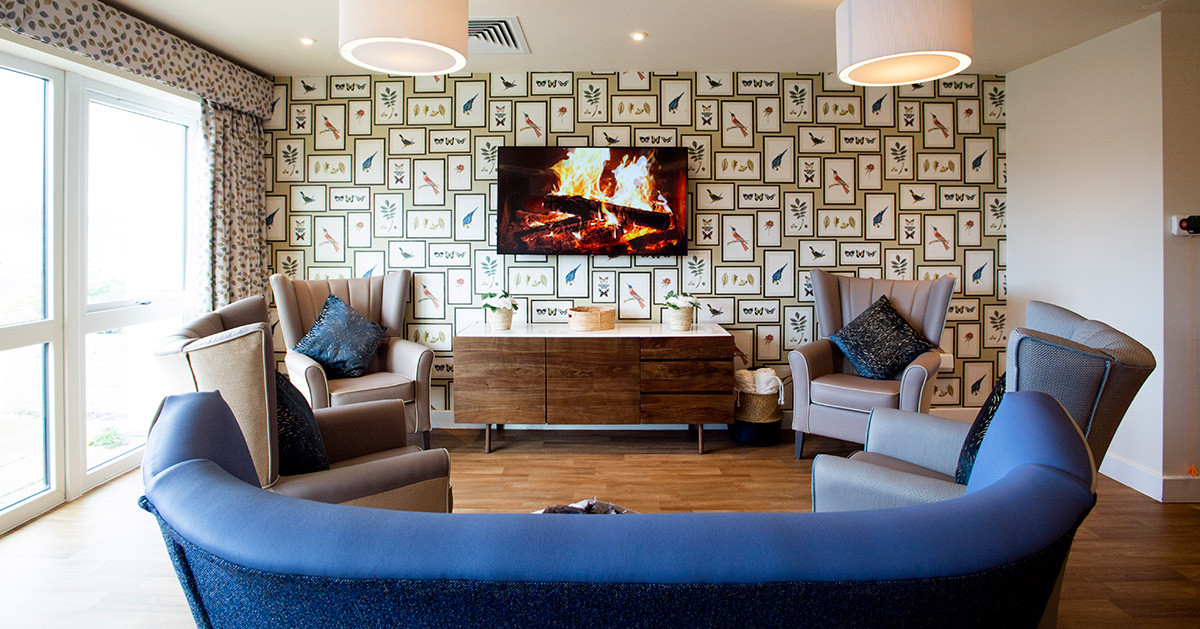
Residents are made to feel at home.
Within all three of our homes there are multiple, smaller houses which allow us to provide tailored care for our residents no matter where they are on their journey with dementia. In total we have 20 specialist care homes across our three buildings. Each house has a similar look and feel but offers a different level of care and support. Should care needs change over time, our residents do not have to experience the upheaval of moving to a completely different care home.
Our staff
Every member of the Vida team has been selected because they share our values. Vida treats everyone with respect and dignity. We are transparent, honest and fair at all times. We support people to make their own decisions so that they can lead independent lives where possible, and we treat everyone equally.
Our in-house Learning, Performance and Development team that form our bespoke staff training programme, Vida Academy, are always on hand to support our staff to excel. They provide our staff with multiple opportunities to learn new skills, develop in their roles and achieve career progression. Vida Academy supports all our staff, from new starters through to senior managers. The academy promotes lifelong learning and establishes our team as dementia ambassadors.
Communicating with families
As we have developed and grown as a provider we have recognised the importance of clear and engaging communication channels in order to inform and update family members, and build their trust in our ability to care for their loved ones.
Effective communication with families is essential which is why we have developed our own in house app, Family Team Talk. The app offers a lifeline for our families, giving them a digital platform and news feed to keep up to date with daily life through text, video and image posts from staff. Originally launched in response to the Covid-19 pandemic, the app continues to raise the morale of relatives, residents and staff and give everyone a greater feeling of connectivity and reassurance.
For more information, please visit www.vidahealthcare.co.uk or contact admissions@vidahealthcare.co.uk. You can view the life inside Vida by visiting us on our social media pages.
Local politicians raise concern over lack of Harrogate and Knaresborough NHS dentistry
Local politicians have raised concern over a lack of access to NHS dentistry in Harrogate and Knaresborough.
Both Conservative MP, Andrew Jones, and Tom Gordon, the Liberal Democrat parliamentary candidate for Harrogate and Knaresborough, said the issue had been raised with them multiple times.
It comes as this week, the Stray Ferret reported that another dentist on Harrogate’s King’s Road will go “membership only” once its NHS contract runs out in December.
Chatsworth House Dental Clinic told patients it will now only take appointments from those as part of its membership scheme.
In a letter seen by the Stray Ferret, it said it planned to cut its patient list by 70% as part of the plan — which it said would “reduce appointment waiting times” and “improve prevention of dental disease and decay”.
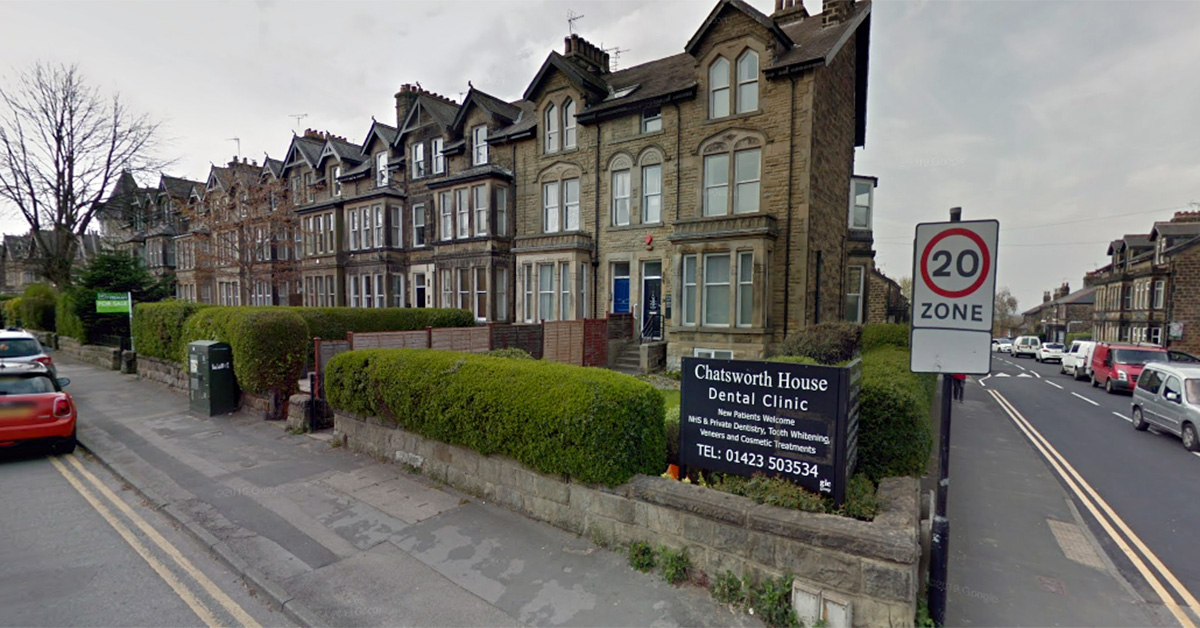
Chatsworth House Dental Clinic on King’s Road.
Gail Hindson, a patient who received a letter from the dentist, questioned why patients would require longer appointments.
She said:
“Why do patents need longer appointment? In the 40 years I have been a patient I have never felt my appointment time did not meet my needs.
“What support are they providing to those patients they are rejecting either due to lack of finance or understanding of the process?”
Concerns over lack of access
The decision by Chatsworth House Dental Clinic raised concern over the the lack of access to NHS dentistry in Harrogate and Knaresborough.
NHS Humber and North Yorkshire Integrated Care Board, which replaced North Yorkshire CCG in April, is responsible for the commissioning of dental care in the district.
A review of NHS dentistry published in August 2021 found there was just one NHS dentist practice per 10,000 people in the Harrogate district.
Harrogate and Knaresborough MP, Andrew Jones, has taken concerns over the lack of NHS dentists to the ICB.
He said the organisation should begin expanding NHS dental provision in Harrogate and Knaresborough.
Mr Jones said:
“It is positive that dental provision has moved from being controlled nationally to a more local approach. I want to see this local management produce results for our area quickly.
“Recently a small number of constituents have contacted me having had problems getting access to an NHS dentist. Anecdotally this is a wider problem. I am also concerned that residents moving into the new estates in our area will be left without dental cover.
“So I want the ICB to begin expanding the NHS dental provision in Harrogate and Knaresborough and to keep the level of service under review as the new estates become fully occupied.”
Tom Gordon, the Liberal Democrat parliamentary candidate for Harrogate and Knaresborough, said the issue was one that “kept coming up on the doorstep”.
He added people had also told the local party about their concerns at accessing an NHS dentist appointment.
Mr Gordon said:
“Access to NHS dentistry is one of the biggest issues that keeps coming up on the doorstep time an time again.
“That’s why we have been campaigning on this issue since I was selected earlier this year, and I have met with Daisy Cooper MP, the Lib Dem health spokesperson, and she raised it in Parliament, when our current MP has failed to do so at any point in the last 13 years.
“Over the summer we launched our local dental survey. The results made for a shocking read.
“43% of people who responded to our dental survey are not currently registered with a dentist, with more than 60% of those people having not seen a dentist in years.
“Just 30% of people we spoke with told us they were currently registered with an NHS dentist, with just under half travelling outside the district to see them. The rest pay for private care.
“More than half of the people we spoke with told us that they have delayed seeing a dentist because of the associated cost.”
Read more:
- Investigation: ‘Shocking’ waits for NHS dentists in Harrogate district
- Access to NHS dentists in North Yorkshire has ‘got worse’, says MP
- ‘Radical reform’ needed for North Yorkshire NHS dentists, says councillor