Harrogate District Hospital has said it does not expect to cut back on vital health services because of soaring energy bills after revealing its costs have more than doubled from last year.
The hospital’s gas and electricity costs shot up by 132% between April and June when compared to the same period last year, but bosses have insisted the price rises “are being managed”.
This comes amid warnings that some NHS trusts will have to find as much as £2 million extra a month this winter due to the fuel price surge.
The NHS Confederation – which represents trust bosses across the UK – told the BMJ that the energy crisis coupled with higher than expected inflation was already “wiping out large parts of the NHS budget”.
A spokesperson for Harrogate District Hospital said that as part of its own budget planning it would do its “utmost” to take into account further rises, adding:
“Inflation costs above those included in the budget are being actively managed through the trust’s efficiency programme so that we can provide the best possible value for the taxpayer.
“It is important that our community has the best possible healthcare system to turn to when they need it and we are not anticipating that the current fuel rises will impact on the vital services we provide.”
Energy bills for non-domestic customers such as hospitals are not subject to the energy price cap and have therefore been even more vulnerable to surging prices.
Read more
- Harrogate businesses ‘still unable to pay energy bills’ despite PM’s pledge
- ‘It’s still too high’ – Harrogate residents on the government’s energy announcement
Under Liz Truss’s energy plan, household bills will be frozen at an average of £2,500 for two years and the new prime minister said businesses, charities and public sector organisations would also be offered an “equivalent guarantee” – but only for six months.
Harrogate District Hospital was last year awarded £14 million to reduce its carbon footprint and energy bills as part of its drive to become a “greener, more environmentally friendly organisation”.
The funding is being used for works to install new insulation and glazing across the hospital site.
A hospital spokesperson added:
Concerns over exploitation in North Yorkshire as number of young carers rises“Another exciting project currently underway is the drilling of a borehole, from which the heat energy will be extracted from the water, put through a heat exchanger and into our heating system to help reduce our reliance on gas and other fossil fuels.
“We also have a number of other projects that are currently being progressed or will start shortly, including replacing air handling units to increase efficiency and extract heat energy, and installing photovoltaic arrays to generate electricity on the site.
“Through this work we are already seeing big efficiency gains and further projects will continue in the years ahead.”
Children’s services bosses say a “significantly higher” number of children are coming forward as young carers, partly due to physical and mental health conditions not being treated during the pandemic.
A North Yorkshire County Council meeting heard precise numbers of people aged 18 and under who care for a friend or family member who cannot cope without their support had not been established since the pandemic as the 2021 census data was still being analysed.
However, the meeting was told it was believed the number of young carers had risen sharply since the 2011 census, when 1,107 young carers aged 15 and under were identified in the county, 70 of whom were providing 50 or more hours of care a week.
Some councillors expressed surprise after hearing the 2011 census also identified 2,436 unpaid carers aged 16 to 24, 203 of whom provided 50 or more hours of care a week.
Councillors heard the council’s annual Growing Up In North Yorkshire survey of children would also help establish accurate figures of the rise.
The young people’s scrutiny committee meeting heard to meet its legal duty to provide all carers with an assessment of their needs and put in services to protect their health and wellbeing, the authority was working with numerous bodies, and in particular schools, to identify as many young carers as possible.
Officers said the authority had strengthened a drive to identify young carers, some of whom are reluctant to ask for help for fear of being perceived as weak or facing bullying.
Read more:
- Harrogate care boss relieved as government ends mandatory covid testing
- ‘Rodent dropping’ Harrogate care home no longer registered
They said the council’s successful awareness-raising campaign may have contributed to the increase in young carers by removing stigma and instilling a greater willingness among young people to come forward and seek help.
An officer added:
“Coming out of the pandemic we know that some people’s health issues haven’t been addressed or have deteriorated, and particularly we are yet to see the impact on mental health, both for adults and young people.
“We are certainly seeing some impact already on children’s services. I think we will see an increase in the number of carers as a result of the pandemic.”
In response, councillors said children were providing a free service that the authority should be providing instead.
Conservative councillor for Bilton & Nidd Gorge, Paul Haslam, said the young carers were “providing care on the cheap”.
Conservative councillor for Thorp Willoughby, Cliff Lunn added:
“It could be seen that we are merely training them to do the job properly rather than addressing the problem. In the bigger picture we could be seen to be exploiting childhood.”
A senior officer replied that any service could not completely fill the gaps that families, and in some cases young children, provide.
She added:
Care provider expands to Harrogate district“I think that’s a really valid point. One of the aspects of the services provided is to make sure the adults who need the care are aware of all the sources of support that they can access, including financial benefits that may help them to pay for care to relieve the carer responsibilities for the child.”
Business Breakfast is sponsored by Harrogate law firm Truth Legal.
A care provider from Northallerton has expanded into the Harrogate district.
Blossom Home Care provides care to the elderly and other adults with home care requirements. Established in 2015 in Northallerton, Blossom has moved into the north-east, North Yorkshire and other areas of the UK.
Carrianne Walters and Darren Kacis, franchise owners of Blossom Home Care Harrogate, have over 30 years experience in social care.
Their office opened this week on Hartwith Way in Harrogate.
They can be contacted on 01423 649885 or by email at managerharrogate@blossomhomecare.co.uk.
Read more:
- Business Breakfast: Ripon company director shortlisted for two industry awards
- Business Breakfast: Harrogate man launches health inequality app
Harrogate town centre flats nears completion
Apartments being developed in central Harrogate are due to be ready to move into this autumn.
Lambert House is being built by Harrogate-based Tate Estates and consists of 12 two-bedroom apartments, just off Station Parade.
All the apartments have private under-croft parking and several of the properties include two-storey duplex layouts and balconies.
Shane Tate, from Tate Estates, said:
Hot Seat: The Harrogate man leading the way in luxury care“We’re excited to release the homes for sale, and especially because we’ve already had high levels of enquiries from a wide range of potential buyers during the construction phase.”
When Graeme Lee was in his mid-20s, he organised a holiday for 24 people in two chalets in France. Tragically, two of them died on the trip.
Devastated, he took a year off from his job as a senior manager at Marks & Spencer. His sabbatical drifted into a second year until it ended abruptly when his mother fell ill and he rushed home to be with her. Within four weeks she was dead.
Thirty years on, Mr Lee is one of Harrogate’s most successful businessmen. His company Springfield Healthcare has six care homes, a £30m turnover and 1,500 staff, including domiciliary care. It wasn’t university or education that forged him, but those early losses.
He says:
“They were two of the most traumatic things that have ever happened to me.
“I can’t tell you how responsible I felt for what happened on the holiday. One of the girls wasn’t going to go and I lent her the money.
“Those two years away transformed me. I learned a lot about the meaning of life.”
It has been some journey. Mr Lee grew up in a small care home his mum and dad owned in Garforth, West Yorkshire, regularly moving bedrooms to accommodate residents and watching TV with them at night.
He then struck out on his own at M&S until his mother’s death proved a turning point. He says:
“Shortly before she died, Mum asked if I would look after Dad and the business and my two sisters. I’ve tried to do that ever since.”
Care homes are light years away from what they were when Mr Lee was young. He says:
“Care homes in the 1970s had bad reputations. Your grandma would say ‘don’t ever put me into a care home’. That’s driven me over the years. I want to change how older people perceive care homes.”

Harcourt Gardens in Harrogate
Today Springfield Healthcare, which has six homes providing 500 beds, is at the forefront of luxury care. Think cinema days, rooftop terraces and gin bars.
Harcourt Gardens, which opened close to Harrogate town centre in December, is registered for 115 residents. Its facilities include a cinema room, gym, hairdressing salon and spa, and landscaped gardens. He adds:
“The most important thing for me is that it’s in the heart of the community. Older people want to live in their community.”
Naturally it isn’t cheap — prices in Harrogate start at £1,250 a week. Mr Lee says his company creates an option for people able to afford the choice and provides value for money.
Harcourt Gardens, which employs 50 staff, took more than seven years to go from vision to completion. Covid and a flooded basement added to the delays.
How does he top that? Another site in Harrogate could raise the bar even higher.
‘Holy grail of care’

Outside Grove House
Three years ago, Mr Lee bought Grove House, a grade two listed building off Skipton Road that was once the home of Victorian inventor, philanthropist and mayor Samson Fox.
Grove House belonged at the time to the Royal Antediluvian Order of Buffaloes, a fraternal movement. A flag showing the initials GLE hung outside, indicating it was the organisation’s grand lodge of England.
So when Mr Lee, whose car number plate bears the initials GLE after his name, turned up to check out the site, there was a sense of fate. That there is a plaque about Samson Fox near his Harrogate home added to this.
He bought the site for £3 million and now plans to transform it into “the holy grail of care”.
He wants to convert Grove House to accommodate 23 independent living apartments and build a 70-bed care home and eight houses providing supported living for over-65s on land alongside it.
Schoolchildren from nearby Grove Road Community Primary School will be invited to participate in activities alongside residents and use the gardens for study and play. The site will also host an annual garden party for the community.
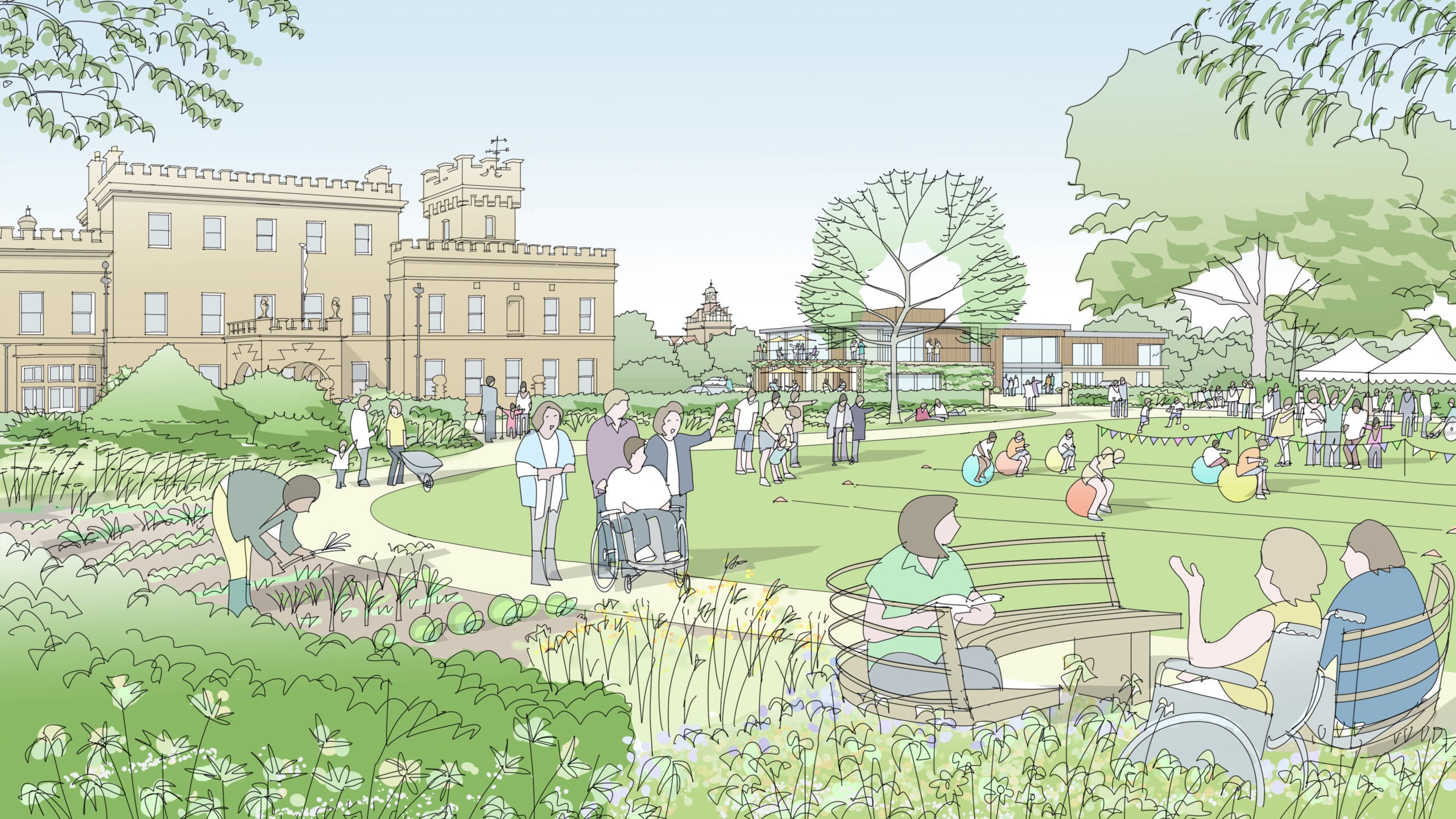
The vision for Grove House.
He says:
“I want to bring Grove House back to life and make it part of the community.
“All of my 28 years in care have led me to this. We are giving back to the community and school. It’s not just about making money; it’s about doing the right things.”
‘Strong regional provider’
Mr Lee, who will be an energetic 57 next month, is eyeing other projects.
He’s bought the former Summer Cross pub in Otley and hopes to get planning permission to convert it into a care home. He’s also looking at a site in Wetherby. But his empire is unlikely to swell much more.
“I don’t want to be the biggest, I want to be the best. I want to be a good, strong regional provider.”
Times, however, are tough. Brexit, he says, has “not had a significant impact” besides the fact that he now employs fewer European staff, but he describes the impact of the cost of living crisis and rising energy bills as “massive”.
“I’ve never known it as challenging in my 28 years. We have increased pay rates by 11% for domcare and fuel allowance by 33% and it hasn’t even touched the sides.”
By contrast, he says some local authorities have only increased the rates they pay private providers by 3%, which he describes as “absolutely unacceptable”.
Read more:
The company is also focusing on staff wellbeing and provides a hardship fund for those in need.
The rise in agency staff is another big change in the care sector, which he attributes largely to evolving work patterns.
“Ten years ago, I didn’t have any agency staff. Now people want to work for four to six weeks and then have a month off.”
Care homes are a major part of the Harrogate district economy but most people, says Mr Lee, make the mistake of not thinking about them until there’s a family crisis. Then they are suddenly forced to make rushed decisions. He says:
“There are so many good care homes on your doorstep here in Harrogate. Go and start looking.”
Mr Lee has two grow-up children from his previous relationship. Son Hugo runs a recruitment company and daughter Rafaela is at university. He now lives with partner Heidi and her three boys.
Away from work, he “plays golf, badly” off a 13 handicap, and is a member of Alwoodley golf club in Leeds. He also enjoys mini-breaks.
He’s come a long way but the 1990s are never far from his mind.
He is close friends with the parents of one of the girls who died and he’s still driven by the promise he made to his mum to look after the business and to keep raising the bar on care homes.
Reassurances issued over ‘onerous’ social care revamp across Harrogate district“I’m totally committed to providing the holy grail of care. I want it to feel like a hotel when people walk in.”
A council has denied claims its scheme to ensure high social care standards has been designed to “weed out” some care providers.
Hundreds of residential and home care providers and day services have been asked to reapply to be on North Yorkshire County Council’s approved care providers lists.
It is the first stage of a huge transformation of the social care market in North Yorkshire.
A meeting of the authority’s care scrutiny committee heard while some £160m of taxpayers’ money was spent annually buying social care services in the county, the current system allowed providers to set their own rates and give few details about their coverage.
Although many local authorities have been able to set rates for providing care as they dominate their area’s care market, about half of care services in North Yorkshire are paid for privately, so the county council has regularly been forced to watch some providers’ rates soar.
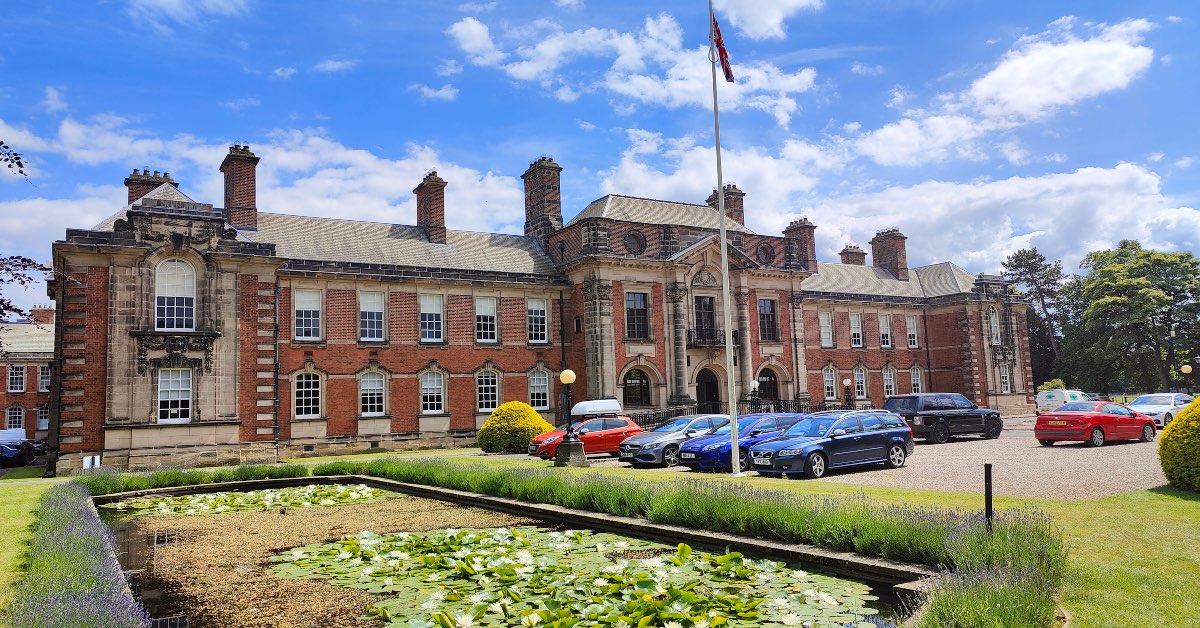 North Yorkshire County Council’s offices in Northallerton.
Councillors were told contracts with care providers would in future be based on a set of service specifications.
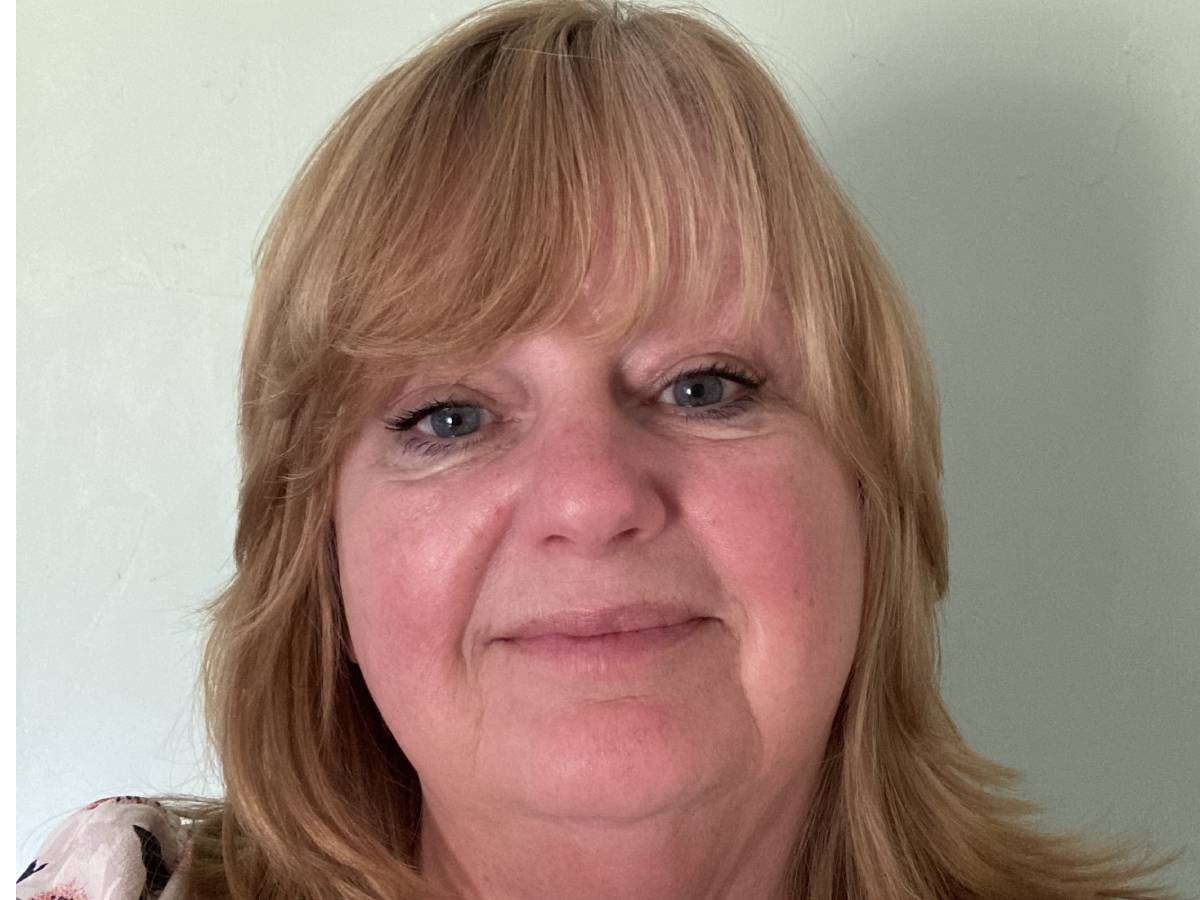
Jill Quinn, chief executive of Dementia Forward.
Committee member Jill Quinn, chief executive of Burton Leonard-based charity Dementia Forward, told the meeting completing the new process to be an approved provider was “onerous”.
She added the process appeared to aim to prevent certain providers from being placed on the lists.
She said:
“We understand why it needed revamping and the need for quality markers. Can we reassure people that are applying that it’s not meant to catch them out and that there will be sympathy and support, otherwise I feel we will lose some good people.
“I’m quite seasoned at this and I’m half-way through doing mine and it really is like quite a job.”
The meeting heard trying to maintain quality standards across 155 care home providers and 225 residential and nursing homes was a huge undertaking for the council.
Cllr Michael Harrison, who represents Killinghall, Hampsthwaite and Saltergate and is North Yorkshire County Council’s executive member for adult services and public health, said the process aimed to identify providers who are able to give the level of service that both the 90,000 residents receiving care and the council could afford.
He said:
“We are wanting to make sure the residents who are receiving social care receive a quality that they and we are happy with. We are absolutely not wanting to weed any providers out. ”
Read more:
- Carers recognised for covid efforts in Harrogate and Ripon at team celebration
- Residents moved from Harrogate care home with rodent droppings
Cllr Harrison said setting clear standards for care was vital, adding the council had moved people out of a residential care home earlier this month after becoming concerned for their safety.
He said:
“That’s a last resort, but it’s also a good example that we’re not prepared just to take any service just because it’s available.
“It’s got to be a service that is safe and appropriate for the individuals receiving it, which include some of the most vulnerable people in society.”
Cllr Harrison (pictured above) said the changes would ensure a transparent process for people to bid for contracts from the county council and confirm providers were getting the funding they need from the authority to be viable and sustainable, including paying their staff a decent wage.
He added:
“We need to make sure what we pay for the service is delivering what we need. Whilst we need to go through the process, we need to make sure that we don’t put providers off from coming on to our approved provider list because the process is too onerous.”
He said in response to the concerns, the council would offer support to any providers that found the process difficult.
Green Shoots: Harrogate care provider buys electric bikes for staffA Harrogate and Knaresborough care provider has bought a fleet of electric bikes to reduce emissions, avoid congestion and boost the mental health of its staff.
My Homecare offers at-home care to around 40 clients in Harrogate and Knaresborough.
Carers can be driving to people’s homes from 7am to 9pm, clocking up “absolutely loads of miles’ and contributing to local air pollution, says Sarah Kemp, care manager at the company.
Visits have also been disrupted over the past few years due to the seemingly endless number of roadworks linked to new housing developments in Harrogate and Knaresborough.
Ms Kemp said:
“Harrogate is quite a big town when you realise how many people you are visiting. We go everywhere from Bilton, Jennyfields and the town centre.
“But if you need to visit people multiple times the miles soon rack up.”
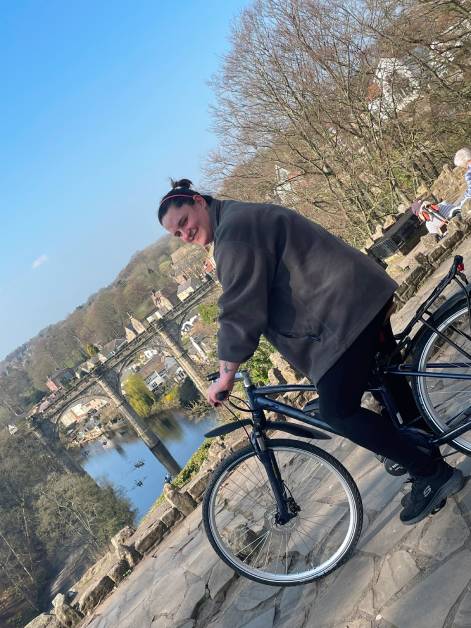
Holly with one of the bikes
More responsive
The Cycle 2 Care initiative began with seven bikes. It will be trialled in Harrogate and Knaresborough and could be rolled out to other My Homecare locations in other parts of the country if it’s successful.
Ms Kemp added:
“Electric bikes will help us be a lot more responsive.”
Read more:
- Green Shoots: Boroughbridge heat pump engineer on his environmental ‘obsession’
- Green Shoots: Harrogate Town’s vegan footballer who is passionate about environment
- Green Shoots: What it’s like to own an electric car in Harrogate
Recruitment boost
Recruitment problems in the care sector have been well documented.
It’s estimated there are around 1,000 jobs available across North Yorkshire, with providers struggling to fill roles.
My Homecare Harrogate believes electric bikes can help persuade carers to come on board and work for them.
It also currently has a small number of carers that don’t have a car, so the bikes will help them get to clients more quickly.
Ms Kemp said she brought up the electric bikes at a recent job interview, and the candidate was impressed.
“The person who we interviewed said no other providers have offered this.
“Nobody is using electric bikes as a recruitment tool the way we are.”
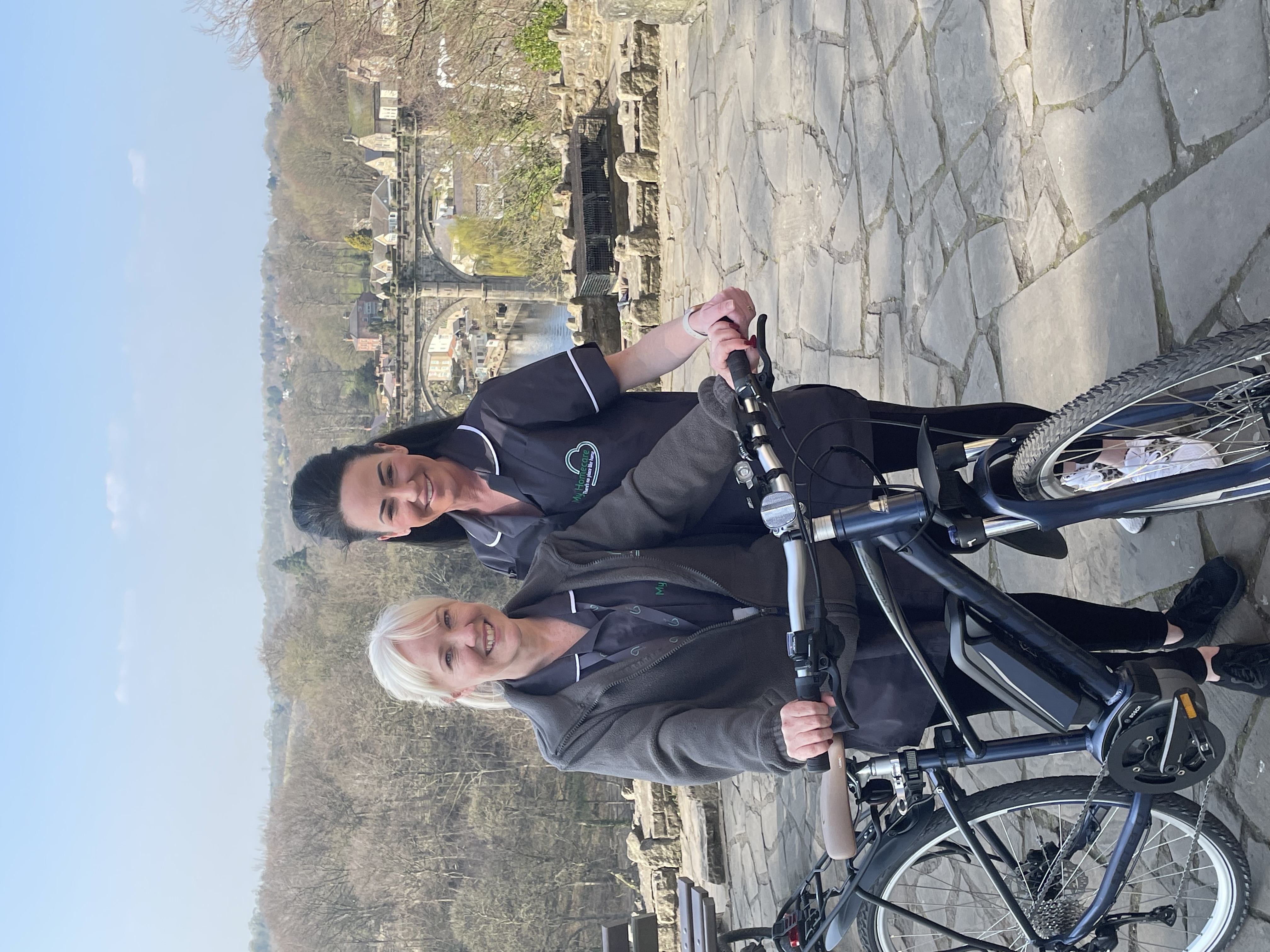
Kim and Clare
‘Greener way of delivering care’
Each carer will have a full induction on how to use the bike and will be provided with a helmet, lights and a lock.
Ms Kemp hopes will not only improve the environment but improve the mental health and wellbeing of staff too.
She added:
Robotic cats to provide comfort for North Yorkshire dementia patients“This hopefully will be a greener way of delivering care.”
Knaresborough Rotary Club has delivered a ‘litter’ of 27 robotic cats to the charity Dementia Forward.
The charity, which is funded by North Yorkshire County Council, provides dementia support across the county.
During lockdown, it launched a ‘cafe in a box’ scheme in which dementia patients receive special boxes tailored to their individual interests.
Robotic cats have been included in the boxes to patients who have been clinically assessed to obtain maximum benefit from robot cat therapy.
Research has found the therapeutic value of robotic cats can be more beneficial than drugs for certain conditions.
The latest delivery takes the number of robotic cats donated by Knaresborough Rotary Club to 50.
Read more:
- Harrogate jigsaw marathon to raise money for dementia charity
- Harrogate hospital invests £110,000 in staff and dementia care
Each robot weighs about the same as a cat and interacts in a lifelike way, creating a calming effect.
They miaow, purr, lick their paws and can become long-term companions to dementia patients.
Jill Quinn, chief executive of Dementia Forward, said people became attached to the cats after the charity trialled them.

Jill Quinn, chief executive of Dementia Forward.
Ms Quinn said:
North Yorkshire care jobs: Alex Slade, Harrogate Reablement worker“They are very lifelike and purr and react when they are stroked.
“They can provide comfort for a person with dementia who is anxious or unable to settle by providing a calming effect.
“One example we witnessed was a woman who was very into arts and crafts, but her dementia meant that she would get anxious and wasn’t able to stay involved in any activity.
“But once we placed the cat on her knee she sat and stroked it – it created a calming distraction which enabled her to stay focussed and enjoy the activity.”
This article is sponsored by North Yorkshire County Council.
Some workers leave the care sector for jobs in retail, but Alex Slade has taken the opposite route and is riding high with a successful and satisfying career in North Yorkshire.
In addition to her work helping those who have been in hospital to live back in the community, Alex has a day each week studying for her Level Three qualification in Health and Social Care, which will help her career progress.
In the meantime, however, Alex, 29, enjoys her role with the County Council’s north Harrogate reablement team because of the positive impact she can have on people’s lives. She said:
“In this team you see people progress and sometimes they can go on to not need care.
“It is lovely to help people become independent again and I find it very rewarding.”
The job can involve, quite literally, getting people back on their feet after a fall, or learning to look after themselves again after a stay in hospital.

She had spent five years working as a one-to-one carer before moving to the re-ablement team, a switch which allowed her to get to know a wider spectrum of people.
It is a very different world from the early years of her career, working in a burger bar at 16 before moving on to shops.
Although Alex finds her main work rewarding, she has a broad sphere of responsibilities, including spending time as an Independence Co-ordinator, conducting assessments to work out the type of help – such as specialist equipment – clients may need.
She also acts as the team’s ‘champion’ for both medication and recycling – working with GPs and their patients to prevent unintended stockpiling of medicines, which could be harmful in some cases, while also encouraging people to recycle waste when her visits are taking place – helping them make a positive contribution to society despite the restrictions they may face.
Alex’s spread of responsibilities, coupled with working towards a higher qualification, reflect the career development encouraged by North Yorkshire’s senior staff. She said:
“My team manager always wants us to be our best-selves and encourages us to do more.”
Read More:
Questions remain as closure of Ripon care home looms
Questions still surround the closure of a Ripon care home more than two months after the care group which runs the home announced the decision.
Skell Lodge, which is owned by the Maria Mallaband Care Group (MMCG), operates from a listed Victorian building on South Crescent.
MMCG told the Stray Ferret in October that the building would “shortly no longer meet appropriate building regulations” so it would need to move residents out before the end of the year.
The Stray Ferret has asked MMCG a number of times what the problem with the building is and whether it would it possible to remedy the problem. We did not receive an answer.
A spokesperson for the care group has, however, since said:
“We can confirm that all residents have found alternative accommodation.
“We have worked hard with the team at Skell Lodge, and our partners locally to ensure residents and their families have been supported and have received the help needed during this difficult period of adjustment.
“It is expected that all residents will be settled into their new homes in time for Christmas.”
Read more:
- Ripon care home set to close in December
- Ripon girl’s suicide not linked to acne drug, inquest concludes
We have spoken to two staff members and the family of a former resident. They all raised concerns about how staff and residents have been treated. They also said they were not aware of any problems with the building.
A spokesperson from the CQC said:
“We are aware that the provider Skell Lodge in Ripon has taken the decision to close the service at the end of this year.
“We are monitoring the situation closely and liaising with North Yorkshire County Council to ensure that people are moved safely to alternative services that are appropriate to their needs.”
A spokesperson for North Yorkshire County Council said:
Major drop in applications for social care jobs across North Yorkshire“The future of the residents and the staff is our paramount concern.
“We continue to work with the care provider and the CQC and with residents and their families to try to ensure the smoothest possible transition for people.”
The gravity of the staffing crisis in social care has been underlined as North Yorkshire County Council launches its biggest ever recruitment drive for the sector.
The number of people applying for social care jobs has plummeted, partly due to yesterday’s introduction of mandatory vaccines for care staff.
A full meeting of the council next week will hear at least three of its executive members highlight concerns over the 70 per cent drop in applications for jobs in social care across the 500 providers in the county since July and providers continuing to go out of business, partly due to staff costs.
On any given day there are at least 1,000 jobs available across the county.
A high percentage of the county’s care homes are in the Harrogate district.
In an attempt to fill the vacancies, providers in the county are offering extra financial incentives to staff to take on the roles, from a £1,500 golden handshake for a care setting nursing role in Northallerton to carers being offered £2,000 for referring three friends.
Councillor Michael Harrison, executive member for adult services, said:
“We have people who have joined us from all different types of experiences, some from the entertainment sector; actors, drummers, from the travel sectors; pilots, cabin crew, and everything in-between.
“There is a great career to be had in care and great stability and we support people who join us with career development. From the word go you can make a big difference to somebody’s life in this job; the work that you do really counts towards improving lives and no two days are the same.”
There are 20,000 people in North Yorkshire working in the care sector, from the 13,000 care and support workers in 500 organisations providing services in residential care and people’s homes through to social workers, project managers and administrators.
The alerts come after the authority said it was having to intervene in a number of care homes to keep them staffed and the government undertook to provide workforce recruitment and retention funding to support local authorities and providers to recruit and retain sufficient staff over winter.
In a statement to the meeting, the authority’s leader, Councillor Carl Les, said:
“I am pleased that as the government launches a nationwide initiative we are undertaking more locally the biggest ever recruitment campaign to attract people into a rewarding and progressive career.”
Read more:
The council has recently warned the situation would only worsen with about 200 fewer care workers in the county due to rules requiring all care workers to be vaccinated.
Before yesterday’s deadline, numerous foreign-born care staff in North Yorkshire had said they would leave the UK if they had to have the covid jab to work.
Pay concerns
Care workers have also suggested the lack of pay progression, with staff with more than five years’ experience being paid just 6p more an hour than those with less than a year in the role in 2020-21 is a cause of recruitment difficulties.
In a statement to the meeting, Councillor Michael Harrison, the authority’s adult social care executive member said the county’s situation reflects fierce competition within the labour market alongside hospitality, retail, heavy goods transport and construction.
He said:
“Pressures are building within nursing, residential home and domiciliary care capacity as a result of workforce pressures within the external market, and we continue to see provider failures in the system.
“Packages of care are being handed back to the council to either re-source or find alternative solutions to keep people safe. This is putting significant pressure on and impacting our in-house provision as we try to find solutions for people or fill the gaps using staff from our services.
“This is impacting our ability to provide re-ablement and respite services. Complex care packages are being handed back at short notice alongside those requiring two carers or in more rural locations. In addition we are seeing care home providers withdraw from providing nursing care or withdraw completely from the market.”
Warning of “difficult choices” in the upcoming Budget, the council’s finance boss Councillor Gareth Dadd will tell the meeting that securing the necessary workforce remains acutely challenging.
In an attempt to ease staffing pressures, the council is working with providers and has just launched a recruitment campaign focusing on the diversity of career opportunities in care.
Coun Harrison said:
“We are working with providers and partners to look at options and ideas to work more efficiently and promote people’s safety should we not manage to recruit more people to the sector.
“A system plan is in place with short, medium and long term actions to address issues relating to workforce, which includes capacity for registered manager support to care homes, recruitment to reablement, and recruitment to NHS posts to ensure sufficient intermediate capacity is available to meet the growing demand.”