Two gritters powered by electricity are to join North Yorkshire’s winter fleet to save money and reduce carbon emissions.
The North Yorkshire County Council-owned company NY Highways has bought the gritters, which are supplied by Dorking-based Bucher Municipal.
According to the council, the vehicles have an anticipated fuel saving of up to 20 per cent compared to standard, diesel-powered gritters. It said in a media release:
“The gritting bodies which deploy the salt will run on an electric battery that can charge in just over 30 minutes. The battery will be able to do multiple runs before needing to be recharged.”
North Yorkshire has a 5,753-mile network of roads. The council’s winter gritting programme to maintain key routes lasts from October to April.
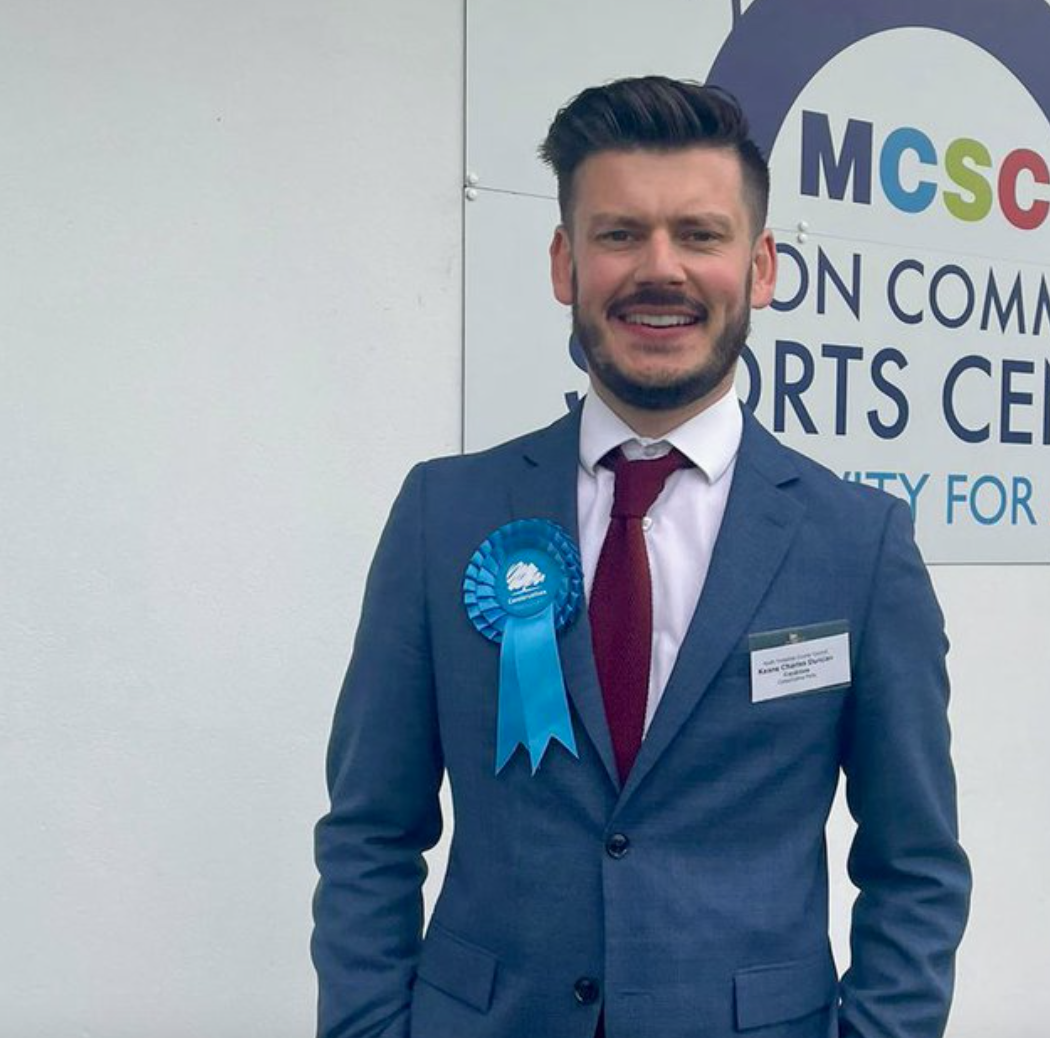
Cllr Keane Duncan
Cllr Keane Duncan, the council’s executive member for highways and transportation, said:
“The electric-bodied gritters are a first for the council’s winter service delivery.
“Innovation is high on our agenda and it is another way we are showing our commitment to achieving net carbon neutrality by 2030.
“The two gritters don’t have any hydraulics which mean there’s less chance of mechanical failure. This increased reliability is vital when we are against the clock trying to deliver the best winter service that we can.”
Picture shows: From left, Andrew Park and Chris Mitchell of Bucher Municipal, Nigel Smith, head of highway operations at North Yorkshire County Council, Rory Hanrahan and Craig Winter of NY Highways, and Mike Francis, operations manager at NY Highways.
Read more:
- Calls to grit more Harrogate district roads set to be rejected
- Harrogate hospital plans new £14m operating theatres
‘Sink or swim’ for North Yorkshire bus routes over next six months
North Yorkshire’s transport chief said the next six months will be “sink or swim” for some bus routes amid a lack of funding from central government.
Cllr Keane Duncan, executive councillor for transport at North Yorkshire County Council, said while £336,000 from government for bus services was “better than nothing”, it was a fraction of the £116 million previously asked for by the county council.
The Department for Transport awarded the council the funding to help with staff capacity in its enhanced partnerships team, which helps to draw up funding bids and works with operators.
The figure is significantly less than the £116 million bid made under the council’s Bus Services Improvement Plan earlier this year, which ministers turned down.
Cllr Duncan said the authority would continue to “face up to immense challenges” of maintaining bus services. He added that for some routes, it will prove to be “sink or swim”.
Cllr Duncan said:
“£336,000 is obviously better than nothing. But putting this into perspective, this is equivalent to less than 0.3% of our original £116 million Bus Services Improvement Plan bid.
“This is a pretty gutting state of affairs for the team who worked on our bid. I can’t hide that. Sadly, the fund was significantly oversubscribed and we were one of several authorities to miss out.
“The task now is to make the most of where we’re at. The enhanced partnership met earlier this month for the first time. This was a very positive meeting, with representatives of all of the county’s operators in attendance.
“We are facing up to immense challenges over the next six months, which will prove to be a sink or swim period for many routes.”
Read more:
- Harrogate park and ride ‘still possible’ despite £116m funding failure
- Harrogate park and ride plans could finally be revealed next year
- Government awards North Yorkshire £336,000 bus grant
Cllr Duncan added that the council would continue to look at improving bus services, despite having its multi-million pound funding bid rejected.
He said:
“It is only by the council and operators working closely together and sharing intelligence that we will be able to face up to these immediate challenges facing our network, protecting existing services as far as possible while making steps forward to improve the service provided to the public.”
Ahead of awarding the council staff capacity funding, the government said the grant would help it continue to work with bus companies.
In a letter to council officials, it said:
Harrogate district planning rules could be ‘radically streamlined’“We understand that this funding does not replace Bus Services Improvement Plan funding to spend on transforming your bus services.
“But we do hope it will help to support your ongoing work with operator partners, especially working through an enhance partnership or franchising arrangement, to deliver better bus services (whether they are commercial or tendered) and enable you to use local bus funding to best effect and attract future bus funding as it becomes available.”
Businesses in the Harrogate district could receive major tax cuts and fewer restrictions on building as part of a government announcement today.
Ministers revealed North Yorkshire County Council is one of 38 local authorities it is talking to about becoming investment zones.
The government has said the zones will “will drive growth and unlock housing across the UK by lowering taxes and liberalising planning frameworks”.
However, a union has warned they could lead to poorer public services and a race to the bottom on employment terms.
The government has written to local leaders in every part of England inviting them to begin discussions on setting up zones in their area. Conservative-controlled North Yorkshire County Council was today confirmed as one of 38 that are keen to be involved.
The government has said the zones will receive lower taxes and ‘radically streamlined’ planning rules.
Businesses will get 100% business rates relief on newly occupied and expanded premises, full stamp duty land tax relief on land bought for commercial or residential development and a zero rate for employer national insurance contributions on new employee earnings up to £50,270 per year.
To incentivise investment, there will be a 100% first year enhanced capital allowance relief for plant and machinery used within designated sites and accelerated enhanced structures and buildings allowance relief of 20% per year.
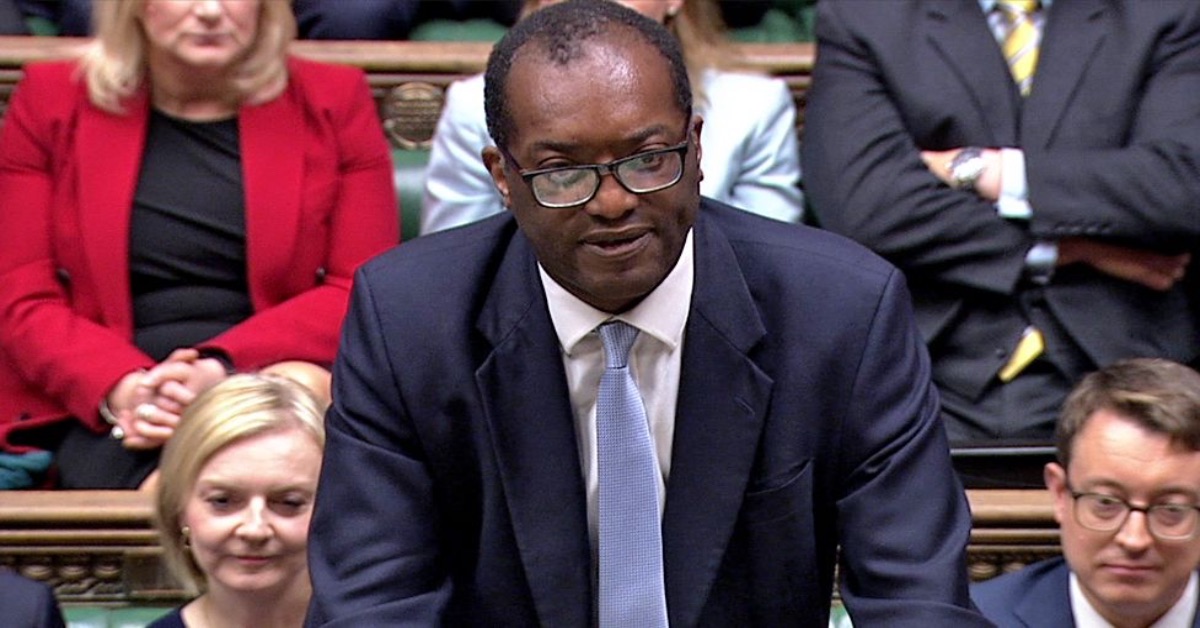
Kwasi Kwarteng
Chancellor Kwasi Kwarteng said:
“That is an unprecedented set of tax incentives for businesses to invest, to build and to create jobs right across the country.
“If we really want to level up, we need to unleash the power of the private sector.”
‘Race to the bottom’
But the zones, which build on the government’s freeports initiative, was criticised by the North Yorkshire branch of Unison.
A spokesman for the union said:
“Our nervousness, which is probably shared by residents of North Yorkshire, is around a race to the bottom by deregulation.”
The spokesman said the zones set local authorities against each other and would be bad for public services, as well as ushering in a “lower standard of planning”.
He also warned it could lead to businesses in non-zone areas cutting wages and standards to compete. He added:
“I don’t blame local authorities for applying but what we need from government is a strategy that goes for a high skill, high wage economy rather than pitting one local authority against another.”
North Yorkshire County Council has been approached for comment.
Sneak Peek: The Secret Bakery, Knaresborough
Harrogate’s The Secret Bakery has expanded and launched a second branch in Knaresborough.
The shop and cafe, in Market Place, sells baked goods, including artisan bread, cakes and sandwiches, which are all made at the Knaresborough Road site.
The new outlet, which also serves drinks, including coffee, is being run by the bakery’s co-owner Jane Spencer, a former teacher from Keighley.
She said:
“This shop used to be The Reading Room and we used to deliver bread here from our shop in Harrogate. When they decided to close, we thought it was a great opportunity for us to open in Knaresborough
“A lot of our Harrogate customers come from Knaresborough, so it’s nice that we can be here.
“I would say our most popular product is our bread, particularly our sourdough. People come from all over to buy it. Our cakes and scones are also really popular.”
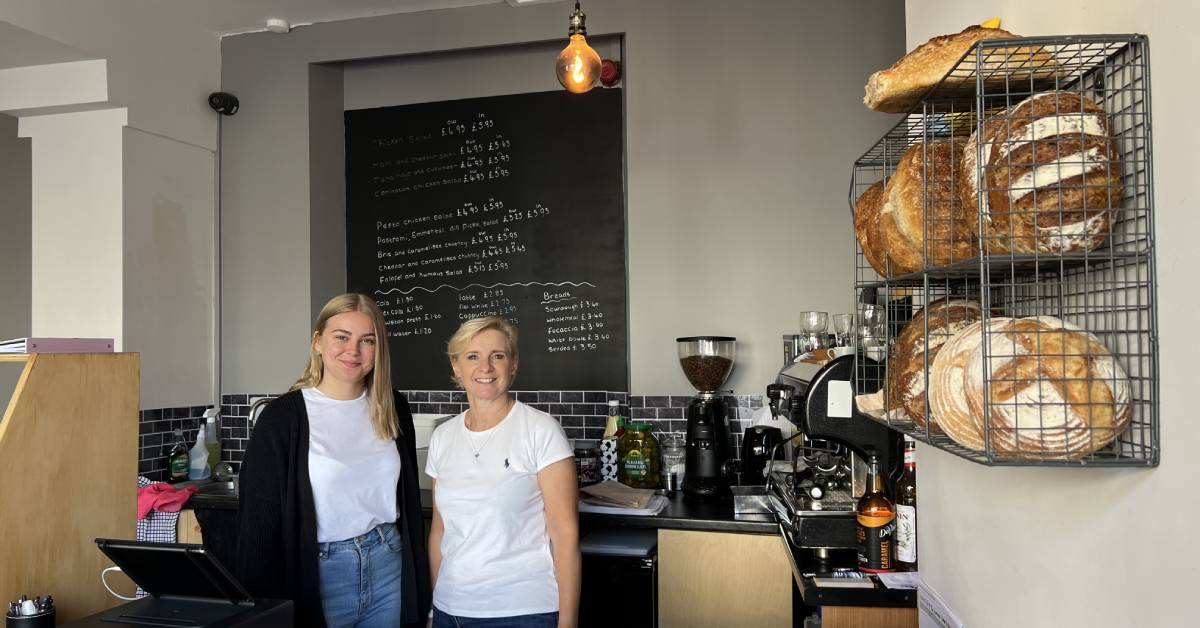
Jane Spencer (right), co-owner of The Secret Bakery, Knaresborough and Aime McNaught in the new shop and cafe.
Opening hours are currently under review, but the aim is to eventually open seven days a week, from 8am until around 4pm and from 10am on a Sunday.
Read more:
- Hidden gem: Harrogate traditional bakery on the rise
- Red telephone box in Knaresborough transformed into tourist information hub
Mrs Spencer and her husband James bought The Secret Bakery in November 2020.
The business is continuing to grow, with work starting next week to develop the Harrogate site.
Mrs Spencer said:
“It will give us some more space in the back to make all the bread and cakes and everything.
“We are also going to be opening later from Thursday through to Sunday and offering things like bread and dips. We will also be serving alcohol.”
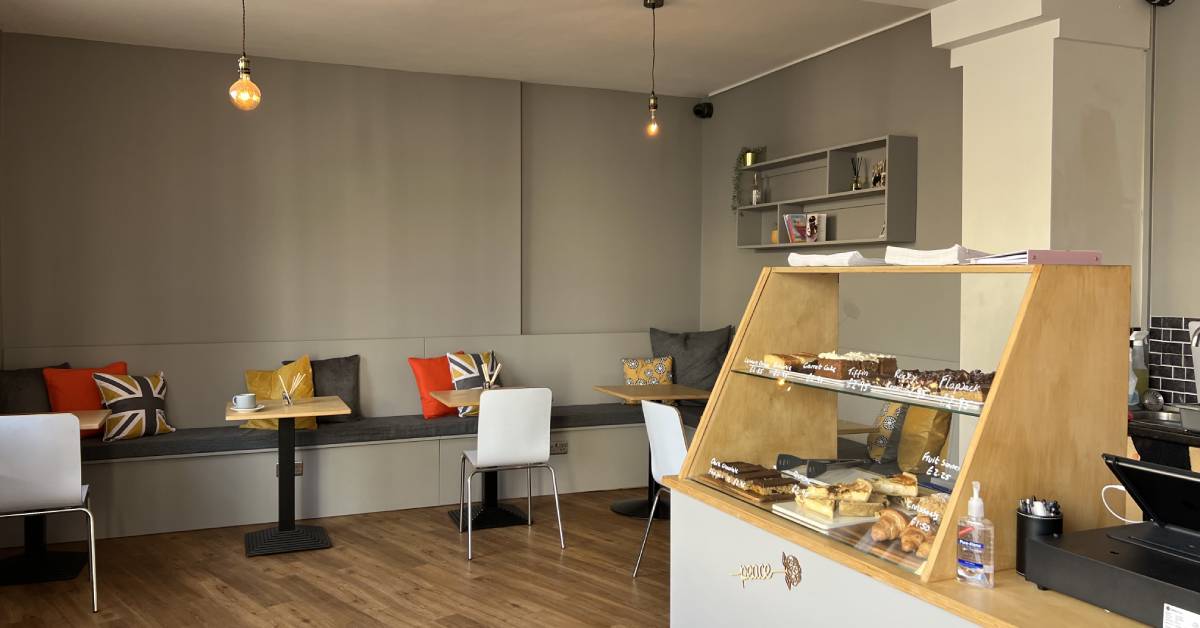
The cafe area at The Secret Bakery, Knaresborough.
Two Ridings Community Foundation has launched a fund aimed at helping communities in North Yorkshire as the cost of living crisis deepens.
The charity is set to open applications for the fund next month and has already received £210,000 worth of pledges towards it.
The fund will give grants to groups who provide practical, financial and emotional support to people struggling to manage bills, with their day-to-day existence and the emotional impact of constantly worrying about finance, debt and their loved ones’ wellbeing.
It comes as people across the Harrogate district have seen energy bills increase and inflation hike the prices of goods and services.
Two Ridings Community Foundation is one of 47 community foundations in the UK which co-ordinate local charitable giving. Its new initiative will help people in north and east Yorkshire.
James Lambert, founding donor of the crisis fund and high sheriff of North Yorkshire, urged others to donate to the fund.
He said:
“As a local businessman I urge everyone who can to donate to this crucial fund.
“As high sheriff I have seen the amazing work that local charities do and know that any money donated is used wisely and well, where it is most needed.”
Read more:
- Community invited to ‘fill up a parking space’ with food amid cost of living crisis
- Vulnerable people in Harrogate district having sleepless nights over rising bills
The fund will also ensure charities can cope with the impact of the cost of living on their own costs, so they can continue to offer support.
The fund will open for applications from North and East Yorkshire community organisations from early October 2022. Full details will be available on the Two Ridings website.
Double North Yorkshire council tax on second homes set to go aheadSecond home owners in North Yorkshire look set to be the first in the country to pay double council tax.
It comes after an investigation into avoidance loopholes concluded there is potential for the charge to be avoided.
In an attempt to help improve access to housing for local people, North Yorkshire County Council’s executive will on Tuesday consider launching a 100% council tax premium on second homes and premises which have been left empty for a year or more from April 1, 2024.
The move follows last year’s North Yorkshire Rural Commission recommending a charge is levied on second homes and used to finance affordable housing, helping to reverse the ongoing exodus of young families from areas where house prices are many times above average wages.
Two months ago the authority’s leading members postponed a decision on the premium after numerous concerns were raised about whether it would encourage council tax avoidance, for instance by second home owners transferring properties transferring to business rates.
Some opposition councillors have claimed the premium will prove difficult to implement while people who have owned properties in the county for decades say the move will simply make second homes the preserve of the rich.
In a report to the executive, officers forecast more than £14 million a year could be raised from using the levy being introduced by the government in the Levelling Up and Regeneration Bill.
Read more:
- Harrogate district second home owners face extra council tax charge
- Second homes council tax premium plan gets mixed reception
- 793 Harrogate district second-home owners face double council tax charge
Research has shown Richmondshire could generate about £1.8 million through the premium, while the Craven, Harrogate and Ryedale areas could each provide about £1.5 million in extra revenue. Hambleton could provide £1 million and the Selby district a further £260,000.
Addressing the concerns over tax avoidance loopholes, the report states that because council tax rates for second homes mirror those of main residences there may be issues with the classification of properties and the application of a second homes premium “may prompt owners to reclassify properties for genuine reasons”.
The report highlights that properties only need to be available to let for more than 20 weeks in a year to be classed under business rates and that the only detail needed to support such a claim is evidence of an advertisement for let for the property.
From April second homeowners must also prove the property was let for short at least 70 days.
The report states the council would use “mechanisms available” to clamp down on couples who own second homes and falsely claim they are living separately and warns of financial penalties if bogus information is provided.
Officers added while the proportion of second homes in Wales paying the 100 per cent premium had fallen by up to nine per cent since being introduced there in 2017, it is unclear whether the downward trend has been caused by avoidance loopholes or by bringing second homes back into use as housing.
Ahead of the debate, the authority’s Green Party group coordinator, Cllr Andy Brown, who represents Aire Valley, said areas faced “being hollowed out of permanent residents” and there was a strong case for raising the council tax not just on second home owners, but “anyone who rents a property out using short term online letting companies”.
He added it would take skill to design a local property tax to impact on rarely used second homes rather than North Yorkshire’s expansive tourism industry.
Myrings partners with Martin House on Harrogate charity boards
This story is sponsored by Myrings.
Harrogate’s Leading Family Estate Agent Myrings has partnered with Martin House Children’s Hospice to support families with its new charity boards initiative.
Martin House provides hospice care for children and young people with life-limiting illnesses free of charge across North, West and East Yorkshire.
To support Martin House, Myrings will donate £10 for every “for sale” or “to let” board in Harrogate and the surrounding villages.
The new charity initiative is starting now so residents will start to see the new Martin House boards popping up soon and it will continue for the foreseeable future.
Gemma Myring, co-founder and director at Myrings, told the Stray Ferret:
“Martin House is a big part of Harrogate and has touched so many lives.
“We simply cannot praise the staff and volunteers enough. The hospice provides selfless dedication and love to those who need it most.
“It has been one of the guiding principles at Myrings from the day we opened our doors to ‘put something back’ into our hometown where we all live and work.
“Myrings has been in the property business for more than 20 years. It’s a long time but not close to the 35 years Martin House has faithfully served our community.”
Myrings has adapted many times over the years, investing heavily into the website and software.
However, the estate agents believes that a welcoming, dedicated and individual service is greatly valued by Yorkshire people so has recently remodelled its offices to allow for a more personal and private client experience.
Please look out for the new Myrings and Martin House boards over the coming months – and call in to see the team for a chat and a coffee soon.
North Yorkshire Police progress on stalking ‘positive’ but needs more detectivesNorth Yorkshire Police are better at dealing with stalking cases than they were a year ago, according to the force’s head of safeguarding.
However, Detective Superintendent Fiona Wynne was concerned that the size of the team currently dealing with the issue was “impacting investigations of stalking”.
The team is currently made up of one detective and two stalking support officers.
North Yorkshire Police said 2.3 million people experience stalking in the UK in a calendar year. The average case lasts for 15 months.
Det Supt Wynne made the assessment while reviewing the force’s 2022 stalking audit at the monthly accountability meeting chaired by Police, Fire and Crime Commissioner Zoë Metcalfe.
Ms Metcalfe secured £100,000 from the government for the force to carry out the review.
Compared to the 2021, there were “positive increases seen in almost all areas” of how stalking complaints were dealt with in the force control room.
Call handlers were reported to be better at identifying incidents of stalking and knowing how to respond to complainants.
Issues remained, though, with how stalking was logged on the police’s computer systems.
The lack of specialist detectives also meant some low- and medium-level cases could not be dealt with by the stalking team.
Read more
- Knaresborough stalker jailed for 14 months
- Gay man says Harrogate police take women victims of stalking more seriously

Zoë Metcalfe, North Yorkshire Police, Fire and Crime Commissioner.
“Additional suppressed demand”
North Yorkshire Police predicted that the number of stalking cases would continue to increase.
Part of this was expected to be to victims coming forward detailing historical stalking incidents.
Det Supt Wynne said:
“14% of those [stalking and stalking-related] offences [in 2021] were… historical offences, non-recent offences of stalking. That basically means that there is an additional suppressed demand which we may see unfolding as the years go on.”
Det Supt Wynne also pointed to the fact that more stalking was now being done using digital technology.
Stalkers were also reportedly using digital devices more often. This included using wireless connections to listen into people’s smart speakers and baby monitors.
The force is working with the personal safety charity the Suzy Lamplugh Trust, which provides help and advice on stalking.
North Yorkshire yarn shops unite for ‘Yarnstravaganza’ trailIndependent craft shops in North Yorkshire are coming together to launch a yarn trail across the county to encourage people to buy local and get into knitting.
The North Yorkshire Yarn Trail is running between September 17 and 24.
Thirteen shops will be taking part, including Yarn etc and the White Rose Sewing Machine Co in Harrogate, Knitting Pretty in Knaresborough, and Masham’s Each One Unique.
The trail is happening as part of the UK Hand Knitting Association’s first ‘Yarnstravaganza’ where wool shops nationwide host special knitting-related events.
The shop owners hope it will encourage people to use local businesses and not buy their materials on the internet.
Fiona Burks, who owns Yarn etc. on Knaresborough Road, said:
“We’re trying to keep people offline. It’s a very tactile thing, buying wool. It’s the colour, it’s the feel, the texture. It’s an experience.”
People who want to take part can pick up a “yarn passport” at a participating shop. They then get a stamp for each one they visit.
Anyone who visits all 13 shops will be entered into a prize draw. The winner will receive a £100 voucher to spend in the participating wool shop of their choice.
Read more
- Knitting show gives Harrogate economy £2m boost
- Knaresborough’s 30,000 knitted poppies honour the dead
- ‘Hidden gem’ Knaresborough knitting shop stocks more than wool

The yarn trail will take in 13 shops across North Yorkshire (photo: North Yorkshire Yarn Trail)
Ms Burks also wanted to promote what she saw as the mental health benefits of knitting. She said:
“To knit or crochet, you need to spend time and process and there’s lots of repetition. It’s really quite a good and meditative thing.”
Along with Sharon King, who owns fellow participating shop Ewe and Yarn in Thirsk, the Yarn etc owner had the idea for a yarn trail a few years ago. However, the pandemic delayed their plans.
Both were inspired by trails they saw being run by wool shops in the United States. Ms Burks said:
Report says North Yorkshire mayor will ‘promote local democracy’“The ones in America are just huge. They cover big areas but they’re amazing… They have these wool shops and they’re huge. They have cafés in them – basically, they’re absolutely brilliant.”
A review of proposed sweeping changes to local government in North Yorkshire and York has concluded having an elected mayor and a combined authority “will promote local democracy”.
The claim, in a report to a meeting of North Yorkshire County Council’s executive on Tuesday, comes ahead of an eight-week public consultation over the devolution deal that local authorities have struck with the government alongside local government reorganisation.
Concerns have been raised repeatedly by councillors in North Yorkshire that the substitution of the county’s district, borough and county councils for a single unitary council and a mayor-led combined authority will erode residents’ ability to shape key decisions.
Earlier this month, Independent Cllr John McCartney said many residents engaged in local democracy felt “irked and discombobulated” as their local councils were being swapped for a remote one in what he described as “a power grab” by county hall in Northallerton.
Independent group leader Cllr Stuart Parsons described the potential substitution of hundreds of district and borough representatives for two North Yorkshire and two City of York councillors on a combined authority as a blow for democratic representation and decision-making.
Green Party group coordinator Cllr Andy Brown said devolution “did not appear to be a great exercise in democracy” in the county.
However, the officer’s report to the executive highlights how local government reorganisation was a prerequisite of devolution, which under the proposed deal would bring £540m of new government investment to spend on local priorities.
The report states:
“The deal means that decisions previously taken centrally would now be taken closer to the people affected and the region is not disadvantaged as other regions acquire their own devolution deals.
“The proposed mayoral combined authority will promote local democracy through direct democratic accountability. The introduction of a directly-elected mayor will enable a greater focus for change that will seek to enhance economic growth.”
Read More:
- North Yorkshire devolution concentrates power into ‘hands of few’
- Mayor for North Yorkshire agreed in £540m historic devolution deal
- Explained: What is North Yorkshire’s combined authority?
The county council’s leader, Cllr Carl Les, said the consultation would see the authority argue very strongly that the devolution deal would see more decision-making by locally elected politicians, rather than civil servants and ministers in Whitehall.
He said while much of the structure of local government in North Yorkshire would not change, the most notable differences would be having an elected mayor to act as a strong voice for the county and city and a combined authority to provide strategic decision-making.
Addressing concerns over local democracy, Cllr Les said while all residents would continue to a locally elected councillor to represent them, the council was in talks with a number of parish and town councils about what services they would like to have jurisdiction over.
He said there was “nothing on or off the table” in terms of the powers towns and parishes could take on.