Thank you for your interest in this story
To continue reading this article, sign up today to unlock exclusive content and be part of our community discussions
- Exclusive discounts
- Enjoy commenting on local issues
Already a subscriber? Log in here.
16
Jan 2023
Harrogate Borough Council prevented from any major new spending schemes
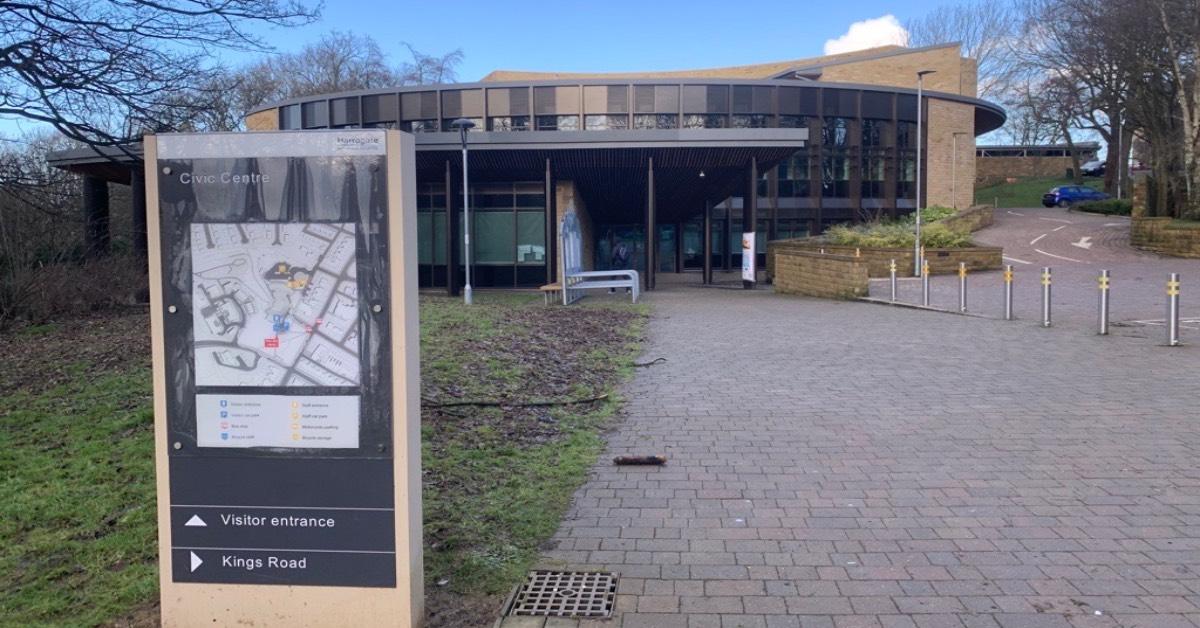
Harrogate Borough Council offices at Knapping Mount.
North Yorkshire’s seven district and borough councils have been told any new major spending schemes they approve will not be ratified before they are abolished.
North Yorkshire County Council has written to the second tier councils, including Harrogate Borough Council, stating there is insufficient time before the new unitary North Yorkshire Council is launched on April 1 for it to consider the raft of large-scale schemes being submitted.
The decision is likely to come as a blow to many of the district authorities, which had been told they would continue to have a significant jurisdiction until Vesting Day, operating and making significant decisions for their residents, businesses and visitors.
Under the structural change order for local government reorganisation in North Yorkshire, which was laid down by the Department for Levelling Up, Housing and Communities last May, the district and borough councils were given a legal requirement to request approval for some financial decisions.
It was underlined the district councils would be given “general consent” to approve smaller scale schemes, but the sanctions for not complying with the consent regime would be “severe”.
District and borough council schemes in recent months have seen elected members discussing a range of proposals to boost housing, leisure facilities, infrastructure and financial support for communities, many of which involve using their reserves ahead of the councils being scrapped.
For example, last week Richmondshire District Council approved a move to spend up to £240,000 on further repairs to Richmond swimming pool, a scheme which will need the county council’s consent.
Read more:
- New council chief questions future of Harrogate Convention Centre
- Revealed: the Harrogate areas set for new council tax charge
Numerous district councillors have spoken openly in meetings about their determination to spend their council’s coffers in the area in which they were raised, rather than allowing North Yorkshire Council to inherit and distribute them across the expansive county as it sees fit.
However, the county council’s leadership says the district council’s reserves could be needed to cover the costs of providing essential services for vulnerable people, such as social care.
The letter to the districts states the county council had expected giving general consent for smaller schemes would reduce the bureaucratic burden on it, but instead the district authorities had continued to submit a large and unmanageable number of spending requests for approval on a weekly basis.
It states:
“We are now less than three months from Vesting Day for the new council, so the majority of schemes that were requested, and were not foreseen as part of the general consent, are likely to be capable of being delayed until post Vesting Day, when the new North Yorkshire Council can consider the matter.
“In addition, there is a duty on all councils to prepare for the new council and additional schemes at this stage are likely to seriously erode the capacity of councils and their staff to be able to provide the level of support desirable.”
The letter highlights how North Yorkshire Council is facing a large revenue deficit again next year and beyond, as well as unquantifiable risks on hundreds of millions of pounds of infrastructure plans.
It adds:
“It is therefore important that resources are able to be directed to those principal area of responsibility including those commitments, deficits and projetcs bequeathed by all eight councils across North Yorkshire.”
'Petty and wrong'
The letter says it has “been determined that no new section 24 requests will be considered, unless it is exceptionally urgent spend which endangers normal service delivery...”.
Nevertheless it adds:
“This does not mean that those schemes are rejected, merely that they are subjected to full consideration by the new North Yorkshire Council from April 1 onwards. Those that have already been submitted will be considered in due course.”
Leader of the opposition on the county council, Cllr Bryn Griffiths, said the county council’s move was short-sighted.
He said:
“Blocking the districts and boroughs using their own monies to fund schemes, which will support their own residents, is I feel just petty and wrong.
“It smacks of the Tories at County Hall not being democratic and trying to cream off the districts’ and boroughs’ money to shore up their own pet projects. They are using a sledgehammer to crack a nut.”
0