Harrogate has been ranked as the most expensive place for first time buyers in Yorkshire in a survey published today.
The survey shows homes in Harrogate typically cost £401,747 compared to the national average of £287,830.
With residents typically earning £34,634 a year, a couple who’d saved a 15 per cent deposit would need to borrow 4.93 times their salary for a mid-market home.
This ranks Harrogate as the 21st least affordable place in the UK in a list of 100 locations analysed by online mortgage broker Mojo Mortgages.
The top 20 most expensive towns and cities are all in or around the south of England, apart from Stratford-upon-Avon in 18th. Bath is the most expensive place, followed by Oxford and London.
Read more:
- Harrogate house prices soar in just one year
- House prices in North Yorkshire increase by 22.8% in a decade
The survey ranks York (4.7), Wakefield (3.81) and Leeds (3.56) as the next least affordable locations in Yorkshire after Harrogate.
Hull is the UK’s most affordable location, with 2.03 of a couple’s average income multiple required, followed by Bradford (2.35) and Barnsley (2.59).
The full research is available here.
A Taste of Home: Grantley Hall’s Shaun Rankin and his triumphant return to North Yorkshire
I can still remember watching Shaun Rankin make his famous treacle tart on The Great British Menu in 2009.
I used to be a regular viewer of the BBC 2 series back in the day — and like Greg Wallace, I never forget a good pud.
So I was genuinely looking forward to meeting the Michelin Star chef, who has returned to his North Yorkshire roots at the helm of his eponymous restaurant at Grantley Hall.
I managed to get lost on my way to the Grade II listed luxury hotel, despite being there twice before. And using a sat nav. So we had a good laugh about my terrible sense of direction, before we sat down for a coffee in the dining room.
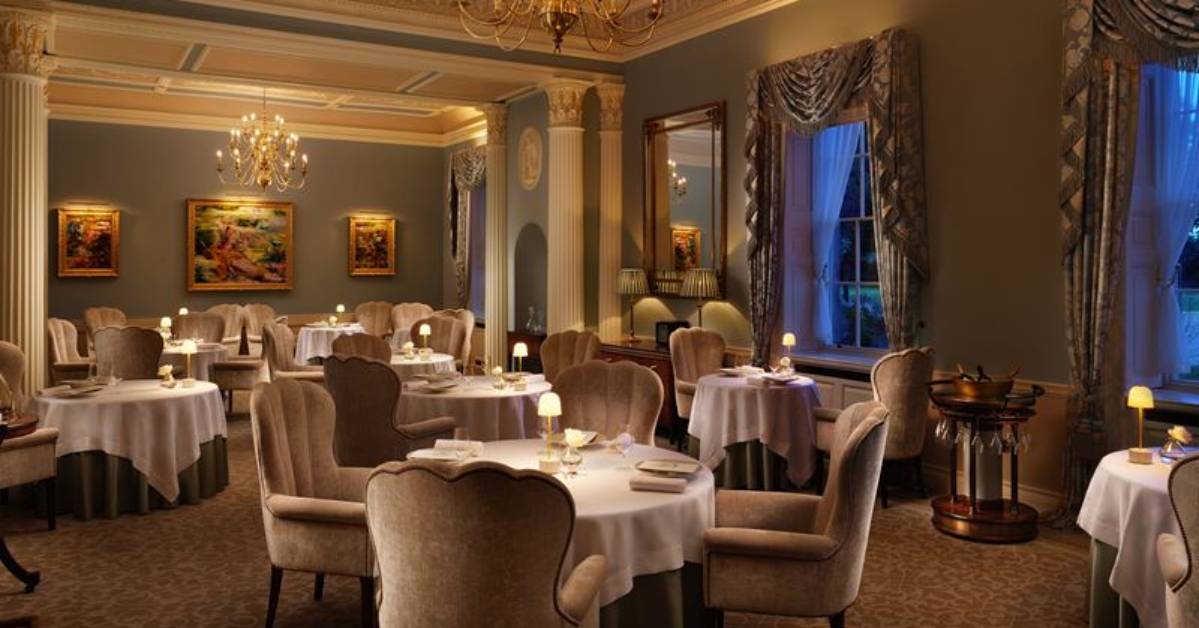
It was certainly an opulent backdrop for an interview. The sprawling estate on the outskirts of Ripon was established at the end of the 17th century, its Palladian-style mansion boasting a rich history having been home to lords and ladies and hosted countless society dinner dances. So the restaurant, which was once a ballroom, is obviously a grand affair. Definitely Bridgeton territory.
Shaun Rankin at Grantley Hall. Photograph: Jack Hardy.
Yorkshire lad
Born in Richmond, Shaun, who turns 50 in March, is a Yorkshire lad.
He knew from an early age that he wanted to be a chef, often cooking with his mother at home in County Durham, where he grew up.
He said:
“Every chef always says their mum was a good cook. And she was. She was a great baker. She was one of those ladies who cooked on a Sunday. I used to help her with her Sunday roasts and make Yorkshire puddings, mash the potatoes and all that kind of stuff at the age of 13 or 14.
“I used to help make scones, apple pies, mince pies and things like that. And those things were used at the beginning of the week. So Monday, Tuesday, Wednesday, all the bakery products were then used to feed you through the week.
“It was quite a simple upbringing. Mum and dad were divorced, so it was only mum that brought me and my brother up.”
At the age of 16, Shaun went to London to complete a three-year apprenticeship at the five-star May Fair, Ritz and Savoy hotels in London.
He said:
“I went to London as a bit of an escape. From the world of simple things really.
“It opened your eyes to luxury, to food, restaurants and the scene of hospitality. Things you’d never seen before in your life. Things you’d only seen on TV or read.
“That’s where I kind of cut my teeth.
“At that age I didn’t know what a Jerusalem artichoke looked like. So it was a learning curve from all aspects — it was life-changing.
” I liked the idea of cooking, so then from there it just became a passion.
“It just becomes your life. You get so enthralled in it all, that you just get carried away with it.”
After completing his apprenticeship, he returned to North Yorkshire in 1992 to work at one of the most prestigious restaurants in the UK at the time, the Black Bull in Moulton, near Richmond.
He said:
“That was a notorious fish restaurant, so I learned lots about fish, lobster, crabs, langoustines. All those really fab ingredients from the coastal areas.
“I was there for about two years and then the head chef said to me ‘it’s time to go’. So he found me a job in Jersey.”
Turning point
Shaun went on to spend much of his career in Jersey, eight years of which were dedicated to the Relais and Chateaux Hotel Longueville Manor. He opened his first restaurant as head chef, Bohemia in 2003, gaining a Michelin Star two years later.
In 2013, after nine years at Bohemia, the rising star went on to open the much-awaited Ormer in Jersey, winning a Michelin Star just four months later. In 2016 he opened its sister restaurant, Ormer Mayfair, bringing the tastes and produce of Jersey to London.
Fondly reminiscing about his time in Jersey, he said:
“That just opened my eyes again to what a different world we live in. Island life. I really fell in love with ingredients.
When you are island-locked, you start to understand exactly what is in abundance and what is sustainable and the carbon footprint of the produce that you use. You’ve got to be shipping in a lot of your meat protein because it’s unavailable on an island.
“But you understand the asparagus grower, the strawberry grower, the guy that grows the watercress, the Jersey Royal is phenomenal, all the vegetables that are grown on the island.
“So you really get a sense of community and you understand what goes into the produce and how hard it is to produce.
“That’s where the whole thing changed for me. As a 22-year-old it kind of clicked. And I knew this was the path, it’s all about ingredients, it’s all about respect for it and you need to try and bring this carbon footprint down.”
Read more:
- Ripon’s Grantley Hall wins first Michelin Star
- Four wellness retreats in the Harrogate district to re-energise mind, body and soul
- Harrogate vegans on Veganuary, restaurants and why they chose plant-based diets
Sustainability
And it is this sustainability approach that he has brought with him to Grantley Hall.
He said:
“The food philosophy has to be that produce is sourced from all around Yorkshire. Of course we go to the coast to get seafood and we go to Scotland to get shellfish, but 95 per cent of the time everything is from a 20 to 30 mile radius and that’s our platform.”
Shaun uses R&J farmers and butchers, from Kirkby Malzeard, and Farmison butchers, based in Ripon, to source meat.
He said:
“All the cattle is full breed and full carcass cut, so that means there is no wastage and that’s really important for us.”
Shaun also uses ingredients from the kitchen garden at Grantley, which supplies 70 per cent of the restaurant’s produce throughout the year.
He added:
“For the rest of it we forage. Things which are around us like rosehips, elderberries, elderflowers, pineapple weed. All these things that are around the areas and local to us. We use those and we create the platform for the dishes.”
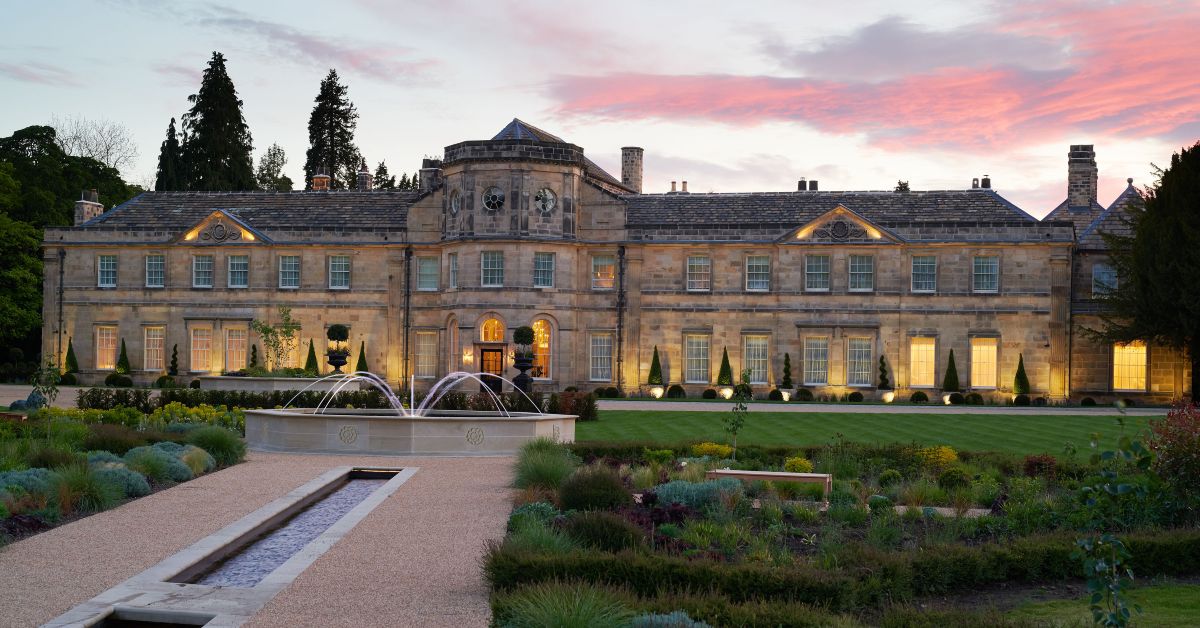
The restaurant is set within Ripon’s 17th century mansion, Grantley Hall. Photograph: Jack Hardy
In fact, if it’s not from the UK, it won’t make an appearance on the menu. This is something he takes a tough stance on.
He said:
“We don’t use olive oil, we use rapeseed oil, we use all of these substitutions all the way through. We don’t use or make pasta, because it’s not what we are.
“Everything is very traditional but reflected in a different modern cooking way and method.
“Hence the menu is called a Taste of Home.”
Taste of Home
And a taste of home it truly is. The current 10-course dining experience, which changes throughout the seasons, features dishes including Bread, Butter, Dripping and Beef Tea, which is bound to evoke memories of a traditional Yorkshire upbringing for many.
And of course the famous Treacle Tart and Clotted Cream makes an appearance.
Shaun said:
“It’s about what a taste of home means. It means that we remember nostalgic parts of our childhood and memories that take us back. It’s led by food and combinations of flavours and textures.
“We take all of the ingredients during the course of the spring and the summer and we will use them in their natural process, but will then savour them and will pickle them, ferment them or preserve them in some way so we can use them in the winter.
“We don’t use things like pineapple, mango or coconut, again we don’t use anything that isn’t from the UK.
“That’s a really strong message for us. For this sustainable carbon footprint approach to this restaurant.
“I’ve been flying this flag since I was 20 in Jersey, and now I am even more determined for it to be that way.
“As a chef, I’m also a teacher, so it’s important to teach my brigade – the chefs that work in the restaurant who are the next generation – that you don’t have to put a menu together with a load of avocados and tuna and passion fruit, pineapple and mangos.
“You can use what is here on the British island really resourcefully. Surely then that generation might change and then the carbon footprint shrinks even further.”
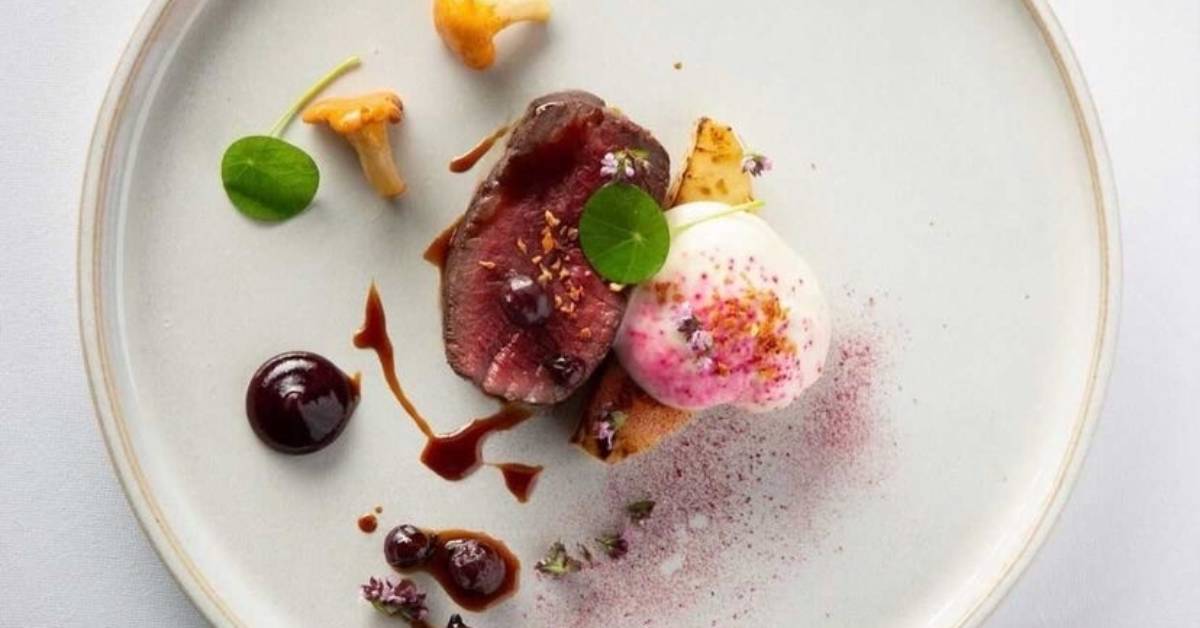
Venison Loin, Blackcurrant and Celeriac from Shaun Rankin’s Taste of Home menu at Grantley Hall.
Passion for design
Shaun said he actually ended up at Grantley Hall thanks to his passion for designing restaurants and concepts.
He said:
“I used to do a lot of consultancy creating and helping hotels and restaurants to achieve what they needed to achieve in London, Jersey and throughout the UK, sometimes even the South of France.”
Two years before Grantley Hall opened, he was introduced to Andrew McPherson, the general manager, and Richard Sykes, the managing director, and joined the team as a consultant, helping to put the concepts and designs together for all the restaurants, kitchens and food and beverage areas in the hotel.
Enjoying his time back in Yorkshire, he was then invited to take over the fine dining and was put in charge of designing the restaurant itself. This involved everything from the credenza units to the soft-closing, velvet-lined drawers, which prevent the clink of the silver-dipped Sheffield cutlery. It’s these little details that help to enhance the dining experience, which, when you are paying £130 per head, is perhaps to be expected.
Shaun said:
“We created everything. We bought the best linen, the best glassware, the best porcelain and crockery.
“Richard and the family honed in on all the local tradesman and materials and again, used everything, as much as possible, from around the Yorkshire area.”
Whisky Sours
Shaun now splits his time between Yorkshire and Jersey, where his two boys, Harry and Ethan, live with their mother.
He currently has a home in Ripon, but before that he lived in Ripley, near Harrogate.
So of course, I wanted to know where his favourite places to eat and drink were in the district.
He said:
“I spent a lot of time at the bar in The Ivy Harrogate drinking whisky sours. The bar is really nice.
“I love Oliver’s Pantry in Ripon. The breakfast is good there and they do a really good club sandwich.
“I go to Three’s a Crowd in Harrogate. I’ve had food a couple of times and it’s tasty. I’ve had Sunday lunch there. I love a roast dinner.”
In terms of what the future holds for Grantley, Shaun said he was looking forward to hopefully having a full year in service at the hotel, following two years of upheaval due to the pandemic.
‘World class’ ambitions
He said:
“Hopefully from now since we reopened, we will get one full year. We will get some momentum.
“We got the Michelin Star in January last year, and the thing about that is every day you need to polish it and keep and eye on it, because you never expect to hold it.
“The ambition for us is the second star in the next few years, so we have to work hard for that. We are constantly working on training and building the team.
“The thing about momentum in restaurants is the more you are open, the better the momentum is. It just becomes more natural and more fluid with everybody and the work, products and service become better. Constantly starting and stopping, you just lose the whole rhythm.
“We are focused on what we do here. The ambitions of Grantley Hall are still yet to be seen. It’s a long journey for Grantley Hall, and for us here and what we want to achieve.
“It really is a world class destination and we want to create a world class restaurant.”
Traditional methods
Shaun then took me on a brief tour of the kitchen – immaculate, unlike mine – which features the Chef’s Table. You can pull up a leather stool and have dinner in the place where the magic happens.
There is also a private dining room, The Dales Suite, which can seat up to 20 people, where you can celebrate special occasions like anniversaries, birthdays and weddings.
Shaun said:
The key message is what we cook here is for a reason. You don’t get fois gras here, you don’t get anything that comes out of France or Italy. Even down to the charcuterie. We brine our own pork collars and make our own hams.
“Everything is traditional, using old methods from the last 200 or 300 years. Salting, brining, curing, preserving fermenting.”
And his favourite dish on the current menu?
“At the moment it’s our Yorkshire venison with blackcurrants and celeriac – both of course grown in our kitchen garden.”

Harrogate and Knaresborough MP Andrew Jones has so far remained silent on the expected scrapping of plans to extend the HS2 line from Birmingham to Leeds.
The former rail minister has been a vocal advocate of the project. In February 2019, he said that it would be a “betrayal of the north” if it did not go ahead.
However, government sources briefed national media outlets over the weekend about the decision ahead of an expected announcement on Thursday.
Just two months ago Mr Jones reiterated his support for HS2 at the annual Transport for the North conference in Leeds. He said:
“I hope that we do not see any compromise on our desire for big investment in our infrastructure. We have failed spectacularly to invest enough in our infrastructure.
“This has meant it is now too expensive and too difficult to move people and goods around the country. So I do not support the argument that we need to abandon longer term infrastructure investment.”
Read more:
- All you need to know about next week’s police commissioner election
- Review launched into council’s handling of Dunlopillo housing plans
At a previous Transport for the North conference in February 2019, Mr Jones went further and criticised media outlets for reporting speculation over the future of the HS2 Birmingham to Leeds line.
“We have all probably seen some media reports claiming that the northern stages of HS2 might not be built. They are nonsense.
“HS2 was conceived, developed and is now being delivered as a national railway. But in particular to improve links for our area.
“So our commitment to the full network of HS2 is undiminished. To cancel anything would be a betrayal of the north.”
The Stray Ferret asked Mr Jones for his thoughts this morning. However, he did not reply to our request for comment by the time of publication.
 Property Gold is a monthly column written by independent property consultant, Alex Goldstein. With more than 17 years’ experience, Alex helps his clients to buy and sell residential property in some of the most desirable locations in Yorkshire and beyond. This month, Alex explains why the Yorkshire property market is so strong.
The Yorkshire market has been on fire recently, with surging house prices, strong demand and there doesn’t seem to be any loss of appetite currently. So how did all this interest suddenly come to Yorkshire and what’s really going on?
During lockdown v3.0 earlier this year, people began planning ahead for what was going to be the brave new world. 9 to 5 jobs, daily commuting, being close to the head office were quickly cast aside, as buyers quickly changed their priorities to be centred around family life and associated lifestyle.
Whilst this philosophy had always been gently simmering for the last several years, it took the pandemic for companies to realise that they could have a fully functioning remote workforce and offer their staff the flexible working they had been pushing for. Equally they could now make substantial associated savings, which would prove beneficial when looking at slightly more uncertain times. A win-win situation you might say.
The lockdown provided time for people to stop, think and prioritise what they really wanted and as such, the property market remained relatively active during this time. As we exited lockdown, from day one, the market very quickly got straight back up to speed. Sellers and buyers were keen to make it happen and to create their new lives.
Read More:
The Chancellor then had what he felt a eureka moment about offering an SDLT holiday. Despite calls from the property industry saying not to do it as it would create other problems (and wasn’t required from the Yorkshire perspective), he proceeded. This sent an already strong market into intergalactic warp-drive. Never, in my 19-years of experience, has the market performed at such an astonishing pace.
Overlaying this, Yorkshire then grabbed the attention of the international buyers – either those who wanted to ‘come back home’ from abroad, or investors who saw a new property hotspot emerging and where yields were more favourable than the south. Leeds being back in the football premiership also helped their thinking.
London and home county based buyers also relocated to the area and the north-south price differential has been quickly closing.
The media obsession with our county then accelerated, with newspapers waxing lyrical about the lifestyle on offer and the television bosses offering up endless programmes with Yorkshire based themes, not to mention the Bank of England having an office in Leeds, Channel 4 and the BBC changing head offices, the list goes on…
The stars have well and truly aligned for Yorkshire – rarely has it been more fast paced. This is the start of our journey and time make sure you’re part of it!
If you have any comments or questions for Alex, please feel free to contact him on alex@alexgoldstein.co.uk
Five autumn Fountains Abbey and Studley Royal hidden gems not to be missed
This article is sponsored by the National Trust
The autumn colours make October and November a fantastic time to see the beautiful Fountains Abbey and Studley Royal in a whole new light.
Whether you’re looking for a family day out with the kids or a mid-week ramble with some friends, the National Trust and World Heritage Site has plenty to offer – including a few hidden gems you might not have noticed before.
Here are our five don’t-miss moments to look out for this autumn…
Fountains Mill

As well as being the oldest building on the estate, the Fountains Mill is also the oldest standing building in the care of the entire National Trust. Built to grind grain for the developing monastery, it survived the eventual closure of the abbey and continued to mill grain right up until 1927. In its long history, the building has been a monastic granary, a timber sawmill, a home for refugees, a mason’s workshop and a base for an innovative hydro electric generator. When you step inside, see if you can spot graffiti from centuries ago or see the splash of the mill wheel turning.
Green Man

Looking out from the east side of the abbey ruin is the green man. He’s a mysterious figure to see on an important religious building. It’s thought that it’s a nod to the older pagan faith and a connection to nature in the beautiful Skell Valley that the abbey sits in.
Surprise View

Surprise view (or ‘Anne Boleyn’s seat’ as it is sometimes called), has been one of the most popular spots for visitors to the water garden for centuries. Before the abbey ruin and Studley were united into one estate, the garden was cleverly designed to offer up a series of these famous “borrowed views” of the abbey. Standing in this spot, we can certainly understand why it would have been all too tempting to peek over the wall at the neighbours and not want to enjoy it for yourself!
Serpentine Tunnel

The Serpentine Tunnel was designed to give Georgian guests a gentle fright. It’s pitch black in the middle and still dark enough to be exciting today. Do you dare to try it for yourself? In autumn it’s even more spectacular, as when you emerge, you’ll see one of the most colourful views of Studley. Can you see the rainbow colours of the trees reflected into the Moon Ponds of the water garden?
Studley Deer Park

Autumn is an amazing time to visit the deer park, and see the 300 deer who live there as the annual rut gets underway. Listen out for the sounds of the stags roaring – it sounds almost like lions! Be sure to keep your distance and stay on the paths though, as you don’t want to be in the way when the bigger males clash antlers and start kicking in a bid to win the attention of the does.
Entrance to both Fountains Abbey and the Studley Royal Water Garden and deer park is free for National Trust and English Heritage members. For non-members, prices start from £17 for adults and £8.50 for children.
Behind the scenes of Harrogate’s new £6m food hallIf there’s one thing that Harrogate does incredibly well, it’s food and drink.
The district has some of the best producers in the country and there is no denying we are completely spoilt for choice when it comes to delicious Yorkshire fare.
So it comes as no surprise that excitement is ramping up for the launch of Harrogate’s huge new £6m food hall in Pannal, which overlooks the Crimple Valley.
The 48,000 sq ft building, which is simply called ‘Crimple‘, will include a butchery counter, an in-house bakery and patisserie, a floristry and a 160-seat restaurant.
Sustainability
And with a huge emphasis on sustainability, there are set to be some very quirky additions to the venue, including it’s own beehive and a reconditioned milk float, complete with milk on tap and refillable glass bottles.
Crimple has been owned by Graham Watson since 2013. With a personal investment of £4m for the construction, plus £2m for the fit-out, the business-owner has created the town’s latest foodie destination in a bid to showcase all the amazing produce the district has to offer.
The man tasked with getting the food hall up and running is general manager Chris Lidgitt, who gave me a sneak preview of the site.
He said:
“We want to be a destination site for North Yorkshire.
“We are proud of what we have done behind the scenes and we all know what it’s going to look like when it opens. We can’t wait to show off our hard work.
“Harrogate needs something like this.”
After two years of planning and more than a year of construction, the food hall is set to open its doors in the second week of November and will see more than 80 new jobs created.
Events space
If you have visited Crimple Valley before, you will be familiar with the antiques centre at the site. This has been completely knocked down and the food hall and restaurant has been built in its place. The garden centre will remain and the existing restaurant and terrace will become an events space.
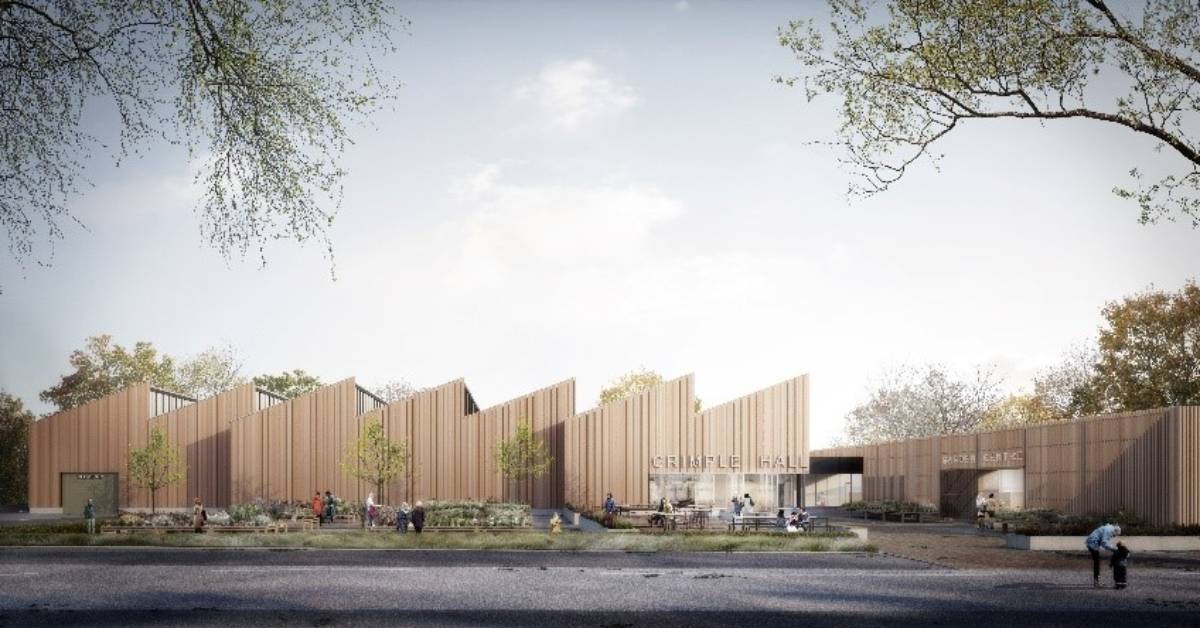
An exterior computer-generated image of the new food hall.
The food hall’s timber-framed building, with its staggered roof, is eco-friendly and sustainable.
The striking design of the building makes reference to agricultural buildings through a series of interconnected barn-like forms.
A heat recovery system also provides all the hot water for the site and energy-saving refrigeration has been fitted.
Impressive
It certainly looks very swish when you drive past on Leeds Road and its even more impressive when you go inside.
When you first walk in, it’s impossible not to notice the sheer scale of the food hall.
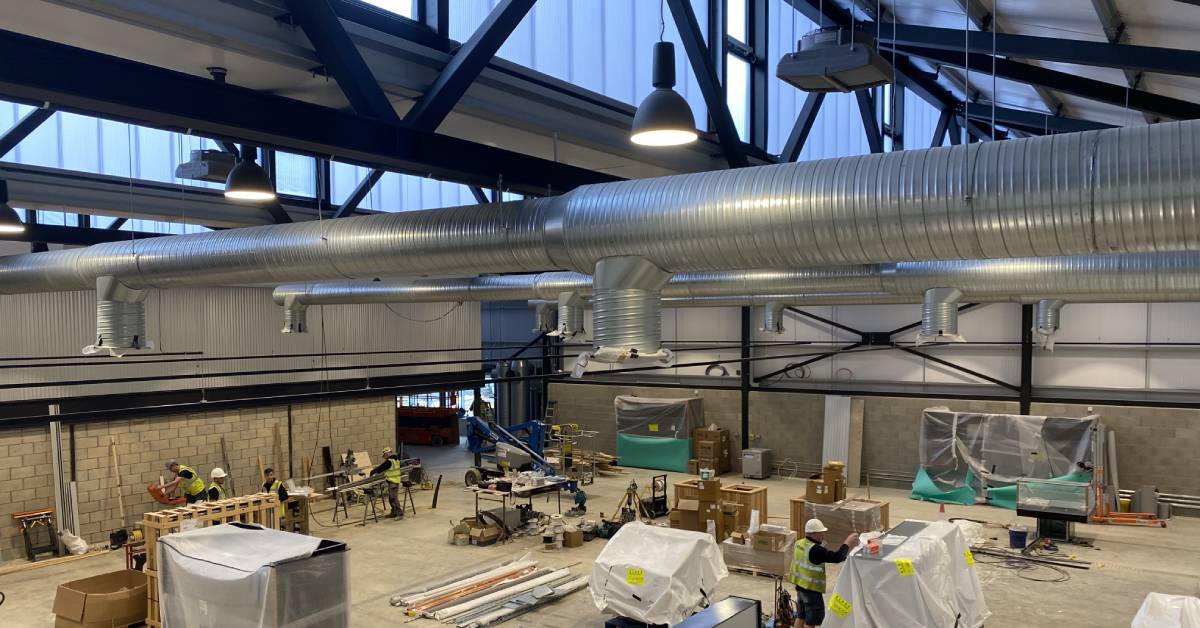
Inside the new Crimple food hall.
The distinctive “saw tooth” roof makes it feel light and airy. The space will allow shoppers to move freely around a specially-designed layout, aimed at making it a relaxed and enjoyable foodie shopping experience.
More importantly the design of the roof allows for natural ventilation and hosts solar panels to feedback power to the grid. In addition, motorised windows keep the temperature constant without wasting electric on heating and cooling.
Butchery counter
One of the big draws will be a 12-metre-long butchery counter, which will have a selection of meats, including the more unusual T-bone and Tomahawk steaks and ox cheeks, as well as the usual cuts. It will also boast a glass-fronted dry-ageing meat fridge.
Chris, who has been in the food and drink industry for years and was a director at The Local Pantry, in nearby Pool, said:
“We will use the in-house butchery department and the produce from the store to supply the restaurant.
“A deli counter will offer cheese, which we are going to mature ourselves in a cheese maturation fridge – from three, six, 12 and 18-months-old.
“There will also be a quirky juice and coffee bar, offering fresh juices and smoothies, which will have a big ice well.
“There will be floristry and gifts, fresh fruit and veg and a bakery, where we will eventually make our own bread. Two bakers will bake in-house including cakes, tarts and patisserie items.
“There will also be a beehive in a sealed unit, which shoppers will be able to see. This will supply honey to sell in the store.”
Yorkshire producers
Food and drink from lots of local producers and independent producers from across Yorkshire will be on offer at Crimple. They will include Bracken Hill Fine Foods, Guppy’s Chocolates, Sawley Kitchen, The Yorkshire Pasta Company and The Original Baker. There will be meat from Robertshaw’s and bread from Cawa Bakery and Lancaster’s. Coffee will be supplied by Dark Woods Coffee.
There will also be food to go, including in-store produced ready meals, pizzas, and fresh fish, as well as a horticulture shop and a grain store.
Chris said:
“There’s a real emphasis on Yorkshire produce but also an emphasis on trying to be different.”
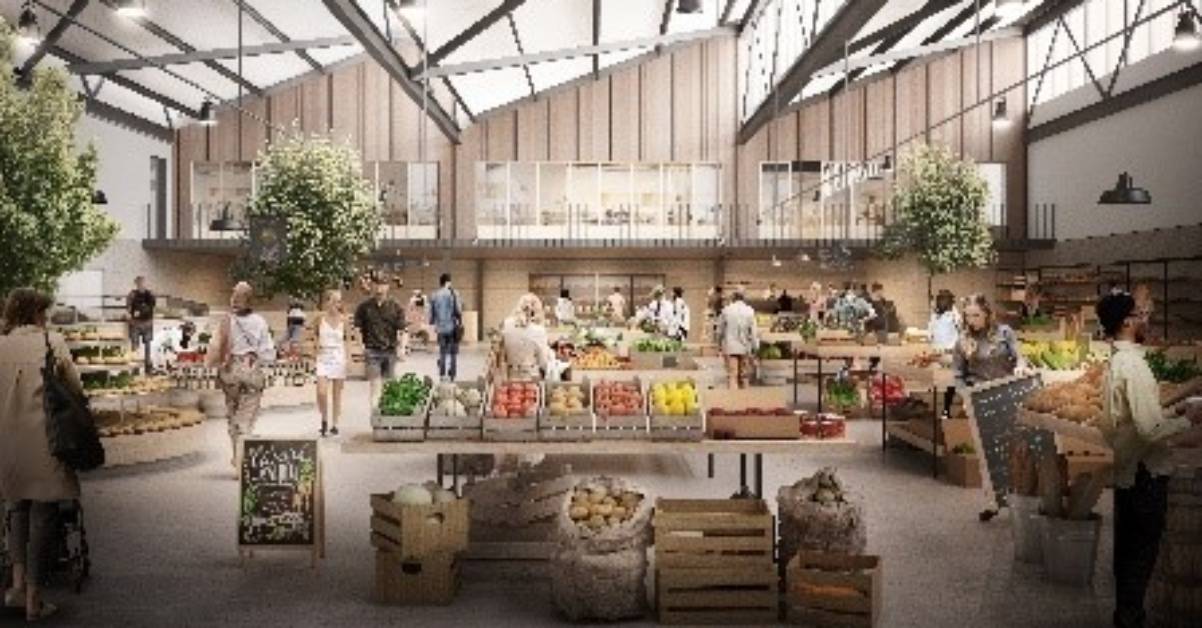
An interior computer-generated image of the new food hall.
- The food hall and garden centre will open on Monday to Saturday from 8am to 7pm, with the restaurant and bar set to offer late night dining in 2022. The restaurant will open from 8am to 5pm. Sunday opening hours will be from 10am to 4pm.
The Harrogate district now has the highest covid infection rate in Yorkshire after another rise in cases beyond record levels.
The district’s weekly rate per 100,000 people currently stands at 630, according to the latest Public Health England figures.
The rate is the 19th highest in England and well above the country’s average of 366.
It equates to almost 150 new infections each day. However, hospitalisations and deaths remain stable when compared with previous waves.
As of last Tuesday, there were 13 covid patients at Harrogate District Hospital.
Patient numbers there previously peaked at 67 in January.
Read more:
- Harrogate man jailed after cannabis and cocaine found at his home
- Knaresborough businesses vote against setting up a BID
The last time the hospital reported a covid-related death was on September 30 when its toll since the pandemic began reached 189, according to NHS figures.
The Harrogate district’s latest weekly infection rate of 630 cases per 100,000 people is another record for the district, which has seen cases climb steadily since mid-September.
Prior to this period, the previous record was 534 on 18 July.
Speaking recently, Louise Wallace, director of public health for North Yorkshire, said the rise in infections in Harrogate and across the county was being “driven by school-age children”.
The latest figures for Harrogate show infections are highest among five to 19-year-olds, although cases among 40 to 49-year-olds are also high.
New state-of-the-art cosmetic surgery hidden in Harrogate villageForget nipping to the village shop for a pint of milk, you can now pop for a facelift at a new cosmetic surgery clinic near Bishop Thornton.
Nestled in the rolling hills of the Harrogate countryside, Kliniken, Swedish for “the clinic”, is aimed at moving away from a clinical hospital environment.
Instead it wants patients to feel like they have just checked into a luxury hotel, rather than a cold, sterile hospital environment.
I was intrigued when I heard about this new rural clinic, which boasts its own state-of-the-art operating theatre.
Firstly, due to its quirky location in the middle of nowhere, miles away – literally – from the typical urban setting, such as Leeds, Manchester or London’s famous plastic surgery hub, Harley Street.
And secondly, when I heard two of the owners had sold their old house to fund the venture, as well as remortgaging their current home. In the current climate, this takes guts.
Hotel lobby
Consultant plastic surgeon Mallappa Kolar, who runs the practice with his wife, Karuna Kolar, and business partner Dr Senthil Kumar, said:
“The reception area has been designed with the thought process that we wanted it to feel professional and welcoming.
“We have tried to keep things discreet, so there is only ever two sets of patients who can be here at any one time. It is meant to feel more like a hotel lobby.
“When you walk in, the ladies greet you as a patient and you get a drinks menu to choose from.”
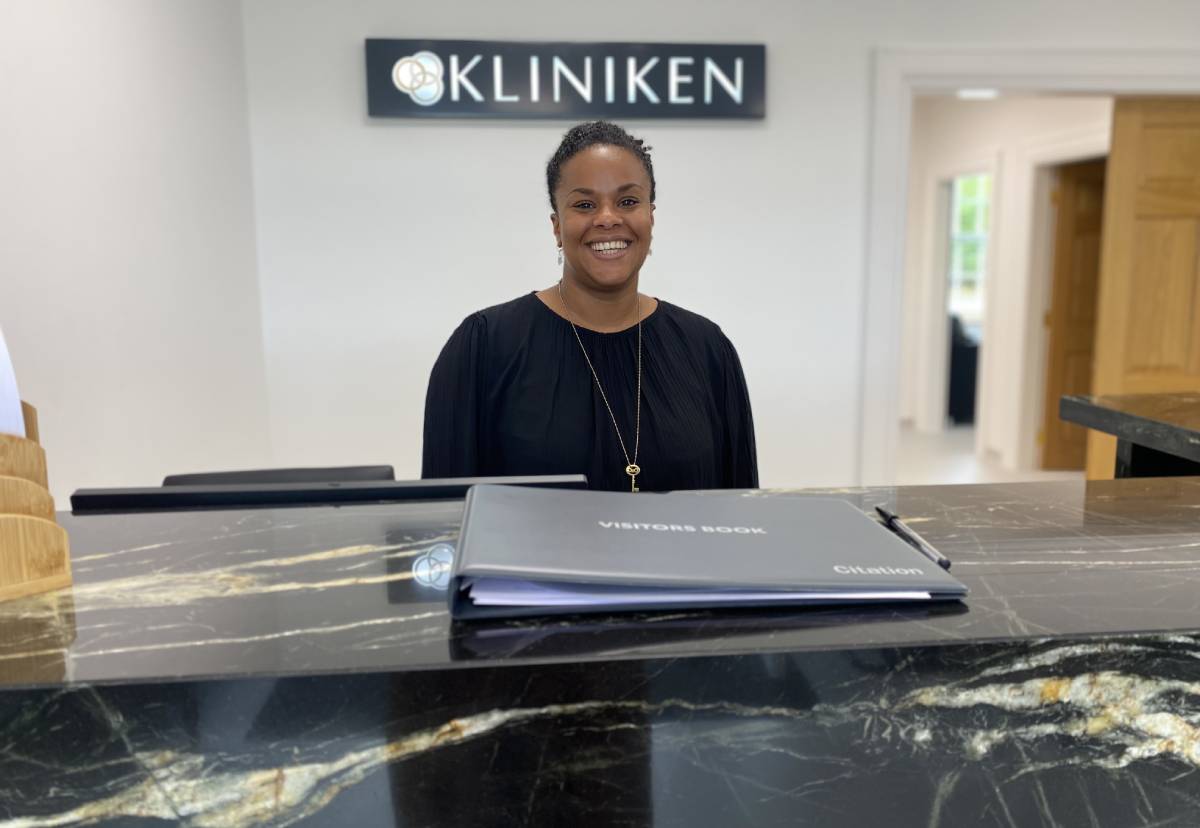
One of the receptionists who welcomes patients to Kliniken.
I’ve driven past Oakwood Park Business Centre, on Fountains Road, many times, but I had no idea here was a whole business community there out in the sticks. With amazing views stretching for miles around, it really did feel calm and serene.
Different feel
When I walked in, it definitely had a different feel to the usual clinical environment you often get in a hospital or GP surgery. I was expecting someone to hand me a key and show me to my room.
Talking of rooms, it’s actually quite a big place, a bit like a tardis. It features two consultation rooms designed around patient comfort which boast flat screen TVs, reclining seats and shiny black desks to match the shiny black Apple Macs.
It is essentially as far removed from a typical cluttered GP’s room as it gets.
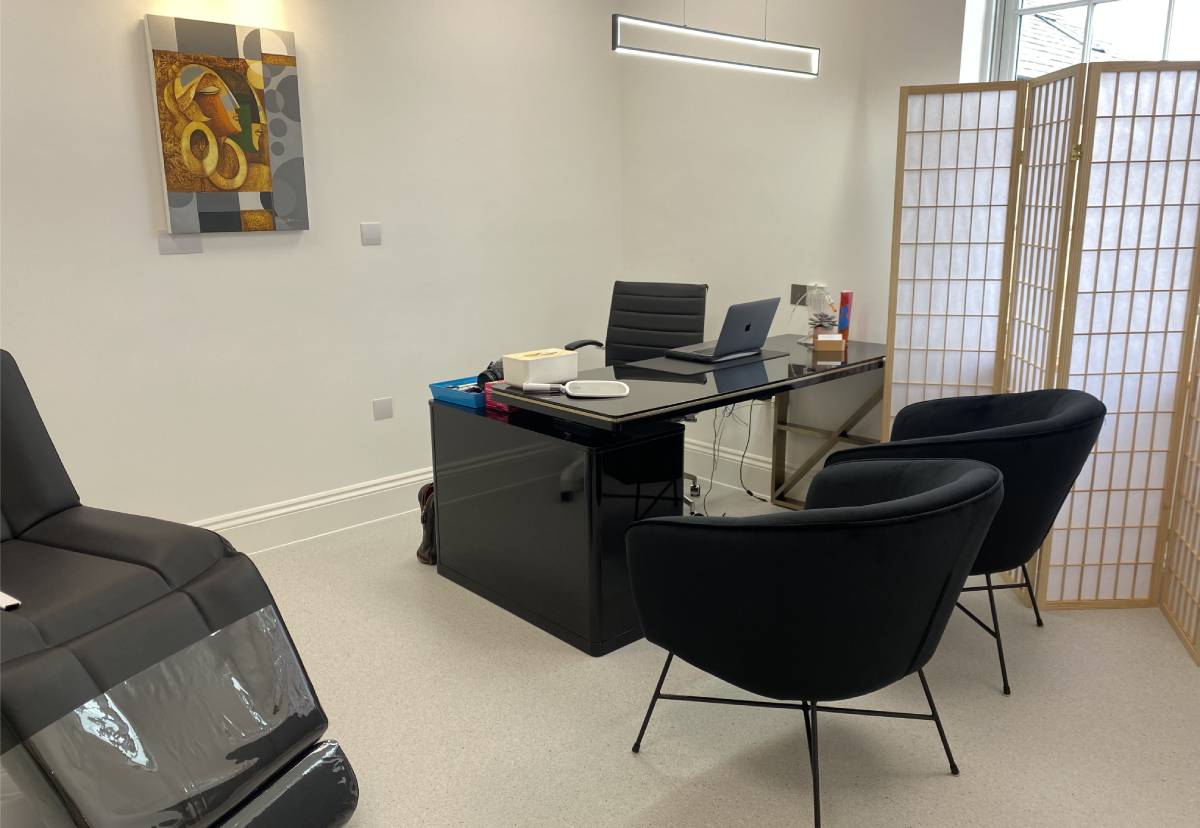
One of the consultation rooms at Kliniken.
There is also a therapy room, with colourful art on the walls, where you can pop in for some botox, fillers or laser treatments.
Mr Kolar said:
“This is designed to feel more like an experience. It is meant to feel comfortable, not cramped. If there is someone with you, they can sit down and have a drink.”
Split into two parts, the other area of the building is known as “the surgery hub”, which features two private recovery rooms.
Mr Kolar said:
“Patients will be greeted on the day of surgery by their own nurse, they will have their own patient care coordinator, their own surgeon and their own anesthetist. Those people are available throughout the entire patient journey.
“They will also get the receptionist’s number and the surgeon’s number.”
Hi-tech operating theatre
But perhaps most impressive is the high-tech operating theatre, which boasts fancy intelligent lighting and the best surgical equipment you can buy, according to Mr Kolar.
You would never expect to find a full working operating theatre just down the road from Fountains Abbey.
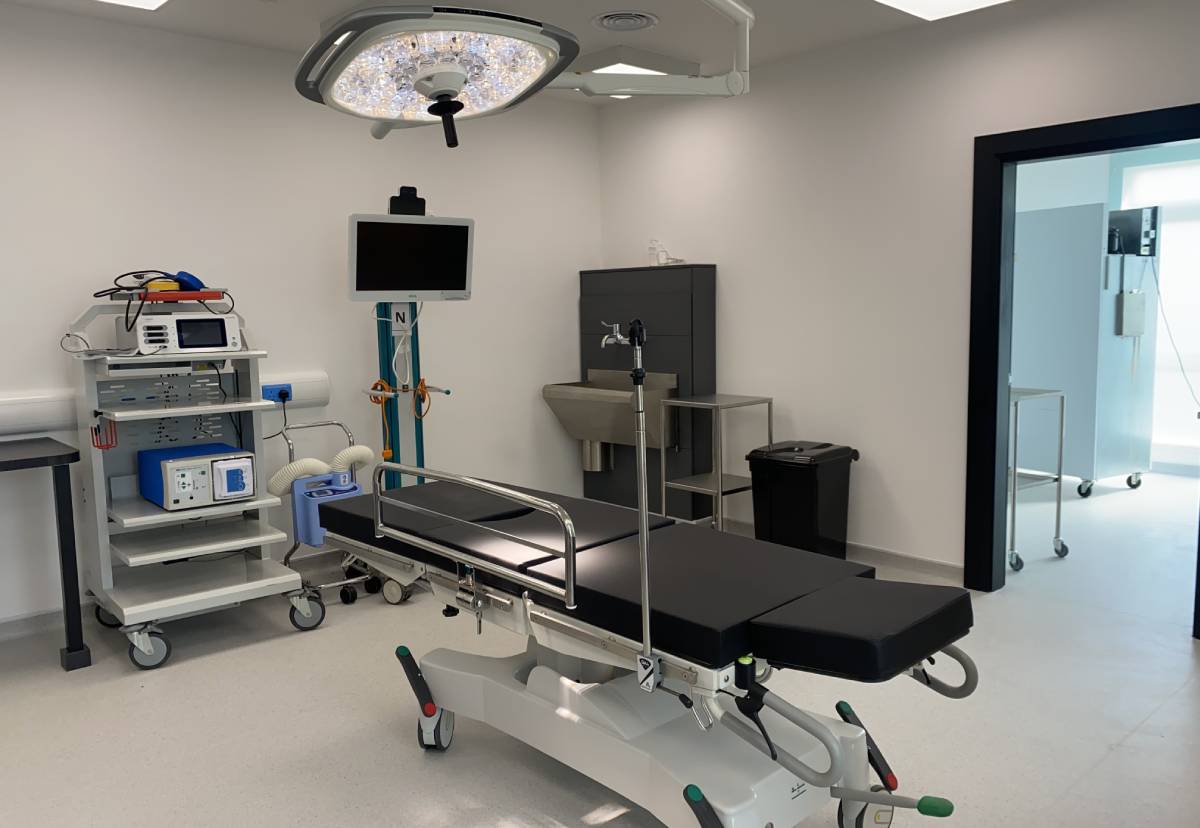
The operating theatre at Kliniken.
Mr Kolar, who is believed to be the only full-time plastic surgeon based in Harrogate, said:
“I didn’t want it to be in the city centre. You should see it in the winter when there is snow, it is literally picture postcard Yorkshire.
“We want it to be the equivalent to Harley Street, but here.”
” I have two brothers who both live in London and for them it’s inconceivable to see something like this.
“We have a son and I want him to appreciate the countryside and the clean air and the rehab and things like that. I feel if I want that for my family, I want that for my patients.”
The clinic has been six years in the planning and the trio have thrown everything they have into it.
Investment
Mr and Mrs Kolar sold their student house and have remortgaged their current property to fund the business venture. Mr Kolar also decided not to go for an NHS consultant job so he could concentrate fully on the clinic.
Dr Kumar, who met Mr Kolar three years ago when he was a registrar completing his training, has also invested heavily.
He flew back to England just a day after his wife gave birth in India as he had an important meeting with the Care Quality Commission.
Mr Kolar said:
It’s unusual to do what I’ve done, finish training and leave and set up a private practice. There are not many people who do that. A lot of people weren’t happy that I was doing that and a lot of people doubted us.
“You get so emotionally invested into this, you don’t have any spare time. It sounds cheesy, but because you’re putting so much into this everything else is paled into insignificance.
“At the end of the day patients are trusting us with their body and it is a privilege.”
However, the determined trio are confident their goal of “redefining the healthcare experience” in natural surroundings will make the clinic a success.
Read more:
- Covid causes Harrogate residents to seek the perfect smile
- Wisteria hysteria: Are faux floral displays here to stay?
Innovation
Innovative treatments at the clinic include a “one-stop shop” for procedures such as hand surgery. This can be done in a day, rather than the patient having to keep coming back for consultations and the surgery itself.
Fat grafting is also available, which involves using a very thin needle to harvest cells from an area of your body. These cells are then injected into the area being enhanced.
Mr Kolar, who has done both an MD and PhD in fat stem cells in Sweden, said:
“There is probably only a handful of places in the country that would do it. So it’s using it for simple things like acne scars, volume rejuvenations, so a natural alternative to fillers. For example it can be used on the décolletage area for women. As we get older the creasing starts to increase, so we can rejuvenate that using fat. It can be used for all these different things.”
Together with their team of surgeons, they are now ready to go “full steam ahead” after being hit by a string of delays due to the pandemic.
Dr Kumar said:
I look at it as an opportunity to basically redefine the healthcare experience. I think we have pretty much nailed it on the head in this particular place.”
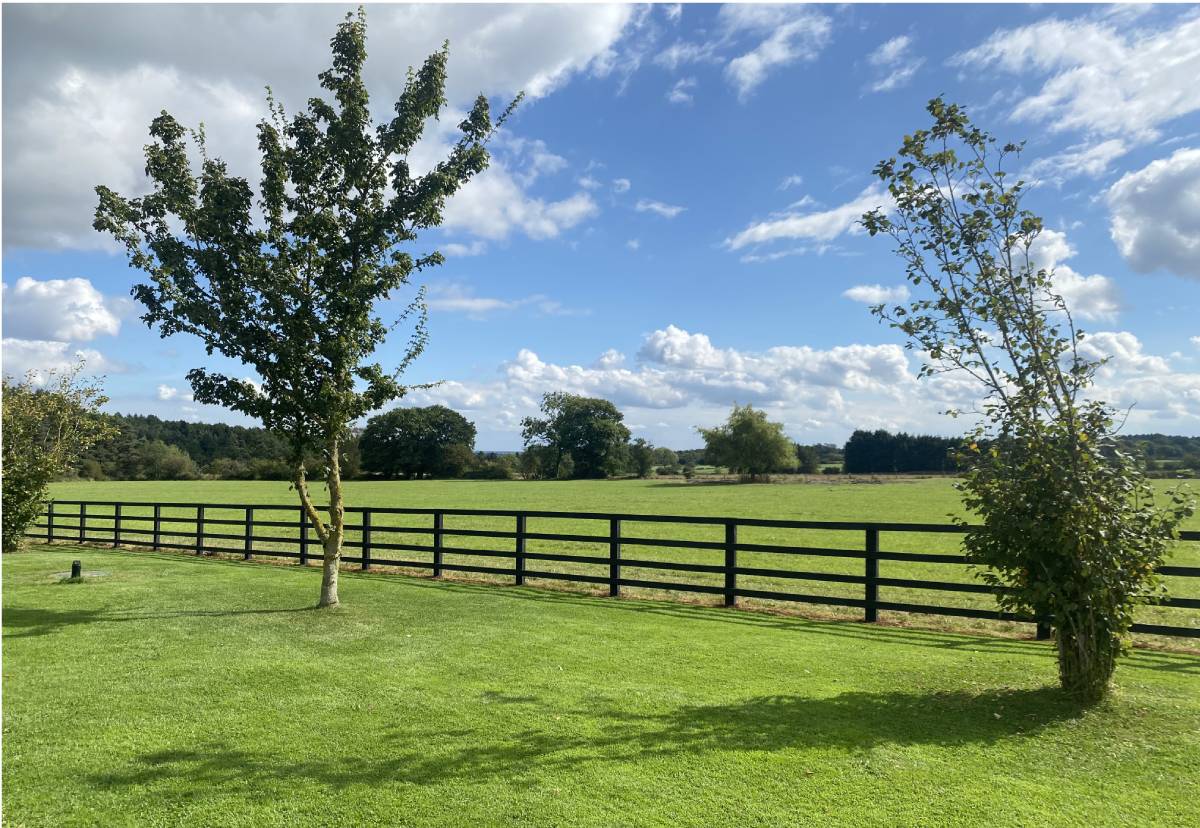
The view from Kliniken, which is based at Oakwood Park Business Centre, near Bishop Thornton.
I am pretty clueless when it comes to beer. For example, I had no idea that IPA stood for Indian Pale Ale or that you some beers were more “hoppy” and “juicy” than others, depending on when the hops are introduced to the brewing process. Did you know hops could also come in a pellet form resembling fish food? Me neither.
So when I spent a morning with the guys at Turning Point Brewing Co in Knaresborough, I was ready to be educated.
I figured that, as Harrogate was launching its very first ever beer week on Monday, now was the perfect time to learn.
Turning Point co-founder Aron McMahon said:
“A hop is just like a little dried bud or flower and we use whole hop cones and also use pellets as well, which are like minced up hops. They are processed and packed into tiny little pellets, a bit like fish food, and they are supposed to give more of a stronger, more intense aroma and flavour.
“You can get different properties from the hops depending on how you use them and what stage you use them.”
Humble beginnings
The story of how rapidly Turning Point Brew Co has grown is an impressive one – particularly with a worldwide pandemic thrown into the mix.
The brewery was originally launched in Kirkbymoorside by friends Aron and Cameron McQueen in 2017. Aron worked for another brewery in North Yorkshire and Cameron used to run a pub in York.
Aron said:
“I used to be one of his customers and I was probably delivering to him for about 18 months before we set off on this magical mystery tour.
“We became friends, we had the same interests and the same sense of humour.
“I decided I was leaving my job at the brewery and didn’t know what I was going to be doing and wanted to stick with something in the beer industry and start a new brewery or bar.
“I said to Cam, just out of jest, if I started a brewery would you fancy coming on board with me and he didn’t really hesitate and just said yes.”
After Aron realised that Cameron was serious, the two friends got together, had a chat, and realised the idea had legs. Through contacts in the industry, they found out about the brewery site in Kirkbymoorside.
And in just four months the pair had gone from talking about running a brewery to actually making their first beer.
Aron said:
“We managed to do it so quickly because of our contacts. Everything just fell really well for us. The site the brewing kit and everything else. We started brewing in Kirkbymoorside in 2017 and quickly got busier and busier.”
Sales went from local, to national to global within a year and within two years they had outgrown their brewery.
New brewery
Aron said:
“Just by a chance conversation with one of the owners with Roosters brewery, they told me that they were looking at moving and their site would be up for grabs in the near future. That was in January 2019 and by August 2019 we were in.
“We bought their old kit and brought our stuff as well. We were in about three months and then covid hit and we worked out we have actually only traded normally for about six months, despite being here for two years.”
The company now has five employees at its brewery at Grimbald Park in Knaresborough, as well as three part-time members of staff who work in the taproom, which is open on Fridays and Saturdays.
A taproom – for those, like me, who don’t know – is a space in which a brewery serves its beer to customers. In most cases, this is either part of the actual brewery or is attached to it.
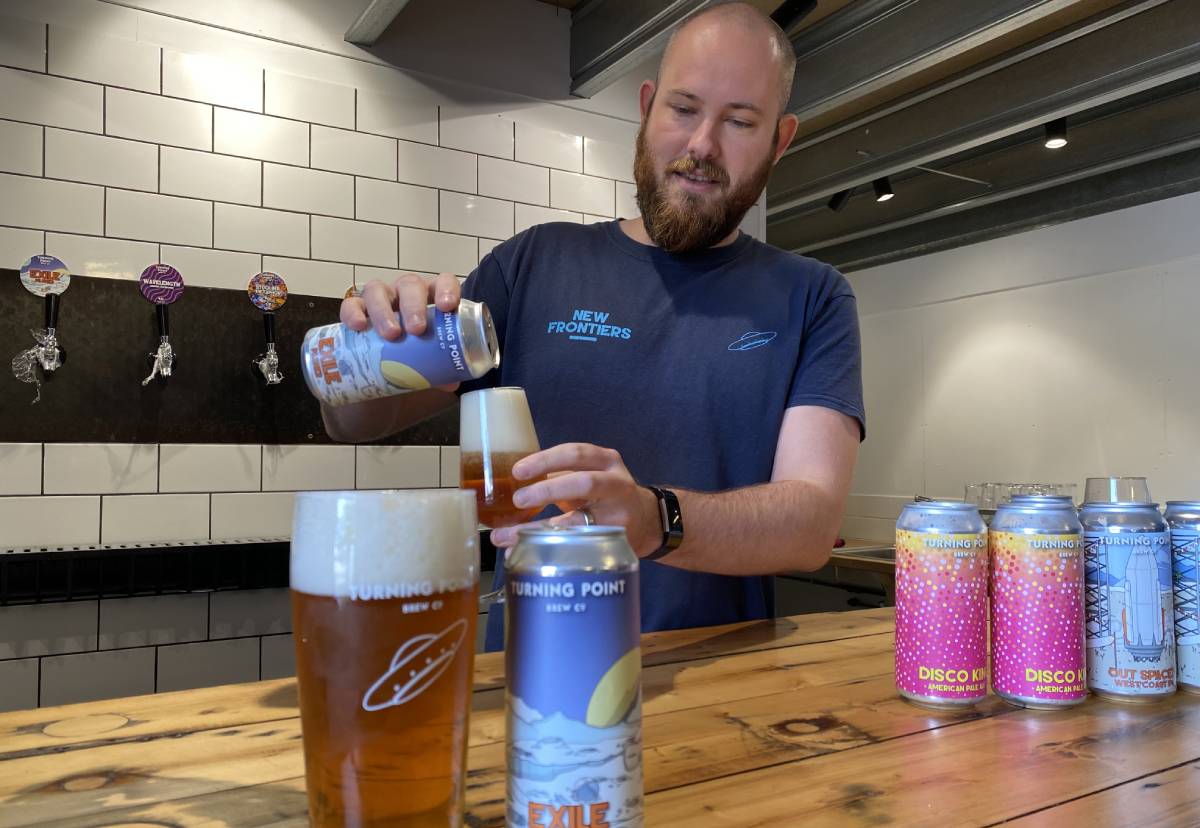
Co-founder Cameron McQueen pours a lager at the Turning Point taproom.
Aron said:
“Here you feel like you’re actually in the brewery. It’s a quirky location where people can come and try fresh beers brewed on the premises and we have a different street food vendor every week. We’ve had a really good reaction locally.”
When the pandemic hit, the duo had to move towards online sales to keep their business going.
Fortunately Turning Point already had an online shop set-up, so they were able to flip their production completely over from mainly cask and keg to cans, which had formerly only made-up around five per cent of their business.
Aron said:
“When covid hit we had a load of beer in the tanks and we then just canned all of it. We plunged all of our beer into cans then and started selling cans on the online store.”
Online events
Once they started selling cans online, they created four different collaboration beers with breweries they admired, including Roosters, and ran their first online event to launch the beers. This was to become the first in a series of online collaborative events aimed at bringing people together during lockdown.
They also started up a beer club called Disco Royalty, which is still running as a way of keeping up engagement with their drinkers – a positive that came out of the pandemic. Brand awareness also increased due to people physically being able to look at the bold artwork on the cans, rather than just a pint in a glass.
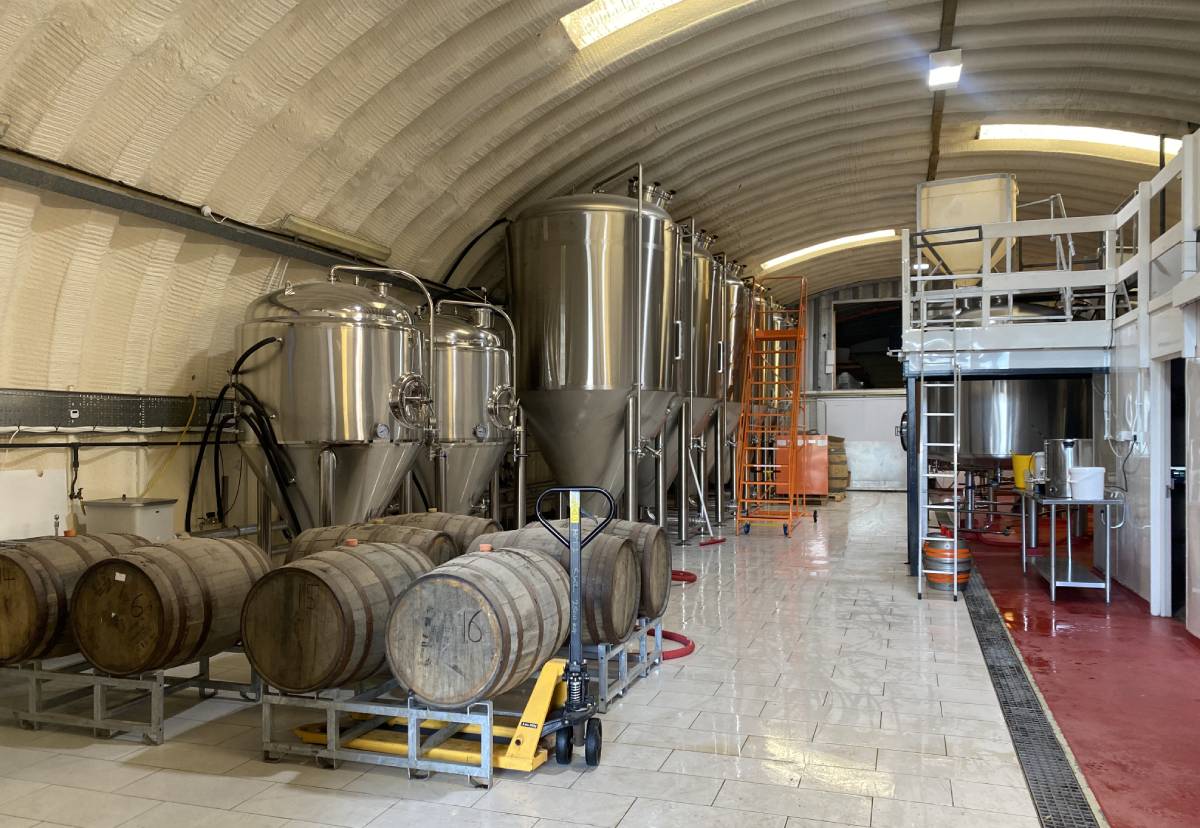
The brewery at Grimbald Park, Knaresborough.
And it is this continued soaring success that has led them to becoming a key player in the inaugural Harrogate Beer Week, which starts on Monday.
Beer collaboration
As well as offering live music and a brewery tour, Turning Point has created a special beer for the event in collaboration with local brewers. These include Roosters, Cold Bath Brewing Co, Harrogate Brewing Co and Daleside Brewery.
The result is a West Coast 6.2% IPA is called Out Spaced – named after a B-side from a Super Furry Animals album incase you’re wondering. It will be available in cask and keg at more than 10 venues in Harrogate and Knaresborough next week, before cans are sold online from next Friday.
Aron said:
“Harrogate and Knaresborough are totally the right places to really shout about beer right now because there is so much happening.
“The number of good beer places that have opened up in Harrogate have been phenomenal. There’s probably 10 to 12 really good independent places to drink craft beer now, which is absolutely fantastic. It’s a great place to go and drink.
“Knaresborough is always going to be like it’s little brother, but it’s really good as well now. The latest addition is the Track & Sleeper at the station.
“For Harrogate to have its own beer week and shot about these venues is great.”
Taste test – I tried three Turning Point beers and this is what I thought:
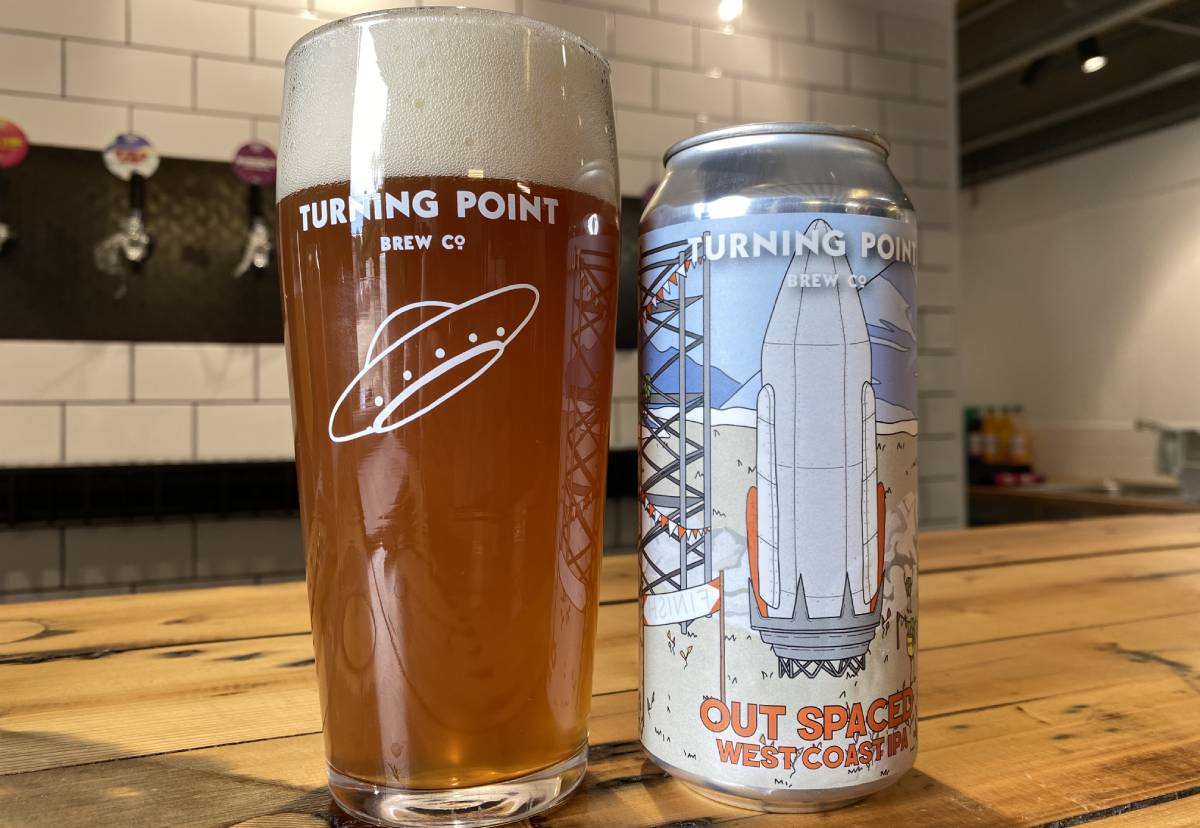
OUT SPACED
WEST COAST IPA 6.2% Brewed for Harrogate beer week in collaboration with Turning Point’s local brewing friends, Roosters, Harrogate, Cold Bath, and Daleside. Tasting notes: A West Coast classic hopped with Simcoe, Amarillo, Centennial. Properly bitter just like in the olden days.
Aron told me that West Coast IPA has “massive aromas and flavours from American hops”. He explained that West Coast IPA is is often a light to dark bronze colour with “a malty backbonet. So you get a bit of juiciness from the malt and slight caramel and slight biscuity flavours”. They also have higher levels of bitterness than New England IPA.
I had no idea beer could be so complex. But I could definitely taste a slight bitterness, however it was nicely balanced out with the sweetness and juiciness of the malt and the hops – or so Aran told me when I was trying to sum up what I could taste. I definitely got a caramel and slightly floral flavour and I actually really liked it, despite its slightly bitter flavour. The artwork on the can is outstanding.
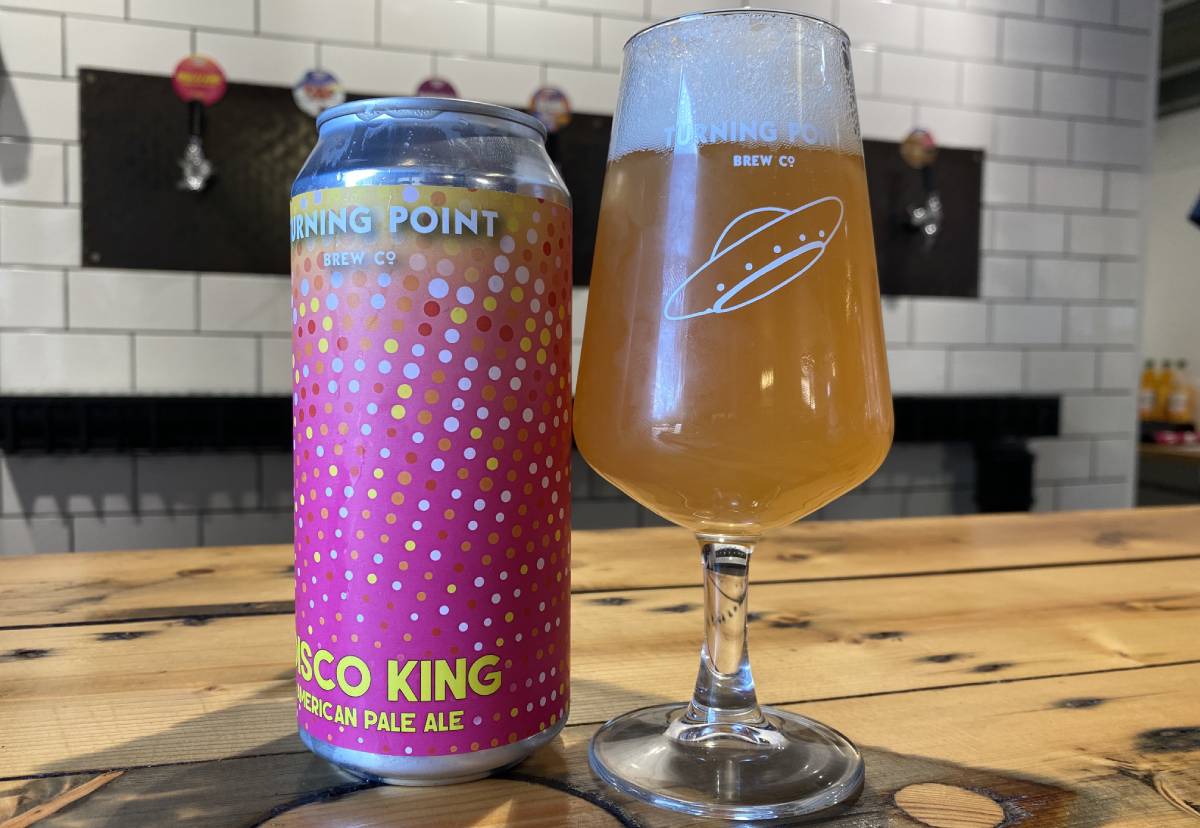
DISCO KING
AMERICAN PALE ALE 5.1% Tasting notes: Big on American hop flavour and aroma from Mosaic and Chinook hops. Drinkability for its ABV from a clean malt base. A real juicy little disco of a beer.
This was one of the first beers Turning Point ever brewed and it has now become their flagship top-selling beer. It is really light, smooth and drinkable. I actually went through a phase of liking German wheat beer when I was a student. This reminded me a bit of that. I loved its slightly floral taste and it is a beautiful colour – like an old fashioned English cloudy apple juice.
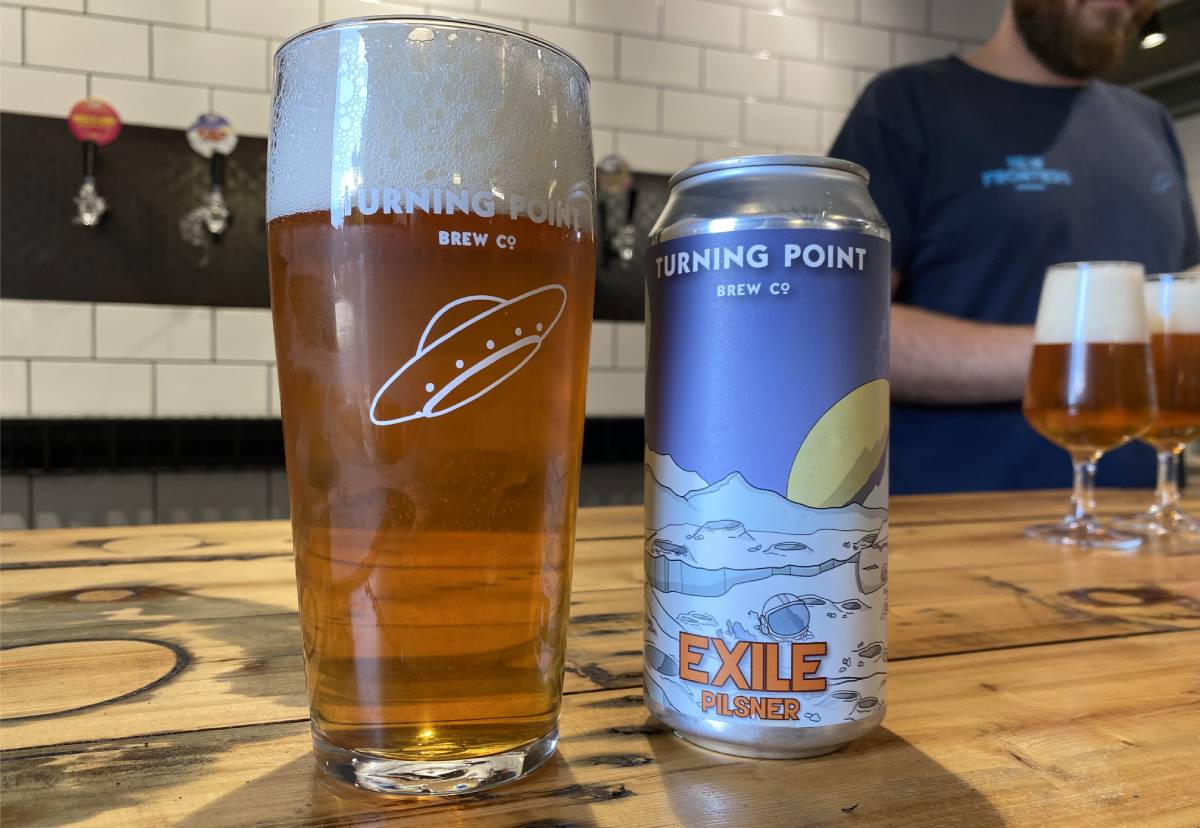
EXILE
PILSNER 5% Czech-style Pilsner with Saaz hops. Tasting notes: Bready and crisp with a balanced bitterness and delicate hop aroma. Showcasing perhaps Turning Points least celebrated ingredient: Soft Yorkshire water.
This is Turning Point’s lager offering and this was actually my favourite. Aron described it as “smashable” and he wasn’t joking. As it was only 11am when I visited, I just about managed to restrain myself from drinking the whole glass. It was really fruity in flavour and had a grapefruity taste. Apparently I had done well to pick this flavour out, so I felt pretty pleased with myself.
This one takes ages to make apparently. Once it has brewed it has to sit in the tank and “lager” – a German word for “store” – for around eight weeks. This is what makes it so drinkable. Totally worth it.
Venues
If all this talk of beer has made you thirsty, you can try Out Spaced at these venues during Harrogate Beer Week:
Major Tom’s – keg and cask
Cold Bath Brewing Co. – keg
Roosters – keg
Harrogate Brewing Co. – cask from October 1st
Tap On Tower Street – keg
Half Moon, Knaresborough – cask
The Disappearing Chin – keg
Devonshire Tap House – cask
Paradise Tap & Taco – keg
Little Ale House – cask
Husk Beer Emporium – cans and possibly keg
- Harrogate Beer Week runs from September 20 – 26. For the full programme click here.
As the craft beer explosion continues in the UK, Harrogate is set to launch its first ever Beer Week. The town is firmly at the forefront of the industry, boasting five breweries in the HG postcode alone.
So what makes Harrogate beer so special? There’s definitely something in the water..
Harrogate is undeniably famous for its water. Its development as a prosperous and flourishing spa town dates back to the 16th century.
William Slingsby discovered the first spring in 1571 in the area now known as High Harrogate. It was named the Tewit Well Spring and the water was found to be medicinal. People, rich and poor, began to flock to the town to test the curative powers of the waters.
Perhaps it is therefore unsurprising to learn that the district’s water – and Yorkshire water as a whole – is perfect for brewing some of the best craft beers in the country.
More breweries have been opening in Yorkshire than anywhere else in the UK, including London.
And Harrogate now boasts five breweries within the HG postcode – internationally-renowned Roosters; rising star Harrogate Brewing; Turning Point, which chose Knaresborough for its expansion two years ago; Daleside, the town’s longest-standing local brewery; and Cold Bath Brewing, which is making waves across the town with its beers, bar and clubhouse space.
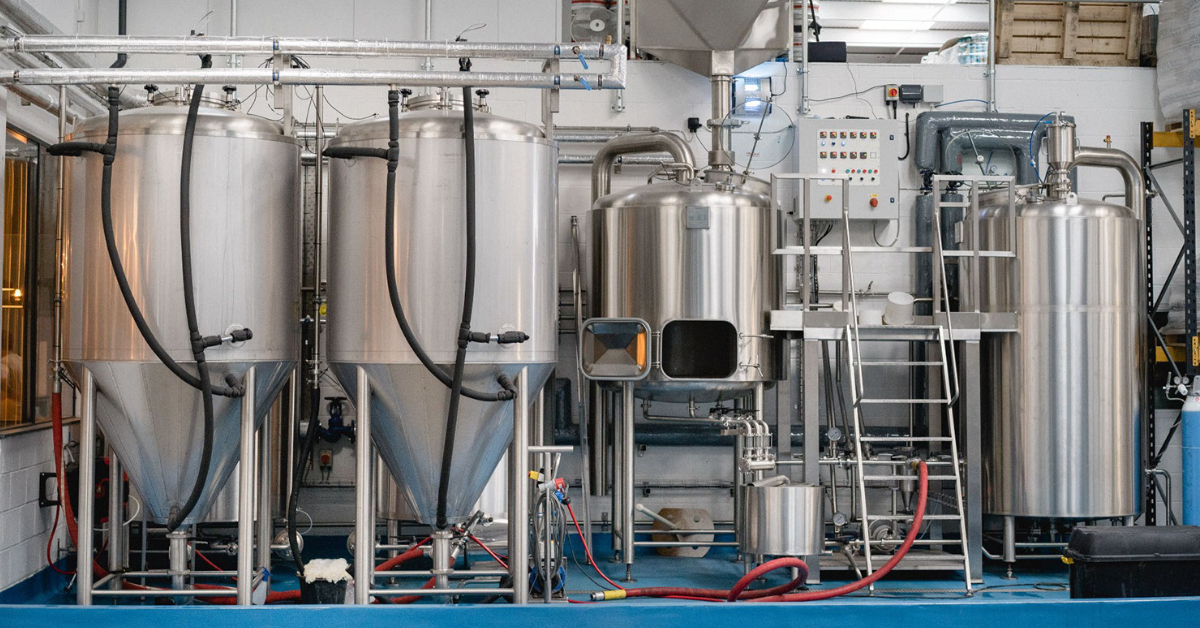
The brewery at Roosters Brewing Co.
To celebrate the town’s growing brewing culture, as well as the bars, pubs and restaurants which support the breweries, this month Harrogate is launching its first ever Beer Week from September 20 to 26.
Harrogate beer communications specialist Rachel Auty, who founded Women on Tap and has secured backing from Harrogate BID to help bring the idea to fruition, said:
“I have been told by breweries that Yorkshire is a key place for brewing because of the water. Harrogate is known for its water so it’s a nice link. It is known for its water history and heritage and it is now attracting breweries to the area.
It [Beer Week] is something we have wanted to do for quite a few years now. We were hoping to get it off the ground las year, but Covid put a stop to holding any events.
“I have seen the beer scene in the town explode over the last seven or eight years. It has got really interesting. We have really exciting beer here actually being brewed.”
With special beer weeks being held in places like Leeds, Manchester and Sheffield, Rachel, who is delivering the event under her specialist food and drink brand TASTE, said Harrogate’s beer scene was strong enough to rival the cities. It’s thought Harrogate is the only town in the country set to host such an event.
Read More:
- How family holidays in Italy inspired spectacular pasta restaurant’s menu
- Stray Kitchen: a booming year for Harrogate blackberries
- Masham brewery brings back tours after 18 months
A programme of special events and initiatives will be hosted at bars, brewery taps, and eateries across Harrogate. The event will culminate in a big beer weekend in the town centre. Other features on the programme will include an ‘Indie Beer Trail’, live local music, and a home brewing competition, with some big names in UK beer heading to Harrogate to host a range of talks and tastings.
Guest headliners include award-winning beer writer Pete Brown presenting ‘Craft: An Argument’ at Cold Bath Clubhouse, a beer tasting and reading with author Matthew Curtis at Roosters taproom, a Conversation on Harrogate Beer with award-winning writer Melissa Cole and Discovering Harrogate Beer with beer sommelier Annabel Smith also at the Cold Bath Clubhouse.
And for those who have ever imagined beer and donuts as the perfect combination, there will even be a chance to try sour and stout-filled doughnuts at The Tap on Tower Street, which has commissioned Harrogate business Doe to create the unique flavour especially for the event.
A collaboration between all the local breweries will also see a special beer produced for Beer Week – a West Coast IPA brewed at Turning Point.
Co-owner of the Cold Bath Brewing Co Jim Mossman, who also sits on the board of Harrogate BID, said:
“I have been very receptive to the idea of putting something positive together with regards to an event in Harrogate, promoting not only breweries in the town, but all the local great independent bars and restaurants as well.
Harrogate is internationally famous for the quality of its water, so it’s by no coincidence you see some great breweries and gin distilleries in this geographical area. They are using it to make quality beer and gins.
We are hosting a series of events in Cold Bath Club House and we are really looking forward to a number of things, from just generating community spirit and bringing venues together, which is great after 15 months of the pandemic – from live music events, to some really credible industry speakers coming to town to do beer tastings and talks.”
Jim said the Harrogate brewing scene was mainly about craft beer, which has seen an explosion in the UK, including lager, pilsner, pale ale and West Coast IPA, but said it was impossible to choose a favourite due to the vast amount of different brewing processes and flavours.
However, he said Cold Bath Brewery was in the process of launching new barrel-aged beers. These are beers that have been aged in oak barrels, allowing the wood to impart extra flavour.
He said:
“We have launched a barrel-aged process in terms of flavours you can create, for example we are using old bourbon barrels.”
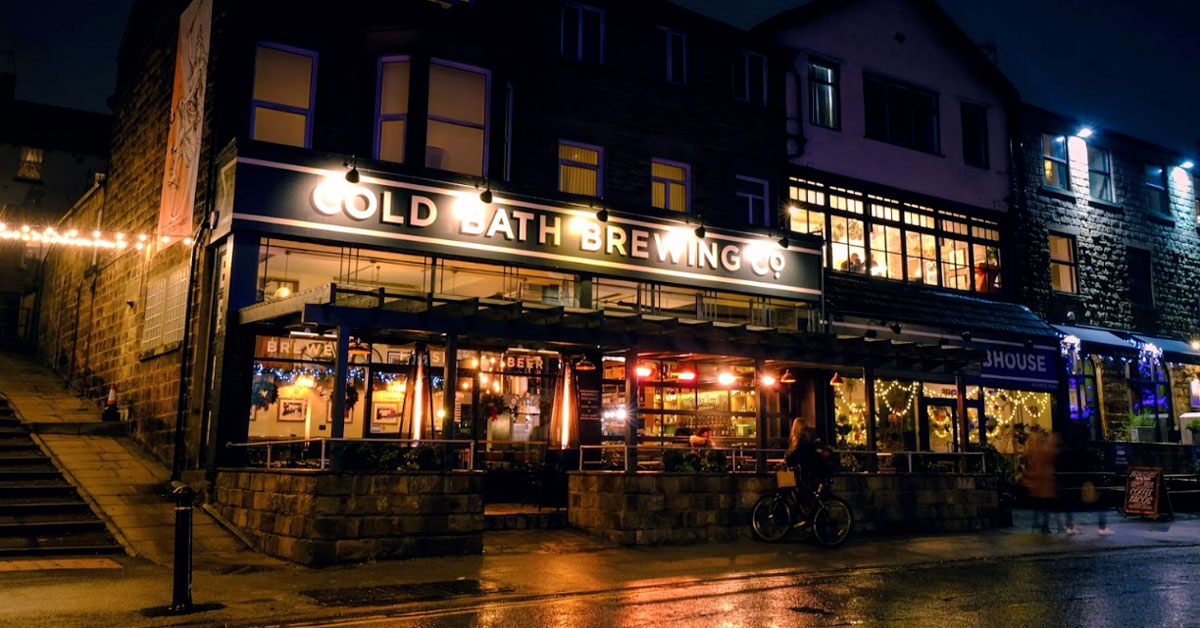
Cold Bath Brewing Co.
Pubs, bars and eateries taking part in Harrogate Beer Week include:
Turning Point Brewery and Taproom