
This story is sponsored by Lucy Pittaway.
One of the UK’s favourite artists says she has been “blown away” by the reception since opening her new gallery in Harrogate before Christmas.
Lucy Pittaway already has four other galleries across the North – in Richmond, Yarm, Keswick and near her home in Brompton-on-Swale – where she sells original artwork and prints of her paintings, which she calls “art that makes you smile” – but wanted a presence a little further south.
She said:
“We’ve been blown away by the reception we’ve had in Harrogate – not just from other traders, but from local people coming into the gallery too.The feedback’s been wonderful. The gallery has been really well received, which makes us feel we’ve definitely made the right decision opening here.
“Footfall’s been incredibly strong. We were getting people wanting to come in before we’d even opened. It’s actually been quite challenging, because we’ve had to take on more people just to cope with demand.”

Lucy Pittaway graduated from Northumbria University with a degree in Graphic Design, and went on to teach and lecture at Darlington Technical College of Art and Design. It was only after she had started a family with childhood sweetheart Neil that she felt it was the perfect time to pursue her lifelong dream of becoming a professional artist.
Her pictures, which often feature scenes, animals and characters from the Yorkshire Dales, can now be found in homes and galleries across the UK and beyond.
She has won an armful of prestigious awards from the Fine Art Trade Guild, including Best Up-and-Coming Artist, Best Art Website of the Year, and the UK’s Most Popular Published Artist in 2018, 2019 and 2022.
Nevertheless, when Lucy decided to open her gallery in the heart of Harrogate, on Prospect Place at the end of James Street, she had little idea of how local traders would respond – but she needn’t have worried.
She said:
“Coming to Harrogate has been really eye-opening. It’s a very welcoming town. From a business-to-business point of view, we were really quite overwhelmed by the help we received from [tourism body] Destination Harrogate. They took a lot of time out to answer all our questions about recruitment, seasonality, advertising and business organisations.
“Other businesses have been very supportive too, and I think that says a lot about the genuine nature of businesses in Harrogate. They want to do the best for their customers and are interested in improving choice on the high street.”

Buoyed by the success of the Harrogate opening, Lucy is now hoping to repeat the achievement in other towns in the region.
She said:
“We’ve just gone through some major renovation at our head office in Brompton-on-Swale, and have invested a lot in new warehousing and office space, which will help us feed more galleries and expand.
“We want to bring a vibrancy to the high street to make people smile. We’re planning to open more galleries this year – so watch this space!”
Find out more:
Discover why Lucy Pittaway is the UK’s most popular published artist by visiting her newest gallery at 21 Prospect Place, Harrogate.
Or check out her latest paintings on her award-winning website, lucypittaway.co.uk.
Yorkshire Dales’ key purpose could change for climate change
Custodians of the Yorkshire Dales National Park have questioned whether its main purposes need to change to help tackle climate change.
A meeting of the Yorkshire Dales National Park Authority heard the organisation was expected to lead the way over tackling climate change, but a consultants’ study found the level of emissions generated by visitors were similar to those created by its residents.
The meeting heard that mainly due to the lack of public transport, visitors generated about two-thirds of residents’ emissions by just travelling to the area and returning home.
However, the carbon footprint of the residents of the national park is estimated to be around 18 per cent higher than the UK average.
The residents’ emissions from flying are estimated to be around 48 per cent higher than for an average UK resident.
Member champion for the natural environment Mark Corner told the meeting although the park authority could not dictate how visitors travelled to and from the park, it could encourage greener transport.
He said:
“Once drivers get to the park they have a very limited ability to get round other than the cars they come in. We need to look again at our public transport approach.”
Read More:
- Action to tackle Yorkshire Dales second homes receives ‘overwhelming support’
- Parks authority rules out wolves reintroduction to Yorkshire Dales
Nick Cotton, the authority’s recreation management member champion, questioned whether national parks should continue to promote themselves as international destinations given the large volumes of greenhouse gases that air travel generates.
He said:
“If we are saying come to beautiful Britain to the wealthy, developing countries in the Far East then aren’t we shooting ourselves in the foot a bit because we are actually encouraging more flights and more greenhouse gas emissions.”
Another member, Kevin Frea, called for the authority to relook at alternative ways of travelling to and around the park, pointing out how 36% of the park’s carbon emissions related to car travel.
Richard Foster, the leader of Craven District Council, also questioned whether it was right for the park be promoted nationally and internationally, through events such as the Tour de Yorkshire cycling race.
In response, the authority’s chief executive David Butterworth said while the authority had some influence on the park, it was not among the top five organisations that could make significant changes.
He said the national park was still being promoted to British and foreign tourists because the law had not caught up with the reality of climate change.
Mr Butterworth said he believed there was a contradiction between needing to tackle climate change and national parks’ statutory purposes.
He said he was optimistic the new government would review whether the climate change and nature emergencies should be enshrined in national parks’ main purposes.
Mr Butterworth told the meeting:
“The law says national park authorities exist to promote understanding and enjoyment. We have taken that over 50 years to mean that means promoting visitor numbers.”
He said national parks were in need of “better and stricter guidance” from central government over how they should be responding to climate change.
Action to tackle Yorkshire Dales second homes receives ‘overwhelming support’Further action to tackle rising amounts of second homes and holiday lets in the Yorkshire Dales National Park looks set to become part of a plan which will shape the area until 2040.
A meeting of the Yorkshire Dales National Park Authority today will consider responses to a consultation on its Local Plan, which features policies designed to increase housing for local residents.
The proposed policies come ahead of North Yorkshire County Council’s executive considering introducing a 100% council tax premium on second and empty homes in the Dales.
The North Yorkshire Rural Commission concluded last year that the shortage of affordable housing was among the greatest challenges to resolve.
An officer’s report to the park authority meeting states the consultation has confirmed “overwhelming support” for all new housing to be for permanent residents.
Read More:
- North Yorkshire County Council considers intervening in Dales housing market
- Pandemic sparks fresh concerns over Yorkshire Dales second homes
However, officers have highlighted some respondents had dubbed the measure too weak and had stated all new housing should be targeted at local need only, as permanent occupancy would still mean younger residents faced competition from retirees.
While community leaders say it is only fair people retiring from working a lifetime in the Dales, such as farmers, should be able to continue living in the area, concerns have also been raised that about 30% of national park residents are aged over 65, about double the national average.
The consultation has also found support for the authority attempting to get housing built on specific sites it has identified, as finding suitable land for housing in the national park has proved to be a major hurdle in developing affordable housing.
Views were split over whether requiring developers to provide up to 50% affordable housing on sites in certain areas of the park is achievable.
Ahead of the meeting, Upper Dales councillor and park authority member Yvonne Peacock said the current policy of restricting new housing to those with local connections often prevented “desperately needed new blood from coming in and working here”.
She said fostering the economic wellbeing of local communities was made a higher priority by the authority.
Cllr Peacock said:
“Having a policy restricting new homes to people who permanently live in them is a better policy as many of the barns that have been converted have ended up as holiday cottages.”
National park officers said the next stage of the Local Plan would see a consultation on the possible housing sites. The target is to provide sufficient land for 850 new homes between 2023 and 2040.
Officers are currently assessing and mapping potential sites and updating housing development boundaries around 100 settlements.
A list of potential sites and maps will be issued for public comment in the next few months.
Parks authority rules out wolves reintroduction to Yorkshire DalesA nature recovery strategy for the Yorkshire Dales will not lead to wolves and big cats roaming the national park, a meeting has been told, but it will set out to encourage action to help struggling species.
A meeting of the Yorkshire Dales National Park Authority heard agreeing an ecological plan was important as government and private funding available to farmers and landowners in the Dales was likely to be tied to environmental issues.
However, it also heard that a consensus had yet to be agreed between interest groups on several issues, such as the amount of trees which should be planted in the park.
Senior officers said it would not be possible to reach a resolution over all areas of contention, but as fresh government environmental policies were expected the strategy would not be finalised before June next year.
The strategy is being developed after studies identified how the park has significant areas of 17 different habitats and more than 100 different species that are UK priorities and have been facing national declines.
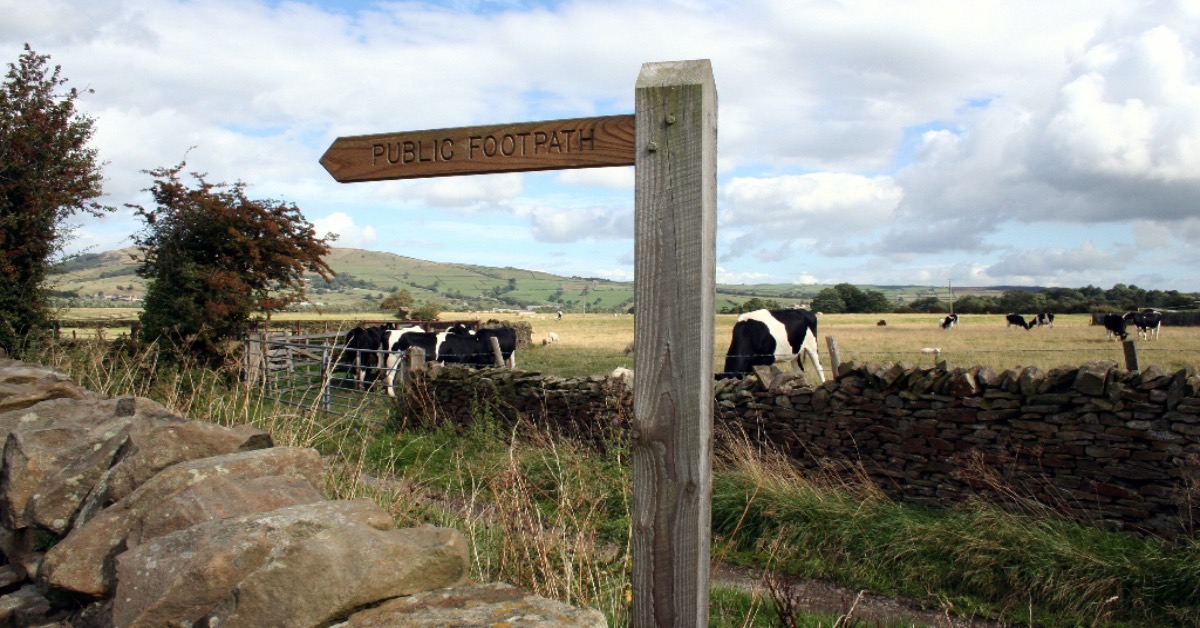
Yorkshire Dales.
It also follows a commitment by interest groups in the park to making “the Yorkshire Dales home to the finest variety of wildlife in England”.
The park’s nationally important wildlife populations include black grouse, rare plants such as bird’s-eye primrose, globeflower and baneberry, scarce invertebrates such as the northern brown argus butterfly and mammals, such as the red squirrel.
Read more:
- New bus service to link Harrogate and Knaresborough with Yorkshire Dales
- Yorkshire Dales Park Authority approves ambitious £11.2m spend
It is hoped the strategy will help create networks for the park’s abundant wildlife to increase biodiversity in its surrounding areas.
The draft strategy proposes what officers have described as a “relatively modest” increase in the proportion of the park covered by native woodland from 4.5% to 7% alongside creating nature recovery areas across 15% of the park.
Although both targets have been criticised as insufficently ambitious by some, several members raised concerns over calls to radically change the management of land, and in particular burning of the heather moorland to encourage regrowth and habitats for grouse, following proposals to phase it out.
Environmentalists have cited how a University of Leeds study concluded burning grouse moors degrades peatland habitat, releases climate-altering gases, reduces biodiversity and increases flood risk.
However, Wensleydale farmer Allen Kirkbride told the meeting long heather caused “chaos for square miles” when it caught fire.
He said:
“The idea of not burning heather is ludicrous.”
The authority’s outgoing member champion for the environment, Ian McPherson, said it faced a challenge in deciding how much of the national park should be set aside for nature recovery areas.
He said:
“What we are trying to do is get a good balance between the needs of environmentalists, farmers and land managers.”
Mr McPherson said while the possibility of reintroducing some native species to the area was being considered as part of the strategy it would not see “wolves and lynx and so on roaming the Yorkshire Dales”, but instead seek to raise awareness some species were at a low ebb.
New bus service to link Harrogate and Knaresborough with Yorkshire DalesImproved bus links from Harrogate and Knaresborough to the Yorkshire Dales will begin this weekend.
A new service, DalesBus 74, will run every Saturday from Knaresborough and Harrogate to Ilkley, Bolton Abbey and Grassington.
The Reliance bus leaves from Knaresborough Bus Station (stand C) at 9.10am and Harrogate Bus Station (stand 2) at 9.25am. It returns from Grassington at 5pm and Bolton Abbey at 5.25pm.
There are also minor changes to DalesBus 59, running between Harrogate and Skipton on Saturdays, from this weekend. All journeys will return from Skipton five minutes later, and the bus will no longer call at Millstones.
Read more:
- MP Andrew Jones ‘disappointed’ at funding snub for £116m bid to boost bus services
- Harrogate bus plans in tatters after government rejects £116m funding bid
From July 3, a service called Eastern DalesBus 825 will run on Sundays and Bank Holidays from Harrogate to Brimham Rocks, Fountains Abbey, Masham, Leyburn and Richmond.
These services are managed by Dales and Bowland Community Interest Company, which aims to improve sustainable access to the Yorkshire Dales National Park and Nidderdale Area of Outstanding Natural Beauty.
Dales Rover day tickets are £10 for adults and £18 for any group of up to two adults and three children. Concessionary bus passes for the elderly and disabled are valid for free travel on DalesBus 59 and DalesBus 74.
Tickets are available from the driver.
Yorkshire Dales Park Authority approves ambitious £11.2m spendThe Yorkshire Dales National Park Authority has approved its most ambitious programme of projects since being established in 1954.
But a meeting of the authority at Tennants in Leyburn heard that the £11.2 million spending plan for the coming financial year would be unsustainable in coming years as government funds had halved and it was being supported by new external funding and the extensive use of reserves.
Officers have warned that without a rise in its government grant the scale of the necessary budget cutbacks are likely to result in reduced services and work programmes from next year.
Referring to its government grant, the authority’s director of conservation and community Gary Smith told members:
“Essentially we are getting the same amount now as we were getting in 2010. What has changed is the amount of income we have generated from other sources.”
The meeting heard the authority’s spending this year would soar by some 30% over last year, and featured a huge increase in funding for land management activities, partly due to the authority’s success in attracting grants from a range of bodies.
Read more:
- Concerns over dwindling campsites in Yorkshire Dales
- Yorkshire Dales park authority sets out £11.2m budget spend
Members were told the Defra-funded Farming In Protected Landscapes and Woodland Trust’s Grow Back Greener initiatives were each supporting three authority staff as well as directly investing almost £2 million into the national park’s farms and businesses.
After being asked if the authority should be holding back more of its reserves its chief executive David Butterworth said using them was partly about wanting to deliver on the authority’s aims.
He added the decision to use the majority of its unallocated reserves also related to being “a little nervous about any government and whether they may claw back some reserves if they felt national park authorities were hoarding”.
Mr Butterworth said the authority wanted the government to provide greater longevity for funding projects, likening the authority’s efforts to attract grants from Whitehall to “chasing petals”. Mr Butterworth said:
“When those petals fall away you are left with nothing.”
Ahead of members passing the budget, recreation management member champion Nick Cotton:
People in Harrogate district urged to count stars to assess light pollution“It is quite extraordinary to think this budget is 50 per cent core grant and 50 per cent self-funding. It is massively different to anything we have experienced in the past. We are into unknown territory.
“We have got a budget ahead of us this year that we can all be proud of, delivering more than we have ever done. We’re keeping an eye on how things will change for next year.”
“We have got a budget ahead of us this year that we can all be proud of, delivering more than we have ever done. We’re keeping an eye on how things will change for next year.”
People in the Harrogate district are being urged to count the stars in the sky to measure light pollution.
The Campaign to Protect Rural England is carrying out the survey from Saturday, February 26, to Sunday, March 6.
The move comes after the Yorkshire Dales joined 15 other areas as a designated dark sky reserve in 2020.
It’s possible to see thousands of stars, the Milky Way, meteors and even the Northern Lights in some areas on clear nights.
Read more:
- Yorkshire Dales joins international dark sky list
- Paddle to the stars at Nidderdale reservoir as part of Dark Skies Festival
People are now being urged to sign up on the Campaign to Protect Rural England website where they can submit their counts.

A spokesperson for CPRE North and East Yorkshire added:
“Results from Star Count will be used to help make a map of where star-spotters are enjoying deep, dark skies.
“By showing on a map where light pollution is most serious or has risen, CPRE can work with local councils and others to decide what to do about it.”
A Dark Skies Festival is currently being held in the Yorkshire Dales until March 6. It includes events across the national park area.
Lack of affordable housing ‘killing’ villages in North YorkshireFormer Liberal Democrat leader Tim Farron has said second homes and holiday lets are “killing” rural communities in places such as North Yorkshire.
Mr Farron told a debate in Parliament last week that more than a quarter of the housing stock in the Yorkshire Dales was not lived in.
He added the majority of properties in some towns and villages were empty most of the year.
Mr Farron, whose constituency of Westmorland and Lonsdale in Cumbria is severely affected by second homes, called for action to “shift the dial and save the dales and other rural communities”.
He said:
“Excessive second home ownership is a colossal problem in our communities.
“The collapse of affordable, available housing for local communities is killing towns and villages in Cornwall, Northumberland, Shropshire, Devon, Somerset, North Yorkshire, the highlands of Scotland and rural Wales, as well as in my home of Cumbria.
Mr Farron accused the government of “inexcusable inaction to save our communities” and outlines a seven-point action plan.
The measures included making second homes and holiday lets new and separate categories of planning use so councils and national parks could limit the number of them in each town and village, giving councils the power to increase council tax by up to 100% on second homes in the worst-affected communities and ensuring Airbnb properties “meet the same standards as any other rental”.
Read more:
- ‘Bold and brave’ changes to prevent second homes in Dales
- Plans to convert landmark pub near Pateley Bridge into holiday cottage refused
Housing minister Christopher Pincher said rural communities faced “some very specific challenges”, which was why the government had changed the tax system.
“Since 2013, local authorities have been able to levy 100% of council tax on second homes, where the people who own them do not necessarily use the local services that they might, but through the council tax have to contribute to them; 96% of local authorities make use of that opportunity.”
He added changes had been made to stamp duty to help first-time buyers and a surcharge had been introduced for foreign purchasers of property.
Mr Pincher added:
“This issue is also why we have reformed the planning system. It is opaque, slow, and is not predictable. That does not help small and medium-sized enterprises—often the builders who build different types of homes for different tenures in the places that the big builders do not want.
“We need a system that will help those SMEs and is far more engaging.
“We also want, as a reform to be introduced soon, a new infrastructure levy to replace section 106, which tends to favour the bigger developers that can afford the bigger batteries of lawyers.”

The dark sky above the Nidderdale Area of Outstanding Natural Beauty (AONB) is one of the most beautiful and darkest in the country.
Being free from light pollution, it is the perfect place for families to stargaze.
Now, visitors to one of the area’s top tourist attractions are being invited to view the stars from a canoe at Scar House Reservoir as part of the seventh Yorkshire Dales and North York Moors National Park Dark Skies Festival.
How Stean Gorge is hosting a series of activities and pizza nights for the festival, which is returning from February 18 until March 6 after it was forced to go virtual last year due to covid restrictions.
It comes after the Yorkshire Dales National Park was officially granted the status of an ‘International Dark Sky Reserve’ at the end of 2020, making it one of the best places in the world to view the skies above.
Astronomy lovers will be able to glide and paddle a rafted canoe on the reservoir, one of three Dark Sky Discovery Sites in the Nidderdale AONB, surrounded by the moon and the stars.
Tony Liddy, head of outdoor education and estates manager at How Stean Gorge, said:
“Scar House Reservoir is one of the darkest places in the UK because there is no light pollution. When the weather is on your side, you can go up there and it is perfect – flat and calm and not a cloud in the sky.
“We do the trips with small numbers, with 16 for each trip, which last around 90 minutes. Saturdays have been booking up fast, so we have opened bookings for Fridays.
“The canoes are rafted together and you head out in groups of six or eight with an instructor. You can then use a pre-downloaded app on your phone to look at the constellations.
“Children from age seven can do the canoeing, so it’s great to do with the kids. Families often come back and do the other activities at How Stean.”
The canoe trips, which will be weather dependent, will take place in February from 7pm until 8.30pm on Saturday 19, Friday 25 and Saturday 26 and in March on Friday 4, Saturday 5, Friday 11 and Saturday 12.
If the canoeing is unable to go ahead, alternative activities, including gorge walking or caving, will be provided.
An International Dark Sky Reserve (IDA) is defined as a ‘public or private land possessing an exceptional or distinguished quality of starry nights and nocturnal environment that is specifically protected for its scientific, natural, educational, cultural, heritage and/or public enjoyment.’
Other sites that have protected status include the Grand Canyon and Death Valley National Parks in America, Mont-Mégantic National Park in Canada and NamibRand Nature Reserve in Namibia.
For more information and to book click here.
Flurry of Yorkshire Dales barn conversions raises call to close planning loopholeDevelopers are exploiting a planning loophole that allows them to convert traditional stone barns in the Yorkshire Dales, a meeting has heard.
Members of the Yorkshire Dales National Park Authority’s audit committee called for the loophole to be closed to ease the national park’s housing crisis.
A policy was introduced six years ago to conserve the area’s historic agricultural buildings. It allows owners to choose whether the barns become homes for locals or holiday lets.
But although the dual policy has brought some barns back into use, the overwhelming majority of permitted conversions have been holiday lets, which could be sold for about £500,000, the meeting heard.
Of the 198 planning consents granted, only 28 per cent have had local occupancy or rural worker restrictions placed on them.
Previous policies had required local occupancy of most barn conversions, the only exception being where it was linked to farm diversification, in which case holiday letting was also permitted.
The meeting heard many locals were being priced out of buying barns, as even derelict ones with planning permission to be converted were now being marketed at between £150,000 and £200,000.
Officers added at £1,500 per square metre, the costs of converting barns were usually higher than new-builds.
Read more:
- Grants of up to £150,000 available for Nidderdale farmers
- Fears Nidderdale could become ‘barren’ unless more affordable homes are built
They said barn conversions should be of wider socio-economic benefit to the national park, where there are several ongoing initiatives aiming at attracting younger residents.
Too many holiday lets
The meeting comes ahead of the creation of a new Local Plan for development.
David Ireton, the North Yorkshire County councillor for Upper Craven said he had been a supporter of the dual policy, but had changed his mind.
He said the authority was set to examine whether a principle place of residence requirement should be brought in on the barns, “which would then allow new blood to come into the Dales with children”.
Mr Ireton said:
“It’s disappointing that so many of these have gone for holiday lets. We’re trying to encourage people to come and live in the Dales, which has got to be good for keeping schools and businesses open.”
Swaledale councillor Richard Good said giving approval to a barn conversion that enabled a Swaledale farming family to remain in the Dales had done much good for the authority’s image.
He added:
“Every time there is one that’s to be a holiday cottage there’s load of muttering, but what can we do about it? Not a great deal.”
The authority’s longest-serving member Robert Heseltine said the barns remained an opportunity to “give that indigenous population a chance to have a permanent home”:
“This is something this authority has to address. There’s been an explosion of tourist accommodation, particularly at the lower end with yurts such like, but tourism isn’t the be-all-and-end-all of the economy in any rural area. The need to bring young blood into communities is something that should never be ignored.”