No. 3: A landmark anniversary year for Ripon Cathedral
In this article, which is part of a series on the 12 stories in the Harrogate district that shaped 2022, we look at a historic year for Ripon Cathedral.
Throughout this milestone year for Ripon Cathedral the iconic building has been at the heart of the local and regional community, playing a central role in events of celebration and sadness.
Its landmark 1,350th anniversary coincided with the Queen’s Platinum Jubilee in June and Her Majesty’s death and funeral in September.
The cathedral captured every emotion, from the joyous bells that rang out to mark the monarch’s history-making 70-year reign, to flags flown at half mast to signal her passing.
During 2022, it provided a fitting setting for activities ranging from the spectacular Rome to Ripon exhibition of artworks depicting the life of its founding father Wilfrid, the city’s patron saint, to the hosting of civic services for North Yorkshire in June to celebrate the jubilee and in September to mourn The Queen’s death.

The cathedral was a focal point for mourning following The Queen’s death in September
The ancient church, whose crypt dates back to 672 AD, is the foundation stone upon which Ripon has developed over the centuries and encapsulates many aspects of the city’s history through carvings, sculptures, stained glass and monuments.
For Wilfrid, a patron of the arts who studied at Lindisfarne, the Rome to Ripon exhibition, provided a modern twist in the telling of his story, including three centrepiece paintings by internationally-renowned Syrian artist Sara Shamma.
The 1,350 celebrations ran for six months from April until October and also included dancing in the nave, a beer festival in the cathedral grounds, a pilgrimage from Bradford Cathedral, a Son et Lumiere, lectures from historians, a series of tours taking visitors behind the scenes, and an organ festival.
As a further lasting reminder of the patron saint’s work in Ripon a ledger stone at the entrance to the quire, was dedicated to Wilfrid at a service attended by the Archbishop of York, The Most Revd and Rt Hon Stephen Cottrell and Bishop of Leeds, The Rt Revd Nick Baines.
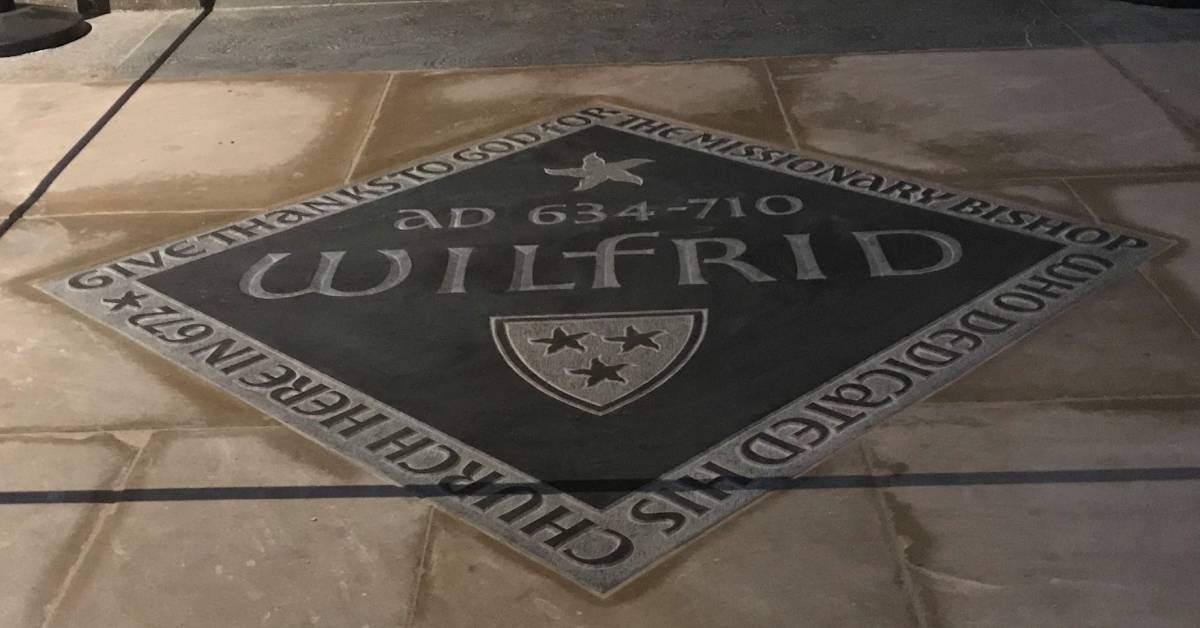
The ledger stone dedicated to Wilfrid
Who was St Wilfrid?
Wilfrid – one of the greatest and most controversial English saints – was born into a noble Northumbrian family. He studied at Lindisfarne before embracing the Roman ways, was deposed on more than one occasion, and yet helped unite England behind a single Christian tradition.
It is said he was born in flames, survived shipwrecks and exile, and his jailers could not keep him chained. He was a healer, he kept people from hunger by teaching them to fish, and it is said that the moon and stars shone so bright for him, that a lunar rainbow appeared on the anniversary of his death.
In his early twenties, he made a pilgrimage to Rome and was much inspired by the lives of the saints there, and the great basilica churches. He brought some of the beauty of Rome back to England with him.
Read more:
New artworks commissioned for Ripon Cathedral anniversaryUnique works of art are being created as part of a programme to mark the 1,350th anniversary of Ripon Cathedral.
They will include paintings by internationally-renowned Syrian artist Sara Shamma, who has been commissioned to produce three portraits featuring St. Wilfrid and his contemporaries, who founded the church in 672.
Ms Shamma’s work will be centrepieces of the From Rome to Ripon exhibition, which has been produced in collaboration with Paul Baily and Jack Chesterton.
It will be on display at the cathedral from May 27 until November 1.
Before then, weaver, Chrissie Freeth’s tapestry work Beyond Words can be seen from Thursday April 28 until May 26.
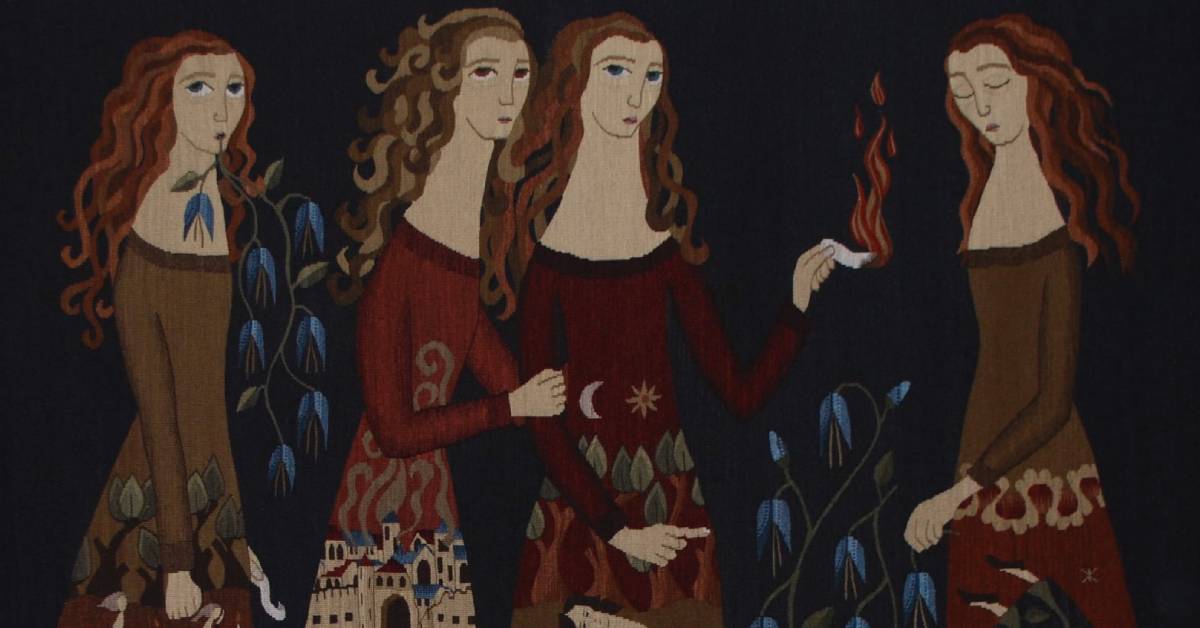
Chrissie Freeth’s tapestries will be on display from April 28
Ms Freeth, was shortlisted for last year’s Cordis Tapestry prize and her work Momento Mori was also selected for the Royal Academy’s summer exhibition.,
She blends folklore, family stories, medieval iconography, and craftsmanship in her large tapestries, 13 of which will be exhibited at the cathedral.
Between May 27 and July 26, Peter Marlow’s exhibition will give a fascinating insight into how English cathedrals developed
The Dean of Ripon, the Very Revd. John Dobson, said:
“To reimagine this sacred space with new artworks from such a wide range of renowned artists, each working in different ways, is a fitting tribute to our founding father, Wilfrid.
“It will tell us something new about who we are, re-connect us with our past, and ground us in our future and I wholeheartedly commend this arts programme to all of you.”
Celebrations of the iconic building and its fundamental importance to Ripon’s development, begin on April 28 and will continue over the Bank Holiday Weekend,
The festivities will include dancing in the nave to a local jazz and swing band, a beer festival on the Bank Holiday Monday in the cathedral grounds, a pilgrimage from Bradford Cathedral, and a Son et Lumiere finale that promises to recreate Wilfrid’s miracles – including that of the lunar rainbow.
Rome to Ripon is a partnership between Ripon Cathedral and Art in the Churches, an award-winning local charity that aims to bring major contemporary art into rural churches to reposition them as the beating heart of their communities.
Who was St Wilfrid?
Wilfrid – one of the greatest and most controversial English saints – was born into a noble Northumbrian family, a patron of the arts, he studied at Lindisfarne before embracing the Roman ways, was deposed on more than one occasion, and yet helped unite England behind a single Christian tradition.
It is said he was born in flames, survived shipwrecks and exile, and his jailers could not keep him chained. He was a healer, he kept people from hunger by teaching them to fish, and it is said that the moon and stars shone so bright for him, that a lunar rainbow appeared on the anniversary of his death.
In his early twenties, he made a pilgrimage to Rome and was much inspired by the lives of the saints there, and the great basilica churches. He brought some of the beauty of Rome back to England with him.
Read more: