The annual Boxing Day tug of war over the River Nidd in Knaresborough has been cancelled due to growing covid uncertainty.
The festive tradition attracts as many as 1,000 spectators to the banks of the Nidd and the bridge between the Half Moon and Mother Shipton’s Inn to watch teams from the two pubs compete.
But the Half Moon has announced on its Facebook page that the event will not take place because it does not want to “risk people’s health or the NHS’s ability to cope”.
It said:
“Sorry everyone but we’ve taken the decision today to cancel the tug of war event this year. The covid case numbers etc are all going the wrong way to make the event safe. Even though it’s outdoors, spectators are literally shoulder to shoulder over the bridge and on the river banks.
“We also can’t restrict the numbers of people who might attend to watch it so it would be impossible to properly manage/check NHS covid passes/ask people to put masks on etc.
“We are gutted as it’s such a fun event, a wonderful Knaresborough tradition and great for the community and our charities but hopefully we’ll get to do it next year.”
Read more:
- Knaresborough ‘bed race’ protest against raw sewage being dumped into Nidd
- Andrew Jones MP tells constituent that clarity is needed on No 10 party
Five possible cases of the Omicron variant have been found in the Harrogate district.
With the Prime Minister warning of a “tidal wave” of Omicron cases set to spread across the UK, it remains to be seen how many other events in the district are cancelled in the weeks ahead.
Knaresborough ‘bed race’ protest against raw sewage being dumped into NiddA group pushed a bed through Knaresborough this morning to protest against water companies releasing raw sewage into the River Nidd.
Water companies are legally allowed to release sewage through overflow pipes when the sewage system becomes too full which can happen during increased rainfall.
A section of the Nidd is crossed by competitors in the annual Knaresborough bed race, so Jeremy Scott, who organised today’s protest, wanted to take a bed from Conyngham Hall through the town to raise awareness.
Mike Kaye, who was on the protest, said:
“More people want to swim in rivers and have a good a time so it’s bonkers. The water companies should put investment in so it doesnt need to happen. It’s crazy.”
Stray Ferret research has found that Yorkshire Water released raw and untreated sewage into Harrogate district rivers and becks on 3,800 different occasions last year for a total of 36,000 hours.
Read more:
- Raw sewage released into Harrogate district rivers for 36,000 hours last year
- Fears 4,000 new homes in Harrogate could increase sewage in rivers
- River Nidd a ‘potential health risk’ after MPs’ vote on sewage
In October there was anger after MPs, including local Conservative MPs Andrew Jones, Julian Smith and Nigel Adams, voted to reject a Lords amendment to the Environment Bill to stop raw sewage from being pumped into rivers.
In November, MPs then voted in favour of another amendment to the bill that will legally require water firms to make a “progressive reduction” in the amount of sewage it dumps, but campaigners said this doesn’t go far enough.
Mr Kaye wanted to raise awareness about the bill and put pressure on local MPs as well as Yorkshire Water to stop sewage from being released into local rivers.
He said:
“There is far too much sewage in the Nidd and the Wharfe.”

A Yorkshire Water spokesperson said:
Wild swimmer says River Nidd pollution levels ‘concerning’“As rainwater can be unpredictable, we have permitted storm overflows on our sewer network to act as a relief valve. They help to reduce the pressure on sewers during heavy rainfall events and stop the system from backing up and flooding homes and gardens by allowing heavily diluted wastewater to be discharged into watercourses.
“This is permitted by the Environment Agency and closely monitored by them and us.”
Wild swimming has become more popular in recent years among people who prefer swimming in rivers and lakes than inside buildings.
Knaresborough woman Miranda Newbery is among those who have taken up the sport. She started last year during lockdown and says feeling connected to nature whilst exercising gives a sense of freedom and changed her life.
Ms Newbery currently swims in the River Nidd with friends once or twice a week but says pollution levels have become an increasing concern.
Last summer she introduced her children to wild swimming. They later fell ill and although she cannot be sure it was due to pollution she has since bought them snorkel-like masks to wear.
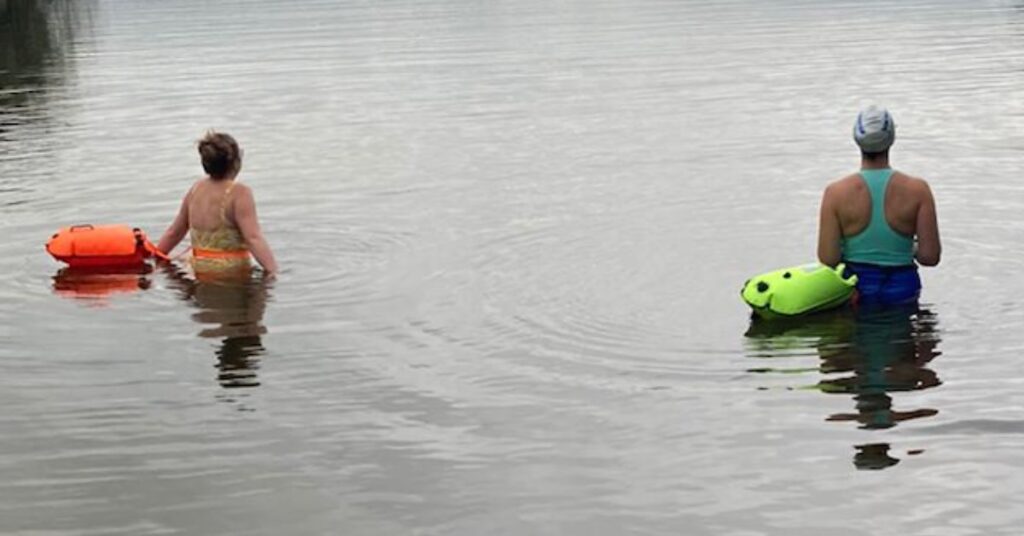
Swimming with a friend in Ullswater
She said:
“It makes me nervous, of course I couldn’t prove it was because of the water but it gives us all so much pleasure I don’t want to stop the kids doing it.
“The river is key to Knaresborough and used by so many. It is something we should look after with our politicians working to protect it too.”
The state of rivers has been a hot topic since MPs voted last month against an amendment to stop water companies, such as Yorkshire Water, pumping raw sewage into British rivers.
Andrew Jones, the Conservative MP for Harrogate and Knaresborough was among those who voted against the amendment. He later said he would support a new amendment to the Environment Bill that would reduce sewage in waterways.
Read more:
- Harrogate firm EnviroVent sets 2030 net-zero target
- Cycling campaigners stop in Harrogate on 500-mile tour to Glasgow
Failed pollution tests in Nidd
The Stray Ferret spoke to other local residents last week who echoed Ms Newbery’s views and called for action to reduce pollution in local rivers.
Jacqui Renton, from Knaresborough, who swims in the Nidd as part of her training for a British championships open water swimming competition, said the Nidd had failed water pollution tests and was “a potential health risk”.
Nevertheless the swimmers plan to keep plunging into the Nidd.
Ms Newbery says she’s shared laughter and heartbreak with other wild swimmers over the last year and encourages people to give it a go.
“There is something about the combination of the cold water and being in the beautiful natural surroundings that we are blessed with in Knaresborough that is truly restorative.”
“It’s a mindful practice and sharing that with friends is so special.”
River Nidd a ‘potential health risk’ after MPs’ vote on sewage
Residents have said MPs voting against an amendment to stop raw sewage being pumped into rivers have created a “potential health risk” in the River Nidd.
Last week, MPs voted 268 to 204 against the Lords amendment, which means water companies such as Yorkshire Water can continue pumping raw sewage into British rivers.
Andrew Jones, the Conservative MP for Harrogate and Knaresborough was among those voting against the amendment.
Last year, every section of the Nidd that runs through the Harrogate district failed water pollution tests due to wastewater contamination – including raw sewage.
The Nidd is used for recreation by families, swimmers and even competitors in Knaresborough Bed Race. Some have expressed disappointment at the MPs’ vote.
Jacqui Renton, from Knaresborough, who swims in the Nidd as part of her training for a British championships open water swimming competition, said:
“Last year the River Nidd failed water pollution tests due to the river being contaminated with wastewater. This included raw sewage, making swimming in it a potential health risk.
“More worryingly, raw sewage being discharged into our rivers of course has a bigger consequence for wildlife, threatening the biodiversity and ecosystem health, which is why urgent action is needed.”
Read more:
- £1.2bn Knaresborough incinerator has never met recycling targets
- £740,000 awarded as part of Knaresborough incinerator fund
A section of the river in Knaresborough is also used by competitors in the annual bed race. Kevin Lloyd, chairman of the bed race committee, urged Yorkshire Water to stop pumping sewage into the river on the day of the event.
However, Mr Lloyd said more action was needed:
“Any initiative that protects the environment is a good thing so I am disappointed at this defeat.
“Yorkshire Water are sympathetic to the event and do what they can but there’s always more that can be done to protect the environment.”
Nidd a ‘huge leisure attraction’
Cllr Hannah Gostlow, a Liberal Democrat who represents Knaresborough Scriven Park on Harrogate Borough Council, also raised concerns as a councillor and local resident.
She said the Nidd was a “huge leisure attraction” used by paddle boarders and young children.
She added:
“The River Nidd is already polluted with wastewater, including with raw sewage, and failed recent pollution tests. The government should be stopping sewage going into our rivers full stop.”
The Stray Ferret contacted Mr Jones about the issue but he declined to reply.
However, he said on his Community News website that he would support a new amendment to the government’s Environment Bill providing a costed plan to reduce sewage in our waterways. He said:
Image gallery: Birstwith Duck Race returns“It would not be sensible to support such a complicated change without having a costed plan. This is what the Lords amendment lacked and why I did not support it.”
Birstwith Duck Race returned yesterday after an absence of five years.
Hundreds of toy ducks were released into the River Nidd, each one carrying the hopes of whoever had drawn it.
They then raced downstream in the revived wacky village tradition. Holly Shaw’s duck took first prize.


OLYMPUS DIGITAL CAMERA
Read more:

OLYMPUS DIGITAL CAMERA

OLYMPUS DIGITAL CAMERA

OLYMPUS DIGITAL CAMERA
Clean water is being pumped into the River Nidd amid hopeful signs that most fish survived last weekend’s category one major pollution incident.
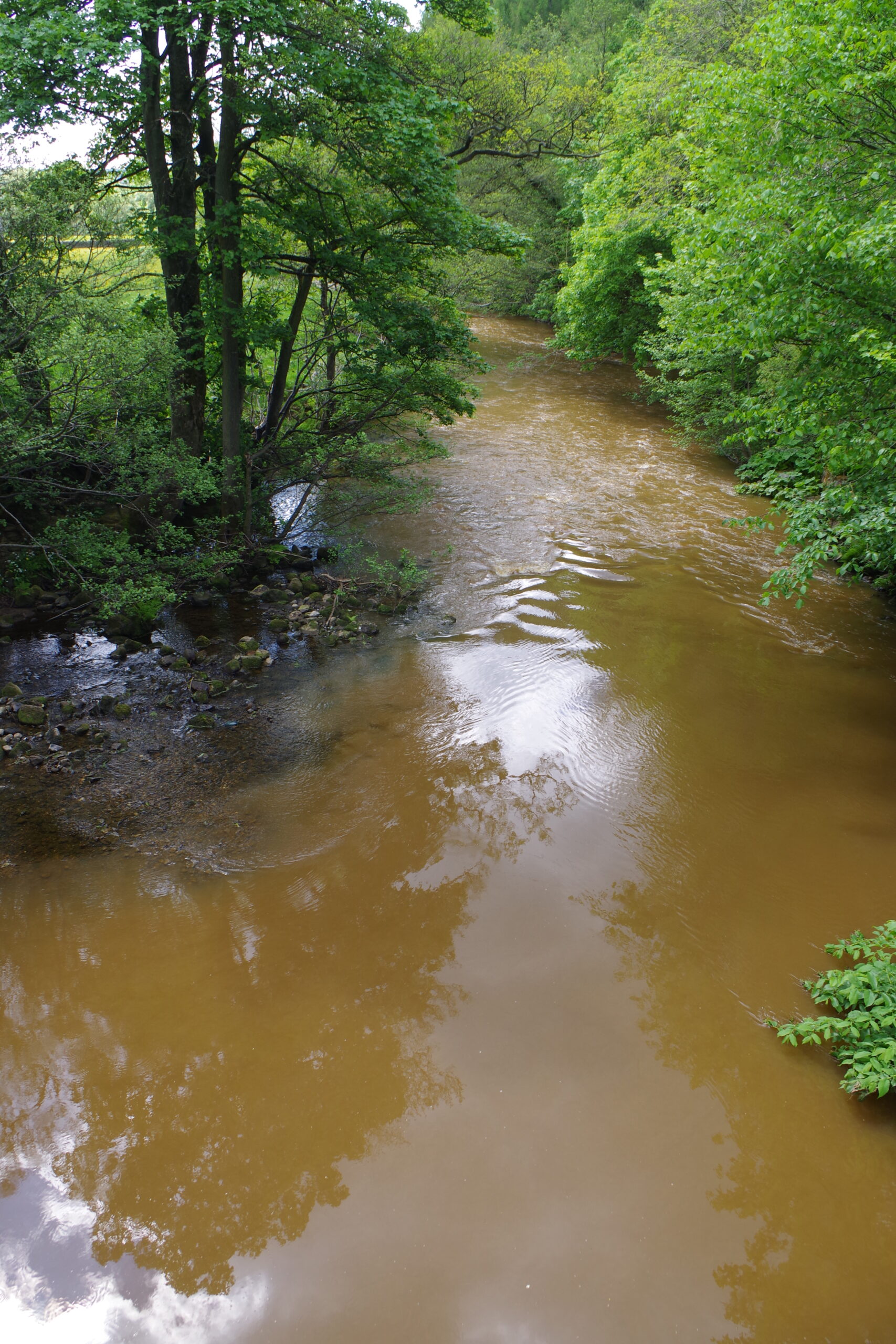
A 12-mile stretch between Gouthwaite reservoir and Hampsthwaite turned chocolate brown on Saturday, prompting fears for the predominantly trout and grayling that inhabit the water and other forms of river life.
Yorkshire Water issued a statement on Sunday saying it had suspended safety work at Gouthwaite by its contractor Mott MacDonald Bentley, which it is thought may have stirred up huge quantities of silt.
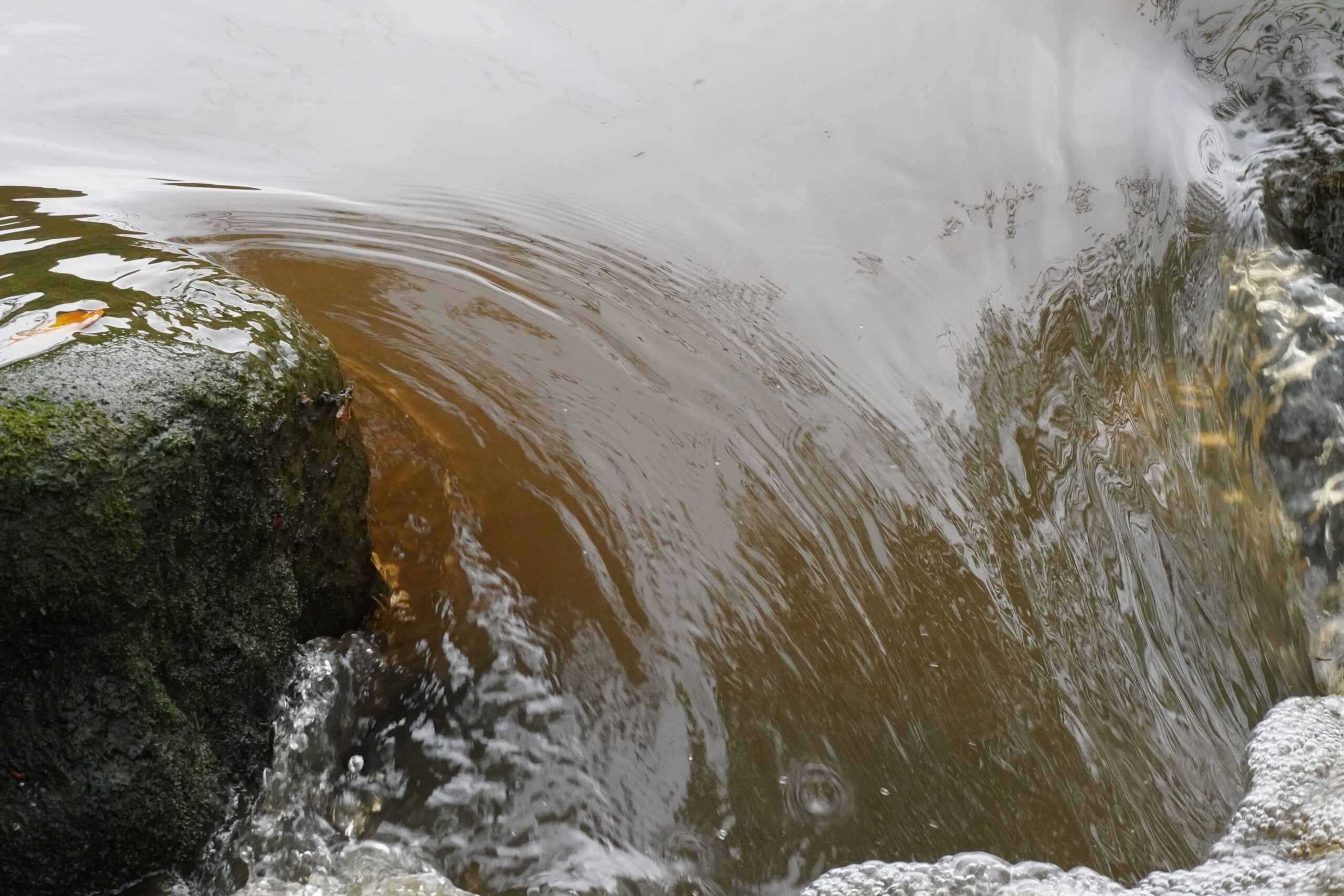
The River Nidd turned chocolate brown.
The company is excavating a trench as part of a long-term project to install a siphon at Gouthwaite dam to enable it to rapidly reduce water levels in an emergency.
Yorkshire Water has declined to comment since the weekend when asked by the Stray Ferret what action it has taken this week and whether it had conducted an environmental impact assessment before the project began.
John Shillcock, president of Nidderdale Angling Club, last night told the Stray Ferret he had heard from multiple sources Yorkshire Water has installed a pipe and was pumping in clean water from further up the reservoir and over the dam. He added:
“The river is much clearer and the cloudiness has passed on downstream.
“The Nidderdale AC secretary and I visited the river today and were much relieved to see that fish were rising and there was evidence of aquatic insect life.
“So this is good news for now, but Yorkshire Water have not made any attempt to let us or other interested parties know what measures they are intending to take to enable them to continue with the siphon installation without the same thing happening again.”
No fish deaths reported
The Stray Ferret asked the Environment Agency, which declared a category one major pollution incident, if it could clarify what action had been taken this week.
A spokesman said it was an ongoing investigation that would take a while to conclude and no further details were available. He added there were no reports of any fish deaths so far.
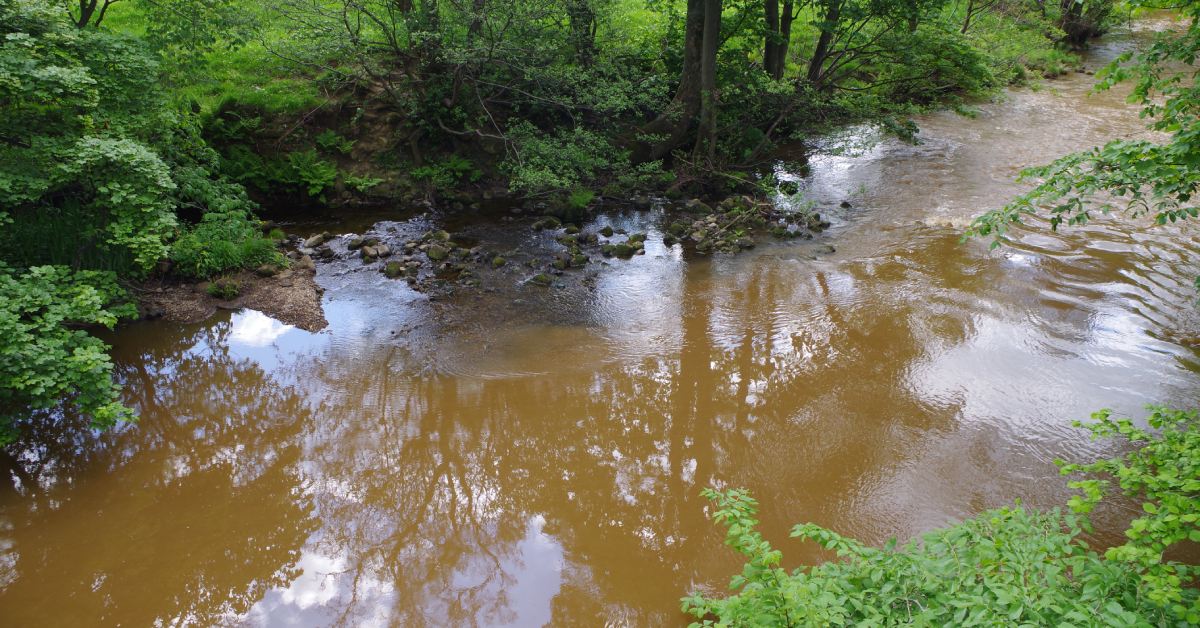
The River Nidd last weekend.
Gouthwaite, which is three miles north of Pateley Bridge, is one of three reservoirs in upper Nidderdale, along with Scar House and Angram, which are further upstream.
The other two supply water but Gouthwaite was built to regulate the flow of the upper Nidd.
Gouthwaite is also a designated Site of Special Scientific Interest in Nidderdale Area of Outstanding Natural Beauty
Major incident opened into River Nidd ‘disaster’
The Environment Agency has opened a category 1 major pollution incident after a 12-mile stretch of the River Nidd turned chocolate brown.
Experts are still trying to assess the extent of the damage to fish and other river life between Gouthwaite reservoir and Hampsthwaite after huge quantities of silt flowed downstream on Saturday.
Anglers and ecologists are calling for action against whoever is responsible and urging the Environment Agency and Yorkshire Water, which was carrying out safety work at Gouthwaite, to come up with a recovery plan.
An Environment Agency spokesman said today it “continued to investigate” the Yorkshire Water works, which is is thought may have stirred up the silt that flowed downstream on Saturday.
The spokesman added:
“Large quantities of silt in a river can harm fish and smother aquatic plants and invertebrates, starving them of light and oxygen.
“Whilst there is no longer any silt entering the river system, it may still be visible as it moves downstream. The Environment Agency continue to monitor the situation and assess the impacts to determine what further action may be necessary.”
With the water still discoloured, it remains difficult to assess the impact on river life.
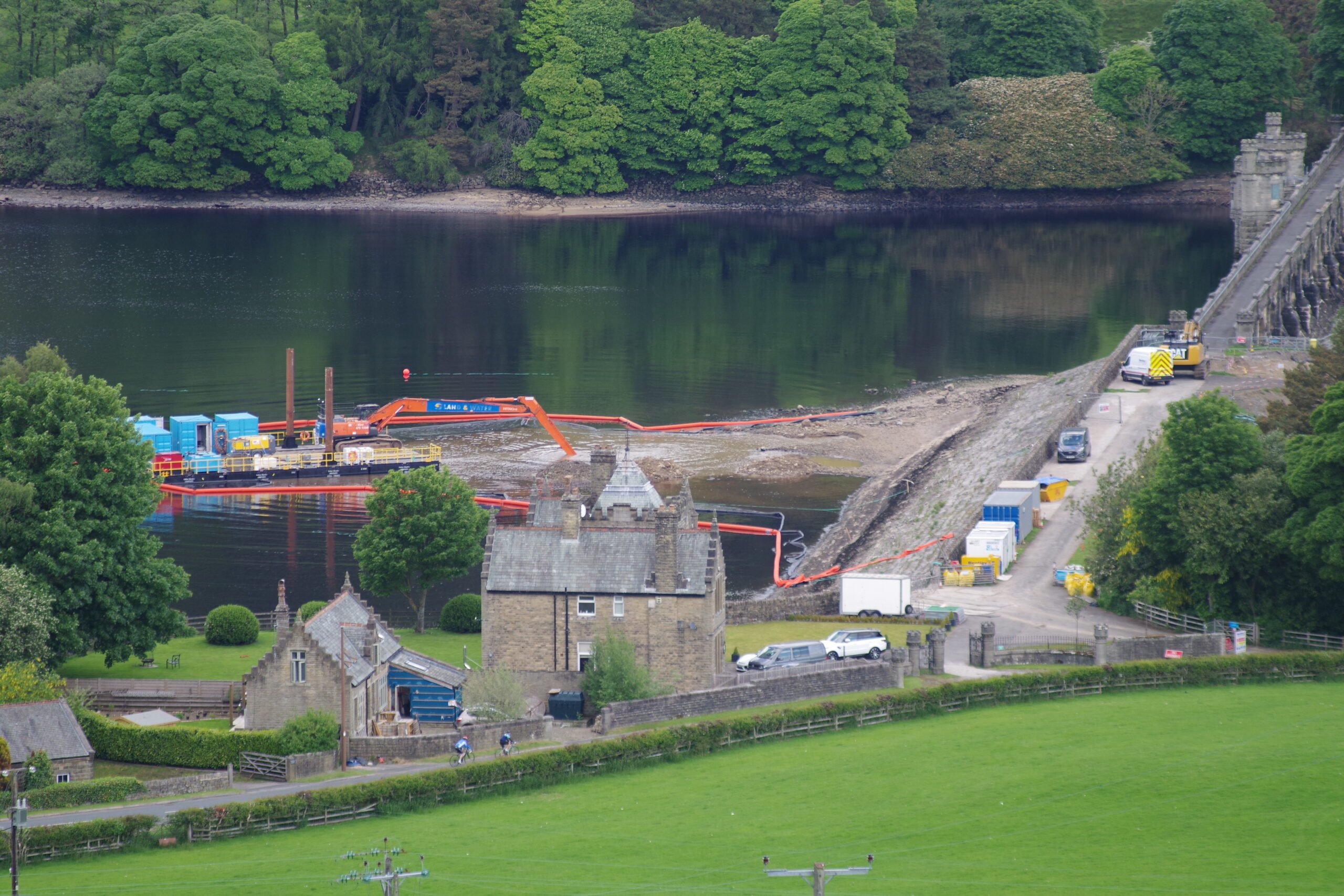
The work at Gouthwaite dam
Dr. John Shillcock, president of Nidderdale Angling Club and a former ecology officer in the area, said:
“In my past experiences, quantities of sediment of this type block out light and can reduce oxygen levels in the river, harming or even killing river life including invertebrates and other organisms on which fish and other river life depend.
“We are awaiting reliable data on the level of sedimentation before we can assess what damage has been done to an extremely precious river system.
“We would like Yorkshire Water to work closely with the Environment Agency to collect as much data and samples as to work out the best course of action to minimise the immediate danger to river life, and to build a deliverable long-term strategy to enable the river to recover from this avoidable incident as quickly as possible.”
Read more:
- River Nidd turns brown after environmental ‘disaster’
- Who is the mystery Good Samaritan carving seats in Nidd Gorge?
The affected stretch of the Nidd is known for grayling and trout.
One angler, who asked not to be named, said the amount of silt would harm oxygen levels on which fish depend. He added:
“There should be some sort of action against whoever is responsible for this. It is an environmental disaster.”
‘Heartbreaking to see’
Alastair Ferneley, vicar of Holy Trinity Church, Dacre Banks, said:
“It’s just heartbreaking to see at the moment — it makes me feel sick in the pit of the stomach.
“As I understand it the slit could choke all the bottom dwelling invertebrates and take out the entire food chain — all the things I watch for: dippers, kingfishers, otters, most of the flying insects that spawn in the rivers, the birds and bats that feed on them.
“I’m hoping it won’t be as bad as a I fear it could be. What we need is a good flood to two to clear the silt out and quickly, but not sure that’s very likely.
“It’s a taste of how fragile the environment and everything that depends on it is.”
A Yorkshire Water spokeswoman said it had nothing to add to its statement yesterday, which said it was working with the Environment Agency to investigate what had caused the sediment in the River Nidd to be disturbed. The statement added:
“We’ve temporarily suspended some work our capital partners Mott MacDonald Bentley were doing upstream at Gouthwaite reservoir while we investigate.”
River Nidd turns brown after environmental ‘disaster’
The River Nidd has turned chocolate brown amid fears for the lives of thousands of fish following an environmental ‘disaster’ over the weekend.
Several miles of the Nidd between Gouthwaite reservoir and Hampsthwaite have been affected.
It is believed safety work by Yorkshire Water at Gouthwaite reservoir, which is just north of Pateley Bridge, may have stirred up silt deposits.
A Yorkshire Water spokeswoman said:
“We’re working with the Environment Agency to investigate what’s caused the sediment in the River Nidd to be disturbed.
“We’ve temporarily suspended some work our capital partners Mott Macdonald Bentley were doing upstream at Gouthwaite reservoir while we investigate.”
The work at Gouthwaite dam
John Shillcock, an ecologist who is president of Nidderdale Angling Club, described the incident as an “environmental disaster”, the scale of which remained unclear. He added:
“It is impossible to know at this stage what the effect has been on the fish and invertebrates.
“There is no sign of rising or dead fish and it is not safe to wade to take invertebrate samples. There is no visibility to know where you are putting your feet.”
Read more:
- Raw sewage released into Harrogate district rivers for 36,000 hours last year
- New flood alerts this evening on River Nidd near Harrogate
He said Yorkshire Water was excavating a trench as part of a long-term project to install a siphon at Gouthwaite dam to enable it to rapidly reduce water levels in an emergency.
He added it appeared this had churned up 120 years of accumulated silt, which had flowed from the reservoir into the river via the discharge control valves.
Mr Shillcock said the angling club had asked to be kept informed about the works and it wanted to know whether an environmental assessment had been conducted to assess risks ahead of works of this magnitude.
He said the Nidd from the dam downstream was a lovely upland trout and grayling water.
The water, he added had been “crystal clear” and of such quality there had been no need to stock fish for the last three years.
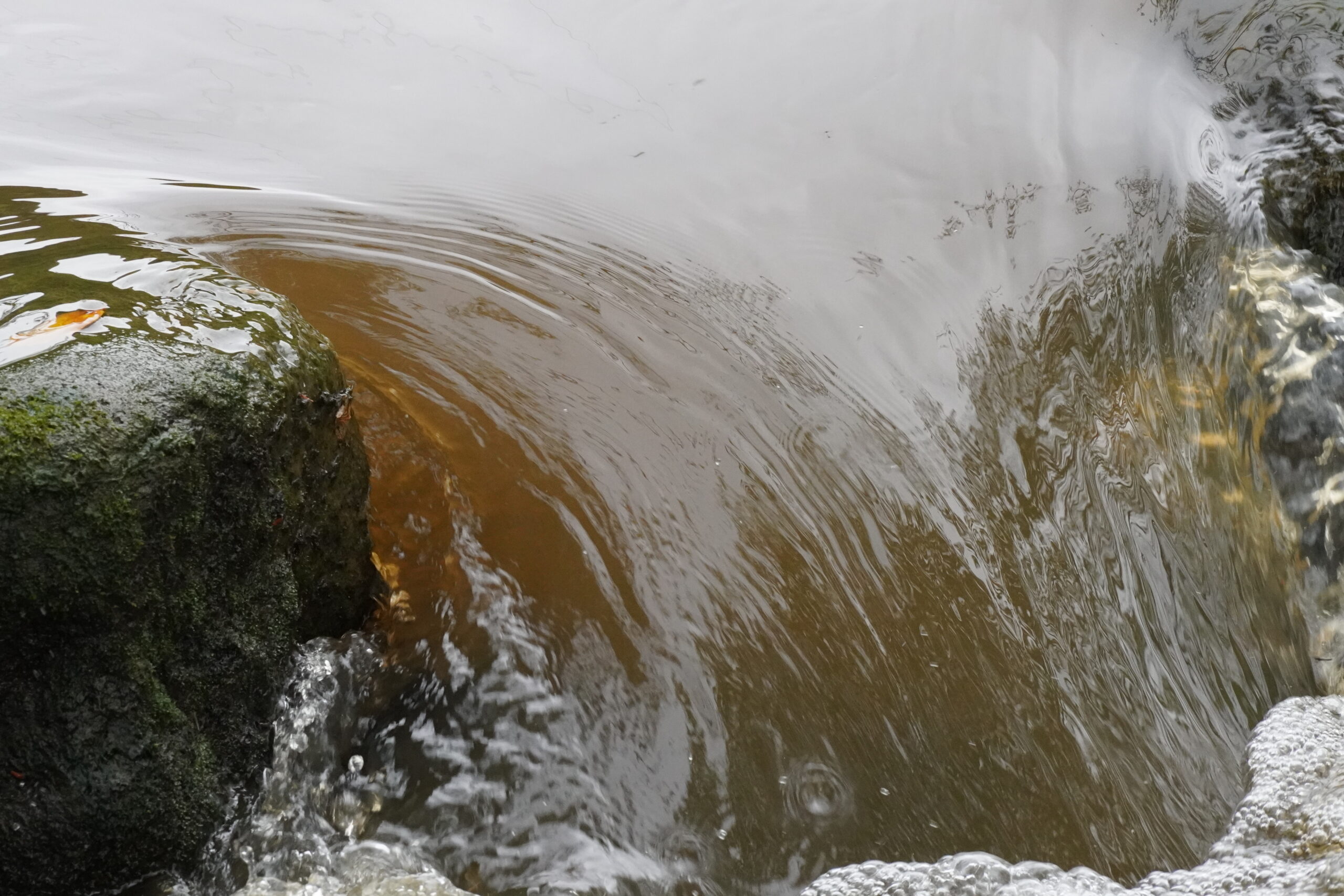
These pictures taken yesterday show the colour of the water.
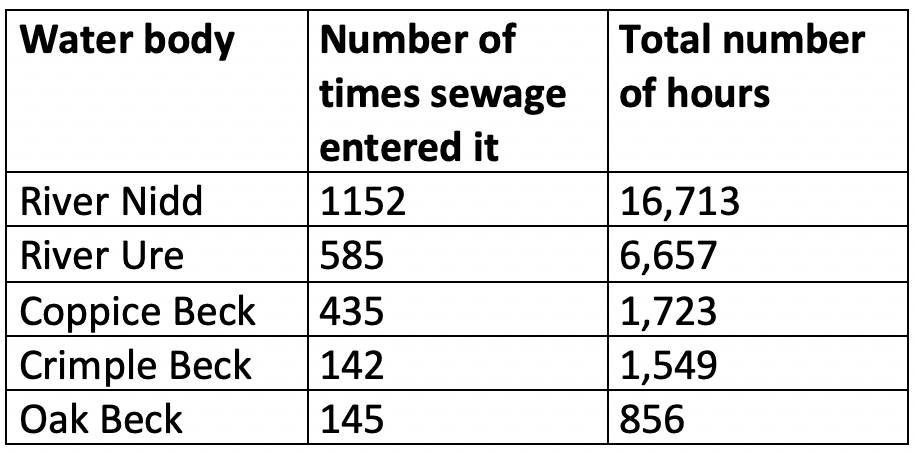
Yorkshire Water released raw and untreated sewage into Harrogate district rivers and becks on 3,800 different occasions last year for a total of 36,000 hours.
The figures, which were shared with the Stray Ferret by Yorkshire Water, show the scale of river pollution that the Environment Agency said is causing harm to the environment.
Water companies are legally allowed to release sewage through overflow pipes when the sewage system becomes too full which can happen during increased rainfall.
Some of the data is below:
‘Wouldn’t even let dogs in’
Yorkshire Water said the sewage has been diluted by rainwater and it is investigating the environmental impact of the storm overflows. But people who use and enjoy the rivers said they were concerned about the pollution. Harrogate district rivers such as the Nidd, which runs through Pateley Bridge and Knaresborough, offer some of our most scenic places to visit.
Kath Martin, who runs the Facebook page Keep Nidd Gorge Gorgeous, said the Nidd “can get very nasty” due to the pollution.
She said:
“I wouldn’t let children or even dogs in the water”.
Kath was part of the campaign that fought to protect Nidd Gorge from a major new road and said “it’s an area we have to protect.”
She added:
“It needs someone at the top to do something about the pollution. We have to address it.”
Concern
Whilst the raw sewage that lurks in Nidd or the Ure makes it unappealing for anyone wanting to wild swim, its impact on local wildlife could also be severe.
Environment Agency data from last year revealed that every section of the River Nidd that runs through the Harrogate district failed annual water pollution tests due to the river being contaminated.
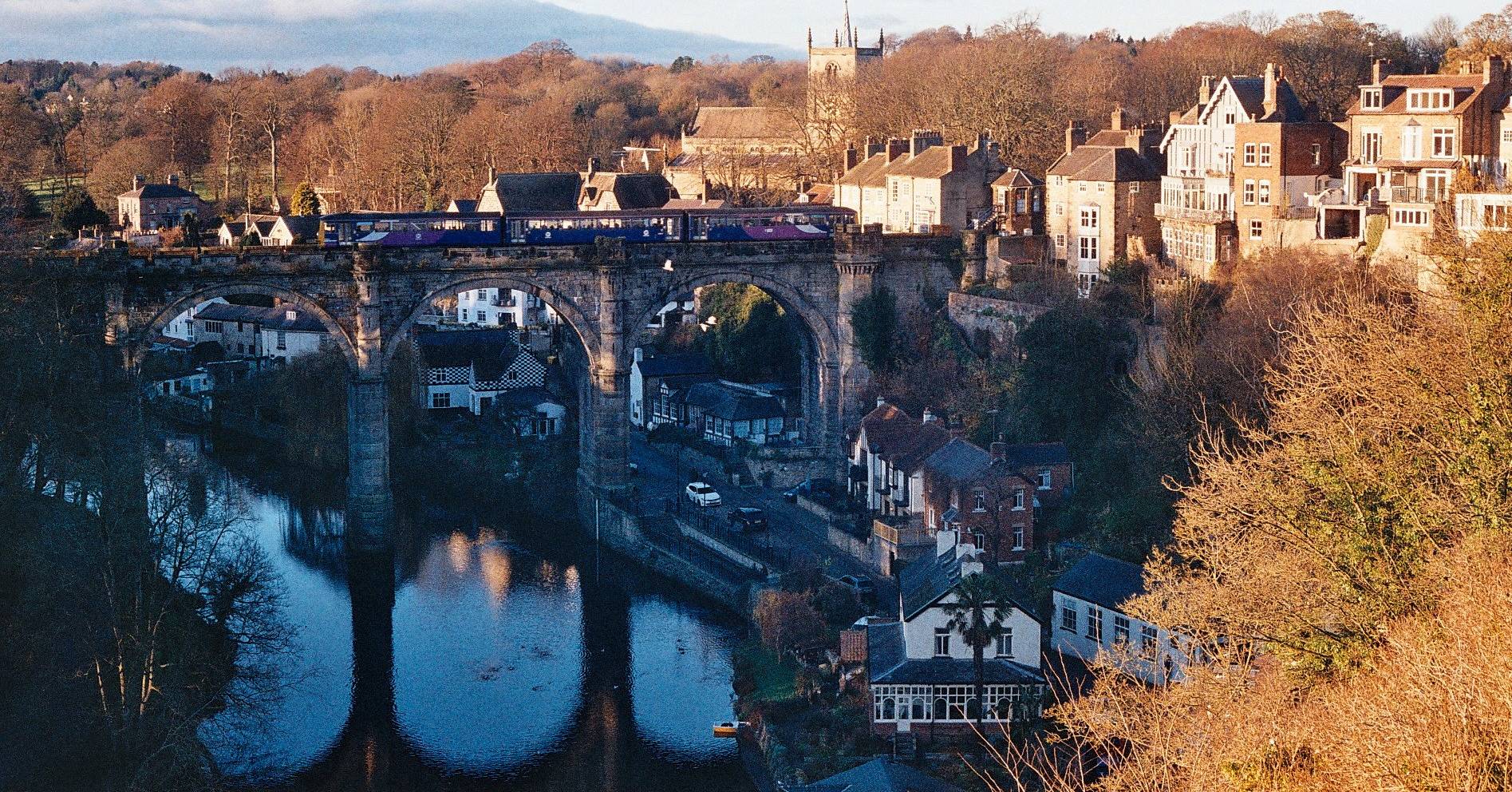
David Clayden is secretary of the Harrogate Flyfishers’ Club. Members fish on the section of the Nidd that runs through Darley, close to where Yorkshire Water released sewage over 2,800 hours last year.
He said he was concerned about the figures and added the club will soon testing the water to try and gauge its impact on the fish.
He said:
“Sewage takes oxygen out of the water so fish can’t breathe. This is particularly important for trout which we fish. They need clear water.”
“The club would want to know that every effort is being taken to maintain the river in a lovely, as well as fishable, state.”
Harm to the environment
The Environment Agency told the Stray Ferret that nationally, the number of sewage spills has increased by 27% since 2019.
It said this was, in part, due to increased monitoring of water companies.
Sir James Bevan, chief executive of the Environment Agency, said:
“The Environment Agency is working actively with the water companies to ensure overflows are properly controlled and the harm they do to the environment stopped.”
A Yorkshire Water spokesperson said:
Fire crews battle two deliberate blazes in Knaresborough woods“Combined sewers carry both foul water from homes and businesses as well as rainwater which falls onto impermeable areas such as paved areas, roofs and highways. As rainwater can be unpredictable, we have permitted storm overflows on our sewer network to act as a relief valve. They help to reduce the pressure on sewers during heavy rainfall events and stop the system from backing up and flooding homes and gardens by allowing heavily diluted wastewater to be discharged into watercourses. This is permitted by the Environment Agency and closely monitored by them and us. Many storm overflows have preliminary treatment such as screens or storm settlement before any discharge is made.
“We are seeing a combination of factors, from urbanisation to climate change, frequently testing the design and capacity of our network. At the same time, increased awareness of the operation of storm overflows is driving an important debate on what society sees as acceptable. We’re committed to supporting the Defra Storm Overflow Taskforce activity in ending pollution from storm overflows.
“We will be investing £137 million by 2025 in storm overflow improvements, investigation and increased monitoring. We are also investigating the environmental impact of 158 frequent spilling overflows as part of the Water Industry National Environment Programme (WINEP). As frequency of spill does not necessarily equate to environmental harm and environmental permits do not set spill threshold limits, these investigations will be key to understanding environmental impact, and what action needs to be taken to resolve any impacts.”
Fire crews were summoned twice in half an hour last night to two deliberate fires in the woods in Knaresborough.
The callouts were part of a busy night in the Harrogate district for North Yorkshire Fire and Rescue, which also attended two incidents in Harrogate.
The first woodland fire occurred at 6.55pm when bracken and tree branches were set alight at the bottom of Nidd Bank cul-de-sac, close to the River Nidd.
Less than half an hour later more branches were set ablaze on the other side of the river, opposite Conyngham Hall.
A crew from Knaresborough extinguished both fires using water backpacks.
A spokesman for North Yorkshire Fire and Rescue said:
“We can’t say for certain but it looks like the two fires were caused deliberately.”
Read more:
- Starbeck home owner ‘absolutely devastated’ after fire
- Fire crews save Labrador from Nidd Gorge ravine
Crews from Harrogate and Knaresborough were then called to reports of a dishwasher emitting sparks in Rutland Road, Harrogate shortly after 11pm.
North Yorkshire Fire and Rescue’s incident summary says:
“The occupier of the property used a dry powder extinguisher before fire crews arrived.
“Crews disconnected the appliance from the mains and checked it over as well as giving advice. They used a thermal imaging camera only.
“The cause is believed to be an electrical fault.”
At 2.39am this morning, two crews from Harrogate and Knaresborough attended a small bag of rubbish set on fire in flats on Robert Street. A security guard had put out the flames by the time they arrived.
Police were also called to the scene.