Over the next six weeks, politicians will be vying for votes and clashing over what they see as the key issues in the Harrogate district.
From the state of the NHS to the quality of water in our rivers, candidates of all party colours will be having their say on topics as they head into a six-week election campaign.
With this in mind, the Stray Ferret has looked at what could be the key election issues in the Harrogate district.
Water quality
Perhaps the most pertinent issue over the last six months is the quality of water in the district’s rivers.
Andrew Jones, Conservative MP for Harrogate and Knaresborough, led the campaign for bathing water status at Knaresborough Lido.
Mr Jones is likely to use the success of the Nidd being granted bathing water status as part of his election pitch to emphasise his record as the town’s MP.

Robbie Moore, Defra Minister, and Andrew Jones at the Nidd.
But, Tom Gordon, the Liberal Democrat candidate, will likely point to the amount of sewage dumped into the district’s rivers as a counter narrative.
As recently as Thursday, Mr Gordon highlighted river pollution as one of the key issues in the area. Labour candidate Conrad Whitcroft also cites the state of the Nidd as one of his key issues.
Health service
Much like the rest of the nation, the Harrogate district is not immune to pressures on the NHS.
The area particularly struggles with GP appointments and dentists, with Harrogate in particular acutely lacking NHS provision for dentistry.
It’s a topic that has not escaped the attention of some of the candidates on July 4.

Tom Gordon pictured with Daisy Cooper, Lib Dem health spokesperson.
Both Mr Jones and Mr Gordon have raised the issue in their own way.
The Conservative MP brought up the topic of dentistry in the House of Commons in September while Mr Gordon met with the Liberal Democrat health spokesperson to raise the issue in March last year.
Expect the lack of dentistry in Harrogate to raise its head again at some point in the next six weeks.
Housing
Whether it be new estate off Kingsley Drive or 3,000 homes in the west of Harrogate, or the Manse Farm development in Knaresbrough, housing is a major issue.
The Stray Ferret has covered the extensive housebuilding in the area and its knock on effect onto local residents extensively.
Given its prominency in Harrogate and Knaresborough, the topic is expected to be debated extensively by candidates.
Mr Jones raised the issue over new build estates in the House of Commons as recently as April, where he pointed out he had run a ‘fair deal for new estates’ campaign for over a year.
Meanwhile, Mr Gordon is no stranger to criticising the government’s record on housing.
In April, he told the Stray Ferret that new homeowners should be protected from “dodgy developers” by strengthening the law on leaseholds and freeholds.
Education
The provision of education is always a hot topic at elections.
Both Mr Gordon and Mr Jones have clashed before over the issue of funding for schools.
But, in the Harrogate district, perhaps a more pressing issue is the provision for those with special educational needs and disabilities.
Read more:
- Who will be standing in the Harrogate district at the general election?
- Opposition parties prepare for chance to end Tory stranglehold in Harrogate and Knaresborough
The Stray Ferret reported recently on a significant increase in demand for SEND places.
A report before councillors on Harrogate and Knaresborough area constituency committee on March 14 showed a significant increase in the number of education health and care plans submitted to the council.
The plans detail a child’s needs and are given to schools to consider ahead of a potential admission.
The matter has even seen parents from Harrogate go to Leeds to demonstrate over provision for SEND pupils.
Transport
The need for people to get around is another issue frequently raised in Harrogate.
Mr Jones, who is a former rail minister, has campaigned for better rail services and championed the town’s electric bus fleet.
Some of this has led to noticeable improvements in the town, such as more direct services to London. But other areas remain questionable.
Take for instance the pledge by government to divert millions of pounds of HS2 money towards potholes and road repairs.
While some roads in the Harrogate district have benefited from resurfacing, others still await repair.
Readers of the Stray Ferret this week shared with us pictures of some roads in the district which they feel are in need of some attention.
It’s a topic which election candidates in Harrogate may face at some point this campaign.
Harrogate district set to become election battlegroundAs the door to 10 Downing Street slammed on Wednesday evening, it effectively signalled the starting bell for a six-week election campaign.
The Prime Minister’s announcement that an election will be held on July 4 created political battlegrounds across the country’s 650 constituencies.
In Harrogate and Knaresborough, the outlook is no different.
The constituency has been held by the Conservatives for 14 years. In that time, Andrew Jones, the incumbent MP, has won four elections.
He has seen off three different Liberal Democrat candidates vying for the seat, as well as numerous other opposition parties.

(Left, clockwise) Andew Jones, Tom Gordon, Shan Oakes, John Swales and Conrad Whitcroft.
But the Lib Dems see the 2024 election as a different proposition. Tom Gordon, who will be contesting Mr Jones, has described it as a “once in a generation” election and a chance to kick out the Tories.
Mr Gordon’s challenge will be to overhaul the Conservative’s 9,675 majority – a required swing in the region of 8%.
The 29-year-old has framed the election in Harrogate as a choice between the Liberal Democrats and the Tories, a sign that the party is eyeing the seat as a major scalp.
Meanwhile, there are three other candidates so far in Conrad Whitcroft (Labour), Shan Oakes (Green Party) and John Swales (Reform UK) who are preparing to put a dent in the Tory dominance in the constituency.
But, despite the reported discontent within the Conservative backbenchers at the prospect of a summer election, Mr Jones has been defiant.
The day after Mr Sunak’s announcement, the Harrogate and Knaresborough MP issued a combative statement which he pledged to win voters trust.
He said:
“On 5 July we will wake up with Rishi Sunak as Prime Minister or Keir Starmer. No other outcome is possible. And there has only ever been a Labour Prime Minister when this constituency has elected anyone other than a Conservative.
“Choosing that local champion combined with choosing our next Prime Minister is the responsibility that lies with us all on 4 July. I hope that Harrogate and Knaresborough residents will choose me again and I will be working hard win that trust once more.”
Skipton and Ripon
In six weeks’ time, Julian Smith, the Conservative MP for Skipton and Ripon, will be tasked with defending his 23,694 majority.
The former Northern Ireland secretary will be hoping to make 2024 his fifth election win in the constituency.
He will also be looking to continue a legacy for the Conservative Party in holding the seat at every election since it was created in 1983.
Standing in his way will be Green Party candidate Andy Brown, who will contest the constituency for a fourth time. Simon Garvey will be standing for Reform UK.
Wetherby and Easingwold
This election will see some voters in the Harrogate district fall under a new constituency.
Wetherby and Easingwold, which replaced the old Selby and Ainsty seat, will cover areas such as Spofforth, Follifoot and Boroughbridge.
The new seat offers all parties a chance to stake their claim to become the first to hold the constituency.
So far, the Tories have announced that current Elmet and Rothwell MP Alec Shelbrook will stand for the party. Meanwhile, Reform UK will field Mike Jordan on polling day.
The Liberal Democrats have chosen James Monaghan as its candidate for the new constituency.
Read more:
- Who will be standing in the Harrogate district at the general election?
- The MP aiming to win his fifth election in Harrogate and Knaresborough
What did police and fire commissioner Zoe Metcalfe achieve?
After two-and-a-half years in office, police commissioner Zoe Metcalfe bowed out from public life this past week.
On Monday, the position of North Yorkshire Police, Fire and Crime Commissioner was abolished as powers were transferred to the newly created Mayor of York and North Yorkshire.
The decision spelt the end for Ms Metcalfe’s £76,300 a year role, which she was elected to in November 2021 after succeeding fellow Conservative Philip Allott.
Her tenure saw a strategy for violence against women and girls introduced, plus a drive to improve call handling times.
But it also saw Ms Metcalfe oversee a controversial plan to cut the number of overnight fire engines in Harrogate from two to one.
The Stray Ferret requested an interview with the former commissioner to discuss her tenure, but a spokesperson for her office said she was unavailable due to “the volume of her commitments in her final few days”.
In this article, we look at Ms Metcalfe’s time as commissioner and analyse her performance.
999 calls
During her campaign to become commissioner, Ms Metcalfe pledged to improve the performance of North Yorkshire Police – in particular call handling.
The issue was encapsulated by the public routinely complaining about long waits for emergency calls to be answered.
Police reported in January 2023 that fewer than half of 999 calls were being answered on time.
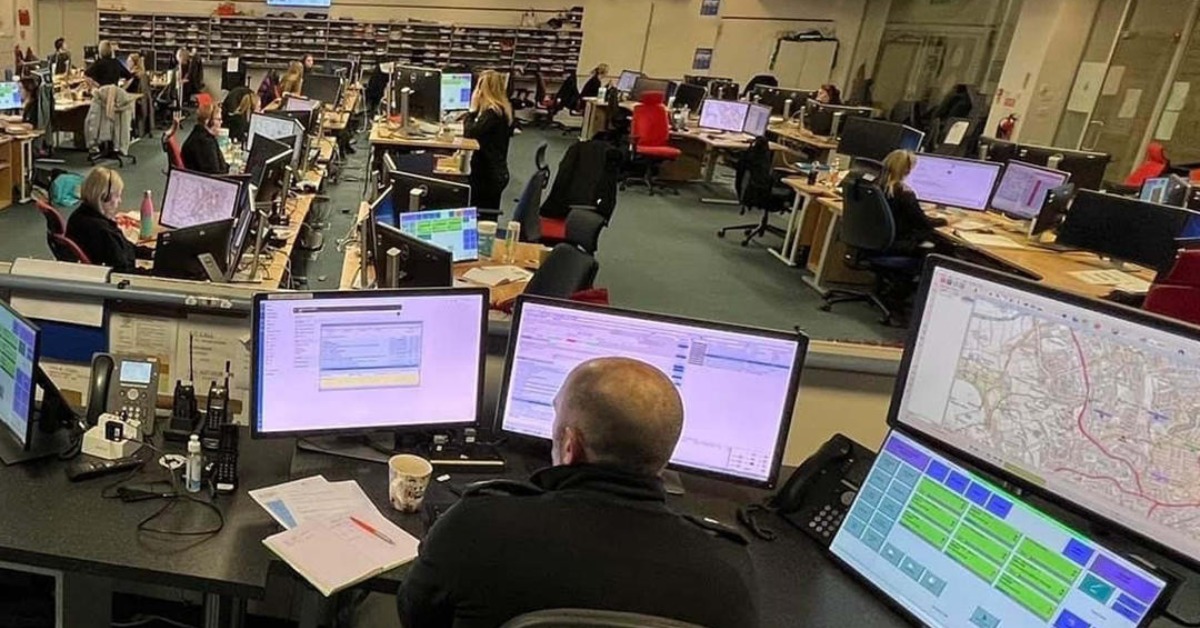
North Yorkshire Police force control room
Between November 2021 and November 2022, only 44% were answered within 10 seconds. The national target for forces is 90%.
Ms Metcalfe made improving response times one of her priorities and announced a £2.5m investment into the control room, which included hiring 50 more staff to ease pressure.
By January this year, the force met the national target for call handling times.
Cllr Chris Aldred, a Liberal Democrat who sits on the North Yorkshire police, fire and crime panel that scrutinised Ms Metcalfe’s performance, pointed to the area as a sign of improvement.
He told the Stray Ferret:
“I would say that commissioner Metcalfe has definitely outperformed the two previous occupants of the role. Although, to be absolutely honest, this is rather a low bar to set.
“I do appreciate the transparency and commitment Zoe brought to the post. Under her watch performance has improved, notably in the outcome of recent inspection reports for both services, the performance of the police control room, where thanks to additional funding she has invested, call time answering has improved significantly.”
However, despite strides in improving the police force, the fire service proved a more contentious service to handle.
Fire cuts opposition
In May 2022, Ms Metcalfe unveiled her risk and resource model, which set out how the fire service will deploy its resources over the next three years. It puts the emphasis on fire prevention, especially during the day when most fires occur.
The plan, which covered the three years from 2022 to 2025, included a proposal to reduce the number of fire engines operating overnight at Harrogate and Scarborough fire stations from two to one.
Read more:
- Zoe Metcalfe departs as crime commissioner
- Tense day ends in clear victory for Labour’s Harrogate-born mayor
- Harrogate fire station changes won’t increase risk to life, says commissioner
The move was met with criticism from the North Yorkshire Fire Brigades Union, which warned that such a decision would lead to a “second-rate emergency response service that will put lives at risk”.
However, in an interview with the Stray Ferret in June 2022, Ms Metcalfe disagreed with the union’s criticism.
She said:
“From everything I’ve seen I’m confident that won’t happen.”
Ms Metcalfe also argued that the proposals meant more resources for fire prevention.
The move came at a time of a bleak financial picture for the service.

Harrogate fire station on Skipton Road.
In January 2022, the Stray Ferret revealed that North Yorkshire Fire and Rescue Service faced having to borrow up to £31 million to fund new equipment after the government abolished its capital grant.
At the time, Steve Howley, secretary of the North Yorkshire Fire Brigade’s Union, said the service was “struggling to buy the basics”.
He said:
“The government needs to start taking fire and rescue seriously and fund it appropriately. The firefighters of North Yorkshire are staring down the barrel of a gun, either cut firefighter jobs to pay for basic provisions or fail to have adequate facilities or equipment.
“Neither option provides the public of North Yorkshire with the protection they deserve or require.”
The Stray Ferret approached North Yorkshire Fire Brigade’s Union for comment, but had not received a response by the time of publication.
Meanwhile, Ms Metcalfe told councillors during public meetings that she would lobby government for fairer funding, but this appears to have not had the desired effect.
In February, the commissioner recommended to increase the council tax precept for the fire service by 2.99% because it was the maximum increase permitted by government without a referendum.
Cllr Aldred said he felt that the commissioner could have done more to pressure ministers to come up with a better model for financing rural fire services.
He said:
“I do think the outgoing commissioner could have put more pressure on central government for more funding for the North Yorkshire fire service.
“The national funding model always works against a large rural fire service, who rely extensively on volunteer fire fighters and often have to travel large distances to reach fires in England’s largest geographical county.”
The trials and tribulations which come with scrutinising and commissioning police and fire services now lie with David Skaith, the Labour mayor of York and North Yorkshire.
North Yorkshire combined authority advertises for £125,000 chief executive
York and North Yorkshire Combined Authority is advertising for its first chief executive, who will be paid a salary of £124,656.
The organisation, which was launched in February and commands public funding of £540 million over 30 years, is currently led by James Farrar, interim head of paid service.
A notice on the authority’s website advertising the role closes on May 12, with interviews due to take place on June 3.
The role requires the candidate to have “strong commercial skills, business acumen and experience of operating in a business development role”.
The chief executive will also be required to work closely with the newly elected Mayor of York and North Yorkshire, David Skaith, and council leaders from North Yorkshire Council and City of York Council.
Meanwhile, the combined authority is also advertising for a director of resources, who would be paid a salary of up to £105,000.
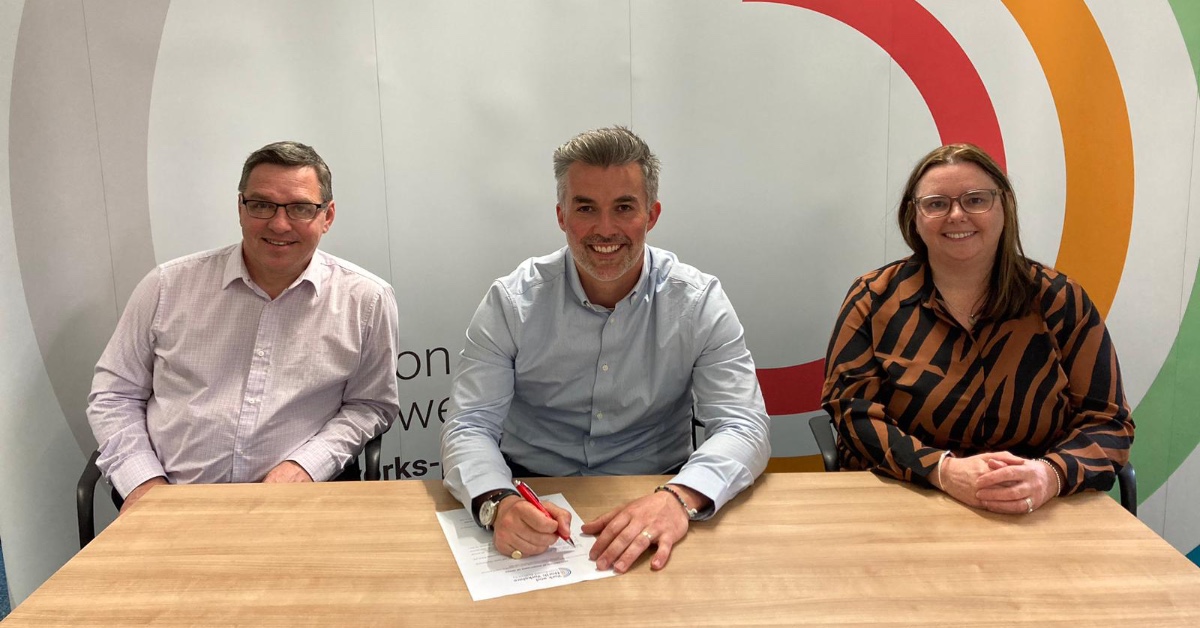
David Skaith signing the declaration of acceptance of office with James Farrar, director of economy and interim head of paid service, and Rachel Antonelli, head of legal and interim deputy monitoring officer at York and North Yorkshire Combined Authority.
The move comes as David Skaith was sworn in as the new mayor yesterday.
Mr Skaith also signed the declaration of acceptance of office, which formally recognises the mayor’s responsibilities for the police and crime commissioner role.
He said:
“I’m honoured to take on the role of mayor for York and North Yorkshire. I’m looking to bring together York and North Yorkshire as one.
“This new role of mayor, and the combined authority, presents a great deal of opportunities to the region. We can attract new investment, and tackle keys areas such as affordable housing and transport. This is just the start, and I’m looking forward to working with partners, businesses, and communities.”
Read more:
- Tense day ends in clear victory for Labour’s Harrogate-born mayor
- Keane Duncan defends campaign as Conservatives lose North Yorkshire mayor election
- How Labour defeated the Tories in North Yorkshire’s first mayor election
Zoe Metcalfe departs as crime commissioner
Zoe Metcalfe’s term as North Yorkshire Police, Fire and Crime Commissioner ended at midnight last night after the role was transferred to the new Mayor of York and North Yorkshire.
Labour’s David Skaith, who won the inaugural mayoral election on Friday, will now take on responsibilities for policing and crime.
Ms Metcalfe, a Conservative who held the post since November 2021, was the final directly elected commissioner for the county.
She was elected after the departure of Philip Allott, who succeeded fellow Tory Julia Mulligan — the county’s first commissioner from 2012 to 2021.
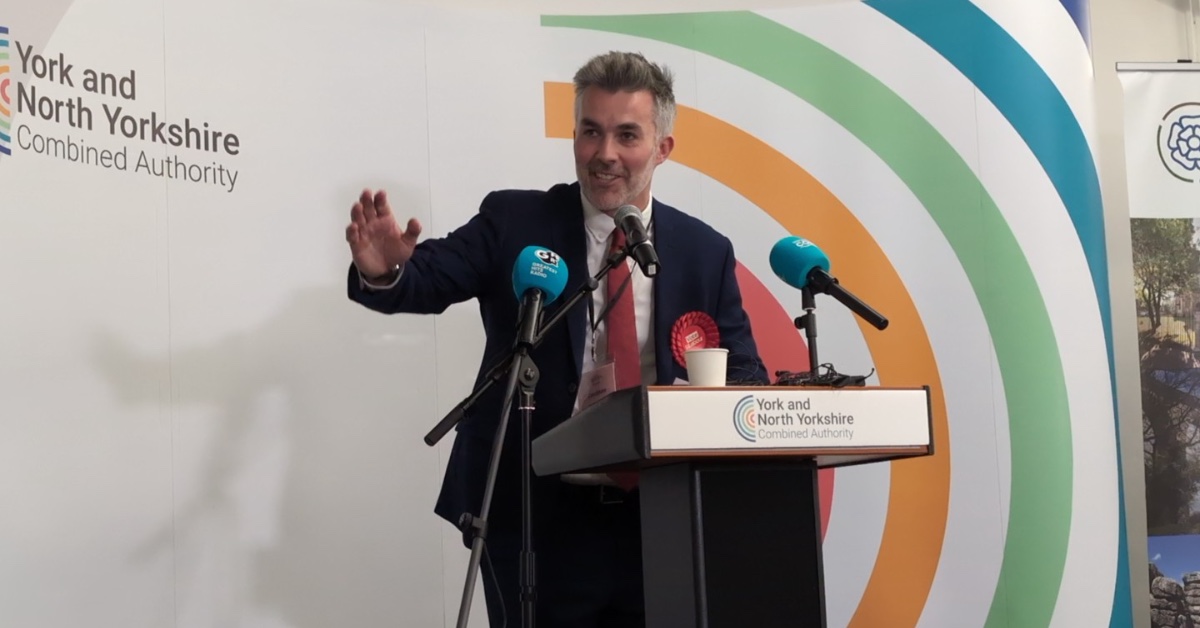
David Skaith, newly elected Mayor of York and North Yorkshire who will take on the commissioner’s responsibilities.
Ms Metcalfe pledged to tackle issues such as violence against women and girls.
She also oversaw the controversial introduction of the risk and resource model for the fire service, which included plans to cut the number of overnight fire engines based in Harrogate from two to one.
The move was met with criticism from the North Yorkshire Fire Brigades Union, which warned that such a decision would lead to a “second-rate emergency response service that will put lives at risk”.
The Stray Ferret requested an interview with Ms Metcalfe to reflect on her tenure as commissioner, but a spokesperson for her office said she was unavailable due to “the volume of her commitments in her final few days”.
In a post on X, formerly Twitter, Ms Metcalfe said it had been an “absolute privilege and pleasure” to represent York and North Yorkshire.
As I step down from my role as Police, Fire & Crime Commissioner at midnight, it has been an absolute privilege and pleasure to represent the communities of York & North Yorkshire. Congratulations to @DSkaith and best wishes for your term in office.
— Zoë Metcalfe (@zoe_metcalfe1) May 6, 2024
The commissioner’s office has now been rebranded the York and North Yorkshire Office for Policing, Fire, Crime and Commissioning after the mayoral election.
Mr Skaith is expected to make a decision on whether to appoint a deputy mayor to take on policing and crime powers.
Read more:
- Labour’s David Skaith pledges to ‘get basics right’ as mayor
- Tense day ends in clear victory for Labour’s Harrogate-born mayor
Call to halt succession of North Yorkshire rural school closures
Liberal Democrats are calling on the Conservative-led North Yorkshire Council to place a moratorium on school closures until the first county-wide Local Plan development blueprint is adopted in 2028.
Members of the 14-councillor political group have tabled a notice of motion for the next full meeting of the authority later this month to highlight “the loss of key facilities from our communities” across North Yorkshire.
The motion follows the council repeatedly launching consultations over the closure of village primary schools, saying Department of Education rules leave it with little option but to recommend they close their doors despite communities developing action plans to rescue them.
Last autumn, the authority’s children’s scrutiny committee heard the succession of rural school closures was “only likely to get worse” with a looming oversupply of places, despite attempts to prevent an increasing number of schools going into the red.
Andrew Smith, the Diocese of York’s director of education, issued the bleak situation facing many communities in North Yorkshire as councillors were told some 16 primary schools had closed in the past six years.
Some of the closed schools include Drax, Horton in Ribblesdale, Rathmell, Ingleby Arncliffe, Swainb, Ings, Burnt Yates, Arkengarthdale, Clapham, Whitby, Kell Bank, Weaverthorpe, Baldersby St James, Harrogate, Hovingham and Skelton.
Councillors heard financial pressures on the county’s smaller schools were rising, with the average school deficit soaring from £16,400 in 2015 to £57,900 last year year.
Meanwhile, the number of primary school age pupils was set to fall in every area of the county except the Selby area and Craven.
The proposal underlines how the closure of rural schools in North Yorkshire has many significant negative social impacts on residents, communities and children – an observation which has regularly been raised by some prominent Tory members of the authority.
The motion states:
“The loss of schools and other associated infrastructure leaves villages without the necessary services to support families now and into the future.”
Liberal democrat councillor for Amotherby and Ampleforth division Steve Mason said:
“The recent news about the potential closure of St Hildas in Ampleforth, following the closure of Hovingham school last year highlights the need for NYC to step in to protect these valued services for the future.
“In the past five years alone we have lost 11 primary schools in North Yorkshire and no doubt more will follow. Clearly something is broken.”
Councillor Andrew Murday, who represents Pateley Bridge and Nidderdale, said the council had a responsibility to support the county’s many rural communities.
He said:
“Primary schools are a vital component of those communities and without them the community gradually collapses. We need the council to rethink its policy otherwise there will be progressive depopulation. Only last month we saw the loss of Fountains Earth School at Lofthouse. It should not be allowed to continue.”
The council’s Conservative leadership have been approached to comment.
Read more:
How Labour defeated the Tories in North Yorkshire’s first mayor election
“We have not been doing the basics,” said David Skaith to reporters huddled around him after becoming the first Mayor of York and North Yorkshire.
It was a seismic victory for Labour over the Conservatives, with a 14,794 majority.
The result at Harrogate Convention Centre on Friday afternoon was the culmination of two competing campaigns.
On the one side, Keane Duncan, for the Conservatives, led an ambitious campaign which included pledges such as buying Scarborough’s Grand Hotel for regeneration.
He also promised free car parking in towns and cities across the county.
Much of Mr Duncan’s campaign was focussed on utilising social media to promote his pledges. He published high-production videos and pictures to push his message.
He also went on a tour around the county in his van, which notably did not include anything which mentioned that he was a Conservative.
The 29-year-old emphasised the fact that he was out meeting people and published photographs of himself with residents in North Yorkshire’s towns and villages on his social media pages. His campaign appeared to focus on himself as an individual, rather than his political background.
During the campaign trail, Mr Duncan told the Stray Ferret that he had “bold ambition” for York and North Yorkshire. However, on the day, that did not help his election prospects.
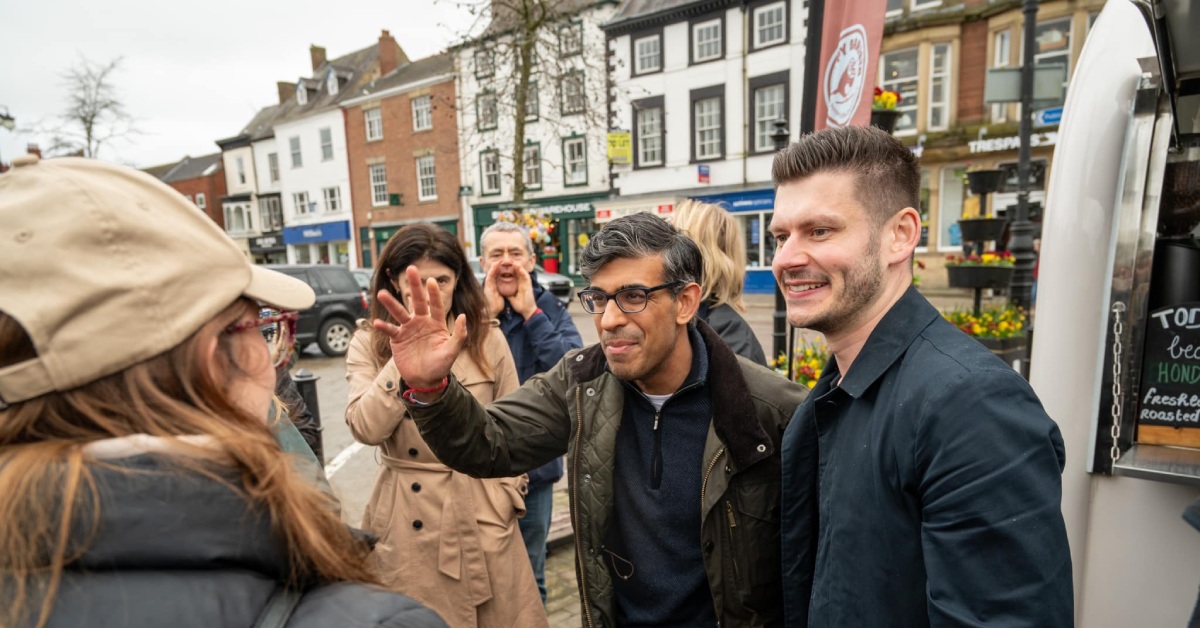
Keane Duncan, with Prime Minister RIshi Sunak in Ripon in April.
In fact, Felicity Cunliffe-Lister, the Liberal Democrat candidate, said she felt making pledges which “no-one believes” did not help the public’s trust in democracy.
She said:
“If you don’t take elections seriously that reflects badly on politicians. If you pledge to do things that no-one believes, it can and should backfire on you. It devalues politics. The feedback I get is that ‘you’re just another politician’.”
Specifically on the Grand Hotel, she said:
“That’s just one of them. There have been a series of headlines nobody believes. It was just grabbing headlines without anything behind them.”
In the end, Mr Duncan fell to a clear defeat. When speaking to the press afterwards, he defended his campaign, including the pledge on the Grand Hotel, and said he felt focussing on the coast was “important”.
Regardless of the majority involved, Mr Duncan was magnanimous in defeat and was seen applauding Mr Skaith after the declaration.
A traditional campaign
By comparison, Mr Skaith’s campaign offered little in terms of marquee pledges.
When speaking to the Stray Ferret two weeks ago, the Labour candidate focussed on matters such as transport, a High Street fund and a cost of living fund.
While the policies will resonate with some of the electorate, they were not headline grabbing pledges.
Rather, Mr Skaith appeared to take a traditional campaign route. He was seen canvassing with senior Labour politicians such as Rachel Reeves, shadow chancellor of the exchequer, and Mayor of West Yorkshire, Tracy Brabin.
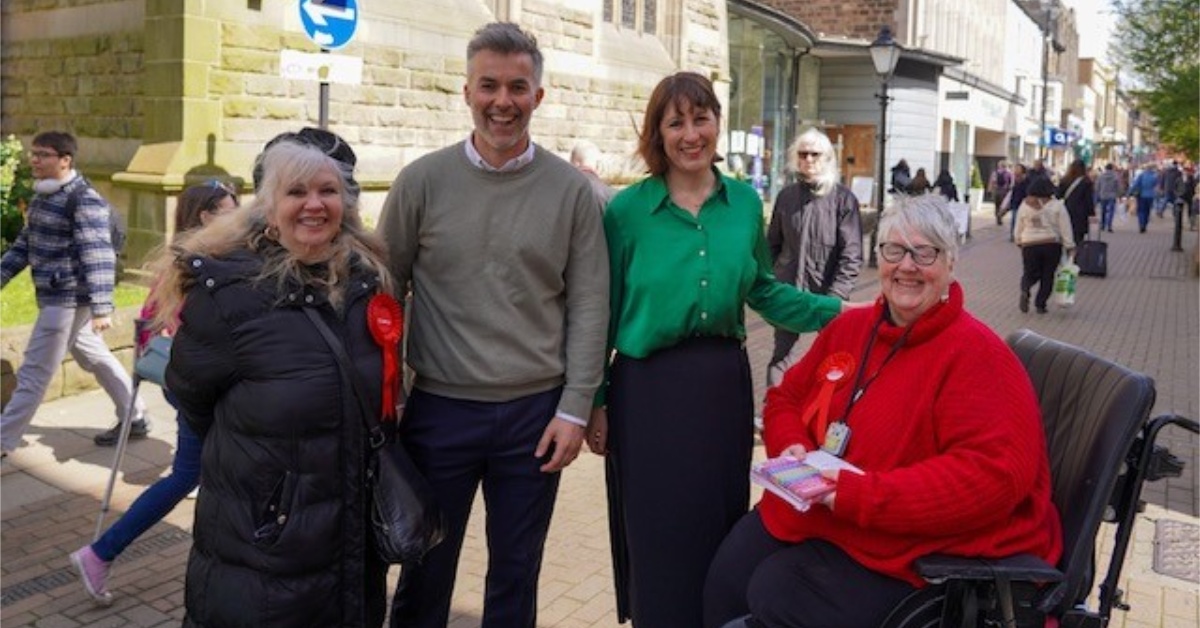
Shadow Chancellor Rachel Reeves and North Yorkshire mayoral candidate David Skaith campaigning with Labour Party workers in Harrogate.
After his victory on Friday, he told reporters that he would focus on building affordable housing and improving transport links. However, how that looks in practice remains to be seen.
The campaign has had the desired affect and now Labour has metro mayors in West Yorkshire, South Yorkshire, North Yorkshire and further west in Greater Manchester and Liverpool.
Much of Mr Skaith’s 15,000 majority could be attributed to the city of York which includes students and a Labour-controlled city council.
The national picture cannot be overlooked either, with the Tories lagging behind in the polls. One of the candidates, Paul Haslam, was also a former Conservative who threw his hat in the ring as an independent.
However, Labour will not see it that way and will spin it as a blow to Prime Minister Rishi Sunak in his own back yard.
The party has parked its tanks on traditional Conservative ground in a year which promises more elections to come.
Read more:
- Labour’s David Skaith pledges to ‘get basics right’ as mayor
- Tense day ends in clear victory for Labour’s Harrogate-born mayor