The number of compensation claims paid for potholes in the county has shrunk considerably over the last two years.
North Yorkshire County Council revealed it had paid nine claims worth £5,431 in 2018/19 and just one worth £55 in 2019/20.
By contrast, it paid 36 claims worth £16,435 in 2017/18, 10 claims worth £1,720 in 2016/17 and 27 claims worth £21,876 in 2015/16. The statistics were revealed after the Stray Ferret submitted a Freedom of Information request.
Road users did not know why the number of claims has decreased.
Kevin Douglas, chairman of Harrogate District Cycle Action, said roads were in a poor condition, which had caused damage and accidents.
He added:
“A number of cyclists have made claims and been unsuccessful and have given up. Perhaps people think there is no point.”
A spokesman for the Alliance of British Drivers, which campaigns on behalf of drivers, acknowledged potholes were a greater problem for cyclists than motorists but added:
“Councils should do something about potholes because they are a danger.”
A North Yorkshire County Council spokeswoman said it hadn’t changed its approach to contesting pothole claims, and said there were still 60 ongoing cases for 2019/20.
Read more:
- County council approves £8m funding for highways company vehicles
- North Yorkshire County Council sets up highways company
Home library service maintains morale
The home library service has earned praise in Harrogate for its support for local people as lockdown restrictions are eased.
The service delivers books to those who cannot select them in person, including people with disabilities, illness and caring responsibilities.es.
The service is run by volunteers and was operating out of libraries across North Yorkshire since before lockdown. As libraries began to reopen, the service has also been restarted.
Doris Guiseley, 92, from Harrogate, said:
“I’ve had the service since I was 80 and to me it is a godsend. I’m an avid reader and can get lost in a good book, it’s what keeps me going. I recommend it to everyone I meet and tell them it’s a brilliant service.”
The Harrogate library volunteers have been praised for their support over lockdown.
Edith Beckley, a 96-year-old from Harrogate, said:
“The volunteers have become friends too and when they couldn’t visit they rang me every week during lockdown just for a chat.”
Read more:
- Harrogate Neighbours praised for covid response
- Would you like to help out at Ripon’s Himalayan Garden?
The service has now been adapted to ensure the protection of both volunteers and the community. All books are left in a secure place on a pre-arranged date and quarantined after collection.
In July, a Select and Collect service was also launched to allow customers to limit contact whilst collecting books.
County Councillor Greg White, executive member for libraries, said:
People urged to have say on North Yorkshire council reorganisation“I would encourage more people to take advantage of our brilliant service. If you or someone you know would benefit please get in touch.”
District council leaders have urged people in North Yorkshire to have their say on the future of local government and public services in the county.
It comes amid government plans to reduce the number of local councils in England as part of its devolution agenda.
County council and district council bosses in North Yorkshire will this month submit separate proposals on how they want to see local government look.
County council bosses want one unitary authority, which would see the seven district councils, including Harrogate Borough Council, scrapped.
Read more:
- Yorkshire councils battle for support over devolution visions
- Districts to launch alternative council reorganisation bid
- ‘Double devolution’ for parish councils, under county council plan
But district council leaders have said two authorities – one in the east and another in the west of the county – would work better and claim such a model would save up to £56 million a year.
The west authority would serve Harrogate, Craven, Hambleton and Richmondshire, while the east would cover York, Ryedale, Scarborough and Selby.
Now the district councils have invited residents and businesses to have their say on the topic at a series of virtual engagement events, beginning tomorrow.
Speaking on behalf of the seven council leaders, Cllr Steve Siddons, leader of Scarborough Borough Council, said:
“The reorganisation of local government services may not sound like the most exciting thing on earth, but the reality is that it will affect everybody who lives, works or runs a business in North Yorkshire and York.
“It is not only about how your everyday services will be delivered in the future, it is about the ability of communities to shape the future of where they live, and determine how we can bring new investment, jobs and growth to our region. That’s why it is so important that people have their say.”
The move comes as the PR war over the future of local government is set to heat up this month ahead of a deadline for proposals to be submitted to government.
The trade union Unison, Mayor of Tees Valley Ben Houchen and Terry Collins, the chief executive of Durham County Council are among those who have spoken out recently.
To find out more on the series of engagement events being held by the district councils, click here.
New Harrogate rescue centre rehomes 19 catsWhile most independent businesses were forced to close down during lockdown, one local cat rescue has thrived since it first opened in April.
Celia Dakin, owner of Harrogate Cat Rescue, had always planned to open a centre for rehoming stray cats.
Due to the covid-19 pandemic, many national animal charities had to stop neutering feral animals, including cats, and this has increased the number of kittens being born without a loving home. Celia felt this was the perfect opportunity to set up a rescue business.
In just over three months, the rescue centre has rehomed 19 cats and kittens and is currently in the process of homing a further 10 kittens and three adult cats. Celia has always been ‘cat mad’ and has two 11-year-old cats of her own, Geoff and Lady.
Celia told the Stray Ferret:
“Initially, I was approached by a lady who told me that there was a fairly large colony of cats where she worked, and that she had seen kittens. So, I started my rescue.”
Celia runs her business from her home in Harrogate, which has a no-kill policy. This means that no healthy or treatable cats are euthanised or killed even if the shelter is at full capacity.
Read More:
- Lockdown “puppy boom” results in Harrogate dog start-ups
- Harrogate’s Turkish Baths to re-open after 5 months
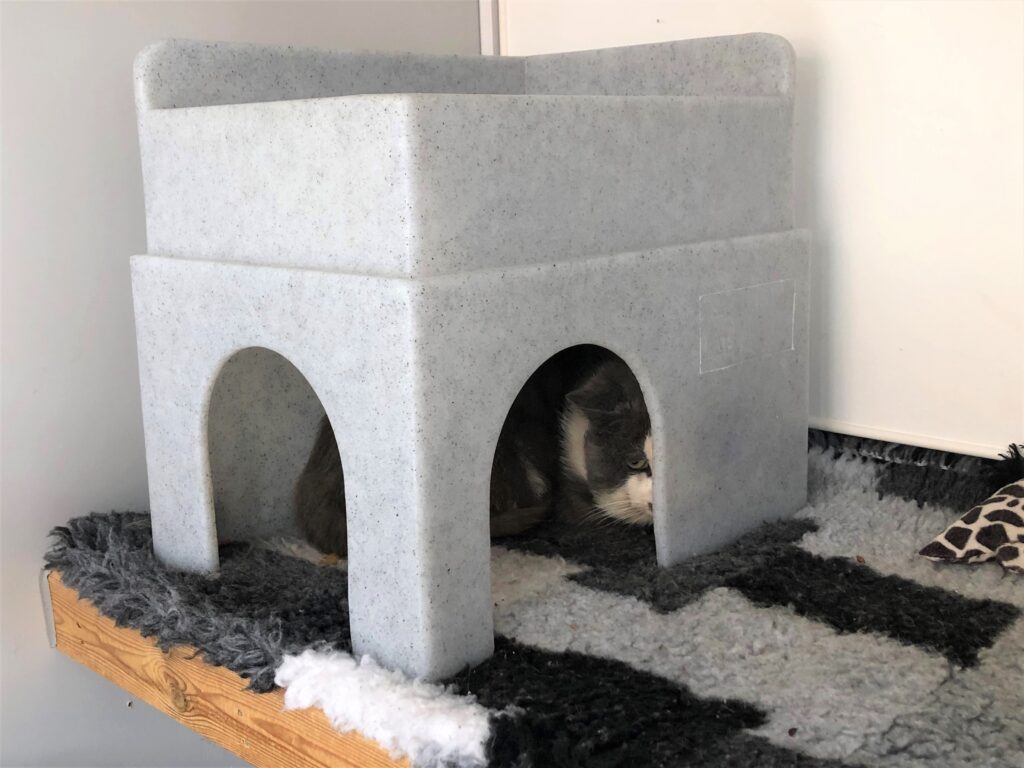
She currently houses a poorly five-year-old shorthair cat, Mack, who tested positive for feline immunodeficiency virus (FIV), an incurable viral infection.
He has a large wound on the side of his neck caused by a cat bite, which has now become ulcerated. He also needs dental surgery to remove his rotten teeth. Despite his tough life, Mack has a friendly nature and is in need of a loving home.
The cat lover currently has 22 cats in foster care, including Emily, a six-year-old Ragdoll and Bengal crossbreed, who was sent to Celia when her owners chose to travel abroad.
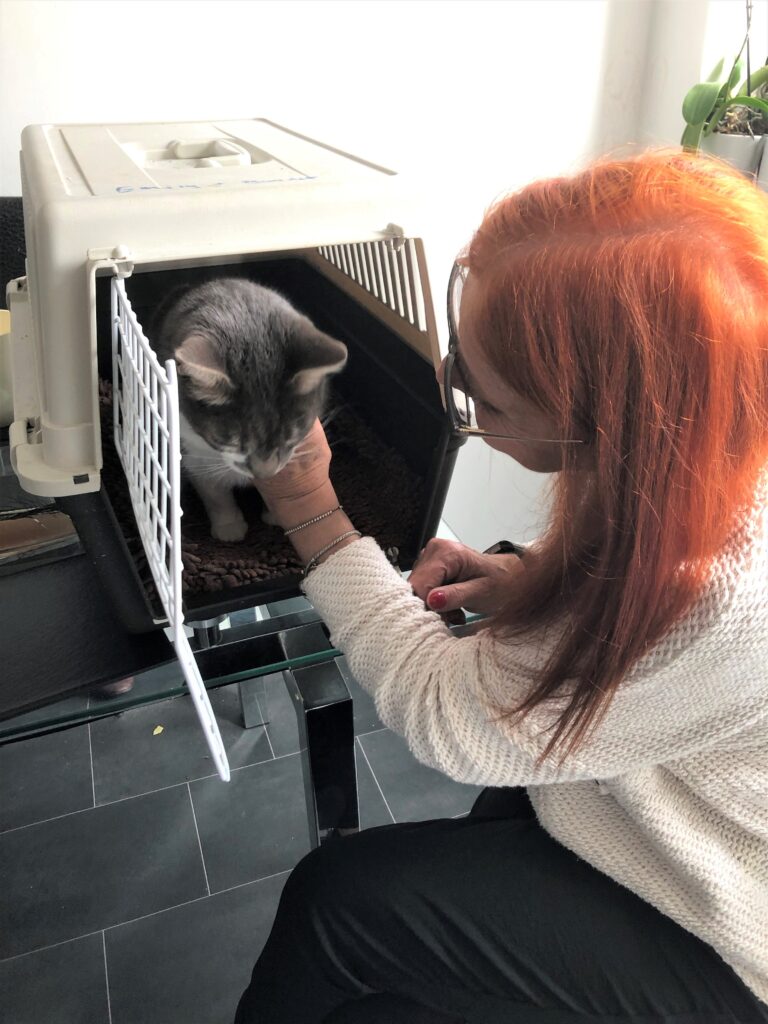
The rescue encourages new owners to get their cats neutered at four months old, if they haven’t been already.
Celia said:
“I believe that every cat deserves a chance, as most stray and outdoor cats have been failed by humans. I am active in encouraging co-operation between me and other rescues in Yorkshire, with the aim of working together for the benefit of all cats.”
“Neutering cats is an extremely high priority; unneutered males age quicker and are more prone to disease, as they have to fight for food, females and survival. Unneutered females leave home as their hormones dictate and are repeatedly raped by the unneutered males, leading to multiple pregnancies, causing stillbirth, deformity and disease.”
All cats and kittens that are cared for by the Harrogate Cat Rescue receive a veterinary health check, flea and worm treatment, microchip and at the least their first vaccination. The adoption fee for an adult cat or kitten is £90 each.
To find out more about the adoption process, visit the Harrogate Cat Rescue website.
County council chair urges residents to commemorate VJ DayNorth Yorkshire County Council’s chairman has encouraged residents to commemorate the 75th anniversary of Victory in Japan today.
Today commemorates the surrender of Imperial Japan on August 15, 1945, which led to the end of the Second World War.
Nationally, the Prince of Wales and Duchess of Cornwall will lead a two-minute silence from 11am at the National Memorial Arboretum in Staffordshire and the Red Arrows will perform a fly past over Edinburgh, Belfast, Cardiff and London.
The BBC will also broadcast VJ Day 75: A Nation’s Tribute and screens in locations across the country will show a photo montage showcasing living Second World War veterans.
Read More:
- Hospital pop-up launches craft competition to increase donations
- Harrogate Grammar School has 35% of A-level results changed
It will include the Duke of Edinburgh who was present on board HMS Whelp in Tokyo Bay for the signing of the Japanese surrender.
Cllr Jim Clark has called on residents in North Yorkshire to also commemorate the anniversary.
He said:
North/south councils would better serve county, says Labour“Whatever the reason for perhaps not marking it in the past, for this 75th anniversary I would like each and every one of us to take time to remember the events of 75 years ago in whatever way you feel appropriate.
“Remember all the brave service men and women who made great sacrifices, some the ultimate sacrifice, including those of our great county, so that we enjoy the freedoms we value so much today. Remember also the large number of innocent civilians, including many children, who died because they happened to be in the wrong place at the wrong time.
“Finally, I would like to thank all of you who have gone the extra mile over the last few months, both paid staff and volunteers. It has been North Yorkshire communities at their best and once again I invite you to stand together in remembrance and thanksgiving; against hate and prejudice; and to build stronger communities.
“This will allow us all to face an uncertain future with hope and confidence.”
North Yorkshire would be better served with two unitary councils in the north and south of the county, says Harrogate and Knaresborough Labour Party.
The local Labour group said while it supports devolved powers for the county, it does not agree with county council proposals for a single authority under restructure plans.
It comes as ministers have set a requirement to reorganise the make-up of local councils ahead of any devolution bid.
But Harrogate’s opposition parties, including the Liberal Democrats, have objected to the proposal for a one unitary council which would see Harrogate Borough Council and the other six districts scrapped.
Read more:
- Yorkshire councils battle for support over devolution visions
- Districts to launch alternative council reorganisation bid
- County to draw up plans for single North Yorkshire council
The local Labour group suggested a divided structure which would see urban areas, such as Harrogate and York, under one council and rural areas in the north under another.
It said a plan for a single authority would be too big and remote for the county.
A spokesperson for Harrogate and Knaresborough Labour Party said:
“Harrogate and Knaresborough Constituency Labour Party welcomes the idea of devolution of powers from central government to York and North Yorkshire as long as the budgetary devolution promises made by central government are adhered to for the foreseeable future.
“However, it totally opposes the idea of one authority based in Northallerton, as this would be too large and remote from the majority of a widely scattered population. There needs to be a geographical as well as economic reality in any proposal.”
Districts leaders, led by Harrogate Borough Council leader Richard Cooper, have described county plans as “unworkable”, while county leaders have issued statements with endorsements from the likes of Durham and assurances from government ministers.
The campaigns to gather support are expected to continue for the next few weeks as both camps have until September to submit formal proposals to ministers.
Devolution in other shire counties
Over the Humber Bridge and into Lincolnshire, a similar battle over devolution and government restructure is taking place.
Much like North Yorkshire, the county is made up of a county council and seven district authorities. However, it also has two unitary councils in the North and North East.
As part of a devolution bid, the Conservative-led Lincolnshire County Council and its two counterparts may divide the county up under a proposed restructure.
It could see the county and its residents governed by one council in the north and another in the south.
This, as in North Yorkshire, would see the districts scrapped. As a result, leaders of the seven districts feel aggrieved and have complained of a lack of engagement from county hall.
But the message from government is that any devolution in both of the shire counties will not come until its council structure is changed.
County ‘way off’ lockdown but ‘stay vigilant’, says public health directorNorth Yorkshire’s director of public health has called for people to remain vigilant despite the county being “way off” a local lockdown.
Dr Lincoln Sargeant said the average number of cases of coronavirus in the county remains low, with areas like Harrogate averaging around 10 cases per week.
Currently, 736 cases have tested positive in the district, with 2,601 in the wider county according to Public Health England figures.
But recent local lockdowns in Bradford, Kirklees and Calderdale have raised concern that similar measures could be taken in the county
Read more:
- Coronavirus vaccine trial rolled out for hundreds in Harrogate
- Two-week extension for Nightingale hospital as negotiations continue
A local lockdown was imposed in parts of West Yorkshire following fears of a second spike in coronavirus infections. Meanwhile, Prime Minister Boris Johnson said the prevalence of the virus was “likely to be rising” in England.
But Dr Sargeant said the county is “way off” the rate of cases compared with areas on the government’s watchlist, such as Barnsley. The rate of cases in North Yorkshire is currently at around 420 per 100,000 people, but the South Yorkshire town is nearly double that at 821.
However, Dr Sargeant told the Stray Ferret that people should remain vigilant despite the low number of cases. He said:
“We have to be vigilant because things can change rapidly and it does not take much to import cases from areas like West Yorkshire.
“A lot of this is in people’s control and the virus itself has not really changed. The same things we need to battle it has not changed.”
It comes after, last week, figures from Public Health England showed an increase of six cases in the Spofforth, Burn Bridge and Huby area.
But Dr Sargeant said an increase in testing and the council’s track and trace system has led to the authority tackling cases early.
For him, the method of tackling the virus locally was to test aggressively and investigate further.
Dr Sargeant added that knowing who you are spending time with was a good way of avoiding the virus. He said:
North Yorkshire retains seat at West Yorkshire health scrutiny board“If you can confidently recount who your contacts are then that is a good start. I would not be confident if you did not know who they were.”
North Yorkshire councillors will still be able to scrutinise hospital services used by residents who travel to West Yorkshire for care.
Cllr Jim Clark, chair of North Yorkshire County Council, has agreed two seats at the West Yorkshire Joint Health Scrutiny panel which scrutinises health services in the region.
Health scrutiny panels look at the hospital services in a region and hold hospital bosses accountable for their performance.
Patients in North Yorkshire often require hospital care in Leeds, such as treatment for strokes.
Read more:
- The construction of Harrogate’s Nightingale hospital cost almost £15 million
- Two-week extension for Nightingale hospital as negotiations continue
Cllr Clark said the move would allow patients from the Harrogate district to still be represented on the panel and to properly scrutinise the services offered.
He said:
“This is very good news because we want to make sure that we have the authority to scrutinise services that are not provided in North Yorkshire.”
It comes as health services in North Yorkshire have seen a shake up this year. In April, the county’s three clinical commissioning groups in the county merged to create the North Yorkshire CCG.
CCGs are responsible for planning and commissioning care in a local area.
The move comes as part of measures by NHS England bosses to reduce the number of CCGs across the country from 191 to 134.
Rural crime in North Yorkshire costs millionsThe cost of rural crime in North Yorkshire is the third highest among counties in the UK.
A report released by NFU Mutual found that in 2019, rural crime cost the county over £2 million. A rise of 22.6% on the previous year.
The report names theft of high value farm machinery as a factor for the cost increase. It also found that over lockdown, rural crime had continued – with some criminals travelling into the county to target farms.
Inspector Matt Hagen, head of North Yorkshire Police’s Rural Taskforce, said:
“Our county is a largely rural area, and the borough of Harrogate is no exception – so tackling rural crime is extremely important to us. We know that offenders from areas outside North Yorkshire travel into our communities, intent on stealing quad bikes, farm machinery and other valuable property – and those crimes are reflected in the latest figures from NFU Mutual. The report also shows that criminals continued to target the countryside, despite the Covid-19 lockdown.
“Rural crime did not stop – and neither did rural policing. Our officers, some of whom have farming backgrounds, know just how devastating rural crime can be for its victims.”
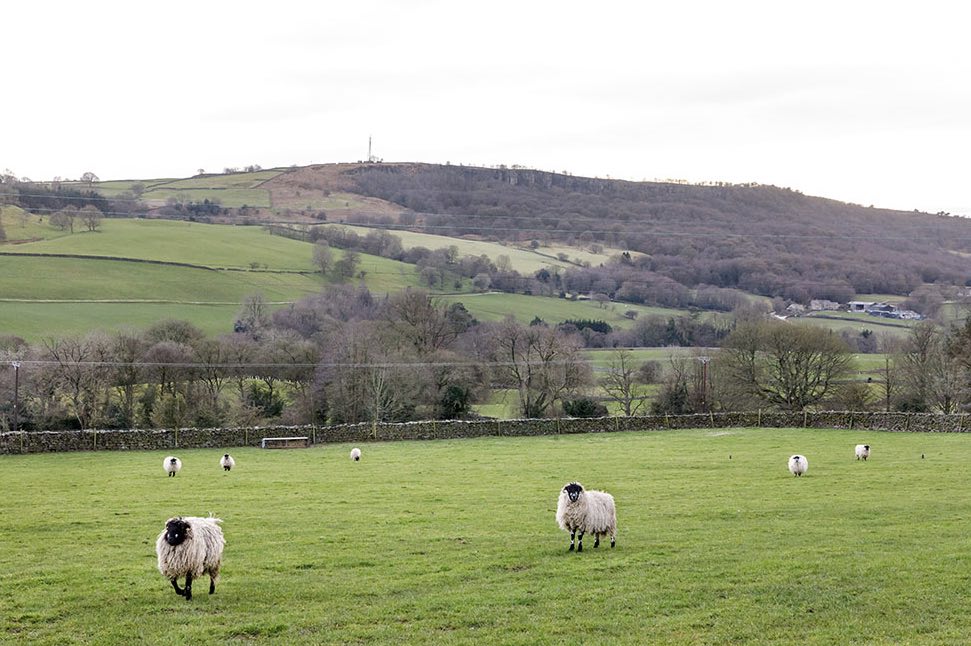
Rural areas in the county have continued to be targeted over lockdown.
Read more:
- The same combination of poisons used to kill birds of prey has been found in two pet dogs, resulting in one passing away.
- Ripon fell victim to fly tipping, leaving council taxpayers to pay the removal costs.
Rural crimes including livestock attacks and machinery theft have been seen within the Harrogate district. North Yorkshire Police has urged farmers to remain vigilant and increase safety measures within their farms.
In an attempt to combat rural crime the police works alongside 142 rural watch volunteers. They act as the eyes and ears within the rural communities.
5 lessons to learn from devolution in Tees ValleyAmid the debate around devolution for North Yorkshire and whether the county should have an elected mayor, one area that is frequently brought up is the Tees Valley.
The region is the closest example of a devolved authority to North Yorkshire and serves a population of 701,818.
Since 2017, the area has operated with elected Conservative Mayor of the Tees Valley, Ben Houchen, and combined authority to make big decisions on areas such as transport, employment and housing.
So what lessons can North Yorkshire political leaders learn from neighbouring Tees Valley over devolution?
Turnout for Mayoral election was poor
Just 21.3% of voters turned out for the election – a mere 1% more than had turned up to vote for the Cleveland Police and Crime Commissioner the year prior.
The result suggests a lack of engagement and understanding of the newly created mayor position, despite the governments insistence that devolved powers require one.
Mayor Houchen was elected to serve a three year term, but coronavirus has pushed back elections until 2021.
From there, mayoral elections will take place every four years.
Read more:
- Council leaders prepare for North Yorkshire devolution
- Districts to launch alternative council reorganisation bid
- County to draw up plans for single North Yorkshire council
Houchen declines mayoral tax
The introduction of directly elected mayors to local government comes with a need to fund them.
As a result, mayors can introduce a precept to council taxpayers known as a “mayoral tax” which funds the office and what it does.
However, the move has proved to be controversial and a number of new mayors, including Andy Street in Birmingham and Dan Jarvis in Sheffield, have ruled out introducing the precept in their areas.
Ben Houchen has done the same in the Tees Valley and pledged not to charge ratepayers any extra for his work.
Mayoral development corporations
Most of the powers given to devolved authorities are around areas which create jobs and boost the economy.
Among the biggest powers that a mayor has is to create a mayoral development corporation which can buy, sell and hold land in a defined area.
Mayor Houchen made creating the South Tees Development Corporation one of his decisions while in office.
It became the first of its kind outside of London and has already purchased land at the former Redcar steelworks, which was closed by former owner Thai-based SSI in 2015.
While there are only four corporations currently operating in England, more can be expected and may prove to be vital for areas in need of economic growth and regeneration.
Read more:
- Exclusive: Ex-MP Phil Willis on how Harrogate can thrive again
- Ripon MP defends controversial NHS Trade Bill vote
- MPs watch: NHS ‘on the table’ in US trade talks?
Buying back an airport
Devolved authorities have a single pot used to invest in skills, transport and other investments.
Whatever a Mayor wants to invest in has to have the agreement of his cabinet and this was best demonstrated when Mayor Houchen made bringing back Durham Tees Valley Airport back into public ownership his key manifesto pledge.
The airport was losing £2 million a year and Mayor Houchen bid £40 million for the airport in what proved to be a tricky decision for his cabinet.
The cabinet, five of which were Labour council leaders, found the investment difficult to back in what they described as a “vanity project”.
However, the deal was eventually agreed last year and the Tees Valley Combined Authority purchased a 75% stake in the airport and rebranded it Teesside International Airport.
More powers
Securing a devolution deal for the Tees Valley was the first step in reclaiming budgets and key decisions from Westminster.
Now that it has powers over transport and regeneration, Mayor Houchen wants more and has set his sights on health and social care budgets as his next target.
Mayor Houchen told Teesside Live in January that he wanted powers similar to Greater Manchester where the combined authority has control over its £6 billion health and social care budget.