The organisation fighting to save Ripon’s military heritage from being bulldozed has said it is “hugely disappointed” about updated plans for the 1,300-home Clotherholme housing scheme.
Government agencies Homes England and the Defence infrastructure Organisation provided the update in a planning report published on North Yorkshire Council’s website last week.
The homes will be built at the barracks site which contains internationally significant military structures, including huts constructed in 1939 when Neville Chamberlain’s government prepared for war with Germany and training bridges that influenced global warfare.
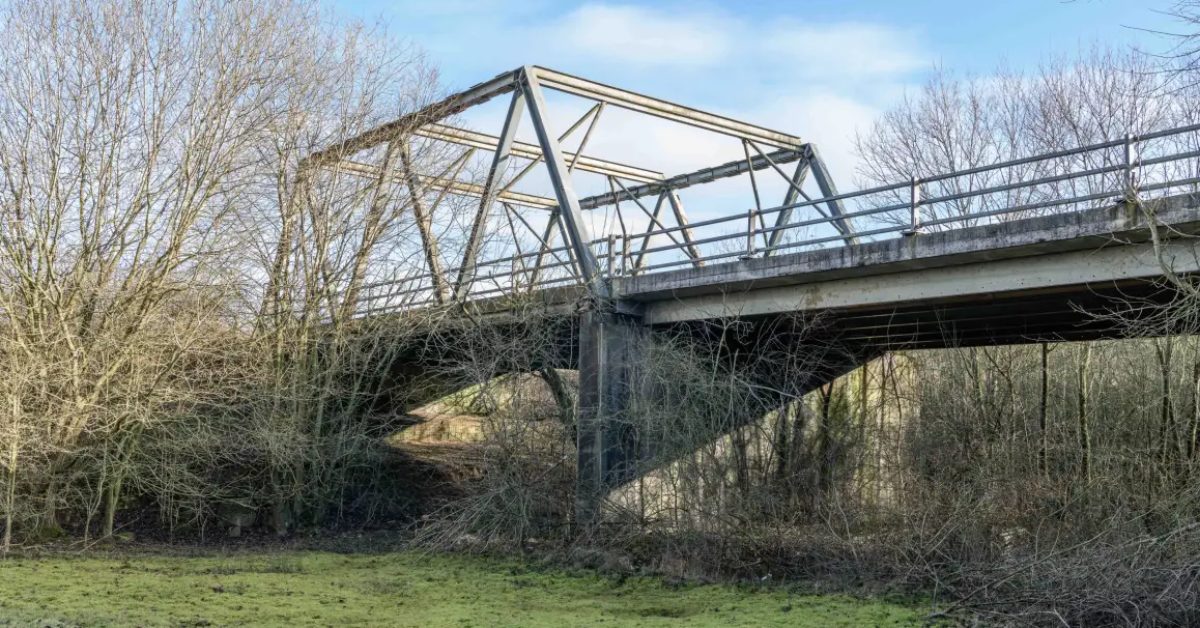
The demolition training bridge. Pic: Ripon Military Heritage Trust
The report pledged to “work with the Ripon Military Heritage Trust on a heritage strategy which will balance the urgent need for new homes for local people with a strategy for preserving and recording the unique history and heritage of the barracks”.
But the trust, which has launched a website as part of a campaign to preserve key aspects of the site, fears the agencies have shown little desire to co-operate since Harrogate Borough Council granted planning permission in February last year and their pledges remain vague and opaque.
Trust chairman Guy Wilson said:
“We are hugely disappointed that after 15 months of engagement with Homes England, the current outline planning application lacks any provision for the preservation of even a single example of the rare and unique huts at Deverell Barracks.
“Neither has any land been allocated to allow for the relocation and re-use of these heritage assets. Both were specific requests that the Harrogate Borough Council planning committee called for in February 2023.
“It has sadly become apparent that none of the parties to this development has any real interest in preserving the heritage of the site and none has made any attempt to work constructively with us. All they are interested in is appearing to do enough to get their present plans passed without alteration, in which case the result will be that significant heritage assets will be lost and this we very much regret.”
The planning update said the housing scheme will preserve the main military roads and names as well as provide information signs.
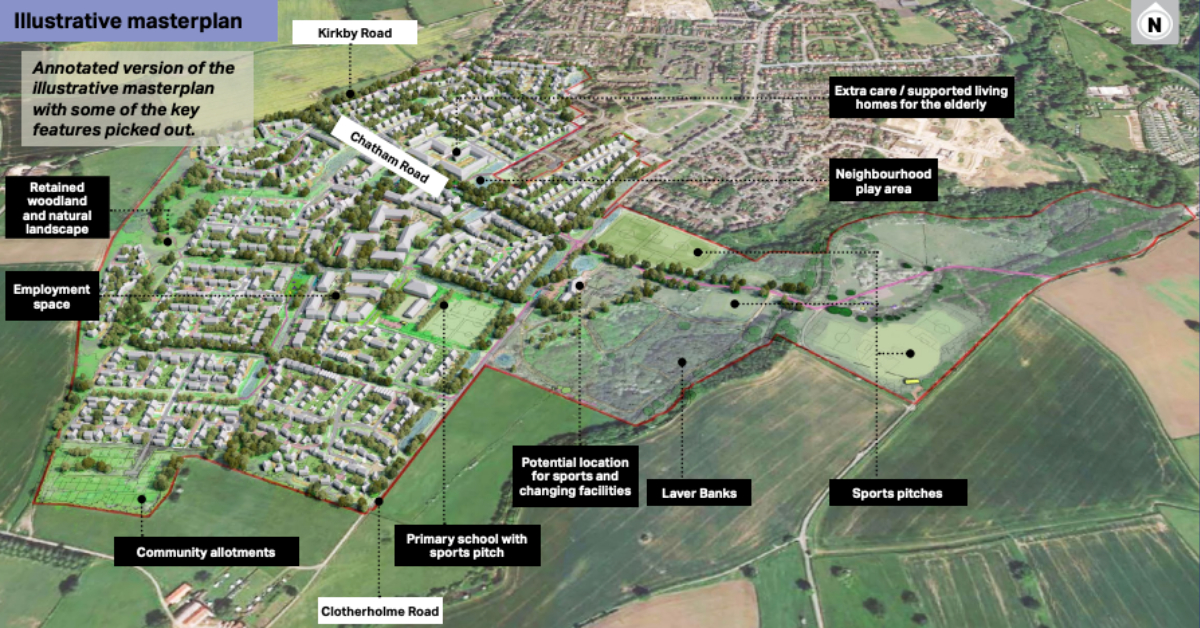
How the site will look. Pic: Homes England
It also talks about “exploring ways to integrate a walking tour, virtual tour or to develop other forms of public exhibition at the site”.
One of the conditions of planning consent was to allocate £100,000 to the trust to conduct a feasibility study on preserving and retaining some of the existing military buildings on the site. But progress since then has been limited.
Mr Wilson said:
“Unfortunately, we are sceptical about their commitment to developing a feasibility study, as after 15 months of engagement with Homes England there has been no proper engagement with the real issues involved in preserving the heritage.
“During that period work has begun on producing an options appraisal; all the proposals put forward by the trust have been ignored and they have refused to allow the process to be based on a clear understanding of the assets’ heritage significance.”
He added:
“Where is the commitment to assess significance? Where is the list of assets to be preserved? Where is the agreement to transfer ownership of assets required? Where is the commitment to allocate the necessary land to relocate assets? Where is the commitment to build into the development timescale the reality of fund-raising?
“Instead of work on these crucial issues we have been stonewalled at every turn by all parties. Their heritage strategy is aimed at ticking boxes and getting approvals not at preserving the heritage.”
Read more:
- Tank will be on the Ripon Inn lawn for launch of D-Day anniversary celebrations
- New details of Ripon’s 1,300-home Clotherholme scheme released
Ripon’s rich military history threatened by 1,300-home barracks scheme
Key parts of Ripon’s military past could be demolished to make way for the proposed 1,300-home development at the city’s barracks.
Homes England is seeking outline planning permission for the Clotherholme housing scheme, which would be the biggest single residential development in Ripon’s history.
Ripon Civic Society has now highlighted the potential loss of rare items that are part of Ripon and the UK’s military heritage.
The vital role Ripon’s military establishment played in both world wars and the Cold War has been highlighted in new research by the society.
Christopher Hughes, its chairman of the society, said:
“The site at Laver Banks is important in the history of Ripon’s past and in the defence of Britain in World War II and since.
“We have done detailed work on the Homes England proposals for the whole of the army camp site. We encourage them, and Harrogate Borough Council, to take a revised look at proposals for demolition of some of the structures our research has identified, and to protect them for the future.”
The society has been closely engaged in the planning process and has been keen to stress the importance of the last remaining remnants of the city’s vast World War I camp, in which the poet Wilfred Owen was stationed.
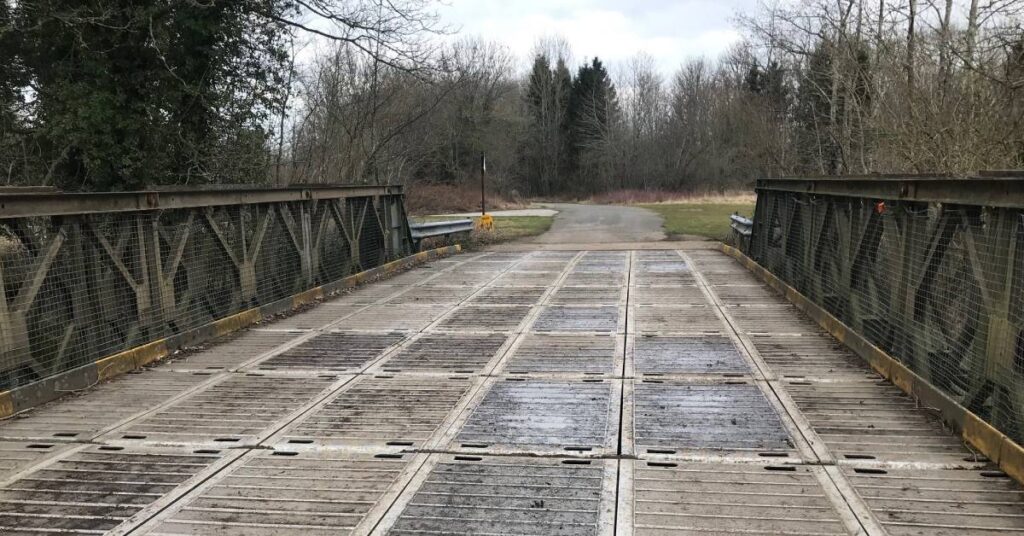
The heavy girder bridge, which crosses the River Laver on the Barracks site, was the next generation of the bridge designed by Sir Donald Bailey.
Setting up Ripon Military Heritage Trust to aid further research, it has now discovered that from the start of World War II the remaining site was the test-bed for developing and trialling demountable bridges, including the world-famous Bailey bridge.
The School of Military Engineering was evacuated from Chatham in Kent to Ripon at the start of the war.
Military heritage structures
Ripon architectural historian, lecturer and writer, David Winpenny, who is a vice-president of the society, said:
“As well as providing training for engineers on the Bailey bridge, the school also developed the massive Bailey Suspension Bridge, capable of spanning up to 400 feet.
“It was tested in Ripon at the Laver Banks site of Ripon Camp by British, Canadian and American troops before being deployed in Burma and other theatres of war.
“From 1946 a new heavy girder bridge was developed; by 1955 60 had been ordered. The first to be put in place was over the River Ure in Ripon. It was mainly used in West Germany as well as in Malaya.
“Development continued in the following decades. The only surviving heavy girder bridge was installed in Ripon as late as 1992.
“Ripon also has the larger of only two surviving k‘demolition’ training bridges, designed with cavities in which explosives could be packed to eliminate the bridges before an enemy assault.
Read more:
- Consultation on 1,300-home Ripon Barracks site closes on Wednesday
- Artworks honour Ripon’s military past
Mr Winpenny added:
“As well as these rare survivals, and the still-extant infrastructure of the testing site, the Ripon Camp also has the last four Twynam Huts remaining; these were the successors to the Nissan Huts and were developed in 1959 for use as accommodations for personnel, offices and stores.
“They were deployed worldwide, including in Cyprus, Aden and Libya, as well as on Ascension Island during the Falklands War and at Long Kesh Camp in Northern Ireland.”
‘Amazing how significant Ripon was’
The society has shared its findings with Homes England, which is responsible for the transition of the site from army camp to housing and employment site, and with Harrogate Borough Council, which will determine the planning application.
It has said that these significant but vulnerable remnants of Ripon’s military past require special protection as part of the planning process. The society wants to work closely with all parties to establish a community legacy for Ripon and the wider area by promoting and interpreting the site.
Guy Wilson, creator of the Royal Armouries museum in Leeds, and one of the Ripon Military Heritage Trust trustees, said:
“It is amazing how significant this quiet part of North Yorkshire was in the Second World War. What was happening in Ripon helped us to win the war and our research has discovered how important Ripon was in the development and perfection of the Bailey bridge and its successors.
“It is a story hitherto unknown but one very worth telling and remembering.”
Activities announced for Battle of Boroughbridge anniversary day
Re-enactments and guided tours will take place in a fortnight to mark the 700th anniversary of the Battle of Boroughbridge.
The battle in 1322 was fought between a rebellious group of barons and supporters of Edward II. The rebels, led by Thomas, Ear of Lancaster, were defeated at Boroughbridge by the king’s army.
The battle itself took place over a timber bridge, thought to have been close to the site of the current bridge over the River Ure in Boroughbridge, and a ford thought to be in the Milby area.
An event to commemorate the battle will be held in the town on March 12 between 10 and 4pm. Members of the public can attend the living history event on the field next to Back Lane carpark throughout the day.
The display will include a combat and weapon demonstration by 3 Swords medieval history group at 10.30am and 2pm on the field as well as numerous other activities throughout the day.
Read more:
- Sneak Peek: Boroughbridge pub reopens after six-figure refurb
- Boroughbridge Walking Festival to return in April
Guided tours around the town will take place at 11.30am and 3pm. Louise Whittaker, from the Battlefields Trust, will lead the hour-long tours, which will take in the sites connected to the battle, including the bridge.
There will also be an art display curated by students at Boroughbridge Primary School held in the library.
The event is being put together by Boroughbridge Historical Society and the Battlefields Trust.