Mercer Art Gallery in Harrogate is appealing for sponsors to support a major new exhibition this summer.
The show, called Total Recall: Myth and Memory, will feature archive works and new acquisitions, as well as some contemporary works by five young Northern artists.
Co-curator Joe Nickols said:
“We are exhibiting some highlights from our collections, including John Piper prints, paintings of Harrogate by John Atkinson Grimshaw, and intriguing works by Cândido Portinari.“New acquisitions come from Lisa Dracup, Kate Mellor, Caroline Walker, Dorothy Cross, and Martin Creed. To complement this we are working with five contemporary Northern artists to further the exhibitions resonance to our area and explore how art is developing. These artists are: Sally Barker, Ka Bird, Jill McKnight, K Walker, and Hang Zhang.“The exhibition is a great opportunity for these new artists to show their work in a public gallery. We are hoping to grow a budget of around £2,000, which will go to support the artists, transportation of artwork, and outreach production costs. The Mercer Art Gallery is striving to be more inclusive and grow engagement with the local community, and this exhibition is part of this progression.”

A detail from plmvlt, a 2021 work by Newcastle artist Ka Bird.
The exhibition, due to run from July 13 to the end of October, will feature some pieces that have been seldom seen, as well as others which may be more familiar to viewers, such as a copy of Work No. 88 by Turner Prize-winning artist Martin Creed. The work caused considerable controversy and made headlines internationally when it was first unveiled in 1995, as it consists simply of a “sheet of A4 paper crumpled into a ball”.
Joe said:
“Some people don’t enjoy that piece, but it does ask a lot of questions. What was it? What memory was inside it? What does it contain?”
Mercer Art Gallery is currently hosting an exhibition of works by Yorkshire-born Martin Creed, in collaboration with Tate and National Galleries of Scotland.
Creed’s Work No. 370 Balls 2004 fills the entire main gallery at the Mercer. The vast installation features nearly 1,000 balls of different scale, weight and texture. Visitors will also be able to see Creed’s iconic neon Work No. 890: Don’t Worry 2008 alongside Work No. 1340 2012, a large-scale wall painting of diagonal stripes.
Artist Rooms Martin Creed runs until July 2, and admission is free.
For information on Mercer Art Gallery and its exhibitions, go to its page on the North Yorkshire Council website.
Read more:
- Turner Prize winner’s work to go on display in Harrogate
- Just 1% of Harrogate council’s art collection on public display
- New exhibition at Mercer shows work of artists with disabilities
Turner Prize winner’s work to go on display in Harrogate
Works by a Turner Prize-winning artist will go on display in Harrogate next month as part of a major national collaboration.
The Mercer Art Gallery is working with Tate and National Galleries of Scotland to put on the exhibition of artworks by Martin Creed.
The project is part of Artist Rooms, which brings the work of more than 40 international artists to galleries around the UK.
Mercer Art Gallery curator Karen Southworth said:
“Since this is the first time Creed’s work has been shown in North Yorkshire we are also hoping to attract a new cohort of visitor to the gallery, keen to learn more about contemporary and conceptual art.
“The exhibition presents an incredible opportunity for our residents and visitors to North Yorkshire to access the national collections of Tate and National Galleries of Scotland through Artist Rooms in Harrogate, and for free. It also offers a fantastic opportunity to raise awareness of the Mercer Gallery, to attract future interest from high profile art institutions and contemporary artists to our beautiful, historical and unique exhibition space.”
Ms Southworth said Creed’s work was “deliberately provocative, challenging and playful”, adding:
“Some people may be surprised or even affronted, but if you allow yourself to go with it and give the works a bit of breathing space you will start to discover some of his deeper ideas and deliberate intentions.”
Born in Yorkshire in 1968, Creed rose to fame after winning the Turner Prize in 2001. His most famous installation is perhaps Work No 227 The Lights Going On and Off, an empty room in which the lights were switched on and off at five-second intervals.
He was also commissioned to mark the opening of the 2012 London Olympics with Work No 1197 All The Bells in the Country Ringing as Quickly and Loudly as Possible for Three Minutes. It saw bells across the country, from Big Ben to bicycle bells, being rung simultaneously.

Creed’s Work No 370 Balls, from 2004, will feature in Harrogate. It will see almost 1,000 balls of different scales, weights and textures filling the main gallery.
Visitors will also be able to see Creed’s Work No 890 Don’t Worry and Work No 1340, a large-scale wall painting of diagonal stripes.
It is the first time the artworks will be exhibited in North Yorkshire, as well as the first time Balls has been shown outside London and Edinburgh.
The exhibition will run from April 1 to July 2 and admission is free.
New exhibition at Mercer shows work of artists with disabilitiesThe Mercer Art Gallery in Harrogate has launched a new exhibition of pieces by local artists living with disabilities.
The World Through Our Eyes features pieces created over the last year by “differently able” artists working with Harrogate-based Artizan International.
The registered charity supports people with disabilities in the UK and in the developing world, through therapeutic arts and crafts workshops, training and social enterprise.
Liz Cluderay, Artizan’s UK director, said:
“Adults living with disabilities in our community have the potential to develop their creativity at Artizan, through our programme of arts and crafts activities, we aim to reduce loneliness and support mental health and increase general wellbeing.”
Artizan hold arts and crafts workshops every day from its town centre premises, overseen and guided by local artists helping to develop their skills and experience of different art mediums.
Hannah Alderson, who is studying at Harrogate College for an MA in Creative Practice, helped to curate the exhibition. She said:
“We’re not just holding the art sessions for the sake of it – our artists are all making real progress and becoming very accomplished in a range of mediums and techniques.
“This is really about the adults with additional needs and celebrating the quality of their work. It just goes to show that they are just as able to create fantastic pieces of art as anyone else.”
The artists, whose disabilities range from visual impairments to learning disabilities, have selected their best pieces of work for the exhibition, which opened on Saturday.
The World Through Our Eyes will run for six weeks at the Mercer Art Gallery, Harrogate. There will also be a private viewing, with the chance to speak with Artizan members, on Sunday, February 5, from 4.15 to 5.15pm.
Read more:
- Artizan café in Harrogate expands to second floor
- ‘Drab’ Harrogate town centre street to get colourful makeover
- First look at Harrogate cafe helping disabled people into jobs
Just 1% of Harrogate council’s art collection on public display
Just over 1% of 2,658 artworks owned by Harrogate Borough Council are currently on display to the public, figures reveal.
A freedom of information request to the authority by the Local Democracy Reporting Service found that 37 artworks are on display at its galleries or museums.
The council refused to publish the total value of the collection, saying that doing so could attract thieves.
However in 2019 it valued its 2,642 artworks at a combined £6.7m.
Harrogate Borough Council owns the Mercer Art Gallery on Swan Road in Harrogate. It also owns the Royal Pump Room Museum in the town as well as Knaresborough Castle and Museum.
A HBC spokesperson said there was “finite capacity” to exhibit more of its pieces but added it regularly rotates artworks across its locations and also lends pieces to exhibitions across the country. A further 70 artworks will be put on public display later this month, they said.
The collection will become owned by the new unitary authority North Yorkshire Council on April 1.
A HBC spokesperson said:
“Harrogate Borough Council’s collection of artworks includes thousands of different items including reproductions, uneditioned prints and a number of pieces of fine art.
“We are very fortunate to have inherited items from people or organisations who have kindly donated to us, so that residents and visitors have the opportunity to see a vast array of art from different periods and movements.
“Due to the nature of our museum venues in Harrogate, and understandably, there is finite capacity to exhibit these valuable pieces and we also want to ensure that when someone visits an exhibition they are encapsulated by the theme or narrative.
“What we put on display therefore varies from year to year and will depend on what exhibition is on show at that time. This is common practice by all museums and galleries across the world – helping to ensure displays stay fresh and dynamic and encourage repeat visits as well as new visitors.”
The spokesperson added:
“Last year we held an exhibition from some of the biggest names in Modern British Abstract art, including John Hoyland, Patrick Heron, Gillian Ayres and Albert Irvin.
“And in the coming weeks we launch our new exhibition, ‘Now You See Me’. It showcases 100 portraits from the Harrogate Art Collection, ranging from one of the earliest works in the collection – a portrait of Sir Francis Slingsby from the 1590s – to our most recent acquisition, a photowork by Irish artist Dorothy Cross, purchased by the Contemporary Art Society and the Friends of the Mercer Gallery.
“We look forward to welcoming new and returning visitors to enjoy this exciting exhibition, which opens on January 21.″
Read more:
- New council will use Harrogate’s multi-million pound headquarters
- Second consultation to be held on whether to form Harrogate town council
Listed building in Harrogate could be converted to flats
Plans have been submitted to convert the upper floors of a Grade II listed building in Harrogate into flats.
Five-storey Mercer House towers above the adjoining Mercer Art Gallery in the Harrogate Conservation Area on Swan Road.
Colston Trustees Limited have applied to Harrogate Borough Council to change the use of the site from offices to residential and create two flats.
According to planning documents submitted to the council, the office space has been redundant for over a year, which could leave the building susceptible to water ingress.
The ground floor and basement of Mercer House are occupied by Paul Lown-owned clothing store Prey Four and are not included in the plans.
Mercer House is historically and architecturally significant due to its gable-fronted, white and blue appearance.
Read more:
- Developers plan 60 homes in Sharow
- Developer tables plan for 55 retirement homes in Kirk Hammerton
- Well known Harrogate clothing retailer moves to new premises
The application seeks to insert new doors, rooflights and an enlarged window. A design and access statement submitted as part of the proposal, says:
“Given the minor internal and external changes required to facilitate residential conversion at Mercer House, and the benefit to the long-term care and maintenance of having the upper floors in active use, this less than substantial harm is outweighed.”
It adds:
“The works, on balance, will both preserve and enhance the historic and architectural interests of Mercer House and special character of the Harrogate Conservation Area.”
Obituary: Malcolm Neesam 1946-2022
It is doubtful whether anyone has known more about Harrogate’s people and places than Malcolm Neesam, who died on his 76th birthday this week.
Malcolm, who wrote about a dozen books and numerous other publications about the town, dedicated much of his life to telling Harrogate’s story. He did it better than anyone and will be remembered as the town’s greatest historian.
He had an encyclopedic knowledge of the buildings and people that shaped Harrogate but he was also gentle and modest, and never boastful or condescending in print or real life.
Underpinning it all was a deep love for the town, and in particular the Stray.
Born in a nursing home on Ripon Road in Harrogate on June 28, 1946, Malcolm’s father worked for a rubber company that manufactured soles for footwear.
Sunday afternoon walks with his mother stimulated his interest in history at the age of six or seven. She would often talk about things they passed. “I didn’t need a playground,” he once said. “I had the Stray.”
He attended St Peter’s Church of England Primary School, “a very happy little school”, as he described it, and then Christ Church Secondary School for Boys. The school, which was situated between the Empress roundabout and Christ Church on the Stray, amalgamated with St Peter’s Secondary School for Girls to create St Aidan’s Church of England High School more than 50 years ago. Retirement flats now occupy the site.
In his last year at Christ Church, Malcolm’s parents noticed an advert for an assistant at Harrogate library and thought his developing interest in history would make him suitable.
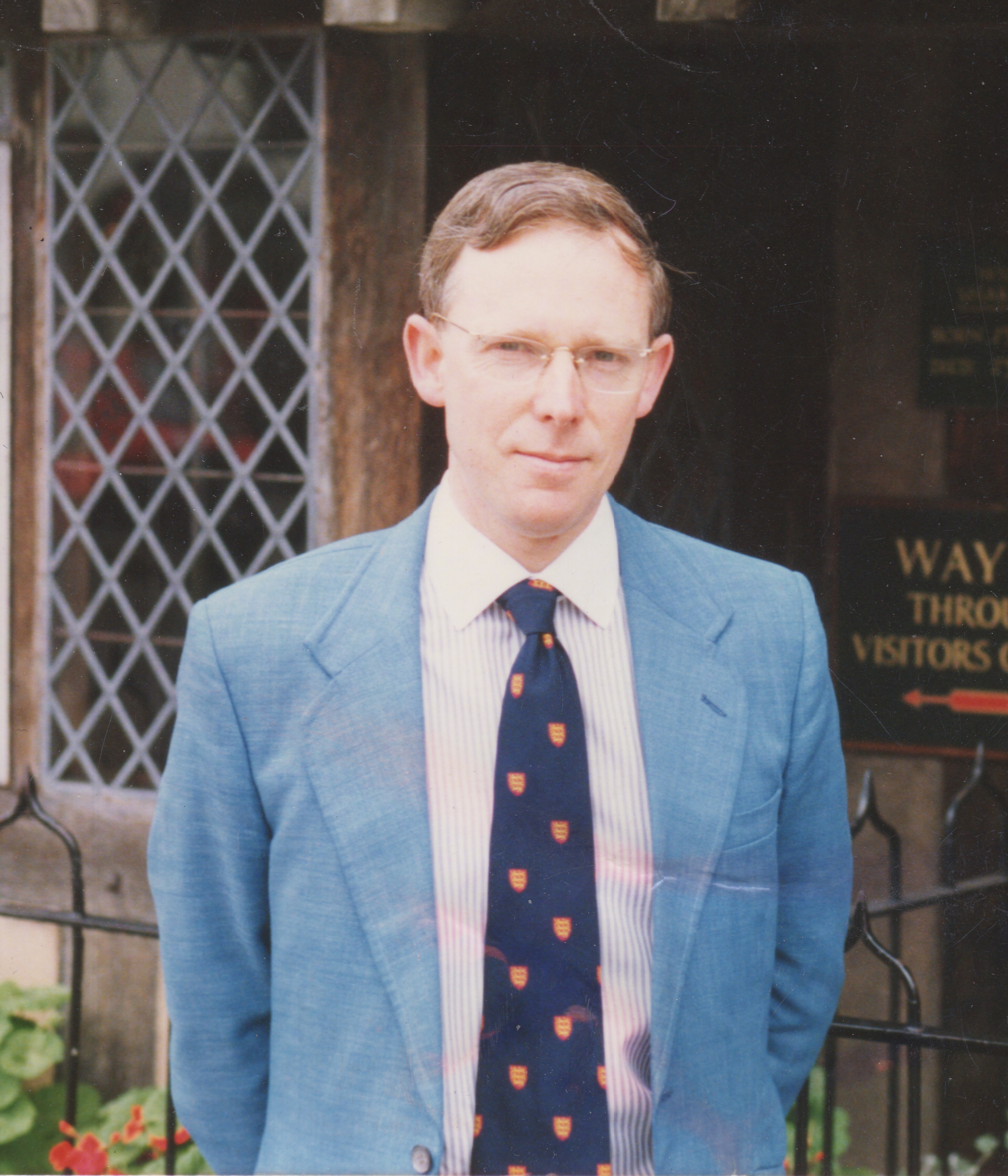
Photographed in London in 1988. Pic by Benedict Hess
After three years in that role he accepted a post at Leeds University studying archives and librarianship. He later attributed his thoroughness at gathering source material for books to his training as an archivist.
Malcolm then moved to Hereford for four-and-a-half years to set-up the city’s first children’s library service before moving further south to Northwood, in the London borough of Hillingdon close to the Metropolitan line, to work as an archivist for the Duchy of Lancaster.
Music librarian
He did this for three years before going to York, shortly before local government reorganisation in 1974, to become city music librarian.
But when reorganisation changed everything, Malcolm was offered a post by the new local authority as county music librarian, which involved buying music for county library services. Being a great lover of classical music, he was perfectly suited.
He stayed in York until 1996, overseeing new methods of administration, storage and repairs as technology changed and vinyl was replaced by cassettes and then CDs in North Yorkshire libraries. All the time he commuted from Harrogate.
He admired York’s decision to effectively pull out of North Yorkshire local government and become independent in the 1990s. Malcolm hated the trend towards ever more remote forms of local government, which will culminate in the creation of North Yorkshire Council next year and the abolition of seven district councils, including Harrogate Borough Council. He felt the more decision-making left Harrogate, the more the town lost control of its wealth and character.
Read more:
- Tributes paid to ‘Mr Harrogate’ Malcolm Neesam
- Harrogate historian Malcolm Neesam dies
- Harrogate Club honours local historian Malcolm Neesam
In 1996 he received an offer to work for an American company called Alumni Holidays, which arranged holidays for former university students.
He had done some guiding in York, which proved useful in his new role in which he gave lectures on subjects such as Scarborough, York and the Yorkshire Dales, Yorkshire architecture and Yorkshire literature. Alumni Holidays was horrified by his initial omission of James Herriot so the author was eventually added to his list of topics.
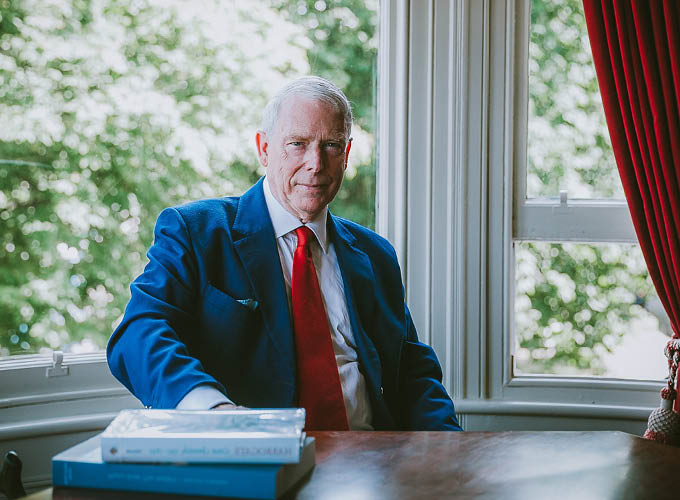
Malcolm worked for the company on a freelance basis for 10 years but the Madrid train bombing in 2004 severely disrupted business by leaving many Americans too afraid to travel to Europe.
Full-time writer
In 2006 he decided to concentrate on writing full-time. He had written short stories at school but didn’t let anyone see them. His writing career had begun in 1973 when the Library Association commissioned him to write a guide to children’s sci-fi called Into Space. It went to nearly every library in the country.
A founding member of the Harrogate Society, which later became Harrogate Civic Society, he was asked by local firms such as Ogden, Raworths and William Woods to write books for them. He also undertook research for plaques. His writing career, he said, “grew in stages”.
Harrogate in Old Picture Postcards was published in 1992, followed by Exclusively Harrogate in 1994 and Harrogate: A History of the English Spa from the Earliest Times to the Present in 2001. His works also included a centennial history of Harrogate Grammar School in 2003.
During this time he became, in the words of Harrogate and Knaresborough MP Andrew Jones, “the chronicler of our town”.
The two books of which Malcolm was proudest are Harrogate Great Chronicle 1332-1841, which was the product of 40 years work, and Wells and Swells: The Golden Age of Harrogate Spa, 1842–1923, which was published in April this year. His beloved Harrogate Club named its dining room in his honour at the book launch. By then, Malcolm was in the advanced stages of the cancer that would claim his life and it was a deeply emotional occasion at a place that meant so much to him.
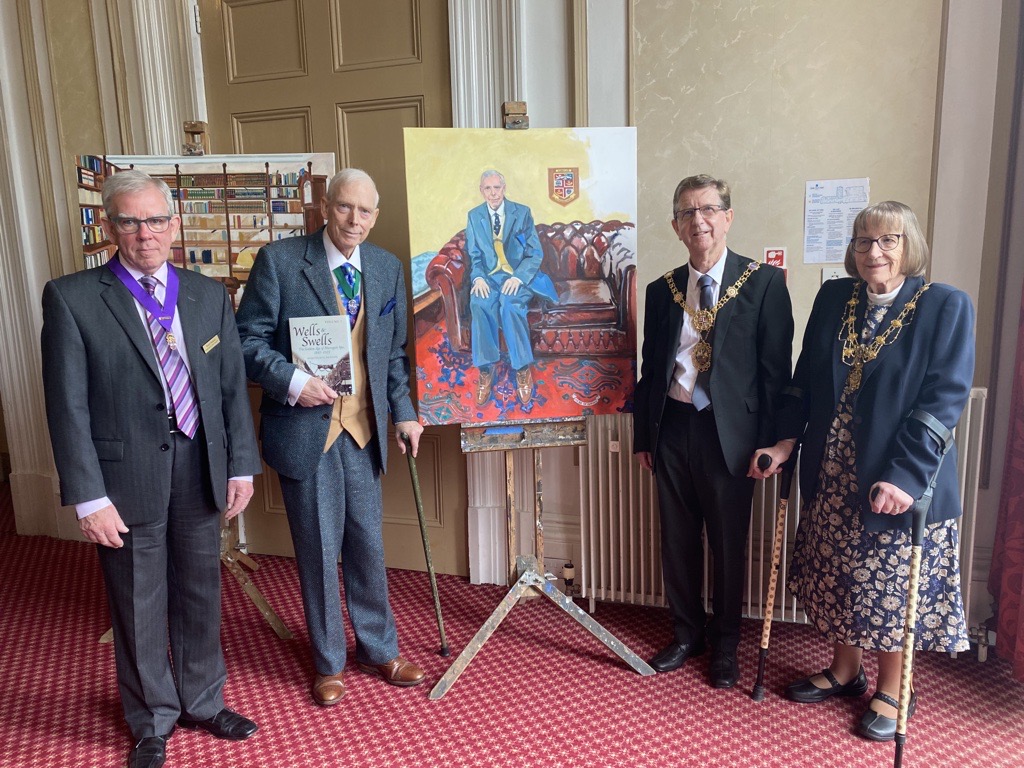
Malcolm Neesam at the launch of his final book, Wells and Swells.
He started work on a third volume, covering Harrogate’s history since 1923, fully aware he was unlikely to finish it.
Before Malcolm, William Grainge, who died in 1895, was considered to be Harrogate’s foremost historian. Grainge had published books and short publications about the town in the 1860s and 1870s, but nothing substantial. Malcolm described Grainge’s style as “too chatty” whereas he focused more on the history.
He and the late Harold Walker, a historian and one-time editor of the Harrogate Herald, set up the Walker-Neesam archive, ensuring their collective research could stay for ever within the town.
His vast collection of papers and photo library will go to Harrogate’s Mercer Art Gallery. Organising them won’t be an easy task: thousands of brown envelopes assigned alphabetically by subject took up an entire room at his home.
Malcolm gave a typically modest answer when asked why he only wrote about Harrogate, saying: “Some writers can turn to anything. I can only write about things that interest me.”
Freedom of the Borough
Malcolm was instrumental in establishing the listing of many buildings in the town and in establishing the first conservation area. He was also the founder historian of the Harrogate Brown Plaque scheme.
He was a member of the Harrogate Club from the 1990s and adored the place and its history. Arthur Conan Doyle once played billiards there.
Harrogate Borough Council awarded him the Freedom of the Borough in 1996 for his services as a historian. He supported numerous local organisations, including Harrogate Dramatic Society and Harrogate Theatre, often sitting on their committees.
Unfailingly polite, he was nevertheless often reserved and diffident in public. He rarely talked about his private life but close friends say he had a keen sense of humour, which could border on the macabre at times, and was an excellent cook.
Besides music, he had a passion for reading, especially non-fiction history and Victorian fiction, such as Dickens, Thackeray and Jane Austin.
But his lifelong passion was Harrogate. He loved its wide streets, the Stray and shops, and felt the population was just about ideal.
He never married. His elder sister, Shirley, who had two sons, died three years ago. Malcolm’s two nephews live in Burnley and East Sussex.
Asked where he was happiest, he said: “It may seem obvious but just sitting on the Stray under a tree.”
Malcolm Neesam, historian and author, born June 28, 1946, died June 28, 2022
Mercer Art Gallery calls for artists in online exhibitionFriends of Mercer Art Gallery is calling for artists and creatives to get involved in its online exhibitions focusing on climate change.
This year’s React 2 exhibition is titled ‘Our Planet, Our Home’ and encourages artists to use any medium and have fun.
Last year’s exhibition was centred around coronavirus and had more than 100 applications. The organisers are determined to have another successful exhibition.
The exhibition will go live in October and artwork can be submitted under these categories: our natural world, climate change and creations using recycled materials.
There is no fee for submission, but the charity asks that the artist makes a donation to support its outreach work supporting art locally.
Last year, creative people aged up to 70 took part in the exhibition.
Catherine Wright, deputy chair of the Friends of the Mercer Project, said:
“Following on from the success of our first online exhibition, we encourage all artists in our local community, amateur and professional, to get involved with this event.
“The subject ‘Our Planet, Our Home’ is such an important and relevant theme and we hope there will be some really thought provoking pieces submitted.
“There were some extremely high-calibre pieces in our last exhibition and we hope the standard will be high again but it is important to us, the Friends of the Mercer that this exhibition is for open to all. If you are artistic we urge you to get creative and get involved!”
There are additional categories for any budding artists under 16. More information on how to enter can be found here.
The submission deadline is September 17 at 5pm.
Read more:
- Musical Shakespeare performance set to arrive in Ripon this month
- Northern Aldborough Festival makes its comeback this month