I can still remember watching Shaun Rankin make his famous treacle tart on The Great British Menu in 2009.
I used to be a regular viewer of the BBC 2 series back in the day — and like Greg Wallace, I never forget a good pud.
So I was genuinely looking forward to meeting the Michelin Star chef, who has returned to his North Yorkshire roots at the helm of his eponymous restaurant at Grantley Hall.
I managed to get lost on my way to the Grade II listed luxury hotel, despite being there twice before. And using a sat nav. So we had a good laugh about my terrible sense of direction, before we sat down for a coffee in the dining room.
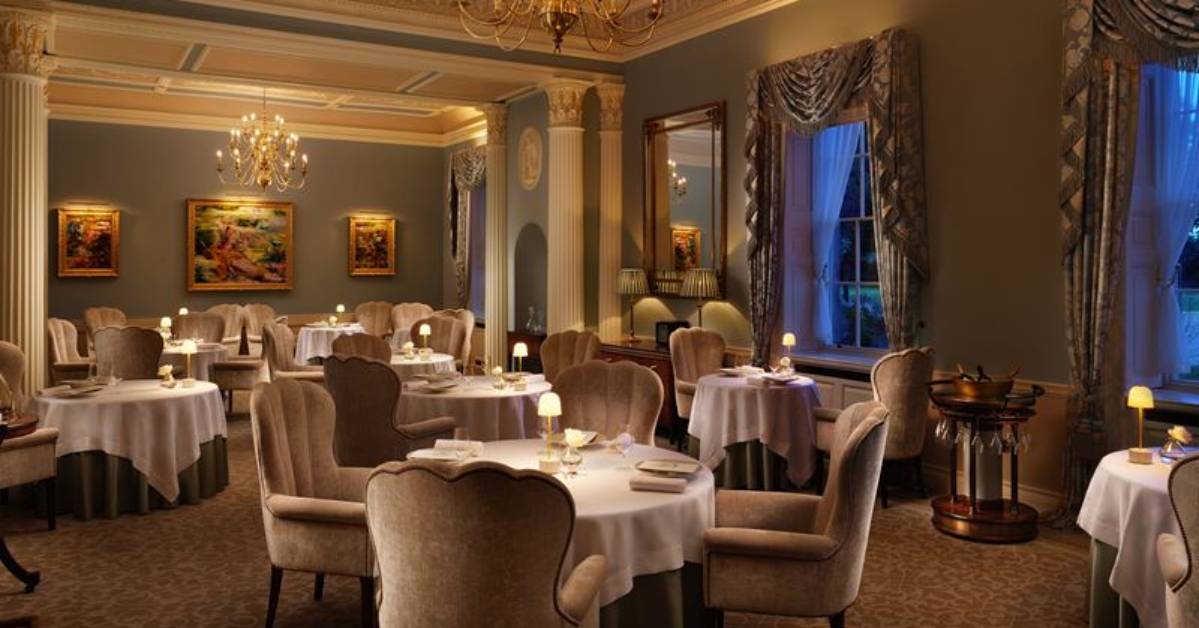
It was certainly an opulent backdrop for an interview. The sprawling estate on the outskirts of Ripon was established at the end of the 17th century, its Palladian-style mansion boasting a rich history having been home to lords and ladies and hosted countless society dinner dances. So the restaurant, which was once a ballroom, is obviously a grand affair. Definitely Bridgeton territory.
Shaun Rankin at Grantley Hall. Photograph: Jack Hardy.
Yorkshire lad
Born in Richmond, Shaun, who turns 50 in March, is a Yorkshire lad.
He knew from an early age that he wanted to be a chef, often cooking with his mother at home in County Durham, where he grew up.
He said:
“Every chef always says their mum was a good cook. And she was. She was a great baker. She was one of those ladies who cooked on a Sunday. I used to help her with her Sunday roasts and make Yorkshire puddings, mash the potatoes and all that kind of stuff at the age of 13 or 14.
“I used to help make scones, apple pies, mince pies and things like that. And those things were used at the beginning of the week. So Monday, Tuesday, Wednesday, all the bakery products were then used to feed you through the week.
“It was quite a simple upbringing. Mum and dad were divorced, so it was only mum that brought me and my brother up.”
At the age of 16, Shaun went to London to complete a three-year apprenticeship at the five-star May Fair, Ritz and Savoy hotels in London.
He said:
“I went to London as a bit of an escape. From the world of simple things really.
“It opened your eyes to luxury, to food, restaurants and the scene of hospitality. Things you’d never seen before in your life. Things you’d only seen on TV or read.
“That’s where I kind of cut my teeth.
“At that age I didn’t know what a Jerusalem artichoke looked like. So it was a learning curve from all aspects — it was life-changing.
” I liked the idea of cooking, so then from there it just became a passion.
“It just becomes your life. You get so enthralled in it all, that you just get carried away with it.”
After completing his apprenticeship, he returned to North Yorkshire in 1992 to work at one of the most prestigious restaurants in the UK at the time, the Black Bull in Moulton, near Richmond.
He said:
“That was a notorious fish restaurant, so I learned lots about fish, lobster, crabs, langoustines. All those really fab ingredients from the coastal areas.
“I was there for about two years and then the head chef said to me ‘it’s time to go’. So he found me a job in Jersey.”
Turning point
Shaun went on to spend much of his career in Jersey, eight years of which were dedicated to the Relais and Chateaux Hotel Longueville Manor. He opened his first restaurant as head chef, Bohemia in 2003, gaining a Michelin Star two years later.
In 2013, after nine years at Bohemia, the rising star went on to open the much-awaited Ormer in Jersey, winning a Michelin Star just four months later. In 2016 he opened its sister restaurant, Ormer Mayfair, bringing the tastes and produce of Jersey to London.
Fondly reminiscing about his time in Jersey, he said:
“That just opened my eyes again to what a different world we live in. Island life. I really fell in love with ingredients.
When you are island-locked, you start to understand exactly what is in abundance and what is sustainable and the carbon footprint of the produce that you use. You’ve got to be shipping in a lot of your meat protein because it’s unavailable on an island.
“But you understand the asparagus grower, the strawberry grower, the guy that grows the watercress, the Jersey Royal is phenomenal, all the vegetables that are grown on the island.
“So you really get a sense of community and you understand what goes into the produce and how hard it is to produce.
“That’s where the whole thing changed for me. As a 22-year-old it kind of clicked. And I knew this was the path, it’s all about ingredients, it’s all about respect for it and you need to try and bring this carbon footprint down.”
Read more:
- Ripon’s Grantley Hall wins first Michelin Star
- Four wellness retreats in the Harrogate district to re-energise mind, body and soul
- Harrogate vegans on Veganuary, restaurants and why they chose plant-based diets
Sustainability
And it is this sustainability approach that he has brought with him to Grantley Hall.
He said:
“The food philosophy has to be that produce is sourced from all around Yorkshire. Of course we go to the coast to get seafood and we go to Scotland to get shellfish, but 95 per cent of the time everything is from a 20 to 30 mile radius and that’s our platform.”
Shaun uses R&J farmers and butchers, from Kirkby Malzeard, and Farmison butchers, based in Ripon, to source meat.
He said:
“All the cattle is full breed and full carcass cut, so that means there is no wastage and that’s really important for us.”
Shaun also uses ingredients from the kitchen garden at Grantley, which supplies 70 per cent of the restaurant’s produce throughout the year.
He added:
“For the rest of it we forage. Things which are around us like rosehips, elderberries, elderflowers, pineapple weed. All these things that are around the areas and local to us. We use those and we create the platform for the dishes.”
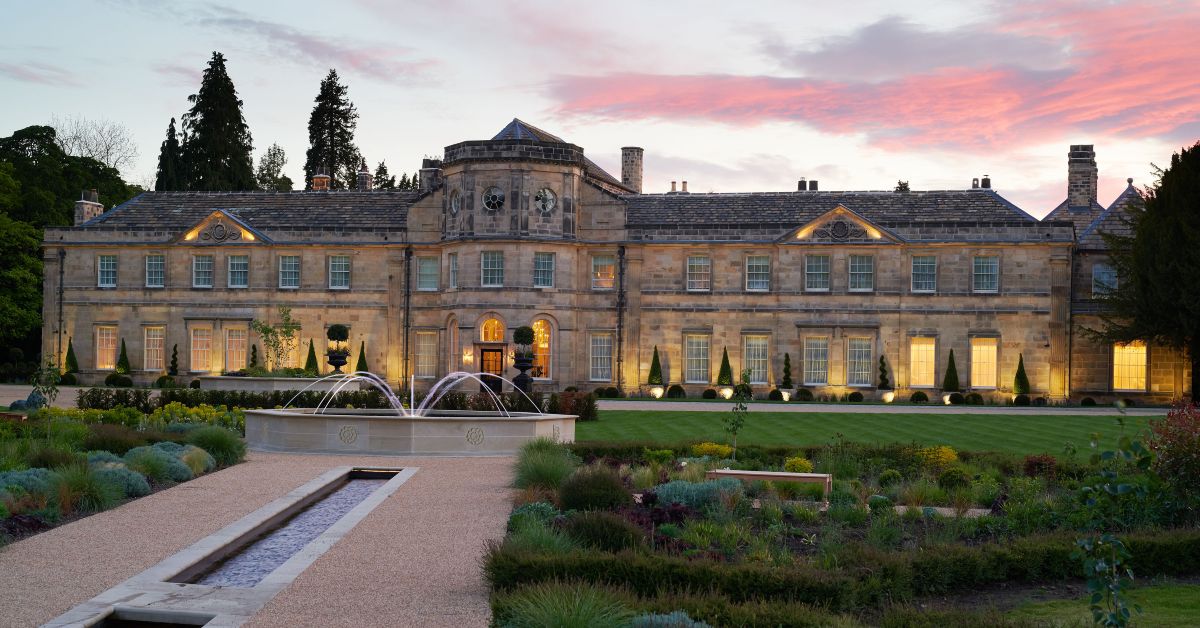
The restaurant is set within Ripon’s 17th century mansion, Grantley Hall. Photograph: Jack Hardy
In fact, if it’s not from the UK, it won’t make an appearance on the menu. This is something he takes a tough stance on.
He said:
“We don’t use olive oil, we use rapeseed oil, we use all of these substitutions all the way through. We don’t use or make pasta, because it’s not what we are.
“Everything is very traditional but reflected in a different modern cooking way and method.
“Hence the menu is called a Taste of Home.”
Taste of Home
And a taste of home it truly is. The current 10-course dining experience, which changes throughout the seasons, features dishes including Bread, Butter, Dripping and Beef Tea, which is bound to evoke memories of a traditional Yorkshire upbringing for many.
And of course the famous Treacle Tart and Clotted Cream makes an appearance.
Shaun said:
“It’s about what a taste of home means. It means that we remember nostalgic parts of our childhood and memories that take us back. It’s led by food and combinations of flavours and textures.
“We take all of the ingredients during the course of the spring and the summer and we will use them in their natural process, but will then savour them and will pickle them, ferment them or preserve them in some way so we can use them in the winter.
“We don’t use things like pineapple, mango or coconut, again we don’t use anything that isn’t from the UK.
“That’s a really strong message for us. For this sustainable carbon footprint approach to this restaurant.
“I’ve been flying this flag since I was 20 in Jersey, and now I am even more determined for it to be that way.
“As a chef, I’m also a teacher, so it’s important to teach my brigade – the chefs that work in the restaurant who are the next generation – that you don’t have to put a menu together with a load of avocados and tuna and passion fruit, pineapple and mangos.
“You can use what is here on the British island really resourcefully. Surely then that generation might change and then the carbon footprint shrinks even further.”
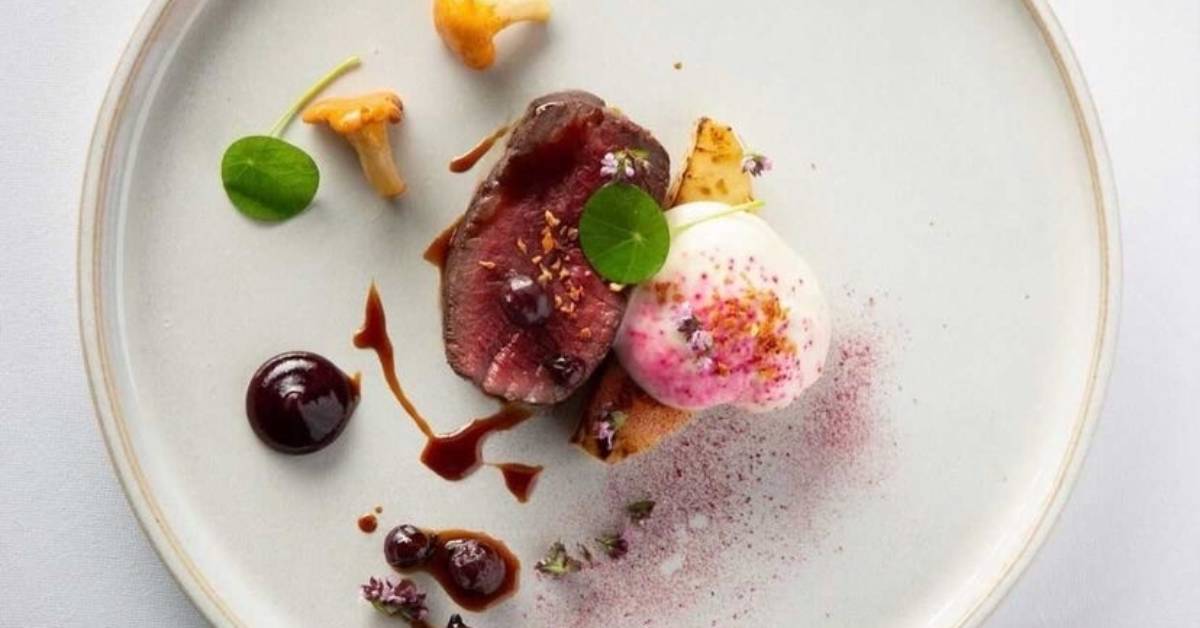
Venison Loin, Blackcurrant and Celeriac from Shaun Rankin’s Taste of Home menu at Grantley Hall.
Passion for design
Shaun said he actually ended up at Grantley Hall thanks to his passion for designing restaurants and concepts.
He said:
“I used to do a lot of consultancy creating and helping hotels and restaurants to achieve what they needed to achieve in London, Jersey and throughout the UK, sometimes even the South of France.”
Two years before Grantley Hall opened, he was introduced to Andrew McPherson, the general manager, and Richard Sykes, the managing director, and joined the team as a consultant, helping to put the concepts and designs together for all the restaurants, kitchens and food and beverage areas in the hotel.
Enjoying his time back in Yorkshire, he was then invited to take over the fine dining and was put in charge of designing the restaurant itself. This involved everything from the credenza units to the soft-closing, velvet-lined drawers, which prevent the clink of the silver-dipped Sheffield cutlery. It’s these little details that help to enhance the dining experience, which, when you are paying £130 per head, is perhaps to be expected.
Shaun said:
“We created everything. We bought the best linen, the best glassware, the best porcelain and crockery.
“Richard and the family honed in on all the local tradesman and materials and again, used everything, as much as possible, from around the Yorkshire area.”
Whisky Sours
Shaun now splits his time between Yorkshire and Jersey, where his two boys, Harry and Ethan, live with their mother.
He currently has a home in Ripon, but before that he lived in Ripley, near Harrogate.
So of course, I wanted to know where his favourite places to eat and drink were in the district.
He said:
“I spent a lot of time at the bar in The Ivy Harrogate drinking whisky sours. The bar is really nice.
“I love Oliver’s Pantry in Ripon. The breakfast is good there and they do a really good club sandwich.
“I go to Three’s a Crowd in Harrogate. I’ve had food a couple of times and it’s tasty. I’ve had Sunday lunch there. I love a roast dinner.”
In terms of what the future holds for Grantley, Shaun said he was looking forward to hopefully having a full year in service at the hotel, following two years of upheaval due to the pandemic.
‘World class’ ambitions
He said:
“Hopefully from now since we reopened, we will get one full year. We will get some momentum.
“We got the Michelin Star in January last year, and the thing about that is every day you need to polish it and keep and eye on it, because you never expect to hold it.
“The ambition for us is the second star in the next few years, so we have to work hard for that. We are constantly working on training and building the team.
“The thing about momentum in restaurants is the more you are open, the better the momentum is. It just becomes more natural and more fluid with everybody and the work, products and service become better. Constantly starting and stopping, you just lose the whole rhythm.
“We are focused on what we do here. The ambitions of Grantley Hall are still yet to be seen. It’s a long journey for Grantley Hall, and for us here and what we want to achieve.
“It really is a world class destination and we want to create a world class restaurant.”
Traditional methods
Shaun then took me on a brief tour of the kitchen – immaculate, unlike mine – which features the Chef’s Table. You can pull up a leather stool and have dinner in the place where the magic happens.
There is also a private dining room, The Dales Suite, which can seat up to 20 people, where you can celebrate special occasions like anniversaries, birthdays and weddings.
Shaun said:
The key message is what we cook here is for a reason. You don’t get fois gras here, you don’t get anything that comes out of France or Italy. Even down to the charcuterie. We brine our own pork collars and make our own hams.
“Everything is traditional, using old methods from the last 200 or 300 years. Salting, brining, curing, preserving fermenting.”
And his favourite dish on the current menu?
“At the moment it’s our Yorkshire venison with blackcurrants and celeriac – both of course grown in our kitchen garden.”

If there’s one thing that Harrogate does incredibly well, it’s food and drink.
The district has some of the best producers in the country and there is no denying we are completely spoilt for choice when it comes to delicious Yorkshire fare.
So it comes as no surprise that excitement is ramping up for the launch of Harrogate’s huge new £6m food hall in Pannal, which overlooks the Crimple Valley.
The 48,000 sq ft building, which is simply called ‘Crimple‘, will include a butchery counter, an in-house bakery and patisserie, a floristry and a 160-seat restaurant.
Sustainability
And with a huge emphasis on sustainability, there are set to be some very quirky additions to the venue, including it’s own beehive and a reconditioned milk float, complete with milk on tap and refillable glass bottles.
Crimple has been owned by Graham Watson since 2013. With a personal investment of £4m for the construction, plus £2m for the fit-out, the business-owner has created the town’s latest foodie destination in a bid to showcase all the amazing produce the district has to offer.
The man tasked with getting the food hall up and running is general manager Chris Lidgitt, who gave me a sneak preview of the site.
He said:
“We want to be a destination site for North Yorkshire.
“We are proud of what we have done behind the scenes and we all know what it’s going to look like when it opens. We can’t wait to show off our hard work.
“Harrogate needs something like this.”
After two years of planning and more than a year of construction, the food hall is set to open its doors in the second week of November and will see more than 80 new jobs created.
Events space
If you have visited Crimple Valley before, you will be familiar with the antiques centre at the site. This has been completely knocked down and the food hall and restaurant has been built in its place. The garden centre will remain and the existing restaurant and terrace will become an events space.
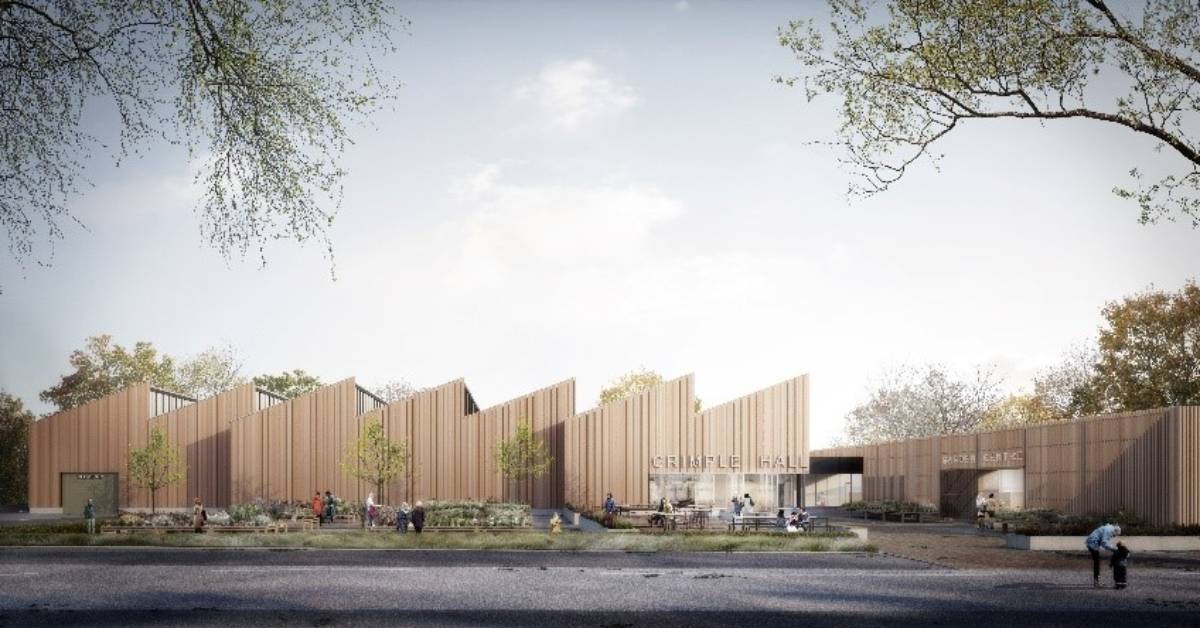
An exterior computer-generated image of the new food hall.
The food hall’s timber-framed building, with its staggered roof, is eco-friendly and sustainable.
The striking design of the building makes reference to agricultural buildings through a series of interconnected barn-like forms.
A heat recovery system also provides all the hot water for the site and energy-saving refrigeration has been fitted.
Impressive
It certainly looks very swish when you drive past on Leeds Road and its even more impressive when you go inside.
When you first walk in, it’s impossible not to notice the sheer scale of the food hall.
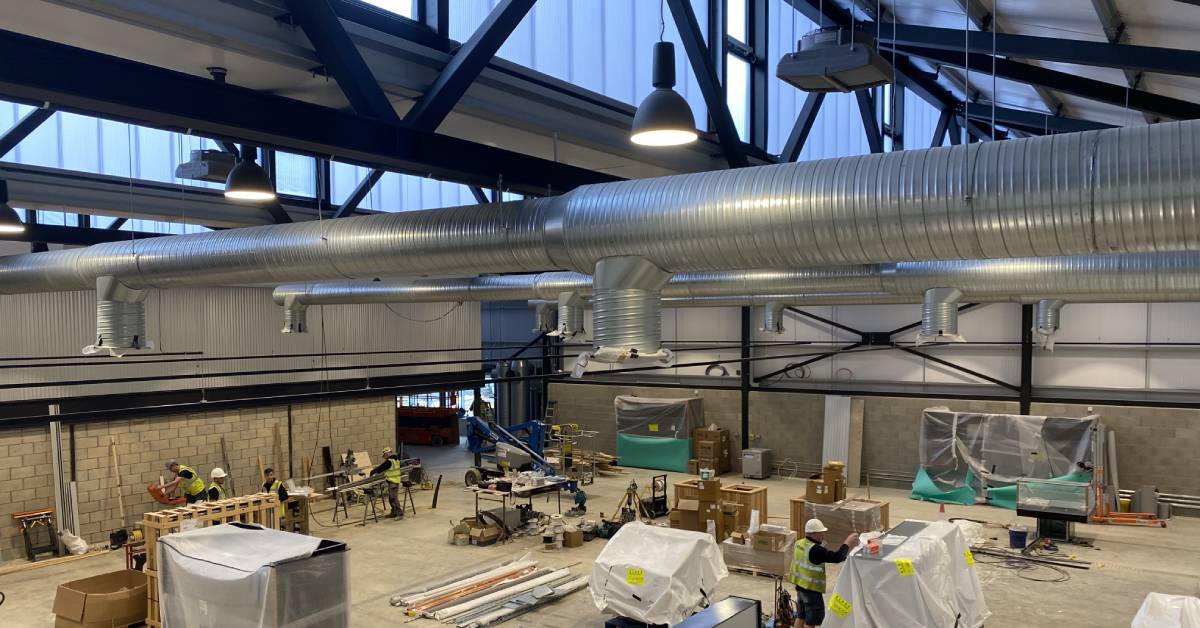
Inside the new Crimple food hall.
The distinctive “saw tooth” roof makes it feel light and airy. The space will allow shoppers to move freely around a specially-designed layout, aimed at making it a relaxed and enjoyable foodie shopping experience.
More importantly the design of the roof allows for natural ventilation and hosts solar panels to feedback power to the grid. In addition, motorised windows keep the temperature constant without wasting electric on heating and cooling.
Butchery counter
One of the big draws will be a 12-metre-long butchery counter, which will have a selection of meats, including the more unusual T-bone and Tomahawk steaks and ox cheeks, as well as the usual cuts. It will also boast a glass-fronted dry-ageing meat fridge.
Chris, who has been in the food and drink industry for years and was a director at The Local Pantry, in nearby Pool, said:
“We will use the in-house butchery department and the produce from the store to supply the restaurant.
“A deli counter will offer cheese, which we are going to mature ourselves in a cheese maturation fridge – from three, six, 12 and 18-months-old.
“There will also be a quirky juice and coffee bar, offering fresh juices and smoothies, which will have a big ice well.
“There will be floristry and gifts, fresh fruit and veg and a bakery, where we will eventually make our own bread. Two bakers will bake in-house including cakes, tarts and patisserie items.
“There will also be a beehive in a sealed unit, which shoppers will be able to see. This will supply honey to sell in the store.”
Yorkshire producers
Food and drink from lots of local producers and independent producers from across Yorkshire will be on offer at Crimple. They will include Bracken Hill Fine Foods, Guppy’s Chocolates, Sawley Kitchen, The Yorkshire Pasta Company and The Original Baker. There will be meat from Robertshaw’s and bread from Cawa Bakery and Lancaster’s. Coffee will be supplied by Dark Woods Coffee.
There will also be food to go, including in-store produced ready meals, pizzas, and fresh fish, as well as a horticulture shop and a grain store.
Chris said:
“There’s a real emphasis on Yorkshire produce but also an emphasis on trying to be different.”
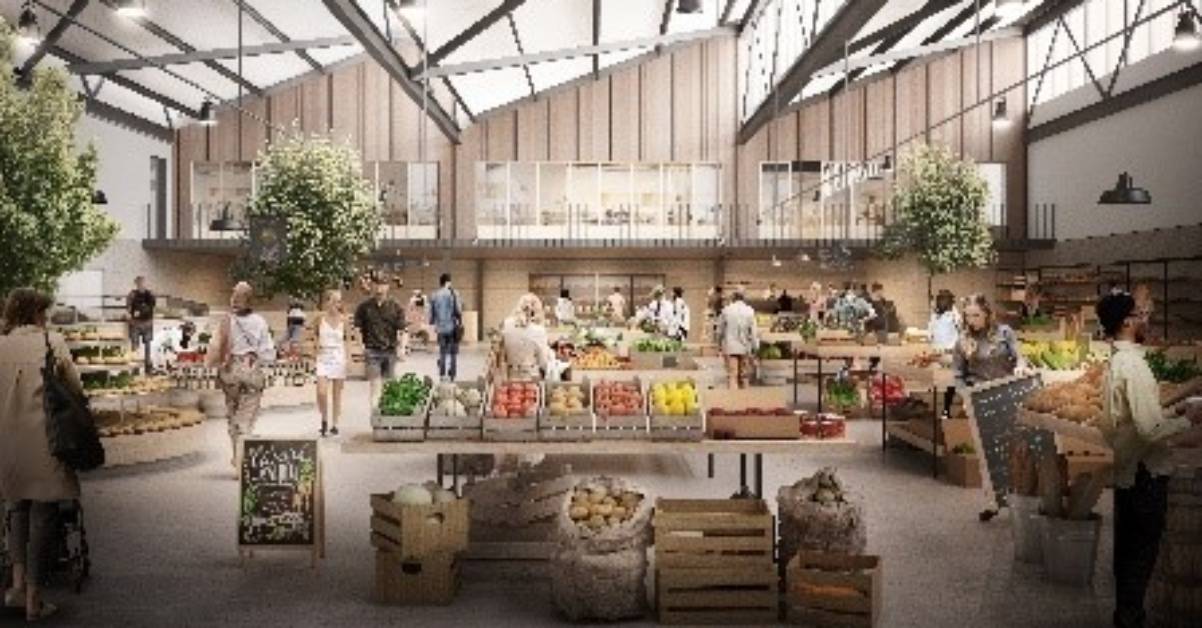
An interior computer-generated image of the new food hall.
- The food hall and garden centre will open on Monday to Saturday from 8am to 7pm, with the restaurant and bar set to offer late night dining in 2022. The restaurant will open from 8am to 5pm. Sunday opening hours will be from 10am to 4pm.