A parliamentary watchdog has refused to publish its correspondence with Skipton and Ripon MP Julian Smith about his £3,000-an-hour advisory role.
The Stray Ferret revealed in August Mr Smith would be paid £60,000 for 20 hours work for low carbon transport company Ryse Hydrogen.
Because of his former government role in Northern Ireland, Mr Smith sought advice from the Advisory Committee on Business Appointments about a potential conflict in taking the role with Ryse.
In 2019, when Mr Smith was Northern Ireland secretary, Jo Bamford, the executive chairman of Ryse, became owner of Ballymena-based bus manufacturer Wrightbus.
The Bamford family owns JCB and are Conservative Party donors.
Read more:
- Strayside Sunday: Pay MPs more and ban outside interests
- MP takes advisory role at hydrogen company – at £3,000 an hour
We asked Acoba, which advises former ministers on employment and conflicts of interest after leaving office, to provide details of its correspondence with Mr Smith.
The FoI response said Lord Pickles, chair of Acoba, considered that disclosure of the correspondence “would be likely to inhibit the free and frank provision of advice and exchange of views; and would be likely to prejudice the effective conduct of public affairs”.
It added:
“The information being withheld includes that which was provided voluntarily by Mr Smith to
enable Acoba to properly advise on the application that had been made.“Disclosure of the information requested would, or would be likely to, make applicants
reluctant to share information as freely with Acoba in future, especially if there was any
perceived sensitivity about the information. This in turn would compromise the advice that
Acoba is able to give.”
The response said the publication of its letter to Mr Smith on its website had fulfilled public interest requirements.
The letter said the appointment was not a conflict of interest, provided Mr Smith does not lobby on behalf of the company or advise on government contracts in the two years after he departed as Northern Ireland secretary in February this year.
The Stray Ferret is to request an internal review of the decision.
Harrogate district MPs vote as Brexit bill clears Commons
Two Harrogate district MPs voted in favour of the government’s Internal Market Bill yesterday, helping to take it to the next legislative stage.
Andrew Jones, Harrogate and Knaresborough MP, and Nigel Adams, Selby and Ainsty MP, voted in line with the government but Julian Smith, Skipton and Ripon MP, abstained.
The legislation paves the way for the UK to override parts of the Brexit Withdrawal Agreement. MPs voted it through at the third reading last night by 340 to 256.
The Bill sparked controversy after Northern Ireland secretary, Brandon Lewis, said it would break international law in a “specific and limited way”.
Read more:
- Allow care home visits, says Andrew Jones MP
- ‘No worse time’ for devolution, say council leaders
- District MPs decline to comment on ‘broken’ covid testing system
The Stray Ferret contacted Mr Jones, Mr Adams and Mr Smith asking why they voted the way they did. None had replied by the time of publication.
The Bill will now undergo further scrutiny in the House of Lords.
What is the Internal Market Bill?
After the UK left the EU on January 31 it signed the Withdrawal Agreement.
The agreement included a Northern Ireland Protocol, which was designed to prevent a hard border returning to the island of Ireland.
The Internal Market Bill attempts to override parts of the agreement. It would allow the UK to modify or reinterpret state aid rules if the two sides do not strike a future trade deal.
Strayside Sunday: Covid testing should be devolved to local authoritiesStrayside Sunday is our weekly political opinion column. It is written by Paul Baverstock, former Director of Communications for the Conservative Party.
Life, it has been said, is just the correct apportionment of blame.
It certainly seems that way in politics and the media coverage of it. I’m as guilty as the rest, often writing negative opinion in this column and raging against the machine in conversation. Time for some perspective I feel.
Last Sunday I wrote about the dilemma faced by former Northern Ireland Secretary and Ripon MP Julian Smith in whether or not to support a new trade bill that would break international law and ignore the Northern Ireland protocol he signed when in office. When the moment of truth came Mr. Smith found enough moral fibre and courage to abstain, thereby preserving his principle, avoiding conflict with his own party leadership, safe in the knowledge that his vote would not put too much of a dent in the government’s whopping majority in parliament. He made a mature political decision to do the right thing both by the people of Northern Ireland and by the party he represents. For this he is to be applauded.
Contrast this with the position of Harrogate’s Andrew Jones MP. A remainer, Mr. Jones waved through the bill, voting with my old boss Iain Duncan Smith, Jacob Reese-Mogg, Steve Baker and the rest of the European Reform Group ultras, for a law that breaks previous agreements with the European Union and breaks international law.
There may well be good reasons for this (although preserving his odour with the Conservative Chief Whip is not one them), but, as ever, Harrogate’s MP is reticent, some might say invisible, when it comes to explaining the reasons behind his actions to the people he purports to represent. Try as they might, I understand the journalistic staff of The Stray Ferret can’t extract comment or explanation from Mr. Jones, nor his office. At worst this pattern of behaviour is undemocratic, at best it is disrespectful, regardless it is cowardly.
But governing is always difficult; it is the consideration of competing claims and countervailing arguments. Done well and, in normal times, government should arrive at negotiated settlements, grounded in their own cogent and transparent philosophy, or “political bottom” as I call it, with enough marrow to satisfy the appetites of all interested parties, voters prime amongst them.
But as we teeter on the brink of another national lockdown; likely a 2-week “circuit break,” it does begin to feel as though the government’s response to Covid is out of control, lurching from one entirely reactive policy to the next. ‘Whack-a-mole;’ knocking local outbreaks on the head, was tried and failed, bubbling was given a go and hasn’t worked, and the ‘Rule of Six’ has lasted less than two weeks. The Government is at sea, but, let’s remember, by definition there is no playbook for handling this pandemic, unprecedented in its scale and effect. This is as true in Harrogate and North Yorkshire as it is nationally.
Our “world class” Test and Trace programme is a disaster. The national testing system is the latest in a long line of national ‘top-down’ IT programmes that are not fit for purpose. Stories of people finding it difficult to book a test online are myriad, delays are common and tests have been offered that require 200-mile or more round trips. Quietly, significant rates of false positives and false negatives confuse the picture. Consequently, as Covid rates rise again, local authority leaders are holding back testing capacity to ensure tests are available for their own key workers. Cases go unchecked, frustration mounts and decisions are made in fear.
I would imagine that this fear (of a rise in Covid infection rates) is at least in part behind Harrogate council’s decision to give a week’s notice that it will not extend permission for outdoor drinking and dining to continue on Stray land outside the The Blues Bar. Hot on the heels of the mess made of the Stray by the World Cycling Championships the council worries publicly that, as Autumn sets in, slippery conditions underfoot will endanger the local public and leave it with a turf repair bill. Sod it, I say. The more than 3000 people who have signed a petition against the council’s plan seem to agree.
I understand that government has to find a way to act in our best interest while reassuring us that all will be well. But fobbing us off with jobsworth “elf and safety” justifications for actions taken to protect us from the coming second wave will not wash.
Local authority leaders are also exasperated with Westminster’s efforts to recruit a national workforce of Trace Agents. Beyond the fact that few of these people possess the established local, third sector and civil society networks which enable effective communication with local people, they also lack detailed knowledge of the key societal variables driving both Covid behavioural compliance and outbreaks; such as the nature of local housing stock, family living patterns, travel habits, culture and language. This is, in fact, what local authorities are in business to do. We need to let them get on with it.
Tracing efforts were initially outsourced to national private providers such as Serco (offering a one size fits all approach) when, instead, local authorities would much rather use their own staff, equipped both with specialist epidemiological training (asking the right questions in the right order) and a detailed understanding of their own patch. This is how it works round here and all that. Our MP’s, Messrs Adams, Jones and Smith, ought to be advocating loudly and publicly for this approach, rather than following blindly the party line that all is well in Test and Trace land. They must know that this is beyond politics; it’s a matter of life and death.
That’s my Strayside Sunday.
Read More:
- Harrogate’s Blues Bar denied permission to keep tables and chairs on the Stray
- Test and Trace system is “broken” says Harrogate mum
Harrogate district MPs claim almost £17,000 in expenses
The three MPs whose constituencies include the Harrogate district received almost £17,000 in expenses between them in the latest round of claims, which were published today.
The Independent Parliamentary Standards Authority reveals details of MPs’ expenses every two months.
For the latest period, which covers March to the end of May, Skipton and Ripon MP Julian Smith claimed £4,649.21, Harrogate and Knaresborough MP Andrew Jones claimed £4,718.82 and Selby and Ainsty MP Nigel Adams claimed £7,497.56.
The largest sums for all three were to pay the Conservative Policy Research Unit, which is a pooled research facility for Conservative MPs. Each MP claimed in excess of £3,000 for this.
Jones’s details include four mileage claims for £96.75 each, which relate to 215-mile trips to and from London.
One claim is dated March 23, the day the country went into lockdown. Another is on March 26 – the date Parliament shut down. MPs were still expected to attend the House of Commons until then.
Read more:
Strayside Sunday: Pay MPs more and ban outside interests
Andrew Jones MP enters devolution debate
Smith’s smallest claim is 77p for an item of stationery. He also claimed £575 office costs for rent. His entry on the IPSA register does not include any claims for travel.
Adams’ claims include £12 for having his constituency office window cleaned on May 11 and £493 for gas and electricity. He also submitted receipts for £3,550 accommodation costs for rent.
Strayside Sunday: Pay MPs more and ban outside interestsStrayside Sunday is our weekly political opinion column. It is written by Paul Baverstock, former Director of Communications for the Conservative Party.
What are we to make of this weeks’ news that two Conservative MP’s and former cabinet ministers, Sajid Javid, the former Chancellor of the Exchequer and Ripon’s own Julian Smith, the former Norther Ireland Secretary, are both supplementing their income to the combined tune of almost a half a million pounds. This from “interests” beyond the walls of the Palace of Westminster? Mr. Javid is to work for the American bankers JP Morgan, for a reported salary of £400,000. Mr. Smith is set to work for a company called Ryse Hydrogen Limited and, as the register of member’s interests states, will provide 20 hours advice annually for the princely sum of £60,000, a billable rate of a cool £3,000 per hour. How do you like those apples?
Before I go on I should point out that both Javid and Smith asked for, and received, advice on the propriety of their new positions from the government’s Advisory Committee on Business Interests. Both sinecures were approved by the committee, led by former Conservative Cabinet Minister and professional Yorkshireman, Eric (now Baron) Pickles. In short, Javid and Smith played by the parliamentary rule book and their commercial actions and activities have been given a clean bill of health. Well that’s ok then. But it isn’t really, is it? Not now, not ever.
Let’s first look at the numbers. The salary of a Member of the United Kingdom Parliament is £81,932. None too shabby when one considers that the average full-time salary in the UK is £36,611. We pay MPs more than twice the average wage to exercise their duties – and I contend they are duties – as public servants. Given they ask for our vote and seek our trust at election, isn’t full-time working the least we can expect from them in return? I think so and that it is fair to demand it. I believe that MPs should not be allowed outside interests, however my view is that we don’t actually pay MPs enough to attract individuals of a calibre to deliver good government.
Most of our current crop of MPs seem like intellectual pygmies in comparison to the politicians we grew up with and that polls show we respected a great deal more than today’s lot. Margaret Thatcher, Michael Heseltine and Ken Clarke for the blues; Harold Wilson, Barbara Castle, Dennis Healey for the reds; and Roy Jenkins, David Owen and Shirley Williams for the yellows. Giants all.
Being an MP was an entirely different proposition then of course: Far greater power was vested in local government, meaning that the volume of business conducted in Westminster was much less than it is today, constituency mailboxes could be dealt with (in written hand) in one good sitting per week, and the demands of the media and social media were not 24/7. Our politics was better because of it and our politicians were unambiguously superior. But nostalgia for the good old days will not a significant improvement make.
What do we need to do to make things better? Let’s say that we paid MPs a salary of £150,000 per annum and that outside interests are, in-turn, banned. By way of comparison and perspective, the basic pay for an NHS consultant (a Doctor with 5 years of medical school training and then another 8 years of on the job experience) tops out at £107,688. With bonuses known as Clinical Excellence Awards consultants pay nears the £150,000. This places them just below the average UK Chief Executive, who makes £156,000 per year. My argument, not original, is that increasing MPs pay will attract a much better quality of potential candidate and that politics can once again become one of the respected professions. In my view there should also be a lower age limit on parliamentarians, say 30 years old, so that they have to bring several years-worth of real-world experience into their role as elected representatives. I would create too an independent public HR body to vet potential parliamentary candidates of all parties for their suitability for the profession.
When one is recruited to any paid position of employment these days, expert interviews are held, salary benchmarking is conducted, reference checks are made, and personality tests are assessed – especially if the process is handled by a professional headhunting or recruitment agency. Which brings me back to the Right Honourable Julian Smith. Before he entered parliament Mr. Smith founded and ran a successful recruiting company. I doubt very much that he achieved a billable rate of £3,000 an hour for any of the candidates he placed.
Again let’s place this in perspective; a leading London commercial “silk” (a barrister appointed Queen’s Counsel; “Her Majesty’s Counsel Learned in Law”), of which there are very few, following 20 years of practice and an ascent to the very pinnacle of their profession, might, just might, be able to bill their multi-national corporate clients up to £2,000 per hour. I cannot, in any view, see how Mr. Smith can justify £3,000 an hour for the advice he is giving to a private company to his Ripon constituents (and, for that matter, to himself). It would be good to hear from Mr. Smith precisely the kind of advice he is to provide for such riches. It looks just awful.
With behaviour like this the Conservative Party is in grave danger of appearing (again) to harness the worst excesses of “the market” to fill its boots, rather than focussing on the now immense twin tasks of rebuilding our nation’s shattered economy and delivering the much vaunted “levelling up” agenda. This, by the way, at a time when competence and empathy seem in terribly short supply (think Robert Jenrick and his planning fiasco and; see also Gavin Williamson’s exam results debacle). When I worked for the party our obsession was to lose the tag of being “the nasty party.” If the current tone-deaf behaviour of its cabinet members continues it won’t be long before we regain that most unwelcome moniker.
And talking of tone deaf, what of the handling by Harrogate Borough Council of its plans to close James Street (the town’s main shopping thoroughfare) to traffic? Sara Ferguson, the acting chair of Harrogate Business Improvement District, felt moved this week to call out the fact that the council appears to have decided unilaterally on the pedestrianisation of James Street. The council had asked the BID to canvass opinion among local business about the plan and, in so doing, the BID found that two thirds of businesses on the street are against full pedestrianisation. However, with more than a whiff of fait accompli it seems that the council had no intention of waiting to hear the views of local business leaders and had already put in a request to North Yorkshire County Council to close the street for “safety and social distancing measures” (a measure since backed by NYCC to come into effect as early as next month). Through bull-headed incompetence Harrogate Borough Council, much like the United Kingdom government, is testing our patience and goodwill to the limit.
That’s my Strayside Sunday.
Read More:
- The Yorkshire district councils need to set out a clear vision for devolution
- Hoopers store warns: Harrogate isn’t bullet proof anymore
MP takes advisory role at hydrogen company – at £3,000 an hour
Julian Smith, MP for Skipton and Ripon, has been appointed as an external advisor to a hydrogen company at a rate of £3,000 per hour.
He has been warned by a government advisory committee about the potential for a perceived conflict of interest with his former role as secretary of state for Northern Ireland.
However, the committee concluded that the appointment was not a conflict, so long as Mr Smith does not lobby on behalf of the company or advise on government contracts for two years after he was sacked as Northern Ireland secretary in February this year.
Mr Smith previously did one month’s consultancy work for Ryse Hydrogen Ltd in July, and was paid £15,000 plus VAT for 15 hours’ work. Now, he has been appointed on a year-long arrangement of 20 hours across the next 12 months – and will be paid £60,000 plus VAT.
Read more:
- Harrogate district MPs silent on government planning reforms
- MPs watch: NHS ‘on the table’ in US trade talks?
Ryse Hydrogen CEO Jo Bamford also owns Wrightbus, a Northern Irish bus production company which has a relationship with the Northern Ireland Office (NIO) in government. As former Northern Ireland secretary until February this year, Mr Smith sought advice from the Office of the Advisory Committee on Business Appointments about a potential conflict in taking the new role.
In his response, Lord Pickles told Mr Smith:
“The committee considered that, as you met with Mr Bamford whilst in office to discuss the Wrightbus takeover, its growth plans and how NIO could support, there is a risk that this appointment may be perceived as a reward for actions taken in office.
“However, you did not meet with Mr Bamford until after the Bamford Bus Company’s takeover of Wrightbus; the NIO played no role in the takeover; and it confirmed there were no police, regulatory or contractual decisions taken by you whilst in office that affected RHL. It is particularly relevant that although Mr Bamford has said publicly that he will be seeking government funding in relation to a hydrogen bus fleet, this was not within your ministerial portfolio and you make no relevant decisions in office.
“Therefore, the risk this appointment was offered as a result of decisions made for actions taken in office is low.”
The letter warned Mr Smith not to use any information gained during his time as a minister in order to benefit the business, and that he is not allowed to lobby the government on behalf of the business or advise on contracts with the UK government or Northern Ireland executive for two years from the end of his appointment as secretary of state for Northern Ireland.
Mr Smith’s role with the company is expected to be advising on its development and expansion. The letter from Lord Pickles states that Mr Bamford has publicly “expressed a desire to gain government funding to aid in the development of a new fleet of hydrogen buses for the UK”.
Sarah Clarke, policy and communications manager for campaign group Unlock Democracy, said:
“Politicians should remember that they are in Parliament to represent their constituents, not to pursue second jobs. Companies can employ sitting MPs as a way of buying access and influence, which is why many members of the public are rightly sceptical of the practice.
“MPs can follow a simple rule to make sure their dealings are above board: if they take a paid second job, it should be because it helps them become a more effective MP and improves the work they do for their constituents. A job in the House of Commons should not be work experience for a corporate career.”
Neither Mr Smith nor Ryse Hydrogen responded to the Stray Ferret’s request for a comment on his appointment.
Strayside Sunday: Harrogate Convention Centre should not be in the hands of politiciansStrayside Sunday is our weekly political opinion column. It is written by Paul Baverstock, former Director of Communications for the Conservative Party.
Harrogate Borough Council has been up to its usual incompetent, vainglorious tricks this week and looks set, at the next full council meeting, to greenlight a staggering £1m – yes that is a cool £1m – consultancy project to design and plan a £46m (gasp) renovation of the loss-making lemon that is Harrogate Convention Centre.
In its 2014 town plan, the council made much of the fact that the activities of HCC contributed £57m to the town’s wider economy each year. Now, to support its case for new investment in the centre, the council tells us that the convention centre contributes £35m to our local economy. The explanation – a different way of compiling the figures. The lower figure produced with methodology set by an external body, Visit Britain. What a whopping discrepancy from figures the council had previously been in control of compiling. It doesn’t inspire confidence in its ability to now get the maths right with the eye-watering sums it proposes spending.
So, having presided for years over the centre’s demise as a desirable destination conference venue, the council now seems set to absolve itself of the guilt of its previous underinvestment and mismanagement with profligate and horribly misguided public spending. The question for Councillor Cooper is why, when you have so clearly been asleep at the wheel, should we trust you to spend a penny more, let alone the millions you plan?
Instead, the centre should be sold to specialist private enterprise, as large conference venues in Manchester and Birmingham have been, to great financial effect. This would serve to secure the undoubted wider economic benefits of a successful conference centre for the town, away from political interference and leave the council free to focus on serving residents better.
Such a sale would yield significant and sorely needed investment capital for a truly progressive and innovative council to reimagine Harrogate town centre, or to promote independent local business, or to deliver much and never more needed services. However, as former Harrogate Liberal Democrat MP Phil Willis said in these pages this week, the councillors involved are “amateurs”. They should not be trusted to run any business of scale with public funds. Harrogate Council is simply unable to articulate what it is for and lurches from one expensive vanity project announcement to the next. Crescent Gardens, Knapping Mount, now this. It catches the eye, but for none of the right reasons. The sooner Harrogate council is folded into a single, devolved North Yorkshire Unitary Authority, the better. It’s fair to say that Harrogate council’s leadership don’t welcome the prospect, choosing Yorkshire Day, August 1, to announce the launch of an alternative devolution bid campaign. And I’ll return to this subject in detail next week.
Transport Secretary Grant Shapps dropped another clanger this week; heading off to a family holiday in Spain just hours before the air bridge back to the UK was closed – by Transport Secretary Grant Shapps – thereby condemning himself and his family to a 14-day quarantine on return to the United Kingdom. Shapps arrived in Spain on Saturday and, at a virtual meeting with departmental and devolved colleagues the same day, was presented with new covid-19 infection figures that suggested a Spanish second wave. Closing the bridge, he promptly boarded a return flight home to begin a fortnight of self-isolation. Left in situ on their own in Spain, I suspect Mrs Shapps and their three children are not best pleased that Dad has made a bit of a prat of himself again.
The tragi-comic quality of episodes like this have been described as part of the continued “Graylingisation” of British Politics; so named by journalist Gavin Esler, in honour of poor old Chris “Failing” Grayling, who must surely go down as one of the most spectacularly incompetent British Cabinet Ministers in living memory. The hapless MP for Epsom and Ewell has most recently been in the news for failing to secure the Chairmanship of the Parliamentary Intelligence Select Committee, despite the fact, or more likely because of it, that he was Boris Johnson’s preferred candidate. So sure was he that he would emerge victorious, Grayling missed the manoeuvres of Julian Lewis MP (who is highly respected in parliament for his intelligence, his Intelligence expertise and his principle). By the time Grayling realised he was being gazumped, it was too late and Mr Lewis won the Chairmanship of the committee at a canter. In a fit of petulant and retaliatory pique, BoJo stripped Mr Lewis of the Conservative whip, at once earning the ire of parliament and reminding us all that what seems to matter in contemporary politics – nationally and locally – is not competence and probity, but patronage and blind fealty.
Finally, I’d like to recognise that, in respect of his vote, mentioned in my last column, for the “continuity” Trade Bill and against several amendments to the bill seeking protections for the NHS from foreign trade, Ripon MP Julian Smith made a public statement this week. Mr. Smith would still have us take as an item of faith the government’s claim that it will not sell out the NHS, but none the less I very much respect his willingness to spell out his position transparently. It builds trust and understanding between people and their elected representatives, especially if mediated, on the record, through the fourth estate. Trust has never been needed more. Andrew Jones MP, why haven’t we heard from you?
That’s my Strayside Sunday.
Read More:
- Districts launch alternative council reorganisation bid ahead of devolution
- MPs Watch: what have the districts MPs being doing in the past month?
Strayside Sunday is our weekly political opinion column. It is written by Paul Baverstock, former Director of Communications for the Conservative Party.
In 1942 William Beveridge identified “5 giants on the road to post-war reconstruction in the United Kingdom.” Disease was one, and, on the 5th July 1948, the NHS became the state’s answer to it.
The NHS is a living breathing political battleground. Blunt force rhetoric about it generates huge heat, while ideology, knowledge or nuance cast only low light. Take the following case; the virtue-signalling phenomenon of clapping for the NHS, while failing to ensure or, at the very least, publicly confirm, the post-Brexit future of this treasured institution.
During lockdown, both Harrogate MP Andrew Jones and Ripon MP Julian Smith, together with every MP in parliament, implored us to “clap for the NHS.” With typical political expediency, (alas) Smith and Jones embraced the NHS rainbow flag and led our constituency-based public displays of affection. This week, both men voted against an NHS amendment (put down by Green MP Caroline Lucas and supported by the Labour Party) to the Trade Bill that, post-Brexit, will shape our international trading relationships.
The NHS amendment sought to protect the British principle of universal healthcare; it sought protections against wage cuts for NHS staff; the protection of the British medicines market from price gouging; to ensure that our confidential patient data could not be shared without our knowledge and permission. I don’t know about you, but I have found it difficult to disagree with the NHS being protected from the avarice of Donald Trump’s America. I challenge our district MPs to take a principled stance in relation to the NHS, rather than simply use its good name when they see a public relations opportunity at a time of crisis.
On the most important guarantor of British wellbeing, the future of the NHS, can there be a more obvious barometer of a person’s character? In the end, holding to principle against the wishes of one’s own party machinery may well prove personally expensive. But clapping for the NHS while voting to leave it open to profit-takers from abroad is most certainly cheap.
I know that in the age of the Cummings Tyranny, to vote against the party whip is career limiting. And if I were in a charitable mood I would accept that the amendments above were put down by the Greens and by Labour to make political mischief; “nasty Tories won’t protect NHS,” “nasty Tories sell out NHS,” and so on. Of course parliamentary politics is at play, yet it seems to me that the blue team isn’t playing very well. What would it cost for Smith, Jones and colleagues to go on record, preferably in these pages, to state their views and, specifically, make plain that, even though they voted for the trade bill, they voted tactically against the opposition’s NHS ‘spoiler’ amendments in the interest of post-Brexit progress?
So much ideological tosh is talked about the NHS: For example, the Labour Party and the British Medical Association (the doctor’s trade union) scream about the ‘privatisation’ of the NHS. This, despite the fact that no one is charged by the NHS for visiting their GP, or for going to hospital, or for treatment. Some services that are ‘free at the point of use’ to you and me are, in fact, provided by private companies, themselves paid directly by the NHS. But at the last official count ,the proportion of the NHS’s overall budget paid to private healthcare providers was less than 9% and falling.
And we Tories bang on about waste and inefficiency, which does exist, but the fact of which is hardly surprising given that, since 1997, the NHS has endured 7 major structural reforms – with New Labour, the Coalition government and the Tories roughly equally culpable – and its demoralised staff don’t know whether they are coming or going. Billions has been spent too (a good proportion of which has been in vain) on attempting to harness the power of technology to deliver better care outcomes, and to wire together a hugely fragmented healthcare delivery system, so that we can share patient information across and between care settings.
At this point I should declare an interest: The National Health Service is particularly dear to my heart; I worked in the system for several years and, for much of my adult life, have been a frequent acute customer. In the summer of 2006, I was diagnosed with late stage 4 Hodgkin’s Lymphoma and the odds were very much against my survival. I spent the next 3 months in hospital receiving brilliant care. My chemotherapy worked, but a hospital acquired infection almost killed me.
14 years later, the consultant oncologist who saved my life remains a dear friend, a friendship we forged through political discourse; when I arrived at hospital that June, my time as Director of Communication for the Conservative Party was not yet in the distant past. My doctor, a Professor at Imperial, was then and remains now, a die-hard socialist. ‘Prof’ refuses on principle to see patients privately, even though with his skills and reputation he could have charged his way to millionairedom, had he been so minded.
Later, when I was discharged as an in-patient and returned to see him for quarterly out-patient check-ups in clinic, Prof would announce loudly “the Tory is back! Everyone remember to give him a hard time.” Too civilised and sensible a man to subscribe to the view that he “could never be friends with a Tory,” what he meant was that I was to be kept honest in my views about the NHS. ‘Prof’ insists that the service is a humanity defining idea first and a set of healthcare delivery arrangements and economics second. Do Messrs Smith and Jones?
That’s my Strayside Sunday.
Read More:
- District’s MPs vote against protecting the NHS in post-Brexit trade bill
- Call for clarity on the future of Harrogate’s NHS Nightingale Hospital at the HCC
Why not get in touch with Paul and share your views on his column and local politics. paul@thestrayferret.co.uk
MPs watch: litter picking and lost car keysEvery month the Stray Ferret has been trying to find out what our local MPs, Andrew Jones and Julian Smith, have been up to in their constituencies and in the House of Commons.
In June, the district began to emerge from lockdown so we wanted to know how active they have been during this critical period. We asked both Mr Jones and Mr Smith if they would like to highlight anything in particular, but we did not receive a response at the time of publication.
So here is what we know after analysing their online presence.

Andrew Jones, MP for Harrogate and Knaresborough.
In Harrogate and Knaresborough here is what we found on Mr Jones:
- On June 24, Mr Jones voted against weekly coronavirus testing for NHS and social care staff.
- In the House of Commons, Andrew Jones asked Prime Minister Boris Johnson to clarify guidance for hospitality businesses. He said “councils should be encouraged” to use outdoor spaces to help hospitality businesses in Harrogate and Knaresborough survive.
- Earlier in June, he asked health secretary Matt Hancock what steps are being taken to provide further coronavirus testing for BAME and vulnerable people.
- He’s published two stories on his website, both about the closure of Stray FM. He said he has written to the owners of Bauer Media “seeking reassurances”. He does not say if he received a response.
- One of Mr Jones’s nine tweets in June was that he found some car keys near to Tewit Well.
- On June 26, Mr Jones spoke out against racist language on social media. He said: “This week I have been included in tweets using what I consider to be racist language. I have reported all the tweets and blocked both the users responsible. It isn’t acceptable; it won’t be overlooked.”
- Litter on the Stray has been the talk of the town in June and Mr Jones took part in a photo where he collected litter with some Harrogate councillors.
- He filmed a video for #PrideMonth expressing his support for the organisation Pride in Diversity.
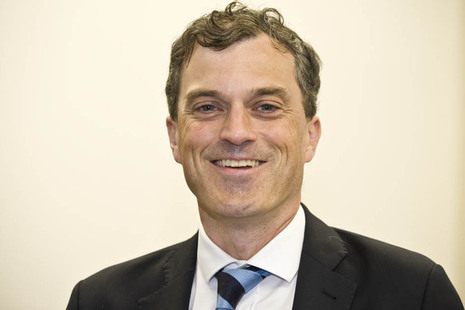
Julian Smith, MP for Ripon and Skipton.
In Ripon here is what we found on Mr Smith:
- Mr Smith also voted against weekly coronavirus testing for NHS and social care staff.
- In June, 40% of his original tweets related to Irish politics, despite the fact he was sacked as Northern Ireland secretary five months ago.
- On Twitter, Mr Smith hailed the “stunning viewing numbers” of BBC drama The Salisbury Poisoning.
- On June 26, he visited businesses in Ripon including Hambleton Brewery and the Little Ripon Bookshop to see how lockdown was affecting them.
- A tweet of his went viral receiving over six thousand “likes” after he joked about his dismissal from government.
- Speaking in a Commons debate he warned that businesses are still not prepared for the realities of Brexit. He said: “Many businesses haven’t realised the consequences of coming out of the single market and the customs union. We can start preparing them for that reality.”
- On his Facebook page, he said he has “received an update” from Homes England on the Ripon Barracks site, but he didn’t elaborate to his constituents what this update was.
- It is now almost six months since Mr Smith’s website was updated with any news.
- Mr Smith has held telephone surgeries for his constituents throughout June.
The Bishop of Ripon, the Rt. Rev Dr Helen-Ann Hartley, she says she’s received a call yesterday evening from the city’s MP Julian Smith.
Dr Hartley, told The Stray Ferret that ” it was good of him to be in touch” but did not want to share more details of the conversation.
The call from Mr Smith came at the end of a day which saw the Mayor of Ripon Councillor Eamon Parkin, and two of his mayoral predecessors Councillor Pauline McHardy and Councillor Stuart Martin all united in their condemnation of an email to the Bishop that read, ‘keep out of politics, or it will be the death of you’.

This death threat and similarly-worded threats made to the Bishop of Newcastle Christine Hardman and John Inge, the Bishop of Worcester, have been reported to the police in their respective diocese.
The Bishop, who took over her role in Ripon in 2018, received a number of hateful messages, alongside ones of support, after saying in a tweet that she disagreed with the way in which Prime Minister Boris Johnson had condoned the actions of his key adviser Dominic Cummings, who travelled 260 miles with his wife and young son from London to Durham at the height of the coronavirus lockdown.
Mr Cummings has subsequently come under fire from almost 40 Conservative MPs, who have found his actions unacceptable and called for him to be dismissed. Among those making that call is Harrogate and Knaresborough MP Andrew Jones.
Following our initial story on Tuesday, the majority of Stray Ferret readers posting on Facebook, said they supported the bishop and her right to speak on the impact that politics has on people’s lives.
Dr Hartley, said:
“I am encouraged by the kind words that I have read and heard.”