Two of Ripon’s key tourist and heritage attractions have reopened their doors to the public and a third will re-open next month.
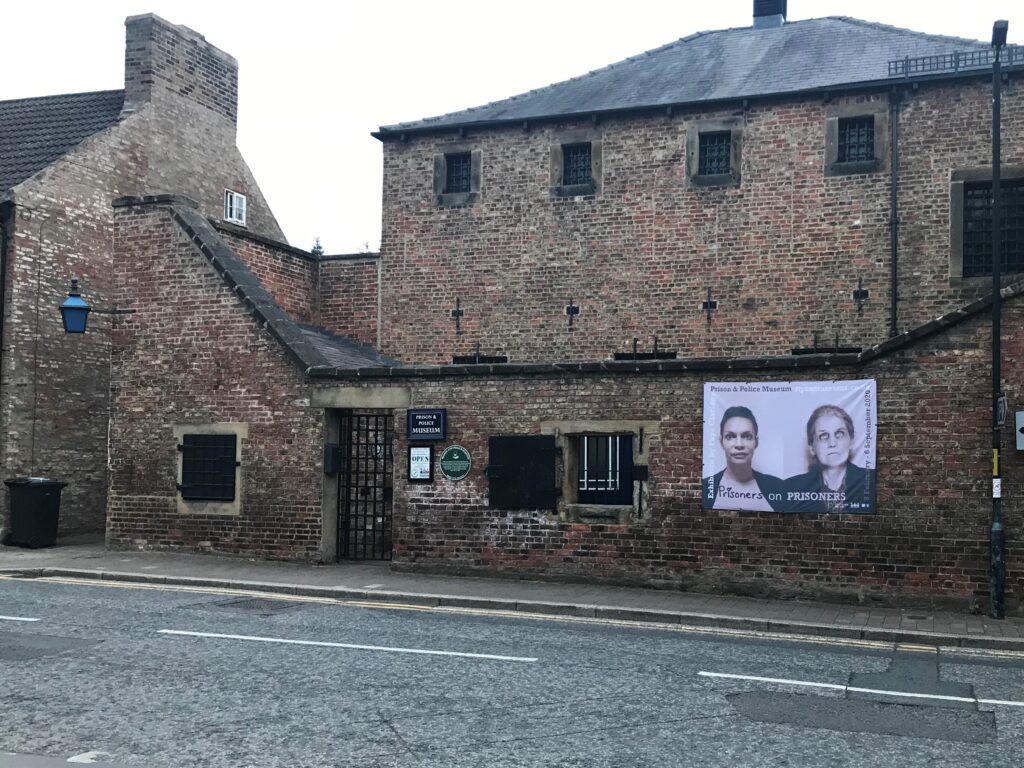
The Workhouse Museum & Garden and Prison & Police Museum, reopened yesterday (Wednesday) and the Courthouse Museum is expected to be open again from August 1.
Helen Thornton, director of Ripon Museum Trust, said:
“I am so excited to be able to offer a warm welcome to visitors once again. The whole team here has worked extremely hard to get ready to provide an enjoyable and safe museum experience.”
She added:
“I hope people will be inspired by the fascinating history we have at Ripon museums and will have fun with their families exploring our beautiful gardens and discovering the amazing stories within our walls.”
The museums will open six days a week, closing on Mondays for a deep clean, as part of a package of measures designed to ensure the safety of visitors, volunteers and staff.
Numbers of people allowed in at any one time are being limited. Visitors must have pre-booked and paid for their tickets and should present their email ticket on a mobile phone or a printed copy at museum receptions.
Read more:
Ripon Museum Trust is also introducing additional cleaning and hygiene measures on its three sites, with social distancing markers in place to help visitors keep a safe distance apart.
Anybody displaying symptoms of coronavirus is asked not to visit.
The measures have been taken following government guidance and following Public Health England recommendations. The trust has received accreditation from Visit England, which recognises that government and industry Covid-19 guidelines are being followed, ensuring processes are in place to maintain cleanliness and aid social distancing.
Visitors to the Workhouse Museum will be able to purchase refreshments and can bring a picnic to eat in the museum’s grounds.
Ripon Museum Trust previously received £40,100 from The National Lottery Heritage Fund to safeguard its heritage buildings and provide much-needed support for essential costs during the coronavirus crisis.
Harrogate History: VE day 1945 – a day of rejoicing after the dark years of warThis History is written for The Stray Ferret by Harrogate historian, Malcolm Neesam:
On Tuesday 8th May 1945 a full sized likeness of Adolph Hitler gazed across West Park Stray surrounded by a replica of his Mountain retreat at Berchtesgaden. It had been placed there as the crowning display of a huge bonfire and assembled by the Harrogate Home Guard, who, at dusk, stormed the display, and to frantic cheering from the assembled townspeople, captured the effigies of Hitler and his cronies, before the Mayor lit the bonfire that burned “Berchtesgaden” to the ground. Beyond this scene of rejoicing, Harrogate was a sea of bunting and the flags of allied nations, which filled not only the town centre, but nearly every suburban street as well. In the main shopping streets at the town’s centre were displayed large portraits of the King and Queen, Prime Minister Churchill and allied leaders, Field Marshall Montgomery and other military luminaries.
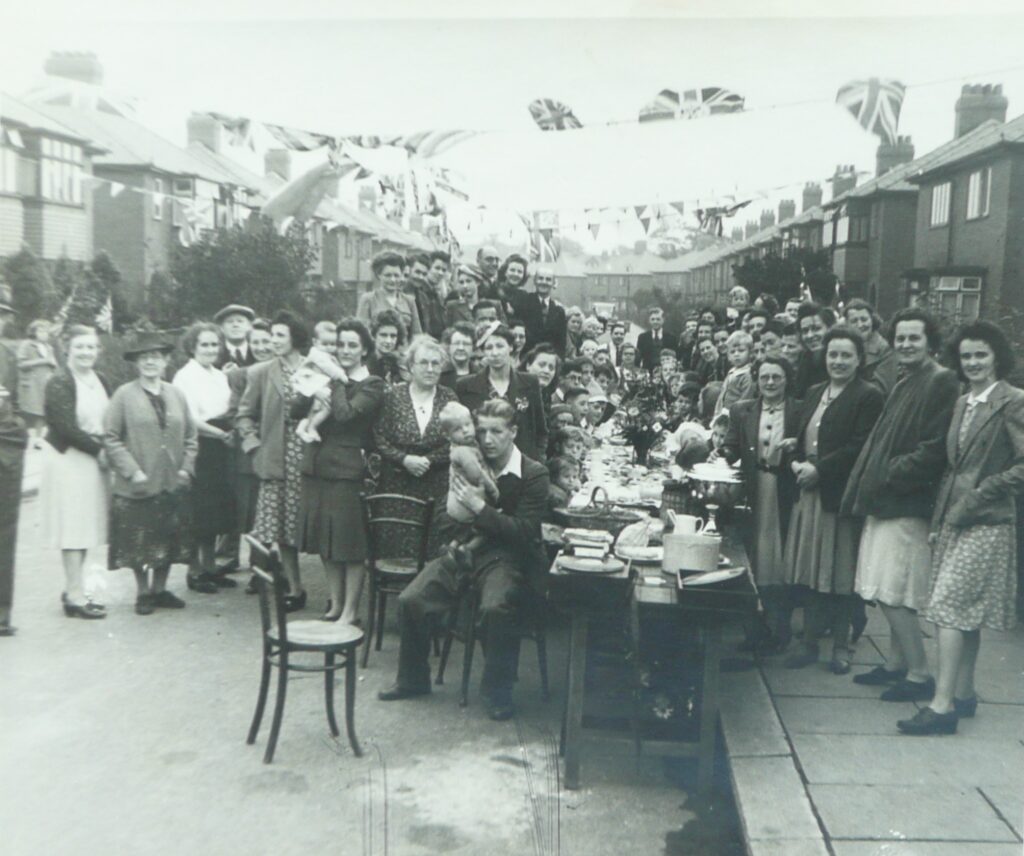
Street party Harrogate 1945
Joyous crowds surged through the town centre that day, whose drab and neglected appearance, the result of five years, eight months and five days of wartime austerity, was temporarily brightened by brightly coloured displays, although the need to conserve energy precluded the use of gas or electric power, exceptions being made at the Royal Baths, and Municipal Offices where Mayor G. Spenceley had greeting the crowds gathered in Crescent Gardens. People continued to surge through the centre of the town throughout the day, despite heavy rain showers, although the streets cleared in time for both the Prime Minister’s broadcast, and the King’s speech.
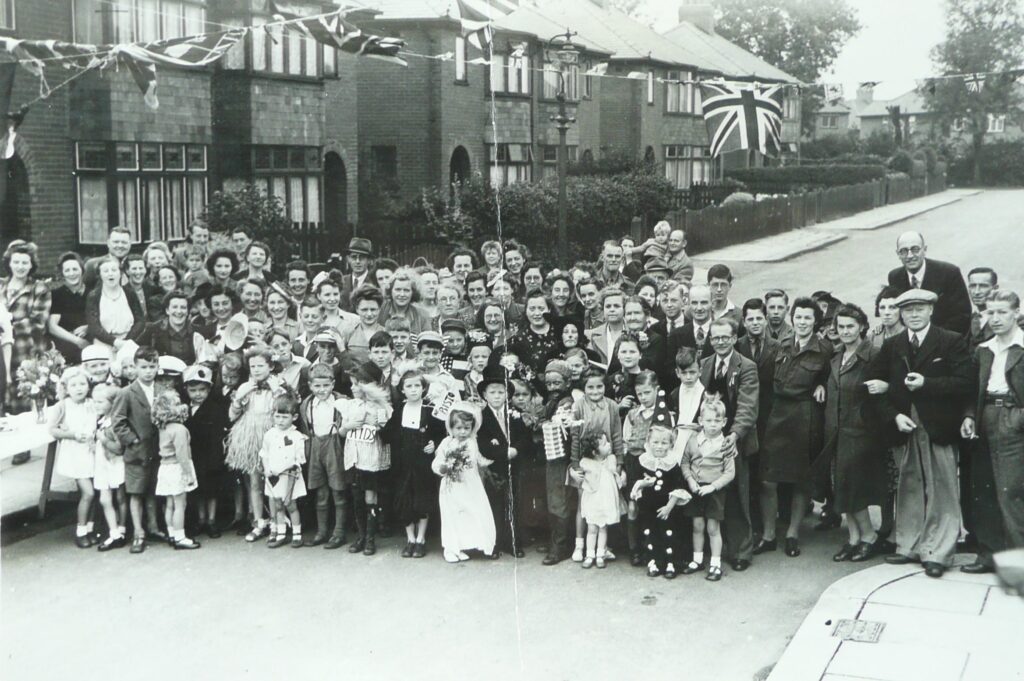
Harrogate residents pose for VE day 1945
The borough court continued to function on VE Day, the main business being concerned with granting licences for dancing and extensions for liquor and music, all essential aspects of the coming celebrations on the following Sunday, which at the request of the King, would be a day of national thanksgiving and prayer. A service was planned at St. Peter’s Church attended by the Mayor and full Corporation, followed by a brief ceremony at the War Memorial in remembrance of the fallen. In the afternoon, a grand parade was to occur on West Park, when participants would include American military personnel, units of the Home Guard and Civil Defence, representatives from the British Legion, St. John Ambulance Brigade, the Scouts and the Guides. Flag bearing youth groups present included the Sea Cadets, Army Cadet Corps, Air Training Corps, Girls Training Corps, Boys Brigade, and the Civil Defence Messengers. After a short open air service, the parade marched via West Park and Parliament Street to the Municipal Officers in Crescent Gardens, where the Mayor took the salute from a specially constructed platform. The Mayor’s rousing speech reminded the townspeople of the ordeal they had undergone, and that until Japan had been overcome, the resolve of the people must be continued. He ended his speech with the sincere thanks of the entire Corporation for what the townspeople had achieved through their great sacrifice.
Memorable though the Peace Parade had been, for some of Harrogate’s residents, their most exuberant celebrations were reserved for the town’s many street parties, which involved whole communities. And if any readers were present at such a street party, the Stray Ferret would love to hear from them.
Malcolm Neesam- Biography
 Malcolm Neesam was born in Harrogate and left the University of Leeds as a professional archivist and librarian. He subsequently worked in Hereford, Leeds, London and York where, for twenty-five years, he was North Yorkshire County Music and Audiovisual Librarian. Malcolm is a much-published author. In 1996 Harrogate Borough Council awarded Malcolm the Freedom of the Borough for his services as the town’s historian.
This is the first time Malcolm has written for The Stray Ferret- and we will be publishing much more from him in the future as he has kindly agreed to write many histories of Harrogate for us in the coming year. We hope you enjoy reading them.