The manager of the oldest jewellers in Harrogate has said he expects the store will close by Christmas.
The Stray Ferret revealed two weeks ago that A.Fattorini The Jewellers had announced it planned to cease trading after 190 years.
Anthony Tindall, the manager of the shop and great-great grandson of its founder, has not set a closing date yet. But he said today it will close when stock expires in a few weeks time, probably before Christmas.
Customers have flocked to the shop on Parliament Street since news broke of its closure.
Mr Tindall insisted that there were currently no confirmed buyers and that he intended to go ahead with the closure, despite rumours that a buyer had been lined up.
Mr Tindall’s great, great grandfather Antonio Fattorini founded the business in 1831. His son, Antonio junior, moved it to Parliament Street in the 1880s.
He said if a buyer was found he hoped they would continue the Fattorini name — but this was definitely the end of the line for his family.
Mr Tindall said the decision to sell was a difficult one but it was time for him to retire and none of his family was eager to take it on.
‘This is the end for my family’
Mr Tindall said the rapid rate at which items were selling meant stock was beginning to “peter out”.
He added:
“We’d love to last until Christmas but if we have to close before then we will. If there’s no stock left then we will be closing.”

Jewellery is on sale for as much as 50% off.
Talking of the decision to close he said:
“I started looking at buyers a few years ago when I knew I needed to retire, we have a few offers but nothing confirmed yet. Inevitably we’ve had people get in touch since the sale but nothing has been confirmed.
“I’m going, you won’t see me here again. This is the end for my family.
“It could be that no one picks it up and it’s an empty site. I’d love to see someone take on the name and keep it as a jeweller.”
Read more:
- Petition mooted over Marks & Spencer plans to close Harrogate Oatlands cafe
- New Harrogate cocktail bar given go-ahead
Fattorini connection to the FA Cup
Antonio Fattorini set up another store in Bradford, Fattorini & Sons, with his sons John and Edward, who designed and manufactured football’s FA Cup in 1911. Remarkably, Bradford City then won the cup that year.
Mr Fattorini’s other son, Antonio junior, stayed to run the Harrogate business.
Mr Tindall said the response from customers since news of the shop’s demise had been surprising:
Stray Jewels with Susan Rumfitt: Art Deco Delights“I always thought people loved us but I didn’t know how much, I was worried we’d have no one at all. We’ve had people whose grandparents got their engagement rings here and are coming back.”
 Stray Jewels is a monthly column written by BBC Antiques Roadshow jewellery specialist, Susan Rumfitt. Susan started her career working for Christie’s auctioneers in Glasgow before establishing her own jewellery department, The Gallery in Harrogate. In 2006, she joined the Antiques Roadshow and has since built up an extensive knowledge of and passion for fine jewellery. This week Susan takes a closer look at Art Deco jewellery, including how it developed and the key influencers.
I have been really looking forward to getting back on the road and viewing auctions and visiting antique shops. I didn’t have to venture too far from The Gallery for my first trip out, just around the corner to Morphets Auctioneers, whose Fine Art Sale included just over 150 lots of jewellery and didn’t fail to disappoint.
The jewellery was from two private estates and featured a whole range of jewellery including Georgian, Edwardian contemporary Scandinavian and 1970’s jewellery. One of the private collections was full of Art Deco pieces and the proceeds of the collection were going to St Gemma’s Hospice in Leeds.
Art Deco continues to be one of the most collected styles in Jewellery. It is bold in design, exquisite in execution and although only spanning the 1920’s and 30’s it is timeless. The visual appeal of the period was seen in the Great Gatsby film and of course Downton Abbey, both productions raising the popularity of the style.
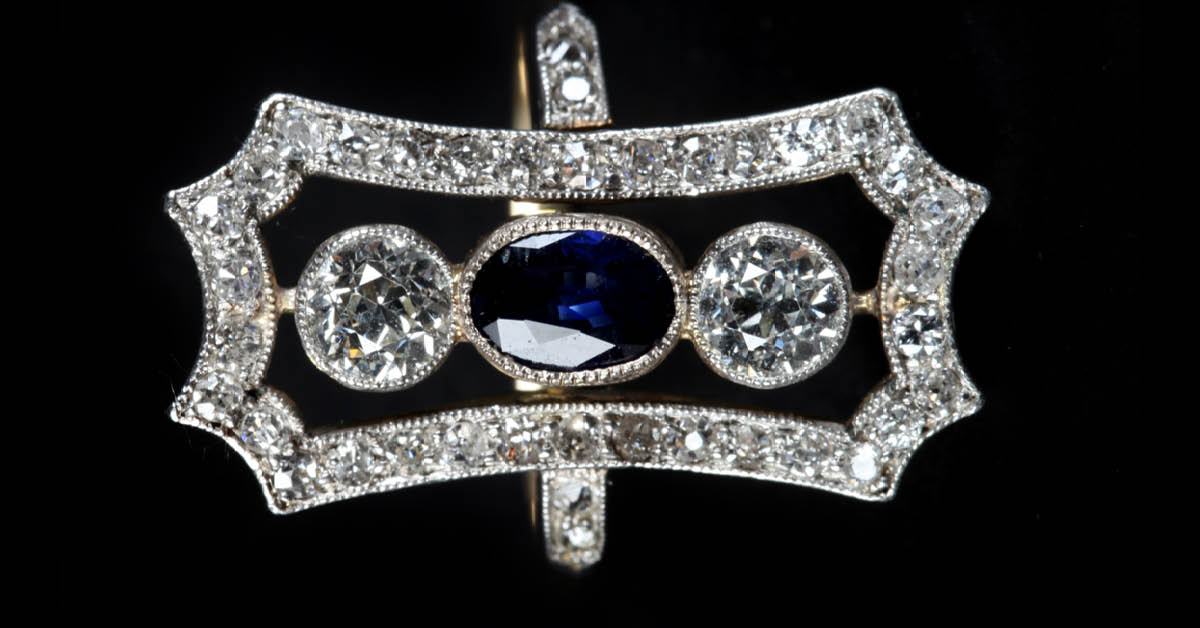
Lot 329- A Sapphire and Diamond Ring
How did the style develop?
The style came after the more delicate Edwardian period. Following the first world war fashion became bolder and jewellery needed to follow suit. Lot 329- A Sapphire and Diamond Ring, shows the transition from delicate to a more geometric design. This ring sold for £950. A more bold and solid approach to design, was reflected in lot 343- An Art Deco Diamond Plaque Ring. Many people re designed their jewels in the Art Deco period and this ring is a typical example, set with old European cut diamonds, dating from the 1890s but within a 1920’s mount. This beautiful ring sold for £1,000.
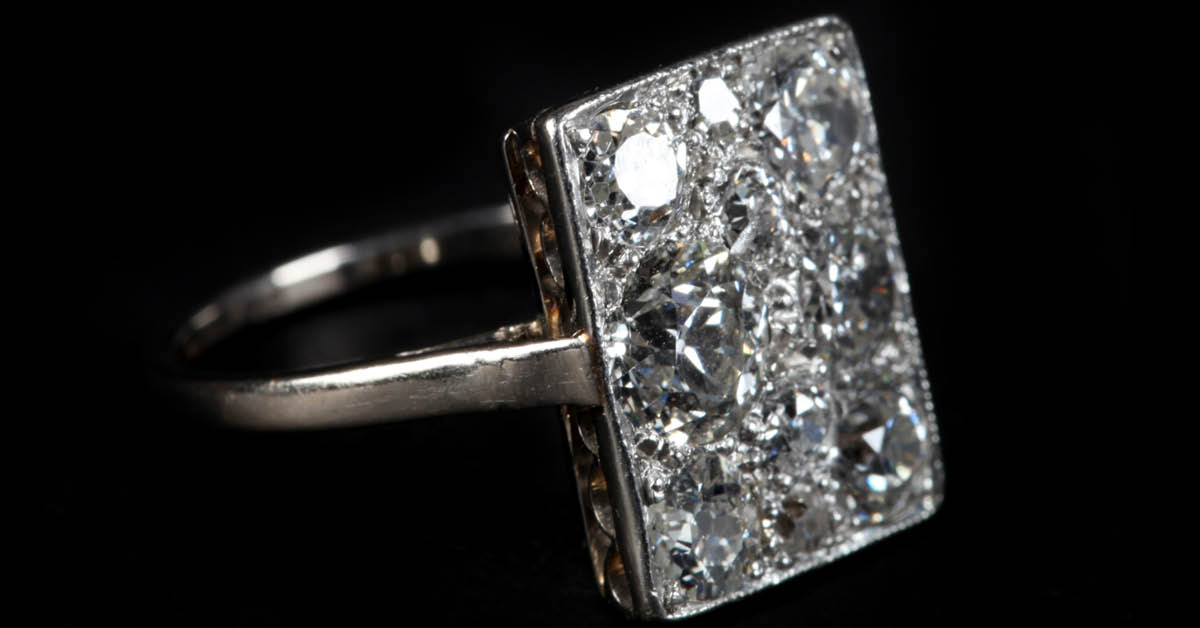
Lot 343- An Art Deco Plaque ring
Characteristics of the Art Deco Style
Colour contrasts, geometric shapes, asymmetrical designs and big compositions. This was represented in a number of lots in the sale. In particular lot 299, A Pair of Diamond Dress Clips c1935 which sold for £2,400. The double clips which can be worn as one brooch or separated and worn on jacket lapels incorporated brilliant-cut and baguette-cut diamonds, round and oblong respectively.
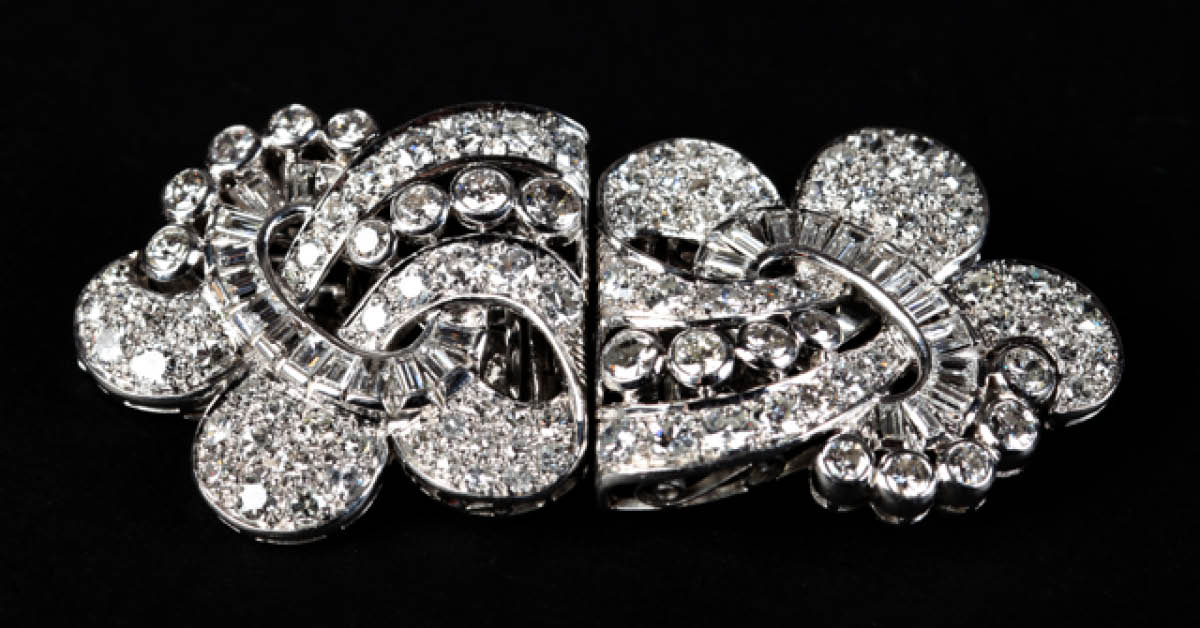
Lot 329- An Art Deco Double Clip Brooch Circa 1935
The idea of incorporating such different cuts was to bring variety and movement to the solid composition. The modern brilliant-cut diamond developed in the 1920’s brings more brilliance to the diamond with more facets than had ever been seen before. Lot 315- An Art Deco Emerald and Diamond Cluster Ring which sold for £3,000, and Lot 365- An Art Deco Ruby and Diamond Cluster Ring which sold for £1,500 both emphasise the passion for big statement rings during this period.
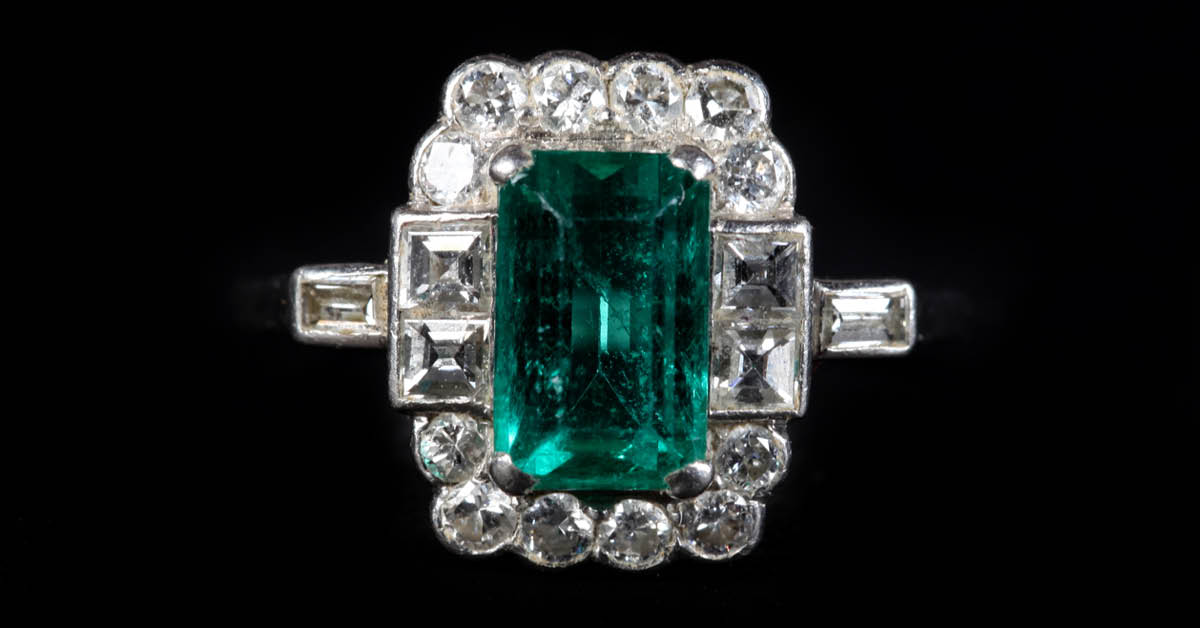
Lot 315- An Art Deco Emerald and Diamond Ring
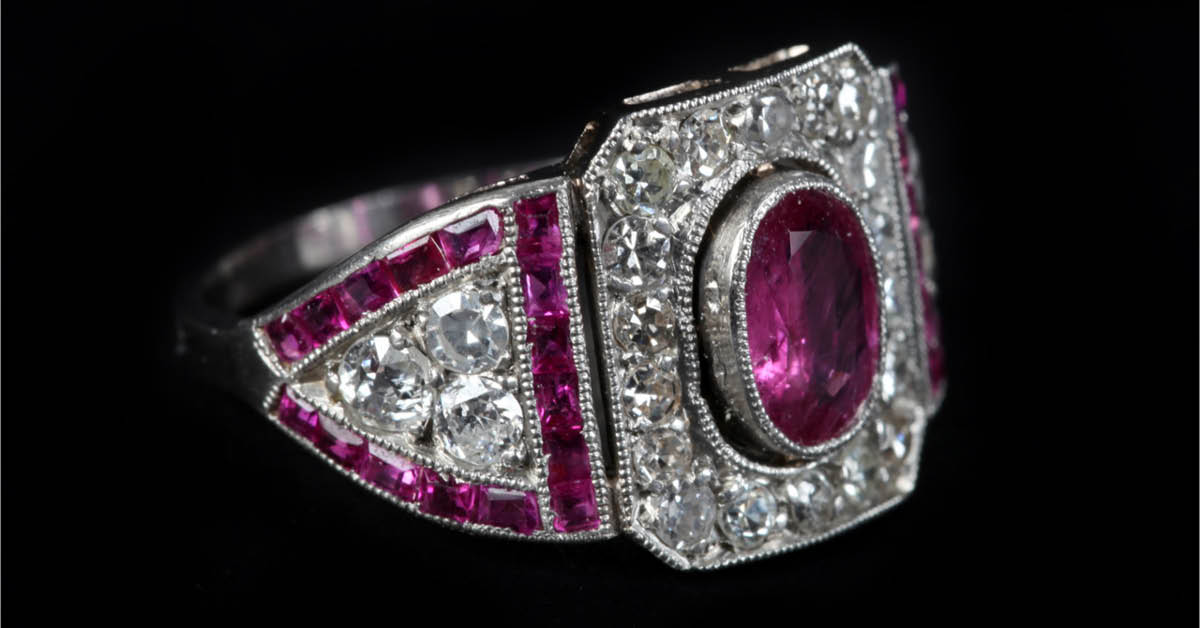
Lot 365- An Art Deco Ruby and Diamond Ring
Jewellery Designers and Influences
Cartier, Boucheron, Van Cleef & Arpels are amongst the most well known fine jewellers of the period. The sale featured a couple of pieces by the less well known firm Alabaster and Wilson, a family run firm founded in 1887 and based in Birmingham. They were asked by the Racing Post to make a diamond and enamel racing horse brooch for Her Majesty the Queen’s 90th Birthday – a great honour. Lot 302 in the sale, The Jardiniere (basket of flowers) Brooch, was made by them and sold for £550.
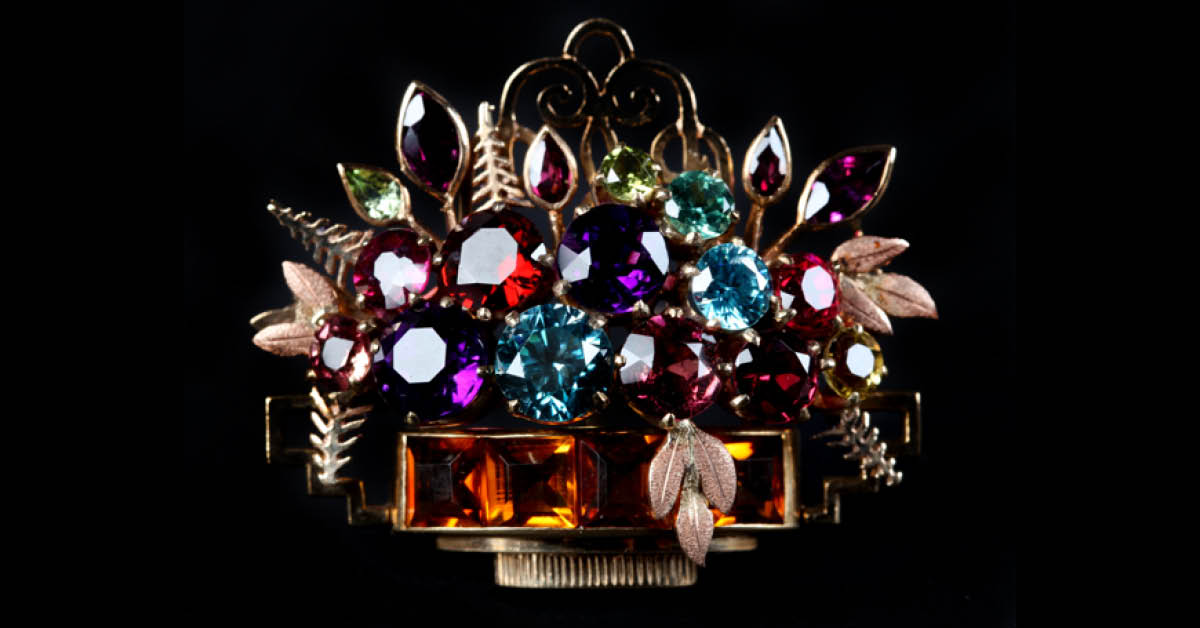
Lot 302- The Jardiniere Brooch
Jardiniere brooches had been made popular by Cartier and as a result jewellers were quick to produce their own interpretations of the theme. This brooch was dated circa 1935 and shows how by this time more semi-precious stones such amethysts, garnets, citrines and peridots were being used in jewellery. These stones continued to be incorporated into jewellery throughout the 1940’s and 50’s and jewellery design also continued to feature some of the characteristics of Art Deco Jewellery.
I absolutely loved this piece, an abundance of colour in a basket! Summer really is just around the corner.
Read More:
- Stray Jewels with Susan Rumfitt: the timeless allure of pearls
- Stray Jewels with Susan Rumfitt: Amethyst and Aquamarine