Nurses working at Harrogate District Hospital will take part in industrial action on Wednesday, January 18 and Thursday, January 19 due to a pay and conditions dispute with the government that has rumbled on all winter.
It’s taking place after members of the Royal College of Nursing union who work for Harrogate District NHS Foundation Trust voted to strike last year.
Harrogate is one of 70 trusts in England that will strike as part of the largest organised action in NHS history.
Here is everything you need to know about the nurses strike.
When is the strike?
The strikes will take place from 7.15am to 8.15pm on both days and there will be a picket line outside the hospital on Lancaster Park Road.
Two days of strikes were held in England, Northern Ireland and Wales on December 15 and 20 but Harrogate nurses did not take part.
What services will be affected?
During the December strikes, thousands of appointments across the country were cancelled or postponed. A trust spokesperson said the hospital will contact patients that have appointments on strike days to let them know if they are still going ahead.
All life-preserving treatment must be provided and nurses in intensive and emergency care will be expected to continue working.
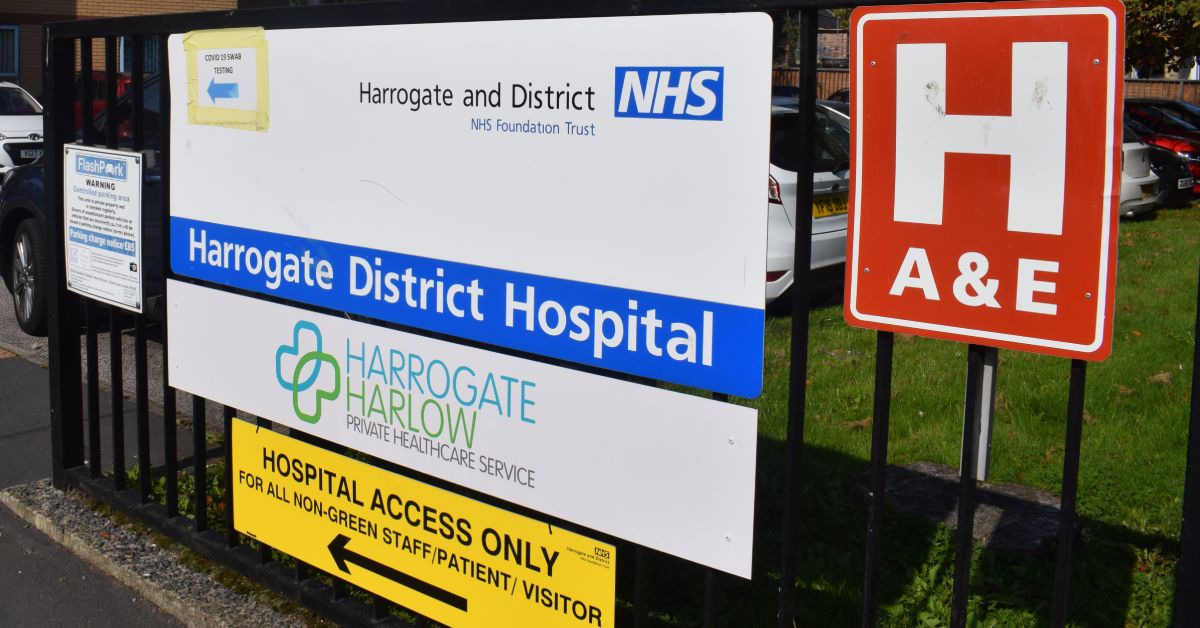
Harrogate District Hospital, Lancaster Park Road.
However, routine operations such as hip or knee replacements are likely to be affected.
A trust spokesperson said:
“We are working to ensure there is safe patient care and that emergency services continue to operate during any industrial action, and have plans in place to mitigate the impact of disruption on direct patient care.
“If you have an appointment or operation that is scheduled on a proposed strike day we would kindly ask you to be patient and we will notify you as soon as possible to confirm if your consultation or treatment will be affected.
“The industrial action will see a picket line outside our hospital in Harrogate and we will be working with local RCN representatives to minimise any disruption this may cause for residents in the vicinity and visitors to our hospital.”
Why are nurses striking?
According to the royal college, 25,000 nursing staff around the UK left the Nursing and Midwifery Council register last year. It’s left hospitals with staff shortages which the union feels has compromised patient safety.
The union argues that many people are leaving the profession or deciding to work for private providers due to low pay within the NHS. It has repeatedly called for a pay increase of 5% above inflation.
However, the government says this increase would be unaffordable to tax payers.
Royal College of Nursing general secretary and chief executive, Pat Cullan, said:
“The government had the opportunity to end this dispute before Christmas but instead they have chosen to push nursing staff out into the cold again in January. I do not wish to prolong this dispute but the Prime Minister has left us with no choice.
“The public support has been heart-warming and I am more convinced than ever that this is the right thing to do for patients and the future of the NHS.
“The voice of nursing will not be ignored. Staff shortages and low pay make patient care unsafe – the sooner ministers come to the negotiating table, the sooner this can be resolved. I will not dig in, if they don’t dig in.”
When will the dispute be resolved?
The royal college is yet to reach an agreement with the government over the dispute but talks have been ongoing since December’s strikes.
The government has raised the possibility of a one-off hardship payment to nursing staff but an offer has not been made.
Read more:
- Ambulance workers form picket line in Harrogate
- Picket line at Harrogate station as latest RMT strikes near end
In an interview with the BBC’s Laura Kuenssberg on Sunday, Prime Minister Rishi Sunak said:
“The door has always been open to talk about the things that nurses want to talk about.”
A trust spokesperson said:
Vandals leave Harrogate hospital facing large flood repair bill“While pay is a matter for government and the trade unions, we greatly value our staff and want to see a resolution as soon as possible to ensure we can continue to focus on delivering high quality patient care to all those who need it.
“We understand the importance of good pay and conditions for individuals and their families, as well as wider NHS staff retention and recruitment.”
Harrogate District Hospital has been left with a repair bill after vandals caused thousands of pounds’ worth of flood damage.
The perpetrators pulled away panelling behind a men’s toilet sink and ripped pipework off the wall, causing significant flooding to the antenatal department, the ground-floor corridor in the Strayside wing and several offices.
The attack was carried out in the early hours of Tuesday, December 27.
As a result, there was damage to equipment stored in the area and flooring in the departments needs to be replaced.
Harrogate and District NHS Foundation Trust estimates the clean-up and repair operation – which includes hiring equipment to dry the areas out – will cost £4,000-£6,000, which it said “could be used for patient care rather than repairing damage caused by vandals”.
A spokesperson for the trust said:
Operations cancelled after leak at Harrogate hospital“Such anti-social behaviour is unacceptable and whilst the safety of the patients in our care was unaffected, it did cause additional work for our staff when they should be focused on patient care. Repairs also have a financial implication for our trust.
“The people responsible were recorded on a CCTV camera within our hospital and the incident was reported to the police.”
Harrogate District Hospital has apologised after cancelling patients’ planned surgeries with less than 24 hours’ notice during the Christmas break.
One patient, who asked not to be named, said she was due to have essential orthopaedic surgery last Friday, December 30.
However, she received a call at lunchtime on Thursday to say there had been a leak and the operating theatre was out of use.
Due to go into hospital at 7am the next day, she instead had her surgery cancelled and no new date provided.
She told the Stray Ferret:
“The not knowing is really uncomfortable. I understand that these things happen, but why can’t they reschedule the surgeries out to other hospitals or get us some more information?
“The problem was discovered last week. They’ve had a week to make arrangements and it’s still not sorted.”
Read more:
- Harrogate hospital nurses to go on strike next month
- 500 Harrogate hospital staff apply for cost-of-living hardship fund
Harrogate and District NHS Foundation Trust said the last-minute cancellation was down to a water leak the basement, near the air handling units for the operating theatre.
A spokesperson said:
“Whilst the leak was quickly repaired and minimal damage occurred, the basement needed to be dried and the air handling units inspected by a specialist engineer to ensure they were safe to use.
“Unfortunately, as the air handling units provide ventilation and filter the air within our main operating theatres, it was necessary to cancel some, but not all, elective surgery that had been planned for that day.
“We are committed to providing the best possible healthcare for our community and as a priority we have now re-arranged the non-critical operations that were cancelled. We contacted all those affected, but we would like to reiterate our apologies for having to re-arrange their surgery.
“The air handling units have been inspected and passed checks, and planned activity in our operating theatres has been taking place this week.”
The patient, who is self-employed and works in the wedding industry, said she had been waiting for the last year to get a date for her surgery.
She had been offered a slot in the summer but, as it was at the height of the season, she had to turn it down or face losing all her business for the year.
She was then offered the December date around eight weeks ago. The new date had been ideal, she said, as it would give her the required time to recover before this year’s wedding season began in spring.
She said:
Harrogate hospital ‘almost completely full on a daily basis’“It’s 12 weeks’ recovery – that’s why it has such a big impact when it’s postponed, because you have got to rearrange your whole life.
“Our season starts in April. I have a very physical job and I need to be able to move around.
“My husband had taken time off work. He’s a solicitor and hadn’t booked in any appointments this week so he could be at home to help me.
“Cancelling like this has massive implications for people’s lives.”
Harrogate District Hospital is ‘almost completely full on a daily basis” and has urged patients’ families to help free beds.
Hospital officials appealed for help today amid growing concerns about the NHS’ ability to cope with winter pressures.
More than a dozen NHS trusts and ambulance services declared critical incidents over the festive period. Dr Adrian Boyle, president of the Royal College of Emergency Medicine, has said up to 500 people could be dying each week because of delays to emergency care.
Harrogate and District NHS Foundation Trust has not declared a critical incident but a spokesman said 50 patients were currently unable to leave because they were waiting to be allocated care or a placement.
This bed-blocking was compounding “significant pressure due to the number of people requiring our help and the challenges of a difficult winter”, the spokesman said.
He added:
“Over bank holidays, our emergency department is usually busier than normal, and this has been the case over the period since Christmas.
“Our hospital is also affected by the high numbers of covid and flu patients we are currently caring for. These patients often require a longer stay in hospital before they can return to care or residential homes.
“This, in addition to around 50 patients who are waiting to have care or a placement allocated so they can leave our hospital, means Harrogate District Hospital is almost completely full on a daily basis.”

The emergency department at Harrogate District Hospital.
The spokesman said this was leading to “long waits for beds to become available” and visitors with less urgent issues experiencing longer waiting times.
He added:
“We do know that when patients are starting to improve and no longer require hospital care, the remainder of their recovery happens much quicker in their own homes.
“We would ask for the families of patients to help us support their loved one’s discharge home as soon as their medical condition allows.
“Some patients may be fit to be discharged to their own home, but still require additional support to help them in their recovery. Our teams will work with patients and their families to support them as best we can.”
The spokesman also appealed to families to show understanding if the hospital had to return care home patients to different care homes for short periods.
He reiterated the message to only visit the emergency department for life-threatening or severe illnesses or injuries.
Harrogate hospital nurses to go on strike next month
Nurses at Harrogate District Hospital and Ripon Community Hospital will go on strike next month as part of a national walkout.
The Royal College of Nursing today announced further industrial action on January 18 and 19.
It comes shortly after nurses walked out at hospitals across England for two days this month in a dispute over pay and conditions.
Locally, staff at Leeds Teaching Hospitals Trust took strike action on December 15 and 20 — but Harrogate did not take part.
This time, however, nurses at Harrogate and District NHS Foundation Trust will walk out as the RCN looks to escalate industrial action.
Pat Cullen, RCN general secretary and chief executive, said:
“The government had the opportunity to end this dispute before Christmas but instead they have chosen to push nursing staff out into the cold again in January.
“I do not wish to prolong this dispute, but the Prime Minister has left us with no choice.”
The Stray Ferret has approached the trust for a response to the announcement.

However, previously managers at Harrogate hospital pledged to minimise the disruption caused by the walkouts and urged patients to continue to come forward for care.
A Harrogate and District NHS Foundation Trust spokesperson said:
“While pay is a matter for government and the trade unions, we value our staff and want to see a resolution as soon as possible to ensure we can continue to focus on delivering world class patient care to all those who need it.
“We understand the importance of good pay and conditions for individuals and their families, as well as wider NHS staff retention and recruitment.
“We are working to ensure there is minimal disruption to patient care and that emergency services continue to operate as normal should any strike action take place, and have tried and tested plans in place to manage any disruption.
“We are committed to keeping disruption to services to a minimum, and any members of the public that need care should continue to come forward as normal.
“If you have an appointment or operation that is scheduled on a proposed strike day we would kindly ask you to be patient and we will notify you as soon as possible if strike action at HDFT is confirmed and your treatment will be affected.”
Read more:
- Ambulance workers in Harrogate district begin strike
- Harrogate district braced for rail and postal strikes
The walkouts are set to become the latest to hit the Harrogate district.
Rail and postal workers staged action this month, which has affected travel and deliveries over Christmas.
Meanwhile, Yorkshire Ambulance Service set up a picket line on Lancaster Park Road as staff staged a 24 hour strike yesterday.
Ambulance strike to hit Harrogate district tomorrowHarrogate hospital bosses have said plans are in place to “minimise” the impact of forthcoming ambulance strikes.
Staff at Yorkshire Ambulance Service will walk out tomorrow (December 21) and next Wednesday (December 28) for 24 hours in a dispute over pay.
The move is part of a wave of industrial action taking place across England throughout the winter, with rail staff and nurses also staging walkouts.
In response to the strikes by ambulance workers, Harrogate and District NHS Foundation Trust has urged patients to continue to come forward for care.
A spokesperson for the hospital trust said:
“We are working hard to keep patients safe during strikes, while delivering the best care possible, and patients should continue to attend appointments as planned unless contacted to reschedule.
“Nobody should put off seeking urgent or emergency care during the strikes, with key services continuing to operate.”
The trust added that it has contingency plans in place in accident and emergency, as well as measures to discharge patients, during the days of strike action.
It added:
“The safety of our patients is our utmost priority and we have contingency plans in place to minimise any impact industrial action will have.
“For instance, additional staff will be on duty in our emergency department on these days to manage any increase in walk-in attendances for those people unable to travel to hospital by ambulance.
“We also have alternative arrangements in place to help manage the discharge of patients who are unable to make their own travel arrangements so that they can leave our hospital in a timely manner.”
Harrogate District Hospital, Lancaster Park Road.
Meanwhile, managers at Yorkshire Ambulance Service have urged the public to only call 999 for an ambulance for life-threatening conditions or injuries amid stretched resources during strike action.
An agreement is in place between the unions and the service to cover life-threatening calls.
Nick Smith, executive director of operations at Yorkshire Ambulance Service NHS Trust, said:
“With continued operational pressures and the added challenge of industrial action, we will have less resources available to respond.
“Services will be severely disrupted, with the likelihood of significant delays.”
Ambulance staff ‘had enough’
Union membership in
Yorkshire Ambulance Service employs 7,200 staff, of which about 4,000 belong to either Unison or the GMB unions.
It is one of nine ambulance trusts across the country whose workers have voted to strike.
Paramedics, emergency care assistants and call handlers will be among those planning to walk out tomorrow.
Staff at the ambulance trust voted to stage the strike in protest at a 4% government pay award.
Rachael Harrison, GMB Union general secretary, said workers have “had enough”.
She said:
Parents in Harrogate district urged to get their children vaccinated against flu“The last thing they want to do is take strike action, but the government has left them with no choice.
“(Health Secretary) Steve Barclay needs to listen and engage with us about pay. If he can’t talk to us about this most basic workforce issue, what on earth is he Health Secretary for?
“The government could stop this strike in a heartbeat – but they need to wake up and start negotiating on pay.”
Hospital officials in Harrogate said today they are concerned by a lack of take up for flu vaccines in children aged five to 11.
Harrogate and District NHS Foundation Trust runs the School Age Immunisation Service, which covers vaccinations for children across North Yorkshire and the North East.
However, officials are now urging parents to get their child vaccinated against the flu this winter to help prevent its spread.
Carly Dodsworth, from the School Age Immunisation Service at the trust, said:
“Whilst flu often has mild symptoms it can also be extremely serious.
“We would encourage parents to have their children vaccinated at the earliest opportunity to protect them and anyone they meet who could be vulnerable to the flu.
“Parents who missed the chance to have their child vaccinated in school and who are still keen for them to have the vaccine, can take advantage of the additional clinics that we have organised over the next few weeks.”
Read more:
- 500 Harrogate hospital staff apply for cost-of-living hardship fund
- Harrogate hospital employs security staff for first time
All primary school children are eligible for the free flu vaccination, which is usually a nasal spray that is given in school.
The School Age Immunisation Service is yet to visit all primary schools in the region and parents of children whose primary school has yet to be visited are being asked to look out for an email from their school with details of when flu vaccinations will be taking place.
Children who have missed their opportunity to have their vaccination at their school will be able to take advantage of additional drop-in clinics and appointment only clinics which are being held across the region in December.
You can find out more about drop-in and appointment clinics here.
‘Lessons learned’ after covid patient’s oxygen disconnected at Harrogate hospital, inquest hearsHarrogate hospital has “learned lessons” following the death of a woman who became disconnected from her ventilator when she was left alone in a room with the door closed.
Karen Smith was 44 when, in October 2020, she was admitted to the hospital with covid.
She was put on a temporary intensive care ward that had been set up by Harrogate and District NHS Foundation Trust to deal with the high demand of the pandemic.
An inquest heard this week Ms Smith died on the ward after her oxygen mask became disconnected.
The continuous positive airway pressure (CPAP) oxygen machines used on the ward were not connected to the nurses’ station in the way they were on the established ICU.
When Ms Smith’s mask came off and the tube became disconnected around 5am on Saturday, October 24, although the machine’s alarm sounded, there was no way of it sending a signal to the nurses’ station for a rapid response.
The previous day, the hospital’s infection control team had visited the ward and recommended that the doors to each bay, which had been open, should be closed to help reduce the spread of covid.
Dr David Earl, a consultant in anaesthesia and critical care, told the inquest:
“The doors were closed on that Friday and I don’t think enough work was done to recognise the implications of how that might make nursing quite difficult, because you can’t hear behind the doors.
“This is when things start to go a bit wrong, I think, on that Friday.”
On the Saturday evening, a nurse who was covering a meal break had left Miss Smith’s bay to go to the toilet urgently. She had no way of contacting another nurse to cover for her, but believed the original nurse was about to return from her break.
The inquest heard that, during the pandemic, staff were required to remove extensive personal protective equipment (PPE) and go to a bathroom nearby, rather than the one on the ward, which took much longer than usual.
When the nurse she was covering for returned, the disconnection was noticed and Ms Smith’s mask had been completely removed.
Read more:
- Knaresborough solicitor died in fatal fire caused by candle, inquest finds
- Harrogate hospital chief will not return from NHS secondment
Dr Earl told the inquest many patients find CPAP masks uncomfortable and can attempt to remove them when slightly disorientated, such as when waking up.
The machine’s log indicated Ms Smith had been without hers for around four-and-a-half minutes. A new mask was immediately brought from the store cupboard nearby.
Staff said they hoped the short time of disconnection meant that Ms Smith would not have been affected by the lack of oxygen supply.
The inquest heard that, although her blood oxygen levels quickly rose again, it became apparent to the team on the next shift that she was more sleepy and less responsive than usual.
That night, as her condition further deteriorated, staff called her mother, but she was not allowed to come into the hospital because of covid restrictions.
Addressing Ms Smith’s mother Audrey and brother John, who were at the inquest, Dr Earl said:
“At the time, we were following national guidelines about visiting.
“As someone who worked through all of this, not having visitors all the time was terrible. On intensive care, we spend a lot of time with families getting to know them. To suddenly not have families there was absolutely awful for us, but we know it was even worse for families like yourselves.
“It we could go back, we would get you straight in when we knew [she was dying]. Now, that’s the national guidelines.”
Ms Smith said her daughter had been well enough the day before to be messaging her friends. However, Dr Earl said given the number of days she had been reliant on the CPAP without any sign of improvement, his experience with covid patients suggested she was more likely than not to have succumbed to the virus in the end.
Walkie-talkies introduced
Dr Earl said the hospital had “learned lessons” from Ms Smith’s death and a number of changes had been implemented to prevent the same situation arising again, including changes to nurse rostering and the introduction of walkie-talkies to allow nurses to communicate with each other even when in separate rooms.
He added:
“We realise we can’t make everything perfect, but we try to list all the things where we think there’s a potential danger there and try to minimise them.
“In this new area, we had one of those risk registers and recognised it was constantly evolving, but in these circumstances, it was the best we could do.”
Delivering a narrative conclusion, senior coroner for North Yorkshire Jonathan Heath said Ms Smith, who lived in Wetherby, had died from a hypoxic brain injury caused by becoming disconnected from her oxygen machine. A secondary cause of death was her high body mass index.
Mr Heath said there was no evidence of how Ms Smith’s mask came to be removed and the tube disconnected, so he did not want to make any assumption.
Mr Heath said:
Harrogate hospital chief will not return from NHS secondment“I am satisfied that a ‘prevention of future deaths’ report is not required.
“Whatever I would be saying to the hospital appears to have been addressed already.”
Steve Russell will not return to his role as Harrogate and District NHS Foundation Trust (HDFT) chief executive after accepting a national director position with NHS England.
In February, Mr Russell left his role in Harrogate to take up a secondment as national director for covid and flu vaccinations at NHS England.
The secondment was due to last up to a year but he has now been offered a permanent role as director of vaccination and screening.
HDFT chair Sarah Armstrong thanked Mr Russell for his efforts at a HDFT board of directors meeting in Harrogate on Wednesday.
A HDFT spokesperson added:
“We would like to warmly congratulate Steve and wish him every success in the future.
“In the meantime, the current executive team arrangements will continue to operate whilst we consider what the permanent arrangement will be.”
Read more:
- 500 Harrogate hospital staff apply for cost-of-living hardship fund
- Harrogate hospital employs security staff for first time
Mr Russell was appointed chief executive in April 2019 and was in charge of the trust during the peak of the Covid-19 pandemic.
He also led the organisation during the creation of an NHS Nightingale hospital at Harrogate Convention Centre. The hospital closed last year without treating any Covid-19 patients.
Jonathan Coulter has been working as HDFT chief executive since February and will continue in the role until a permanent appointment is made. He is paid a salary of £181,000.
Mr Coulter is a qualified accountant and has taken on a number of roles at various hospital trusts.
He joined HDFT as finance director in March 2006 and has also worked as deputy chief executive.
500 Harrogate hospital staff apply for cost-of-living hardship fundAround 500 Harrogate District Hospital staff have applied for a cost-of-living hardship fund, which has been described as a “signal” of the financial pressure that healthcare workers are under.
Anyone employed by Harrogate and District NHS Foundation Trust (HDFT) or Harrogate Integrated Facilities (HIF) is eligible to apply for a one-off £500 payment. A panel meets each week to consider applications.
The number of people who have applied for the payment was revealed yesterday by HDFT acting chief executive Jonathan Coulter at the trust’s monthly board of directors meeting in Harrogate.
Between HDFT and HIF, there are around 5,000 staff, with the number of hardship fund applications indicating around 10% are currently struggling financially due to increased fuel, food and energy costs.
Mr Coulter said:
“It is a signal of some of the difficulties some of our colleagues are under in terms of the national situation. We will continue to watch out for those people.”
Other initiatives available for staff include being able to sell holiday entitlements to earn extra money. The trust also advises how to use food banks and provides information on managing finances.
Read more:
- No walkout at Harrogate hospital as part of nurses strike
- Women live 10 years longer in Harrogate than Knaresborough, report shows
- Harrogate hospital pledges ‘minimal disruption’ as nurses’ strike looms
At a meeting in September, Wallace Sampson, hospital trust board member and chief executive of Harrogate Borough Council, said he had “mixed feelings” about staff being able to sell annual leave as he believes it is “very much needed” to help with their wellbeing.
The number of staff struggling to make ends meet comes at a time when nurses are preparing to strike for the first time in over 100 years.
The Royal College of Nursing (RCN) is asking for a 19% pay rise but the government says this is unaffordable.
Harrogate members of the RCN voted to strike but Mr Coulter said that Harrogate is not on the list for the first wave of action on December 15th and December 20th.
Mr Coulter added:
“We will continue to support colleagues and support trade unions.
“It’s important that we do value our colleagues in terms of national negotiations or pay awards and we recognise the link between how people feel and are recognised with the ability to recruit and retain staff. We will watch this space but there won’t be any [industrial] action before Christmas.”