Harrogate Borough Council wants to introduce stricter light pollution rules to ensure Nidderdale Area of Outstanding Natural Beauty remains home to some of the darkest skies in the country.
Astronomers commissioned by Nidderdale AONB in spring last year found the night skies in the north west of the area, including Upper Nidderdale and moorland near Masham, are some of the least affected by light pollution in England.
Countryside charity CPRE says clear dark skies reduce stress and increase a sense of peace. But in the wildlife-rich Nidderdale AONB, artificial light can also disturb how animals perceive the transition between day and night.
This disrupts their sleep and results in reduced foraging or hunting periods for nocturnal species such as bats.
Light pollution can even affect plants whose flowering is linked to day length.
To help combat the problem, the authority has drawn up a Nidderdale AONB-specific supplementary planning document for its Harrogate district Local Plan 2014-35, which outlines where development can occur.
If approved by Conservative cabinet member for planning Tim Myatt today, the document will go out for public consultation.
Read more:
- Yorkshire Dales joins international dark sky list
- People in Harrogate district urged to count stars to assess light pollution
It says light pollution from farm and commercial buildings is “the most obvious source” of light pollution in the darkest zone of the AONB.
It adds that all new outside lights in this zone should comply with the latest design standards and be fully shielded and include a lighting plan prepared by a lighting professional.
All external lighting should be fitted with a system to ensure lights are automatically switched off when they are not needed.
All external lights should be also positioned so that the light shines downwards.
The document recommends that external lights in the darkest zone, which includes Upper Nidderdale, should only have 500 lumens, which is a measurement of visible light to the human eye.
A council report that accompanies the document says:
People in Harrogate district urged to count stars to assess light pollution“Protecting dark skies is important as light pollution has potential to disrupt wildlife, adversely affect human health and erode tranquillity. Poor lighting choices can also waste energy and contribute to climate change.
“The Nidderdale AONB contains some of the darkest skies in England as well as a diverse range of wildlife and habitats, making it particularly important to ensure that light pollution is reduced in this area.”
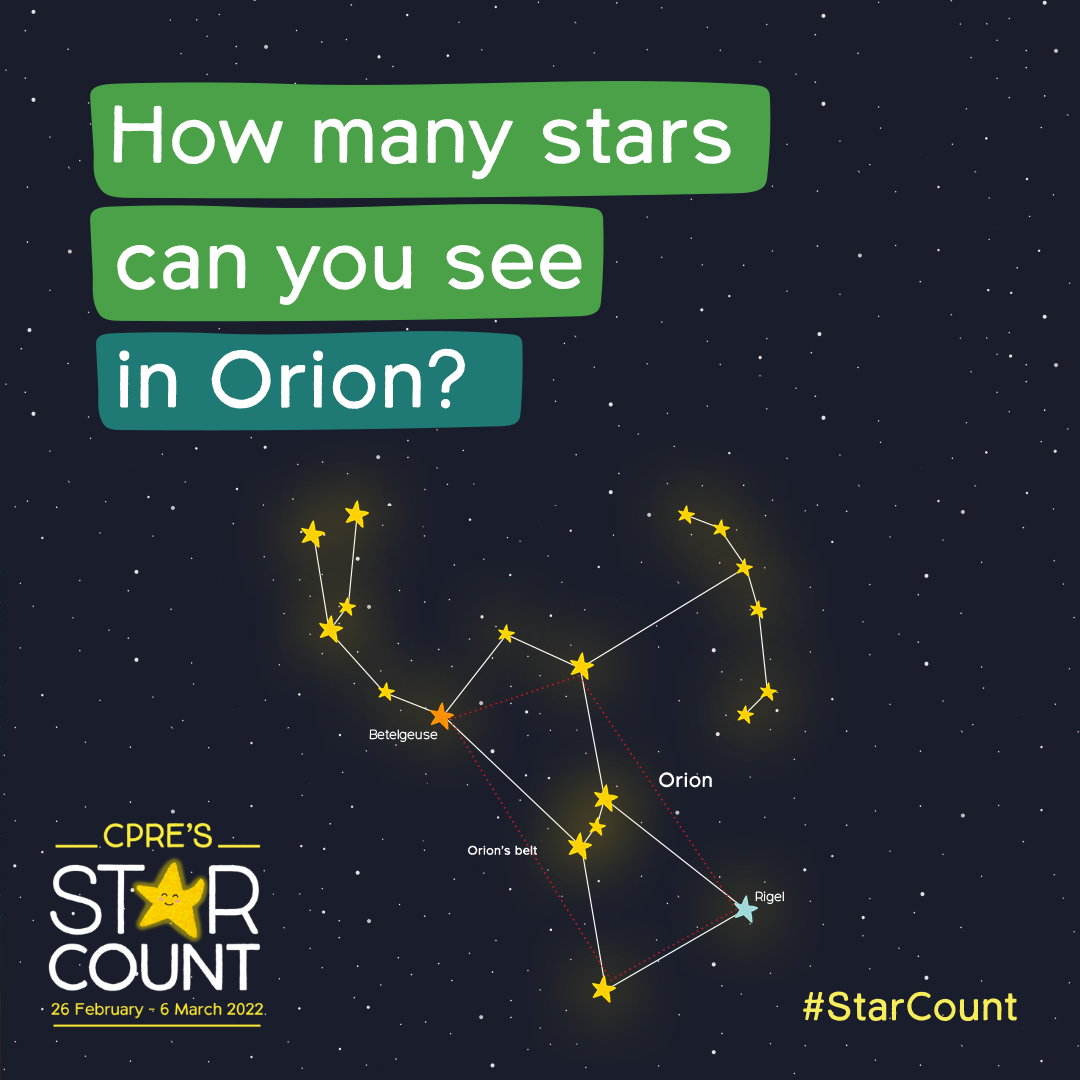
People in the Harrogate district are being urged to count the stars in the sky to measure light pollution.
The Campaign to Protect Rural England is carrying out the survey from Saturday, February 26, to Sunday, March 6.
The move comes after the Yorkshire Dales joined 15 other areas as a designated dark sky reserve in 2020.
It’s possible to see thousands of stars, the Milky Way, meteors and even the Northern Lights in some areas on clear nights.
Read more:
- Yorkshire Dales joins international dark sky list
- Paddle to the stars at Nidderdale reservoir as part of Dark Skies Festival
People are now being urged to sign up on the Campaign to Protect Rural England website where they can submit their counts.
A spokesperson for CPRE North and East Yorkshire added:
“Results from Star Count will be used to help make a map of where star-spotters are enjoying deep, dark skies.
“By showing on a map where light pollution is most serious or has risen, CPRE can work with local councils and others to decide what to do about it.”
A Dark Skies Festival is currently being held in the Yorkshire Dales until March 6. It includes events across the national park area.
Observatory near Ripon offers chance to see Milky WayPeople in the Harrogate district will be given the opportunity to see the solar system and Milky Way from an observatory near Ripon next month and in March.
Lime Tree Observatory at Lime Tree Farm, at Grewelthorpe, is offering a series of tours as part of Nidderdale Area of Outstanding Natural Beauty‘s Dark Skies Festival.
If the weather is clear, telescopes will be available to see the dark nights skies close up.
Nidderdale is home to some of the darkest skies in the country and has four dark sky discovery sites — Thruscross reservoir, Scar House reservoir, Fewston and Toft Gate — which are recognised as excellent and accessible places to stargaze.
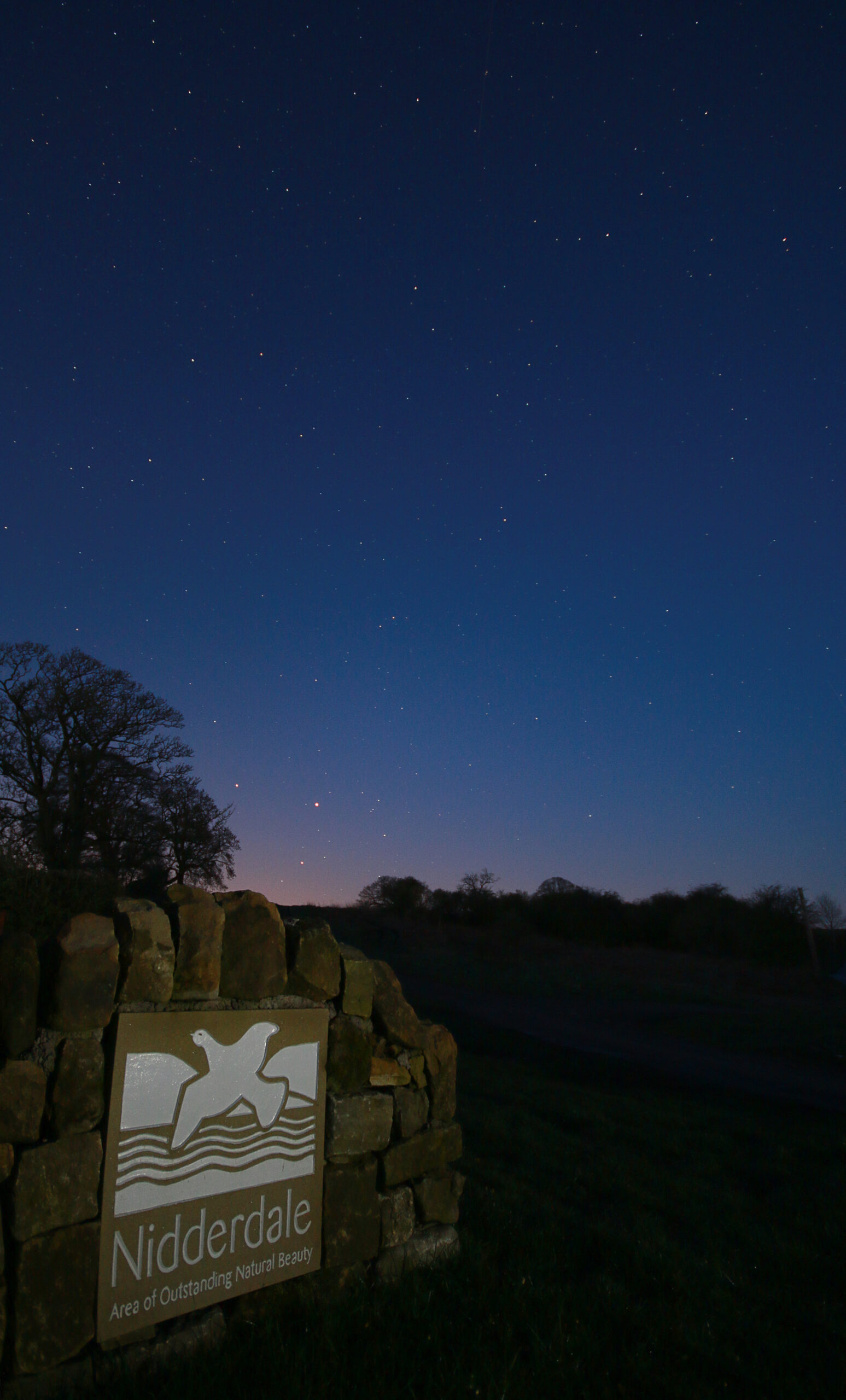
Credit: Martin Whipp
Iain Mann, Nidderdale AONB manager, said:
“Our dark skies are part of what makes this landscape so special with the opportunity to see thousands of stars, and even at times, the Northern Lights.
“But this wondrous sight is under threat with increasing light pollution. It also threatens nocturnal wildlife, wastes energy and can even affect our own wellbeing.”
New planeterium coming
Lime Tree Observatory, which has a 24-inch reflecting telescope with a motor driven and a presentation room, is run by volunteers on a not-for-profit basis.
Nidderdale AONB recently awarded the observatory a Farming in Protected Landscapes grant to buy digital projection equipment for its new planetarium, which has been three years in the making.
Built in a converted old hay barn, the planetarium will be six and a half metres in diameter, and is set to open to the public this year.
Read more:
- Paddle to the stars at Nidderdale reservoir as part of Dark Skies Festival
- Grants of up to £150,000 available for Nidderdale farmers
The three-year Defra-funded Farming in Protected Landscapes grant programme offers financial support for one-off projects that either support nature recovery, provide better access or engagement with the land, or increases the business resilience of ‘nature friendly’ farms.
Astronomer, filmmaker and volunteer at Lime Tree Observatory, Martin Whipp, said:
“When it opens, the new planetarium will have a real wow-factor. You’ll be able to fly through the Orion Nebula, or witness simulations of galaxies colliding in this immersive experience.”
“The observatory aims to truly engage and inspire the public. Here, children can hold a meteorite that’s four billion years old. It can really fire imaginations. Space offers an exciting platform to learn physics, to inspire art, poetry and philosophy.”
The Dark Skies Festival also offers a chance to canoe under the stars at How Stean Gorge in Lofthouse.
For details and to book for the Lime Tree Observatory, click here.
Tickets are limited and booking essential.
What is Nidderdale AONB?
Nidderdale AONB, which is funded by the government, is an area of 233 square miles located on the eastern flanks of the Yorkshire Pennines stretching from Great Whernside to the edge of the Vale of York.
AONBs are designated in recognition of their national importance and to ensure that their character and qualities are protected for all to enjoy.
Yorkshire Dales dark skies festival moves onlineThe Yorkshire Dales has been forced to move its first dark skies festival online since joining the international dark sky list.
With the third national lockdown, it means that people will be unable to travel to Yorkshire for the annual event between February 12 and 28.
Organisers had already been planning some virtual events but will now need to expand that offering because of coronavirus.
It will include a mixture of free and paid for events through webinars and over platforms like zoom.
When the organisers held the first virtual fringe dark skies festival in October they had a “considerable audience.” They are hoping for a repeat or even better this time.
Read more:
- Yorkshire Dales joins international dark sky list
- Gallery: Full day of heavy snow hits Harrogate district hard
Scientists will be among the “stellar” line-up of speakers. They will share the latest cosmic discoveries and space developments, including NASA landing on Mars.
Astronomers will give people a tour of the night sky before encouraging them to look out on their front doors.
The full moon will appear in the second week of the festival, so experts are planning a live “moonwatch” with an informal questions and answers session.
On other evenings people will be able to watch wildlife and conservation experts as they explain the importance of conserving our night skies.
Photographers will also be on hand to share their top tips for taking great images of the night sky like the picture above.
Helen Dalton, tourism officer for the Yorkshire Dales National Park said:
“We first introduced a small virtual programme of events during last October’s fringe festival and had a considerable audience so we’re confident that a similar format on a larger scale this February will be even more popular particularly as it will help fire people’s imaginations to go outside and view the skies above where they live.”
Emily Watson, visitor development and marketing assistant at the North York Moors National Park added:
Hundreds of meteors will fall over Harrogate tonight“There is something very special about spending time under our night skies which are so pristine more than 2,000 stars can be seen in one go and where a walk or run becomes a thrilling adventure when you venture out into a beautiful landscape after twilight.
“This is why we’re keen to use the virtual festival to help open people’s eyes to the possibilities of experiencing something so awe-inspiring both on their own doorstep and once lockdown restrictions are eased and we can welcome visitors again.”
Hundreds of meteors will fall over Harrogate skies tonight.
Around 60 to 100 meteors will fall from the sky every hour, but stargazers may struggle with finding somewhere clear to view them because of predicted thunderstorms.
The event is called the Perseid meteor shower and happens every year.
It is expected to be most visible in the early hours of tomorrow morning between midnight and 5am.
Tristan Campbell, an astrophotographer from Harrogate said:
“The weather doesn’t currently look as though it’s going to be clear until at least 1am and unfortunately the moon rises around then which makes the meteors harder to see.”
Read more:
- Engineers tackle major pipe burst on Otley Road in Harrogate
- Coronavirus drive-through testing in Harrogate today
Meteors, more commonly known as shooting stars, are formed as debris falls from the tail of a comet. Since July 14, earth has been ploughing through particles left behind from the Swift-Tuttle comet, which turn into bright falling specks.
As Perseid meteors are so bright, Tristan said if the skies remain clear they will be visible from most gardens, although a better location would be somewhere dark with little light pollution. Tristan’s personal favourite spot to shoot is in Crimple Valley.
He said:
“If I’m feeling more adventurous I’ll head out to Nidderdale for much darker skies.”
The shower can be seen across the whole of the UK and is expected to continue until August 24. More information can be found on the Royal Museums Greenwich website.