North Yorkshire Council’s decision-making executive could hold some meetings at Harrogate’s Civic Centre instead of Northallerton, according to the council leader.
The new council formed on April 1 and replaced the seven abolished district councils as well as North Yorkshire County Council.
Geographically, it’s England’s largest council area and spans over 3,000 square miles.
But its size has led to criticism that decisions will be made far away from Harrogate residents as the vast majority of meetings take place at County Hall in Northallerton.
Like Harrogate Borough Council and North Yorkshire County Council before it, North Yorkshire Council has an executive or cabinet system of local government.
In this system, the council leader appoints and chairs the executive, which in North Yorkshire includes 10 councillors that meet a couple of times a month.
Each executive member has a specific area of responsibility – for example children and young people, highways or finance – and they collectively make the most important decisions affecting residents.
Read more:
- ‘Undemocratic’ to ask Harrogate residents to pay for town council without stating its powers
- North Yorkshire Council makes ‘first step’ towards £67m of savings
- ‘We want our learner swimming pool’, say Ripon councillors
For example, the executive will meet on May 30 in Northallerton to decide whether to put forward a full business case for the £11.2m Station Gateway scheme.
Ahead of a full meeting of the council next week, Conservative council leader Carl Les has published a statement that says he wants to hold some executive meetings at locations across North Yorkshire.
He said dates are being sought and venues must have public and disabled access as well as have live-streaming facilities, which would open up the option of using Harrogate’s £12m Civic Centre that only opened in 2017.
The new council could also choose to hold executive meetings at other former council offices it now owns in places like Scarborough or Skipton.
No changes in the executive
Cllr Les’s statement said that his executive will remain the same.
Below is a list of the ten Conservative councillors on the executive and what they are responsible for:
- Councillor Carl Les – leader of the council, also responsible for communications, safer communities and emergency planning.
- Councillor Gareth Dadd – deputy leader, executive member for finance, assets and resources, and special projects.
- Councillor Derek Bastiman – executive member for open to business, including economic development, regulatory services, the management of waste disposal and the integration of waste collection. Responsibility for building relationships with businesses and with the LEP’s infrastructure board.
- Councillor David Chance – executive member for corporate services, including legal and democratic services, overview and scrutiny committees, partnerships, performance management, customer contact, locality budgets, refugee and evacuee reception and support, NYLAF and household support fund, member support, IT, complaints and compliments, customer services including the council contact centre.
- Councillor Keane Duncan – executive member for highways and transportation, both road and rail, plus bus services and engagement with Transport for the North.
- Councillor Michael Harrison – executive member for health and adult services, including health and wellbeing board, health integration, extra care.
- Councillor Simon Myers – executive member for planning for growth, the Council’s present responsibility and preparing for the new unitary authority, as well as culture, leisure, sport and housing responsibilities.
- Councillor Janet Sanderson – executive member for children and young people’s services with responsibility for fostering and adoption, children’s social care, safeguarding and prevention.
- Councillor Greg White – executive member for working in localities, including stronger communities, area constituency committees, broadband and mobile telephony and to act as the council’s digital champion, working with parish and town councils, libraries, and other face to face contact points (registrars, coroners and records), and the council’s response to climate change.
- Councillor Annabel Wilkinson – executive member for education, learning and skills, including early years, schools, apprenticeships, FE colleges, UTCs and engagement with the skills part of the LEP.
Staff who previously worked for some of the county’s abolished district councils are now working at Harrogate’s Civic Centre.
The building on St Luke’s Avenue was the headquarters of Harrogate Borough Council until March 31 when it was abolished to make way for the unitary authority North Yorkshire Council.
Councils for Hambleton, Craven, Scarborough, Richmond, Selby, Ryedale, plus North Yorkshire County Council, were also abolished.
One of the big questions about local government reorganisation was what would happen to the Civic Centre which only opened in 2017.
To help pay for the build, the council’s old offices at Crescent Gardens were eventually sold to developer Impala Estates for £4m.
Reorganisation had been mooted for many years and when the council decided to make the move, critics said the project could become a white elephant in the event of Harrogate Borough Council no longer existing.
Read more:
- Liberal Democrats back creation of Harrogate town council
- Have your say on new development plan for Pannal and Burn Bridge
However, North Yorkshire Council’s Conservative leader Carl Les has reaffirmed his commitment to using the building and said it would not be sold as the authority looks to save money.
When asked how many staff are currently working at the Civic Centre, Cllr Les said:
“The number of staff using the Civic Centre on a day-by-day basis does vary, so it is difficult to provide an exact figure. However, staff who were previously employed by other councils in North Yorkshire before the new authority launched have been regularly working from the Civic Centre.
“We will be looking to rationalise the property estate which the new council has inherited.
“However, we will retain the Civic Centre and look to focus more staff on using it as a base as the property rationalisation rolls out.”
Cllr Les said each former district area will retain one main office, which will be supported by around 30 “customer access points” in places like libraries.
He added:
Councillor Michael Harrison appointed first charter mayor of Harrogate“The main office enables you to continue to access all the support, advice and services you always have, but now all from one council. More than 80% of our staff live in North Yorkshire and take pride in delivering good services for their communities, families and friends.”
Councillor Michael Harrison was appointed the first charter mayor of Harrogate at the Civic Centre this morning.
Cllr Harrison is a Conservative who represents Killinghall, Hampsthwaite and Saltergate on North Yorkshire Council.
The non-political role will involve promoting the historic and ceremonial traditions of the Harrogate area during events and occasions such as Remembrance Sunday.
It will differ from the former Harrogate Borough Council mayoral role, which covered the whole of the former borough and undertook a wider range of engagements.
Cllr Harrison described the position as “mayor-lite“. He said:
“We’re doing that deliberately but there needs to be the element of civic duty that will continue. I can assure you I will be doing that.”
The mayor was elected by the Harrogate charter trustees, which are 10 councillors who represent divisions covering the unparished parts of Harrogate town.

Harrogate’s 10 charter trustees
It was a more low-key occasion than previous Harrogate Borough Council mayor-making ceremonies, which were traditionally held each year at Harrogate’s Royal Hall.
Cllr Harrison was nominated for the role by Liberal Democrat councillor for High Harrogate and Kingsley, Chris Aldred, who was also appointed charter deputy mayor during the meeting.
Cllr Aldred said:
“Some observers may expect us to nominate one of our own but it’s also equally important to prove that charter trustees are actually non-political in order to continue the civic traditions and heritage of Harrogate. I’m sure Michael will do that and be a great ambassador for the town.”

Cllrs Michael Harrison and Chris Aldred
Cllr Harrison’s first engagement as charter mayor will be at the unveiling of new sculptures at the New Zealand garden in Valley Gardens this month.
He will also attend ANZAC memorial day at Stonefall Cemetery.
Read more:
- Councillors to elect ceremonial mayor for Harrogate this month
- Mayor of Ripon nominated to serve a third term in office
Ceremonial robes and chains most recently used by the last Harrogate borough mayor, Victoria Oldham, will be used by the charter mayor.
But he won’t be entitled to perks enjoyed by previous council mayors such as having a chauffeur-driven car to get to events.
The new council has allocated an annual budget of £12,100 for Harrogate charter trustee business.
However if a Harrogate Town Council is created, it will assume responsibility for the mayoral position from North Yorkshire Council should it want it.
The charter trustees will meet again in October. Cllr Harrison said at the next meeting the charter trustees will make a suggestion to North Yorkshire Council on what the council tax precept for the town council might be.
Consultation documents for the town council state Harrogate households would be asked to pay between £40 and £60 on top of their council tax each year if a Harrogate Town Council were created.
The budget would be spent on accommodation, employment costs, office and IT equipment, insurance, professional fees, the mayor and delivering services.
What those services might be are still to be decided but it would likely involve taking control of assets once held by the abolished Harrogate Borough Council.
New signs consign Harrogate Borough Council to historyNew signs have appeared at Knapping Mount in Harrogate to mark this month’s momentous change in local government.
Harrogate Borough Council was abolished at the end of last month and replaced by North Yorkshire Council.
North Yorkshire Council also replaced six other district councils and North Yorkshire County Council to become the unitary local authority in the county.
Signs marking the change have gone up at the Civic Centre at Knapping Mount in Harrogate.
The Civic Centre used to be the centre of local government in the Harrogate district but it now one of many offices controlled by North Yorkshire Council, whose headquarters are at County Hall in Northallerton.

Read more:
- North Yorkshire Council bans TikTok from staff phones
- Harrogate Borough Council to be abolished today
Harrogate council’s biggest moments: A shopping revolution, Royal Hall rebirth and controversial new offices
With Harrogate Borough Council in its final days, the Local Democracy Reporting Service looked at five major moments that defined it.
From controversy over the Harrogate conference centre to the move from Crescent Gardens to the Civic Centre — the council has played a major role in the look, feel and development of the district for the last 49 years.
As well as searching the archives of the Harrogate Advertiser we spoke to some of the people who were involved at the time to give a picture of how these five events unfolded.
1992: The future of shopping comes to Harrogate
Speak to a Harrogate resident over the age of around 40 it’s likely they will talk with fondness about the town’s former indoor market that was demolished in 1991.
For some, shopping has never quite been the same since the council approved the demolition so it could be replaced with the £50m Victoria Shopping Centre.
The old market was well-loved and included butchers, fishmongers, florists, needlecraft shops, second-hand book and record shops and much more.
But the late 20th century was the era of the shopping mall and there were hopes in Harrogate that a more modern facility would revitalise the town centre and attract major national brands. The market traders would be invited to take the space downstairs as part of the project.
Funding came from National Provident Institution and it was developed in partnership between Harrogate Borough Council and Speyhawk Retail plc.
The plans included a council-owned 800-space multi-storey car park on the other side of the train tracks with a bridge to connect shoppers.
Read more:
- Explained: What happens to Harrogate taxis after devolution?
- What will be the legacy of Harrogate Borough Council?
But the scheme was developed during the recession of the early 1990s that hit the town hard.
Harrogate’s bus station had been boarded up due to financial difficulties and the letters pages of the Harrogate Advertiser was full of fears about the town becoming a wasteland of empty shops and buildings.
During construction, market traders were moved to a temporary market on Station Parade while they eagerly awaited their new home to open.
Excitement was building and in early 1992 the Harrogate Chamber of Trade and Commerce suggested good times were finally around the corner. It called on the Harrogate public to be more positive.
The business group had a punchy statement published in the Advertiser. It said:
“We’ve had enough! We’re sick and tired of the Harrogate and district moaners. All they do is complain, complain, complain and never look for the encouraging signs all around us.”
The Victoria Shopping Centre was designed by architects Cullearn & Phillips and was inspired by Palladio’s Basilica in Vicenza.
But its most controversial aspect were the sculptures depicting customers and staff on the balustrade around the roof line.
Harrogate historian Malcolm Neesam desribed the statues as “quite hateful” resident Simon Townson told a reporter they were “grotesque and not for Harrogate” and the Harrogate Civic Society led calls to see them removed.
However they are still there to this day after the developer insisted they were a fundamental part of the design.
In the summer of 1992, Speyhawk revealed that 40% of the units had been filled by brands including Tie Rack, Levi’s and the Body Shop.
The underground market hall was opened on October 20 by then-mayor of Harrogate Barbara Hillier, with the rest of the shopping centre opening on November 9.
There was a wave of optimism from shoppers who described the town’s new venue as the future of shopping.
There were 54 units for market traders on the ground floor and they were quickly occupied. Butcher Brian Noon told the Advertiser in 1992:
“I think its brilliant! The developers have thrown a lot of money at it to make sure the building is tip-top.”
Harrogate Wools owner Bill Lee was similarly optimistic about the building’s future. He said:
“It will bring people back to Harrogate because they definitely have not been coming. I haven’t heard one complaint.”
The Victoria Shopping Centre was built in the years just before internet shopping took hold, which was perhaps not to have been foreseen.
Enthusiasm slowly ebbed away during the 1990s and 2000s as the market traders on the ground floor left one-by-one.
Today, the Victoria Shopping Centre still features big high-street names like WHSmith, TK Maxx and HMV. The town’s post office also moved there in 2019.
It’s now owned but not run by Harrogate Borough Council. The Local Democracy Reporting Service revealed last year its value has fallen by more than 80% in 10 years.
Harrogate Borough Council said it could receive a boost in shoppers if another controversial scheme, the Station Gateway, goes ahead.
But that will be a decision for North Yorkshire Council.
2008: A dilapidated Royal Hall brought back to former glory
The Royal Hall’s halcyon days saw it host the likes of the Beatles as well as the music, arts and comedy stars of the time.
But by the turn of the twentieth century, Harrogate’s grandest council-owned building had fallen into rack and ruin. In 2002 it closed to the public after part of its famous ceiling collapsed.
It’s downfall was in part, due to the town’s conference centre being such a drain on the council’s resources, according to the book Kursal – a History of Harrogate’s Royal Hall.
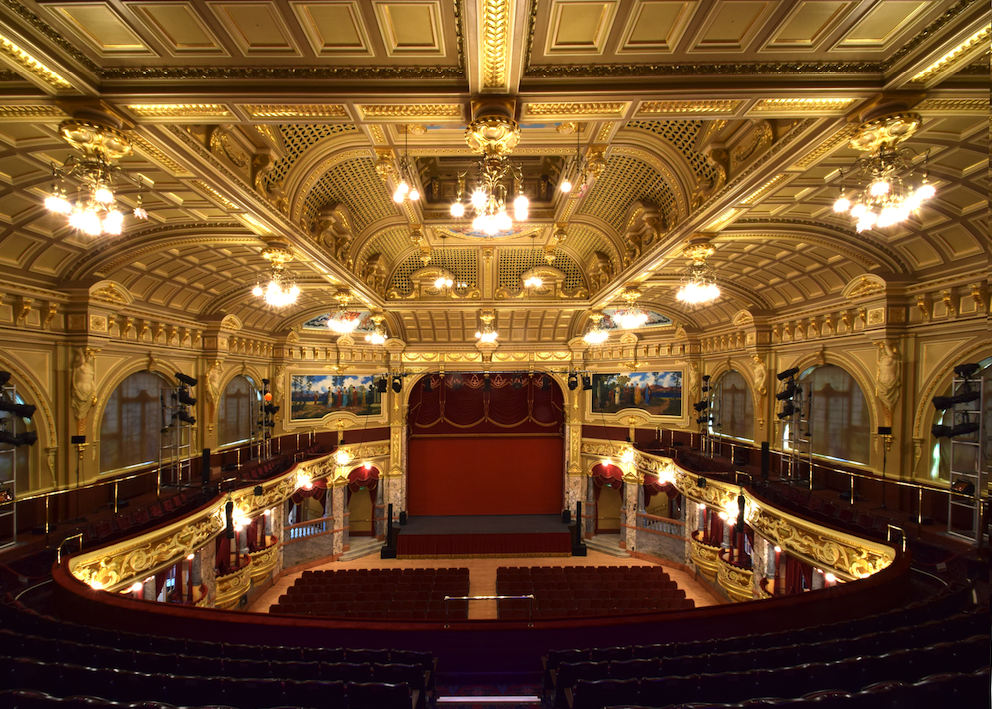
Royal Hall by Jim Counter
It was in such a poor state of repair that the unthinkable was being broached by councillors — after almost 100 years the Royal Hall could be condemned and demolished.
Refurbishment was originally estimated to cost £8.56m with the council likely to having to stump up £2m from its own coffers. The remaining amount would come from a Heritage Lottery Fund grant.
However, there were fears the risky project could potentially bankrupt the authority.
Its emotional importance to the town was not only felt by residents in the town but by performers too.
David Hirst, who led the world famous brass band the Brighouse and Rastrick Band, made his plea from the stage of the Royal Hall in 2000.
He urged the audience, reduced in capacity because the theatre’s upper circle has been closed due to the crumbling concrete, to “get those letters in” to the council and back restoration. He said:
“This building is part of the Harrogate heritage, part of the tone of Harrogate.”
The Royal Hall Restoration Trust was formed in 2001 after then-leader of the council, Cllr Geoff Webber, suggested to the chairman of Harrogate Civic Society, Lilian Mina, that the council would welcome the support of an independent organisation whose prime role would be raising money for the refurbishment.
Then followed tea dances, school concerts, charity balls and other events, which raised £2.7m for the restoration — far more than the £1m it originally expected.
Lilian Mina died in 2008 and Geoff Webber died in 2021 but his son Matthew Webber, who is currently a Liberal Democrat Harrogate councillor, paid tribute to those who spearheaded the campaign to save the Royal Hall.
It was officially re-opened by patron of the trust Prince Charles in 2008 after six years of works.
Cllr Webber said:
“I am very proud of the work done by my late father as council leader at the time in conjunction with the Lilian Mina and the Royal Hall Preservation Trust that led to the Royal Hall being returned to its continued use today.”
2017: Goodbye to Crescent Gardens and a new home
Like the conference centre throughout the 1980s, it was Harrogate Borough Council’s move away from Crescent Gardens that dominated council-business during the mid-2010s.
Crescent Gardens had been used by HBC since 1974 and before that was used by the predecessor council in Harrogate ever since it opened on Halloween 1931.
But by the 21st century, the neo-classical building was showing its age and had become expensive to maintain for the council.
In 2010, the Conservative and Liberal Democrat coalition government came to power and councils were ordered to find savings under its programme of austerity.
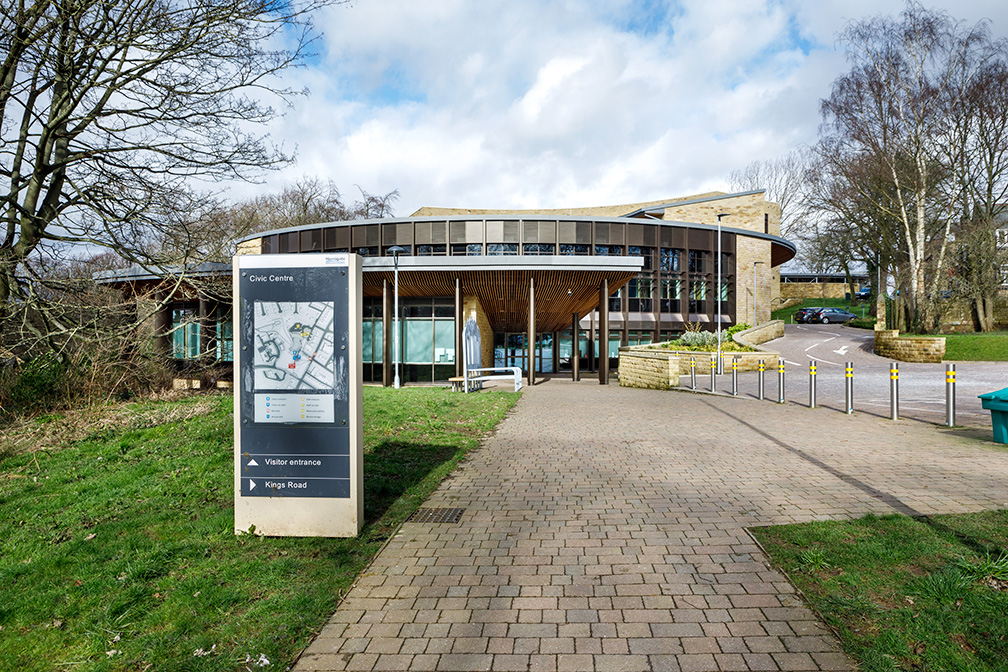
The civic centre at Knapping Mount.
For the council, Crescent Gardens was an obvious place to look.
The council put forward several proposals, which included refurbishing Crescent Gardens, but it ultimately decided to build new offices on land it already owned at Knapping Mount off King’s Road.
At the time, it said the build would cost £8m although the move, as well as the selling off of other offices, would save around £1m in year due to reduced costs involved with maintaining the older buildings.
Tantalisingly for the council, there were hopes it could sell Crescent Gardens to a luxury developer.
Then-council leader Don Mackenzie was quoted saying it could generate an investment of up to £30m into the district’s economy.
Read more:
- Explained: Who will make planning decisions in Harrogate district after devolution?
- Explained: What happens to bin collections in Harrogate after devolution?
Another former Conservative council leader, Anthony Alton, told a meeting the move was probably the biggest decision the council has taken since 1974. He added:
“We are in a continuing economic downturn which means that we have to make every penny count.”
The move to the Civic Centre was always contentious.
The Liberal Democrats argued that £2.5m should be spent on a refurbishment of Crescent Gardens and the Knapping Mount site should be sold for affordable housing.
They also criticised its circular design, saying it would increase costs.
By 2015, rumblings of another local government reorganisation in North Yorkshire were beginning to gather pace and questions were being asked about what would happen to the Civic Centre if there was no longer a council in Harrogate.
Vicky Carr is a former reporter at the Harrogate Advertiser and current deputy editor at the Stray Ferret.
She remembers the subject coming up at a heated Harrogate Chamber of Trade and Commerce meeting that year.
She said:
“Someone wondered whether it made sense to be spending millions on a new headquarters for a local authority which, under government policy, was likely to be abolished within a decade.
“HBC offered reassurances that, should devolution go ahead, a shiny new civic centre would make Harrogate an ideal place for a new unitary authority to have its headquarters.
“Fast forward eight years and, while North Yorkshire Council will use the civic centre for some staff and services, it is keeping its headquarters firmly rooted in Northallerton.”
In 2020, the Stray Ferret published an investigation that estimated the land at Knapping Mount was worth £4.5m to the council, taking the project’s overall cost to £17m. However, the council has always disputed this.
Apart from during the covid lockdowns, council staff have been using the Civic Centre since December 2017.
Crescent Gardens on the other hand is still empty, almost five years’ since Harrogate Borough Council moved out.
The council originally announced it would sell it to property developer Adam Thorpe who had plans for a £75m redevelopment including luxury apartments, an art gallery, underground car park, swimming pool and restaurant.
But two years later, Mr Thorpe’s company ATP Ltd fell into administration with debts of almost £11m, including £24,394 owed to the council.
Crescent Gardens then went back up for sale and was eventually bought for £4m by Impala Estates in 2020.
The Harrogate-based developer was granted planning permission last year for a major refurbishment of the building that will see two-storey extension, rooftop restaurant, gym and new office space.
What will be the legacy of Harrogate Borough Council?From the towns of Knaresborough, Masham and Pateley Bridge to the villages of North Rigton, Summerbridge and Kirkby Malzeard, life will continue without Harrogate Borough Council.
For anyone still not aware, the council will be abolished at the end of this month after 49 years of existence.
From April 1, a new council called North Yorkshire Council will be created for the whole county and HBC will eventually become a distant memory.
Harrogate Borough Council has played a role, small or large, in the life of every resident so the Local Democracy Reporting Service asked four different people in the Harrogate district the same question — what will be its ultimate legacy?
The view from residents
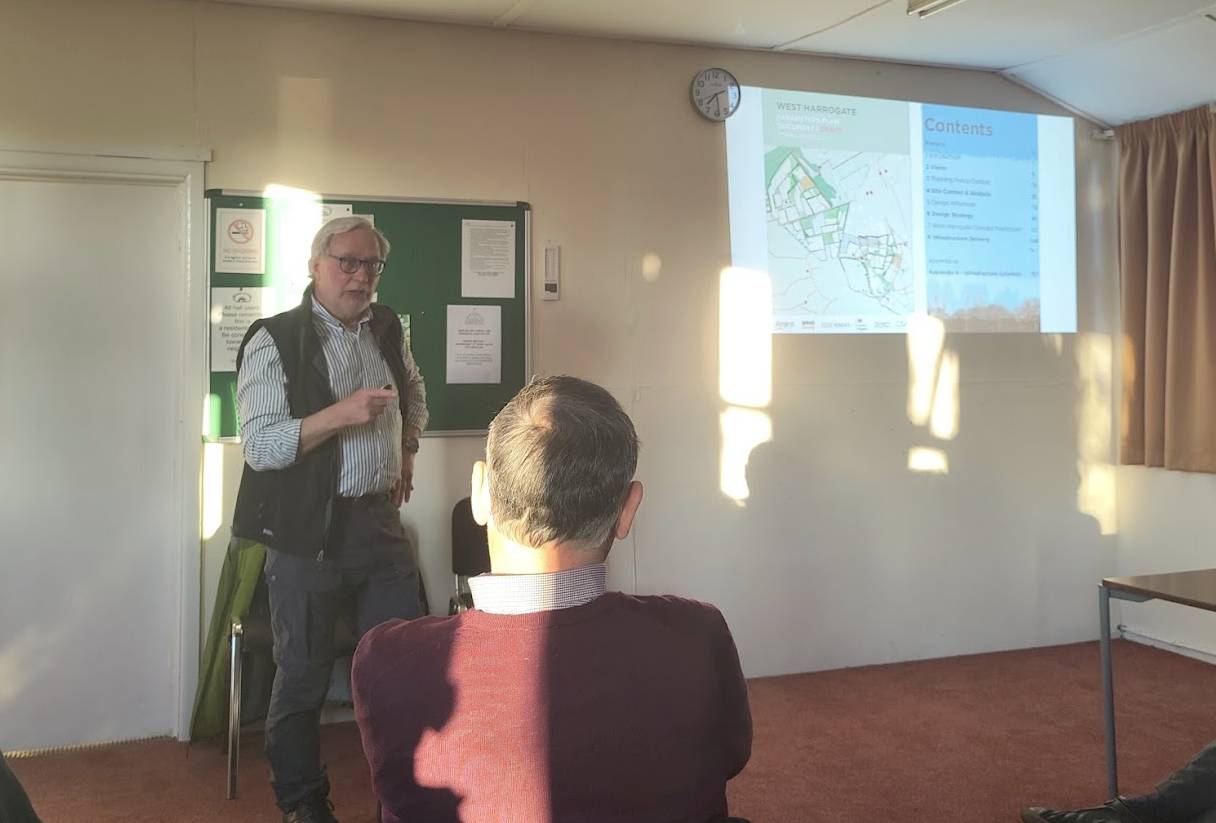
Rene Dziabas
For some residents, the council begins and ends with when their bins are collected.
Others are more engaged with the ins-and-outs of council business and how it spends public money.
Rene Dziabas is the chair of Harlow and Pannal Ash Residents Association, a group that covers an area from Harlow Hill to Rossett Green and Arthurs Avenue to Castle Hill.
Mr Dziabas has lived in Harrogate for 40 years. He said even though the town has seen major changes on the council’s watch he would still move here today if he could.
He said:
“The recycling set up and bin collection has been good. The Valley Gardens and the Pinewoods look good. Those elements are still nice features of Harrogate. The Mercer Art Gallery is an absolute jewel, it punches above its weight. Its exhibitions are really good and well-curated.”
But despite these uniquely Harrogate benefits that the council delivers, Mr Dziabas said over-subscribed schools, poor quality roads and pressure on Harrogate District Hospital have all been made worse by planning decisions taken by Harrogate Borough Council.
Over 4,000 homes could eventually be built in the west of Harrogate over the next decade, including over 1,000 homes in fields next to RHS Garden Harlow Carr on Otley Road.
As with elsewhere in the district, these new developments will change the face of Harlow Hill and Pannal Ash forever. However, residents were disappointed with a document drawn up Harrogate Borough Council last year that said how the homes will link up with local roads, schools and healthcare services.
Mr Dziabas said:
“In this neck of the woods, Harrogate Borough Council is not leaving it in a better state. I can’t think of any major piece of work that’s really had a significant mitigation effect on the problems at the west of Harrogate.”
The council’s Harrogate district Local Plan 2014-35, which outlines where development can take place, will mean thousands more people can enjoy living in the Harrogate district but Mr Dziabas said there are lessons to be learned when it comes to consulting with residents about development. He added:
“Harrogate Borough Council ought to have been more communicative with the public in general. Ultimately we live in a democratic society, we are funding those institutions and I don’t think it’s unreasonable for them to communicate.”
The view from the staff
The Civic Centre in Harrogate
Local government union Unison estimates Harrogate Borough Council has employed around 10,000 people since it was created in 1974.
David Houlgate, who has been Harrogate branch secretary at Unison for the last 18 years, said it’s these people who will be the council’s “enduring and lasting legacy”. He said:
“They are the ones who have delivered services over the years, they are the ones who kept those services going during the pandemic, they are the real stars of Harrogate Borough Council.”
The vast majority of council staff will automatically transfer over to the new authority North Yorkshire Council on April 1.
Mr Houlgate is hopeful these staff members will deliver quality services to residents despite the well-documented cost pressures the new council will face. He said:
“If it gets things right and works with its staff and the trade unions to deliver joined-up and effective services then it’s likely that Harrogate Borough Council will fade in the memory. If the new council fails to deliver on what it has said it would then inevitably Harrogate council will no doubt be missed.”
Mr Houlgate has worked for the council for the last 26 years and is currently a local taxation team leader.
Since 2010, the government has slashed funding for the council, which he said has resulted in higher workloads and stress for staff. He added:
“It has changed an awful lot in my time at the council. It delivers more with less which has been necessary as a result of drastic cuts to funding from a central government that only seems to pay lip service to public services.
“To do this it has, over the years, cut the terms and conditions of staff, pay has not kept pace with inflation and workloads and stress absences have increased.
“As it comes to an end, there are recruitment and retention issues like never before. It probably does not offer the career paths it once did. The new council will hopefully offer more opportunities. We will have to wait and see.”
The view from outside of Harrogate

Cllr Andrew Williams
Harrogate Borough Council was created in 1974 as an amalgamation of smaller councils including those in Knaresborough, Nidderdale, Ripon and Harrogate.
The council has been based in Harrogate for all that time, moving from Crescent Gardens to the Civic Centre in 2017.
But for some people living outside of the town, Harrogate Borough Council has focused too much on the district’s largest urban area.
Cllr Andrew Williams is a former councillor on Harrogate Borough Council. He currently sits on North Yorkshire County Council as an independent and is also leader of Ripon City Council.
There are hopes in Ripon that the new council will look at the city as an equal to similar-sized market towns in the county like Thirsk, Malton and Northallerton.
Cllr Williams has been an outspoken critic of Harrogate Borough Council as he believes the authority has not given Ripon a fair shake.
The council has invested heavily in the Harrogate Convention Centre, which he believes has resulted in few benefits for his city.
However, he praised the council’s staff for their work in delivering services to residents over the years. Cllr Williams said:
“It would be fair to say that some of the services provided are not unreasonable. The refuse collection service, parks and gardens and the housing department do their best.
“The staff have worked incredibly hard to deliver services for residents across the district.”
Harrogate Borough Council points to its investment in new state-of-the-art leisure facilities in Ripon and Knaresborough as examples of its commitment to towns outside of Harrogate.
Cllr Williams called the new pool in Ripon a “significant improvement” but added:
“One project in 50 years is hardly justification for its previous misdemeanours in my view.”
Cllr Williams said Harrogate Borough Council’s legacy in Ripon will not be positive:
“[Their legacy is] under-investment and a failure to recognise the Harrogate district encompasses more than Harrogate, the conference centre being the prime example.
“Money has been poured into Harrogate at the expense of everywhere else in the district.”
The view from charities
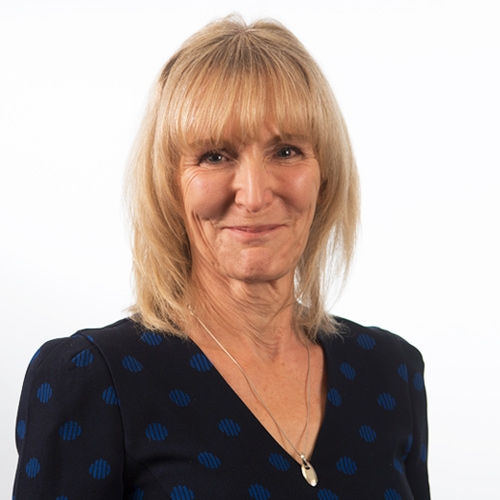
Jackie Snape
Harrogate Borough Council has been a staunch supporter of the district’s voluntary and community sector.
There are more than 700 charitable organisations in the Harrogate district and many have stepped up over the last 13 years as the council has been forced to cut services due to austerity.
The council organises the Local Fund, which was launched in 2018 by Harrogate Borough Council, Harrogate and District Community Action and Two Ridings Community Foundation.
Last year the fund granted £85,000 to 29 different groups.
Jackie Snape, chief executive of Disability Action Yorkshire, said she has enjoyed working with local councillors on various campaigns, including a recent push to improve accessbility at tourist venues. Ms Snape said:
“Harrogate Borough Council was an early adopter of our Think Access campaign, and one of the major factors that we, and other charities, will miss is the local knowledge with individual councillors, often showing a great interest in causes close to their heart and local area.”
Key to the council’s relationship with charities is the role of the mayor, which is a councillor that for 12 months has a packed diary full of meeting charities and attending events.
Current and final Harrogate borough mayor Victoria Oldham was seen getting stuck in with a shovel last year to break ground at Disability Action Yorkshire’s £7.5m supported living complex at Claro Road.
Ms Snape added:
“For many years we were blessed by regular visits by the mayor of the day, all of whom paid great interest in the work we do, both at Hornbeam Park and at Claro Road.
Ms Snape said the council’s legacy of supporting charities will be remembered. Many charities rely on funding from the council and she hopes the new authority will show the same level of support. She said:
“Its work in helping and supporting a raft of charities working with some of the most vulnerable people in society will certainly be remembered for many years to come.
“We hope that when April 1 arrives, and North Yorkshire Council takes over that the same level of local funding and support continues, which is vital to the survival of many charities in the district.”
Looking ahead
If four more people were asked their opinion on what Harrogate Borough Council has achieved and what its legacy will be — it would likely generate another four very different answers.
This perhaps shows the council has done more for the district than it is sometimes given credit for.
But most would probably agree that how fondly Harrogate Borough Council will be remembered is likely to depend on how successful the new council is at the delivering the nuts and bolts services that residents have always expected for the last 49 years.
Read more:
- Explained: What happens to Harrogate taxis after devolution?
- ‘Once you’ve been to Bettys you’ve done Harrogate’, claims Ripon councillor
Council meetings postponed as book of condolence opens in Harrogate civic centre
All council meetings in Harrogate and North Yorkshire will be cancelled next week.
Following the death of the Queen, Harrogate Borough Council has decided to suspend its meetings calendar “as a mark of respect”.
Its audit and governance committee meeting on Monday and planning committee on Tuesday have been postponed.
Meetings for the leader and cabinet on Wednesday will also be held at a later date, along with the general purposes committee and a meeting of the cabinet member for housing and safer communities the following day.
Rescheduled dates are yet to be announced.
A book of condolence has been opened at the civic centre in St Luke’s Mount, Harrogate. It will be available to be signed until 4.30pm today, 8.30am to 5pm Monday to Thursday next week and 8.30am to 4.30pm next Friday.
The council has also said floral tributes can be left on the grass in front of the war memorial opposite Bettys. Some have already begun to appear this morning.

Read more:
- Mayor leads Harrogate tributes to Queen’s ‘constant source of courage’
- Lord Lieutenant pays tribute to the Queen from North Yorkshire
Meanwhile, North Yorkshire County Council has also cleared its calendar for the next 10 days.
Among the meetings to be postponed is the Harrogate and Knaresborough area constituency meeting next Thursday.
A period of national mourning is expected to be announced by the government later today, along with the date of the funeral.
Harrogate cabbies deliver letter to council protesting at changes
Two Harrogate taxi drivers delivered a letter signed by 154 cabbies to Harrogate Borough Council’s Civic Centre this morning protesting against a raft of new licence conditions they believe are unfair.
The changes, which were approved by the council in April, include potentially revoking a driver’s licence if they receive seven penalty points.
They also stipulate drivers must keep taxi plates on their vehicles even when they are not working, attend mandatory training courses and adhere to stricter rules around scuffs and scratches on vehicles.
Following the Stray Ferret’s article on the new conditions last week, the taxi drivers received some criticism on social media for opposing the seven penalty points rule.
Blueline driver David Goodall wanted to stress that drivers are “not asking for permission” to speed but that the points ban was only one aspect of the changes that he believes will irreparably hurt the trade.
He added:
“What we want is for the council to understand within our occupation you can inadvertently go over the speed limit such as when we have a difficult customer in the car or if someone has a medical emergency and there’s a need to get to hospital quickly.”
Taxi driver Musa Ebzao believes making drivers display their taxi plates at all times could put their security at risk and make their cars or their homes a target for thieves.
“I’ve been threatened by somebody who wanted to burn down my house. The plates are telling people where we live.
“Also so many times, people break in thinking there’s money in the taxi and steal what’s in the meter or sat nav. That has happened many times.”
Read more:
- ‘We just want to make a living’: Harrogate cabbies hit out at new rules
-
Harrogate district taxi drivers hit out at ‘unfair’ penalty points proposal
He added that sending experienced drivers on four days of compulsory training was “really insulting”.
“Send me on a course to teach manners and honesty? We already have that. I find it really insulting. I have been taxi driving for 30 years on and off.”
Legal action
Mr Ebzao and Mr Goodall said they will be awaiting a response from the council licensing team but hadn’t ruled out future legal action or protests.
Mr Goodall said:
“An increasing concern is the manner the council is using these conditions as a way of antagonising and persecuting licensed drivers.
“The council should abandon this policy, start from scratch, and consult all the licensed drivers. What we want is common sense, that’s all we ask.”
A council spokesperson said it would not be issuing a response to the letter and that its position has not changed from last week’s statement, which said:
“The safety of customers using taxis is paramount.
“Seven penalty points issued for motoring offences is consistent with proposals for City of York and the West Yorkshire authorities and is recommended in national guidance.
“Taxi drivers’ licences are reviewed on an individual basis when points accumulate. And while the policy specifies seven points, an opportunity is given to the driver to put their side and reasons why their licence should not be revoked.
“Once a vehicle is licensed it is always a licensed vehicle and the law does not permit drivers to take licence plates off. It cannot sometimes be a private vehicle and sometimes be a licensed vehicle at the driver’s choice. And by ensuring a valid licence plate is secured and displayed at all times it allows the public to identify the vehicle as licenced by the local authority, and prevents it being stolen and used by others.”