Knaresborough’s fascinating past is to be brought to life at the town’s first community archaeology festival this month.
Visitors will see hundreds of local artefacts from prehistoric times to the modern era, including a 4,000-year-old ceremonial hand axe.
They are also invited to bring along any artefacts they have found and a team of experts will answer questions about them.
Knaresborough Museum Association is hosting the free to enter festival over the two half-term weekends of October 28 and 29 and November 4 and 5 from 10am to 4pm at Centre-on-Gracious Street.
Kathy Allday, chair of the association, said:
“It’s a really exciting opportunity for visitors to look at a wide range of archaeological finds from the local area and find out what these tell us about the people who have lived in this area for generations.
“We can learn about the first inhabitants who came to hunt, live and farm in Knaresborough, and see what they left behind.”
“The displays also tell us what the Romans, Vikings and Saxons got up to in Knaresborough, as well as shining a light on the town’s amazing medieval history.”

Association vice-chair Malcolm Hay inspects a find.
A £10,000 National Lottery Heritage Fund grant to the association funded the festival and also paid for a geophysical survey of Priory Cottage Orchards on Abbey Road, where the Trinitarian Priory precinct once stood.
Some of the objects on display will be used in a quiz for adults and a game for children at the festival.
Nun Tabbetha will be making an appearance, writing exquisitely illustrated medieval pardons for anyone who needs forgiveness for being naughty.
Audio visual recordings from conservationist Keith Wilkinson on the archaeology of Nidd Gorge, and mudlarker Steve Mycroft will be available and local history books and Knaresborough Christmas cards will be on sale to raise funds for the association.

The association is commissioning a 3D model of the Gates Hill Iron Age fort.
The association plans to take its displays to outlying villages, libraries and community centres, expanding its outreach work with community groups and schools.
It also had plans to organise more exhibitions, research projects and further archaeological survey work.
Read more:
- Knaresborough road closure signs put up ‘in error’
- Man accused of plotting terrorist attack on RAF Menwith Hill near Harrogate
New Harrogate district henge could be ‘nationally significant’
A previously undiscovered prehistoric henge may lie under a Harrogate district village, a packed meeting was told this week.
The massive earthwork, 170 metres in diameter and thousands of years old, was revealed beneath the village of Kirk Hammerton using state-of-the-art multispectral drone imagery techniques by Tony Hunt, who said the find could be “nationally significant”.
He presented his findings, along with community archaeologist Jon Kenny, at a public meeting of local residents and amateur archaeologists in Kirk Hammerton village hall on Monday. Mr Hunt said:
“The meeting was absolutely astounding. Usually, these things attract maybe 20-30 people, but we had 120 – there were people sitting on the floor, and there were 30-40 who couldn’t make it on the night but want to get involved.
“Everybody seems to be very enthusiastic about it being a new henge. I’m healthily sceptical, but it’s definitely worth a look. If this is confirmed, it will be nationally significant.”
A henge is a ring-shaped bank and ditch, usually built around 4,500 years ago for purposes that remain unclear, although experts speculate that they probably had religious or spiritual meaning for ancient communities.
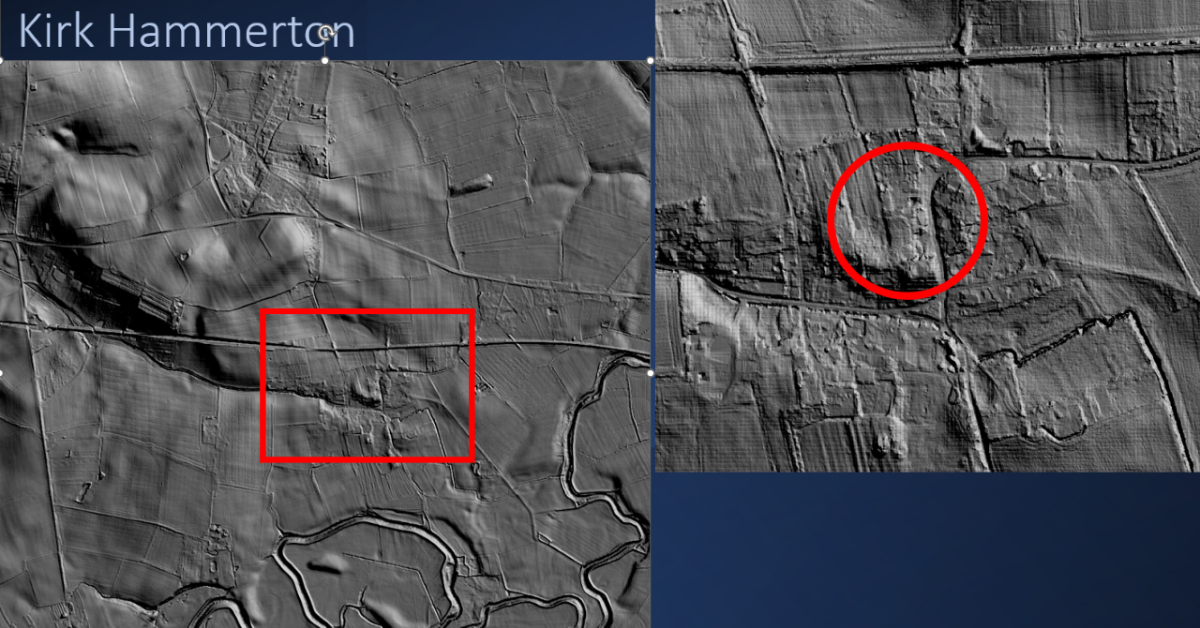
A black-and-white image of the suspected henge, taken from a drone by Yorkshire Archaeological Aerial Mapping.
There are currently known to be 10 henges in Yorkshire, six of them aligned along a northwest-southeast axis, including the group of three at Thornborough, north of Ripon. The latest discovery, a possible 11th, lies in alignment with these.
Mr Hunt said:
“Whether these henges are aligned intentionally is up for debate, since for that to hold up you have to disregard quite a few of the others. It may just be that they are positioned along river valleys.
“They may have been tribal centres, or where the gods live – no people lived in them. They may have represented the border between life and death – at sunset, someone the height of the average Neolithic person standing in the centre of one of these henges casts a shadow pretty much exactly the same length as its radius.”
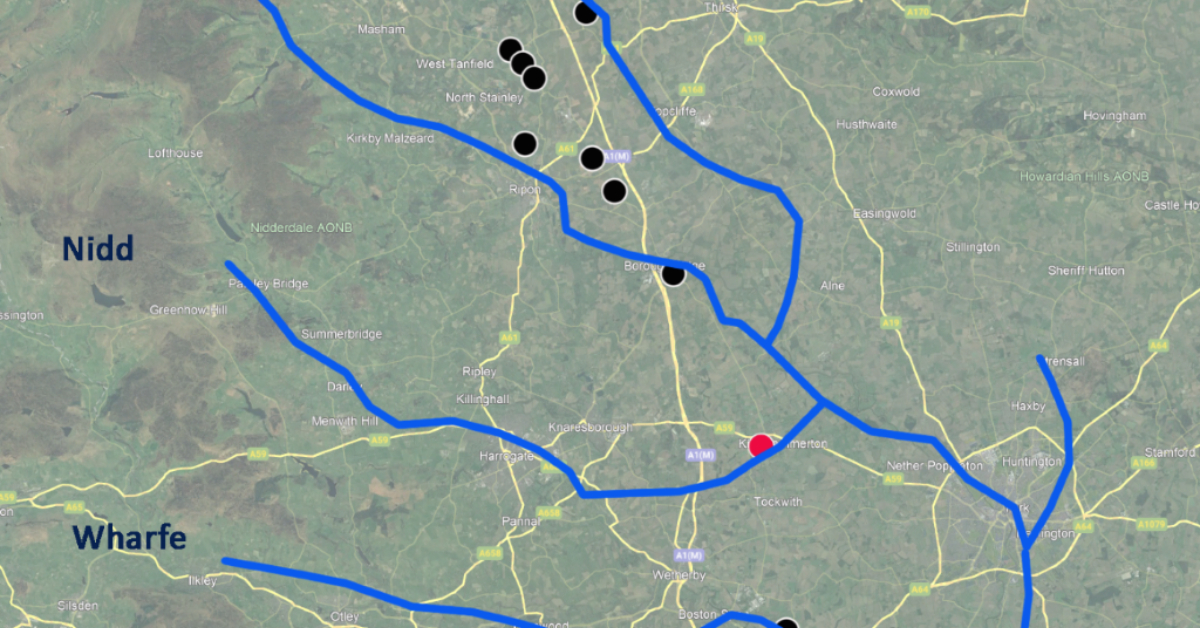
A map showing how the most recently discovered henge lines up with several of the others in North Yorkshire, including the three at Thornborough.
Mr Hunt and fellow enthusiasts now plan to explore further at Kirk Hammerton, using geophysical mapping and ground-coring techniques. He said:
“In a henge, the ditch is on the inside of the earth bank, so we’ll see if we can spot that. If we see something that looks like one, we’ll probably put in a huge long trench from the centre out, through the ditch and earthwork to create a cross-section.”
Mr Hunt has a degree in archaeological sciences from Bradford University and is currently managing director of DJ Assembly, a York-based micro-electronics company. He also runs Yorkshire Aerial Archaeological Mapping, whose thermal and infrared imaging technology revealed the henge. He said:
“Ten years ago, we thought there were only five henges here in Yorkshire. Now we know there are at least 10. There will be more, I guarantee it.”
Using his drones, Mr Hunt has recently discovered lost Bronze Age burial mounds and two new Roman marching camps, both in the Vale of York, as well as mass graves at the site near Northallerton of the Battle of the Standard between England and Scotland in 1138.
Earlier this month, it was announced that two sections of the Thornborough henges, which lie 30 miles to the north-west of Kirk Hammerton, have been donated to the public body Historic England.
Read more:
- Ripon’s ‘Stonehenge of the north’ gifted to nation
- Angry Minskip villagers fight developer over possible Roman site
- Developer withdraws plan for 55 retirement homes in Kirk Hammerton
Calls for archeological survey into Knaresborough’s Roman past
Plans to develop a site in Knaresborough could provide an opportunity to conduct an archeological survey into the town’s Roman past.
An application was submitted to Harrogate Borough Council on March 22 to build a four-bedroom house on Abbey Road.
There was pre-Roman and Roman occupation on the site prior to a Trinitarian Priory being founded.
Kathy Allday, chair of the Knaresborough Museum Association, said the planning application provided a rare opportunity to carry out an archaeological survey prior to any development,
She added the survey could reveal key details about Romano-British life in the area and also whether a nunnery, which is known to have existed in the vicinity, was on the site.
The association has been undertaking its own research in the vicinity of the former Trinitarian Priory and has found a Roman brooch and a medieval coin.
Ms Allday said:
“Antiquarian records and archive material suggest there was also a nunnery and outbuildings which were part of the Priory precinct in the vicinity. As such an archaeological survey of the site. should be a condition of any planning approval for this development.
Read more:
- New bus service to link Harrogate and Knaresborough with Yorkshire Dales
- Crowds enjoy the fun at Knaresborough Spring Fayre
“Archaeological excavations in Abbey Road have been few and far between in the last few decades, so this is an opportunity that should not be missed. Otherwise the chance to learn more about medieval and Roman occupation in Knaresborough may be lost for a few more decades.”
There have been objections to the property being built. Knaresborough Town Council’s submission to the planning consultation says:
“We object to this development as it is within the Knaresborough Conservation Area and would not preserve or enhance the character or appearance of the conservation area.”
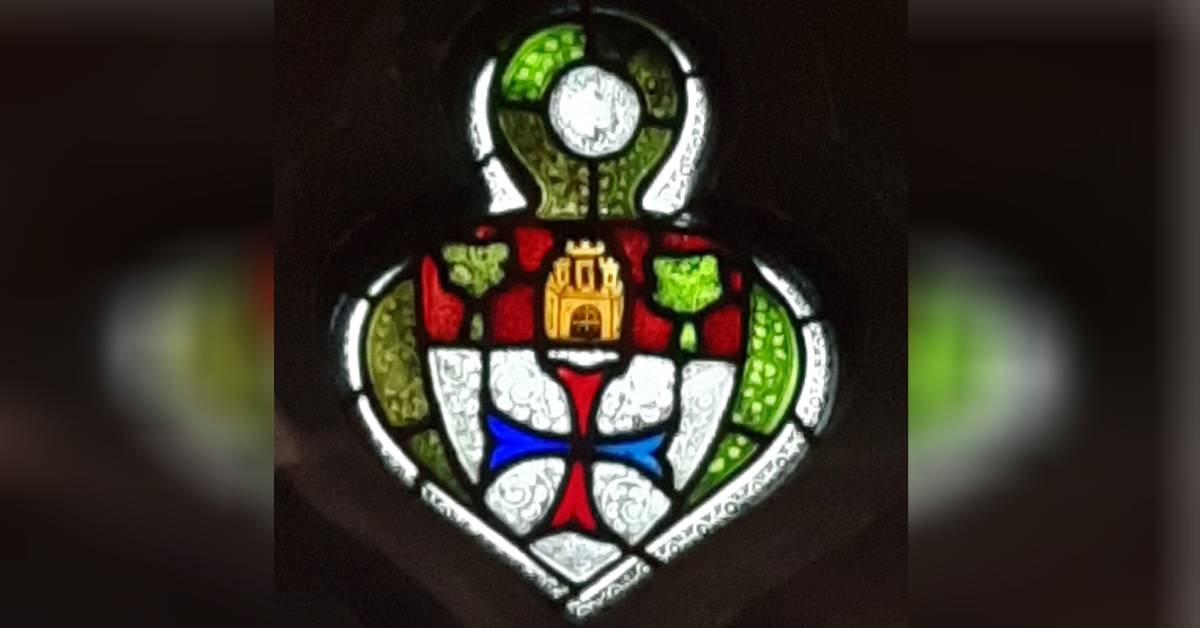
A medieval window from Knaresborough priory, now in Pannal church – Photos by – @knaresboroughmuseum Instagram
The Great British Dig, Channel 4’s new archeology documentary, has unearthed Masham’s hidden past.
The show includes four episodes running through February and March and Masham is the focus of episode two. The show works with local people to dig up their back gardens in search of hidden parts of history.
The show is hosted by actor and comedian Hugh Dennis who is working with a team of archeologists.
The production company behind the show, Strawberry Blond, had to work around lockdowns to film. Executive Producer, Steve Wynne, said the people of Masham were eager to get involved.
The researchers knocked on numerous doors in Masham in hope everyone would say yes to archaeologists digging up their gardens.
The production team knew of a lost cemetery in Masham and wanted to see what could be unearthed around the rest of the town. They used the Town Hall and the square as their base and began their dig.

Hugh Dennis stood in front of Masham’s blue plaque for the lost cemetery. Photograph: Strawberry Blond TV
The show promises to reveal “incredible discoveries” including a number of skeletons. Some were used to show how people lived 1000 years ago.
Steve Wynne said:
“I cannot tell you how incredibly warm and welcoming the people of Masham were. From the amazing bacon sandwiches from Lucy at Bordar House Teas, to Colin at Johnny Baghdad’s on the Square.
“The residents were only too happy for us to turf up their gardens (and beer garden at The Bruce Arms). The team at the Town Hall gave us the run of the place for our unit base, and the local vicar was a fountain of knowledge about the history of the town.”
Read more:
- Primary school near Masham, with only six pupils, set to close.
- Crowdfunder for Knaresborough’s new museum launches.
The episode featuring Masham will air on More 4 on February 24.
The series also features digs in South Shields, Nottingham and Newcastle.