North Yorkshire Council is set to remove two air quality management areas in the Harrogate district after levels of nitrogen dioxide dropped.
The council currently monitors air pollution on Low and High Skellgate in Ripon and York Place in Knaresborough.
Both management areas were introduced to review levels of nitrogen dioxide (NO2), which are caused by traffic levels.
Monitoring of NO2 has been in place on Skellgate in Ripon since 2010 and on York Place in Knaresborough since 2017.
Both were declared after beaching the legal limit of 40 micrograms of annual NO2 per cubic metre of air.
However, a report due before the council’s transport, economy, environment and overview scrutiny committee on April 10 says both air quality management areas are due to be revoked.
It said the areas had not breached the limit for more than five years and are now planned to be removed.
In its annual air quality report in 2023, the council said the Ripon management area had gone six years under the limit.
It said:
“This is the sixth year that there have been no exceedance of the objective, in line with the above we propose to revoke the AQMA.”
Read more:
- Air pollution at Bond End in Knaresborough meets legal limits for first time
- Air pollution risks from Harrogate’s wood-burning stoves ‘cannot be ignored’
Meanwhile, air quality management areas in Harrogate on Wetherby Road and Bond End in Knaresborough are set to remain in place.
Both were implemented for breaching the limit for NO2.
However, despite both areas being under the 40 micrograms for this year, the council intends to keep them in place.
The UK government requires local authorities to take action to improve areas with particularly bad air pollution.
In September 2018, North Yorkshire County Council replaced traffic lights at Bond End with a double mini-roundabout to reduce congestion and improve the flow of traffic.
Starbeck children urge drivers to switch engines off at level crossingPrimary students in Starbeck have urged local drivers to turn off their engines while waiting at a level crossing.
Pupils took part in a competition organised by the Starbeck Residents’ Association to design a banner asking motorists to “Stop Idling”.
The Starbeck level crossing is known for being one of the most congested areas in Harrogate. It is used on average by over 14,000 vehicles daily, many of which keep their engines running whilst waiting for a train to pass.
This is not the first time Starbeck Primary Academy has campaigned on the issue, having participated in an educational campaign on the same problem last year.
Chris Watt, Chair of the Starbeck Residents’ Association, commented:
“People using our High Street are being subjected to unnecessary air pollution which could be improved if drivers simply turned off their engines while waiting at the level crossing.
“They would also save on their own fuel bills.”
Approximately 40,000 deaths a year in the UK are linked to air pollution, according to the Royal College of Physicians.
Emissions are particularly harmful to children’s growing lungs.
Headteacher, Garry de Castro-Morland said:
“This is a vital topic that we continue to discuss with our pupils and work closely with the community to tackle.”
He also emphasised the importance of a curriculum with a focus on environmental issues that could leave a positive impact on local communities.
The winning banner design, created by enthusiastic year five pupil Freya, 10, has recently been unveiled near Starbeck station where it is now visible to motorists.
Mr Watt added:
“The entries to our competition were amazing, showing huge imagination and creativity and we are delighted with the final banner.”
The Residents’ Association hopes that the school’s contribution will serve as a lasting reminder to drivers to switch their engines off at the crossing.
Read more
- Starbeck schoolchildren highlight air pollution dangers of idle engines
- Town centre living trend gathers pace in Harrogate
- River pollution in the spotlight at Ripon green fair
Air pollution rises above pre-pandemic levels at nine locations in Harrogate district
The levels of harmful air pollutants in the Harrogate district have risen above pre-pandemic levels at nine locations – including one which recorded a year-on-year increase despite covid lockdowns.
Knaresborough bus station was the only area in the district to record a yearly rise in nitrogen dioxide levels between 2019 and 2021.
Nine out of all 64 monitoring locations saw an increase during the same period, although each had a drop during 2020 when lockdowns led to tight restrictions on travel.
All locations remain below current legal limits, but these targets are set to be reduced by the government after warnings that pollutants are even more dangerous than previously thought.
Air pollution is associated with a number of serious health impacts – it particularly affects the most vulnerable, including children and older people, and those with heart and lung conditions.
The latest figures for Harrogate have been revealed in a report from the borough council which shows nitrogen dioxide levels rose from 2019 to 2021 at:
- Station Parade taxi rank, Harrogate
- Harlow Crescent, Harrogate
- Devonshire Place, Harrogate
- Woodfield Road, Harrogate
- High Skellgate, Ripon
- High Street, Knaresborough
- Knaresborough bus station
- The Royal Oak, Knaresborough
- Bond End, Knaresborough
Bond End is one of four Air Quality Management Areas (AQMAs) declared by the council for previously breaching the legal limit of 40 micrograms of annual nitrogen dioxide per cubic metre of air.
The figure for Bond End, which has had traffic light upgrades to tackle pollution from idling vehicles, now stands at 38.3 – the highest in the district.
Read More:
- Harrogate traffic to be counted for £11.2m Station Gateway
- Beech Grove road closure in Harrogate to end in 10 days
For the first time in 15 years, the World Health Organisation (WHO) last year released new guidelines which mean the UK’s legal limits for the most harmful pollutants are now four times higher than the maximum levels recommended.
This is after research found air pollution from areas including vehicle exhausts and gas central heating is having a big impact on health, even at lower concentrations.
While not legally binding, the WHO guidelines are used as reference tools by policymakers around the world and impact on how legal limits are set.
The UK government has yet to approve new limits, with a bill currently going through the legal process.
If the WHO’s new target of 10 micrograms of annual nitrogen dioxide per cubic metre of air is introduced, just two locations in Harrogate would meet the new guidelines.
In its annual report, Harrogate Borough Council said it had no plans to declare any new AQMAs under the current rules, but added it recognised there was work to do to improve air quality.
It said:
Councillors approve ‘much-needed’ Harrogate pet crematorium“Concentrations have risen across the district in 2021, but this is following 2020 when there were multiple lockdowns.
“Whilst air quality has improved significantly in recent decades, and will continue to improve due to national policy decisions, there are some areas where local action is needed to improve air quality further.
“We work with colleagues within the highways, sustainable transport and public health departments at North Yorkshire County Council on air quality, and will continue to do this to improve local air quality.”
Harrogate Borough Council‘s planning committee has unanimously backed plans to build the district’s first pet crematorium.
The crematorium will be built inside a converted shipping container at Stonefall Cemetery on Wetherby Road, Harrogate.
There will also be a ‘goodbye room’ in a converted garage where owners can say final farewells to their pets.
The council, which approved its own plans for the crematorium yesterday, currently charges £36 to collect dead pets from people’s homes. The closest pet crematoriums are in Leeds, Thirsk and Skipton.
John Club, the council’s commercial and community development manager, told the meeting there are around 47,000 pets in the Harrogate district and that owners increasingly want to give them a dignified send-off after they die.
The move follows the lead of councils in north east Lincolnshire and Barnsley, which have already opened or started work on pet crematoriums.

This storage building will be converted into a ‘goodbye room’.
Read more:
- Stray Pets Rescue Club: Will, Jerry, Link and Mystic are in need of loving homes
- Pet crematorium planned for Stonefall Cemetery
Stephen Hemsworth, bereavement services manager at the council, took questions from councillors about the project.
Mr Hemsworth said it would cost around £50 for a rabbit to be cremated whereas a dog would cost over £200. He said revenue would be invested back into the council.
He added the facility would be used by the general public as well as local vets.
Good news for pet owners
Conservative councillor for Washburn ward, Victoria Oldham, who is also a farmer, said she fully supported the proposals.
She said:
Starbeck schoolchildren highlight air pollution dangers of idle engines“It’s much needed in the area. I’m jolly glad that it’s coming forward now. I am sure it will be well used. Having a goodbye room will mean an awful lot to pet owners.”
Children from Starbeck Primary Academy were at Starbeck level crossing this morning armed with placards asking motorists to turn their engines off.
An idling engine can produce up to twice as many exhaust emissions as an engine in motion, with air pollution known to harm children’s growing lungs.
At Starbeck crossing, the barriers are activated several times an hour to let trains pass. With queues of traffic on both sides of the crossing a regular sight, it is a notorious air pollution hotspot.
Today’s campaign was organised by the school and Starbeck Residents Association.
Darren Leeming, who has two children at the school and is on the SRA committee said “there are no excuses” for motorists not to turn their engines off whilst they waited.
He said:
“The barriers go down and people don’t turn their engines off. Air pollution goes into children’s lungs. A lot of these drivers have children themselves.”
Read more:
Starbeck Primary Academy is on Starbeck High Street and bears the brunt of the air pollution from waiting cars and vehicles.
Its headteacher, Gary de Castro-Morland, said 99% of its children walk to school so he hopes motorists can turn their engines off to help protect their health.
He said:
Air pollution risks from Harrogate’s wood-burning stoves ‘cannot be ignored’“This year five class has been learning about air pollution and the children wanted to come down.
“Traffic queues right in front of our school, air pollution from standing traffic is a significant issue for us.”
A campaigner from Harrogate says more should be done to highlight how wood-burning stoves damage the environment.
A study published on Friday found the stoves contribute to almost half of the cancer-causing air pollution particles in towns and cities.
Government data found that wood-burning stoves are the single biggest source of PM2.5 particles in the UK, three times more than transport. Breathing in the particles is known to exacerbate lung conditions, such as asthma or chronic obstructive pulmonary disease (COPD).
The stoves have seen a boom in popularity over the past decade, with many people seeing them as cosy and rustic additions to their homes.
Some Harrogate district residents in older houses also find stoves and open fires an important source of heat during winter, but Harrogate man Brian McHugh believes over 90% of them are not really needed.
He said air pollution from wood-burners “can no longer be a taboo subject”.
“People have not been responding to the fact that there is a real danger here.”
Mr McHugh, who has written articles on the subject, said some people get defensive when they are told that stoves contribute to air pollution and take it as a personal affront.
He said:
“They feel it is an attack on their identity.”
Read more:
- Harrogate adventurer completes dangerous mission to reach ‘African pole’
- Covid rate surges in Harrogate district as jab clinics open for children
Mr McHugh said wood-burning stoves should be seen as a public health risk, similar to smoking or excessive drinking. He’d like to see Harrogate Borough Council launch a public information campaign to inform people of the risks.
He added:
Harrogate primary school starts air pollution fight on Cold Bath Road“We have also restricted all sorts of consumer products in the past.
“I think the winter months are an especially good time to talk about air pollution as a while, as both outdoor and indoor air pollution tend to be worse in winter in the UK.
“Harrogate Borough Council has a range of resources and tools at their disposal to disseminate information, whether that is through email, flyers or signage.
“There are local organisations that promote a reduction in local ambient air pollution through Walk to School days and people are being informed about pollution through this direct action. A campaign to start a No Burn Day as a starting point, could be a huge breakthrough.”
A Harrogate primary school that sits in the middle of Cold Bath Road is trying to find a solution to its air pollution problem.
Tim Broad, the headteacher at Western Primary School, was monitoring the children as they left school during the first lockdown when he noticed the scale of the issue.
He was concerned about the sheer volume of traffic but most shocked when, as larger vehicles passed by, he tasted diesel in his mouth.
So the school installed an Airly air pollution monitor and was the first in the Harrogate district to do so.
Western School hopes that it can use the results to encourage North Yorkshire County Council to take action.
Read more:
- Delay to Harrogate schools vaccine programme
- Pupils at school near Ripon shine in worldwide art festival
While Mr Broad hopes that people will change their behaviour in the near future, whether that is by walking their children to school or by switching to electric vehicles.
However, he has also considered lobbying for more drastic action to try and move traffic away from Cold Bath Road. Mr Broad told the Stray Ferret:
Electrifying Harrogate’s school buses ‘has to be cost effective’“I have already expressed my concerns about the volume of traffic from a road safety view but that obviously goes hand in hand with pollution.
“We could try to make Cold Bath Road one way, we could pedestrianise it, we could close it to traffic at certain times of day.
“The problem is, it’s such a thoroughfare. If we block it off then would we just move all of that traffic to another place? There isn’t an easy solution.”
Yesterday, the Stray Ferret published an investigation that found that children in Harrogate are being taken to school in diesel buses that are amongst the dirtiest and most polluting vehicles on our roads.
We discovered through a freedom of information request that 50% of these buses are over a decade old and almost 20% of these go back at least 20 years.
University of Leeds climate scientist and Harrogate resident Professor Piers Forster told the Stray Ferret that the old school buses will be having a damaging impact on children’s lungs in Harrogate.
He called on North Yorkshire County Council to electrify the school bus fleet.
The County Council’s response:
Michael Leah, assistant director for transport and the environment at NYCC, said the council is working with Transdev to bid for government funding for electric buses.
However, it is not clear how many of these buses would be used on school routes should the bid be successful.
He said:
“Bus companies are bound by regulatory compliance and as a home to school transport authority we are required to seek best value for money in securing transport provision.
“We have also set an aspiration of achieving carbon neutrality by 2030 or as near to that date as possible; accordingly we work closely with our bus operators moving towards a more modern fleet.
“Indeed we are working with The Harrogate Bus Company, part of Transdev, on a scheme that – if the funding bid succeeds – would see 39 zero-emission buses delivered in Harrogate over the next three years.”
The bus companies response:
The Stray Ferret contacted the four main school bus providers in Harrogate to ask what they are doing to clean up their fleet.
Craig Temple, managing director of Connexionsbuses said because it is a family-owned business, any upgrades have to be “cost-effective”. He said none of their buses are 20 years old.
“When providing commercial school services, as ours are in Harrogate, our main priority is to provide a value for money, safe and reliable service.
“Each bus carries 70-80 pupils, and as such takes that number of cars off the road. The pollution from this number of cars would massively increase the impact on everyone’s health, and cause congestion (which further damages peoples health).
“I think most people fail to realise what the effect would be on parents through ticket prices if we were to buy much newer vehicles (or even new) at a cost of nearly £400,000 each.
“To purchase vehicles less than 10 years old would add massive costs on to the daily tickets of the children travelling, which, in turn, would no doubt lead to less travelling on the bus and more cars on the road, leading to more congestion and pollution.”
Steve Ottley, general manager of Harrogate Bus Company said some children go to school on electric buses that are part of its main network.
“We are one of 10 operators that run school buses in the district and so this survey is not a representation of our impact as an individual operator. Over 95% of our total fleet is ultra-low or zero emission, running all day and night, compared to school buses which will only run two trips a day.
“As a result of integrating the school bus network into our main network, which improves ticketing and connectivity for customers, the numbers of specific school buses have been reduced, and a third of specific school journeys are now run by electric or ultra-low emission vehicles.
“The remaining five buses are fitted with Greenroad telematics technology to limit fuel usage and idling, and we continue our programme to transform to a fully zero-emission bus operation for Harrogate in the coming years.”
Abbotts of Leeming and York Pullman did not respond.
Read more:
- Stray Ferret reveals high number of old and harmful school buses in Harrogate
- Air pollution at Bond End in Knaresborough meets legal limits for first time
Schools response:
The Stray Ferret also contacted Harrogate’s four public high schools to ask if they were concerned with our findings and what they were doing to encourage cleaner buses. St Aidan’s and St John Fisher did not respond.
Helen Woodcock, the headteacher at Rossett School, said the school actively promotes cycling and walking to its students.
“Technology has moved on in the last 30 years, from a period where leaded fuel was considered acceptable, to a real focus on the need to use sustainable sources of energy for transport.
“Some of our students use the new public electric bus services to get to school and we actively promote the alternatives of cycling and walking to all parents and students. The school student council have focused on recommending other sustainable changes to school life over the years.
“We have a policy that buses directly controlled by NYCC have to enter the school site and turn off their engines whilst waiting for students.
“We look forward to changes in government policy impacting on legal limits for emissions as they move towards fulfilling the promises made in 2019, in the amendments to the Climate Change Act.”
A Harrogate Grammar School spokesperson said it provides in-house new minibuses on four school bus routes.
NYCC provides 11 bus routes to HGS and several are shared with Rossett pupils.
Stray Ferret reveals high number of old and harmful school buses in Harrogate“Harrogate Grammar School directly manage four bus routes to and from the following destinations including the surrounding areas; Pateley Bridge, Tadcaster, Boroughbridge and Leeds.
“We no longer use external coach providers for the Leeds and Tadcaster routes, we operate these services in-house with our own Ultra Low Emission Zone compliant minibuses. Our minibuses are leased brand new and receive regular services and vehicle checks to ensure high standards are kept.
“The two remaining routes however, Pateley Bridge and Boroughbridge, are too over-populated for minibuses and so we work closely with our coach providers in ensuring the high standards of these vehicles provided. We source the most local firms with capacity to fulfil the route requirements which ensures that emissions are reduced.
“NYCC also manage school routes which combine at least 3 routes with Harrogate Grammar School and Rossett High School which we are happy to support to reduce further vehicles on the road.”
A Stray Ferret investigation has found that children in Harrogate are being taken to school in diesel buses that are amongst the dirtiest and most polluting vehicles on our roads.
As our local councils push for sustainable transport, we have discovered that schoolchildren in Harrogate are being allowed to get to school on buses that are over 20 years old and pump out high levels of toxic fumes that can harm their growing lungs.
The Stray Ferret sent a freedom of information request to North Yorkshire County Council, which is in charge of school buses in the district, asking them for the registration number of every bus contracted to pick up and drop off children at Harrogate district secondary schools.
The council awards contracts to private bus providers to run routes.
We then used DVLA data to find out what year the vehicle was made and what type of fuel it used. We found that all 91 buses that were currently taxed and MOT’d are fuelled by diesel.
Almost 50% of these buses are over a decade old and almost 20% of these go back at least 20 years.
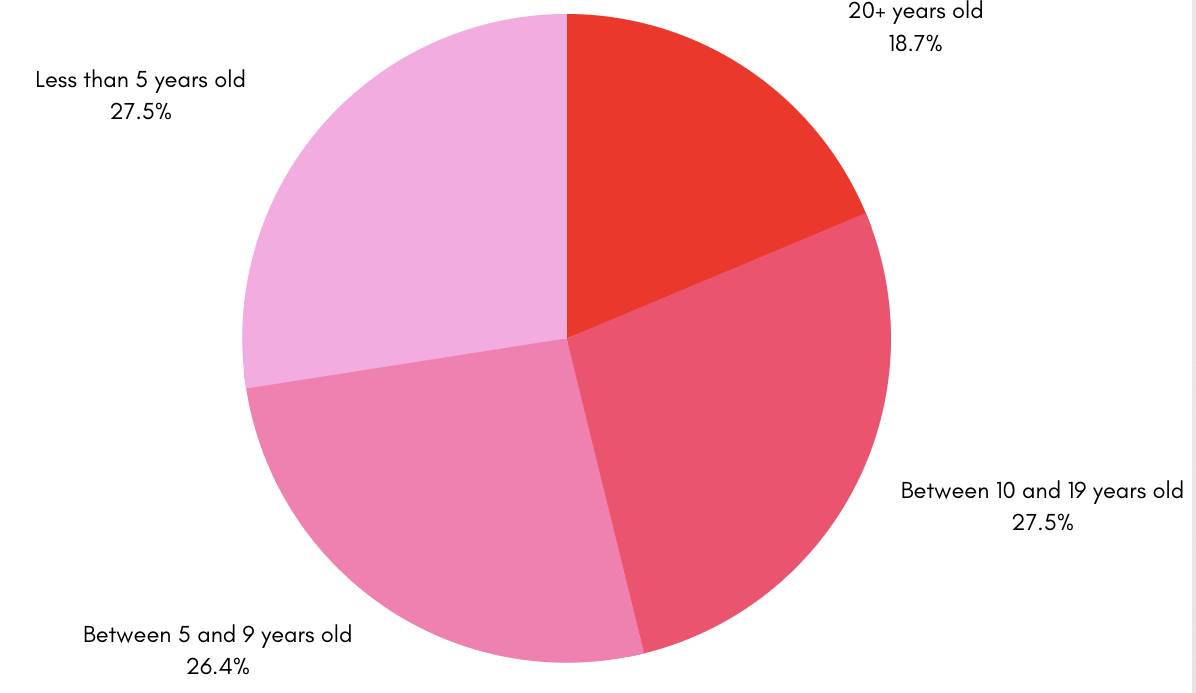
How old are Harrogate’s school buses?
“Not appropriate anymore”
These older buses pump out significantly higher levels of air pollution compared with newer models.
European Union emissions tests on buses made 20 years ago found they produce over 10 times as much nitrogen oxide (NOx) emissions than buses made in the last five years. This figure halves for buses made around 2011.
The Stray Ferret also observed some school buses outside St Aidans, Rossett, and Harrogate Grammar school with their engines idle, effectively creating concentrated arenas of air pollution as children end the school day.
University of Leeds climate scientist and Harrogate resident Professor Piers Forster told the Stray Ferret that the old school buses will be having a damaging impact on children’s lungs in Harrogate.
He said:
“That is the time when your lungs are developing. It’s not just kids on buses, either, but those who walk or cycle have to stand by these buses that are belting out diesel. It’s not really appropriate anymore.”
What damage can diesel fumes cause?
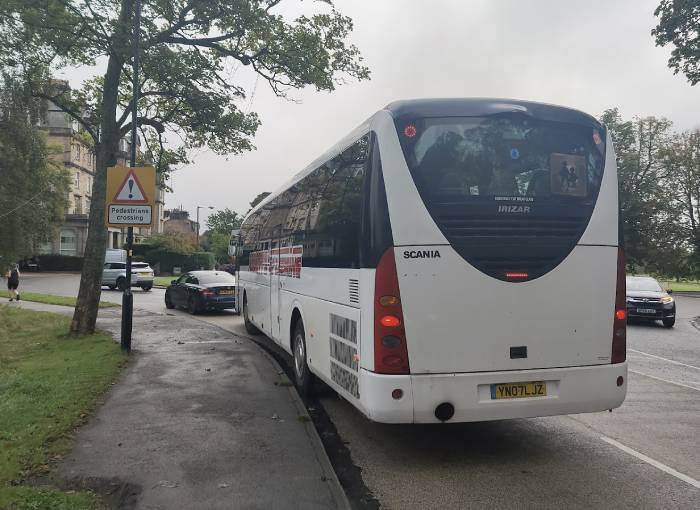
A 14-year-old Abbotts of Leeming school bus on the Prince of Wales roundabout
Knowledge about the harm diesel fumes can cause to children’s growing lungs has been known for decades.
Diesel buses pump out nitrogen oxide (NOx) emissions through their exhausts. Multiple studies have found it can cause reduced lung function in children, trigger asthma attacks and hospital admissions.
Diesel also produces particulate matter (PM2.5) particles which when breathed in can penetrate deep into the lungs and be absorbed into the bloodstream. It’s been linked with a myriad of health impacts for children, including asthma.
Read more:
- Green Shoots: Why Harrogate should be at the vanguard of tackling climate change
- Green Shoots: Harrogate district plumber swaps ‘dirty diesel’ for vegetable fat
In a landmark case in December 2020, a coroner said air pollution from diesel vehicles contributed to the death of nine-year-old Londoner Ella Kissi-Debrah due to her exposure to toxic exhaust fumes near her home by a busy road.
Sarah Hart is a parent of a child at Harrogate Grammar School who previously went to Western Primary School on Cold Bath Road. She told the Stray Ferret that her daughter suffers from a lung condition that she believes is exacerbated by air pollution from Harrogate’s school buses.
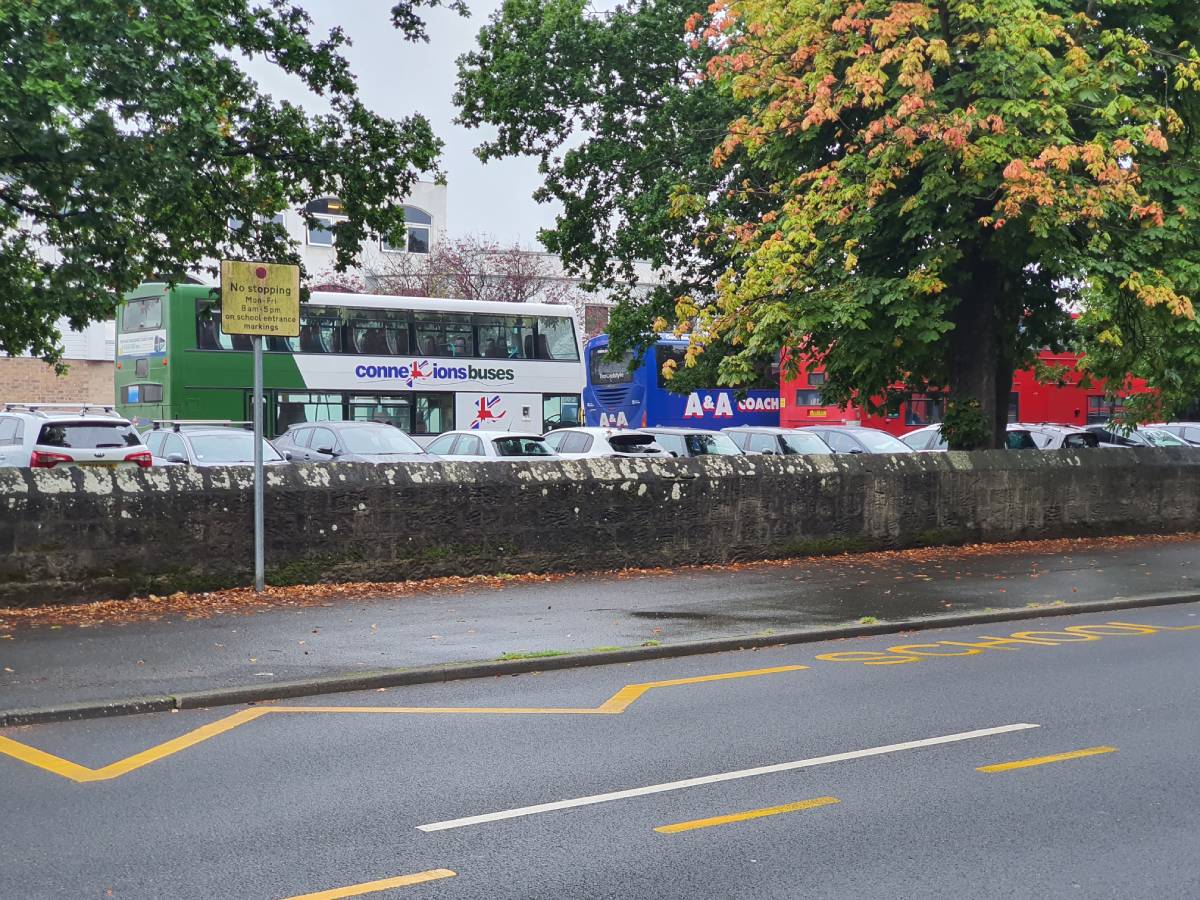
Buses outside St Aidan’s
She said:
“She found the experience of walking to Western really uncomfortable as she has issues with her lungs.
“The buses are really, really old. When they are stationary you can physically see the fumes.
“They should try and get cleaner buses.”
Jemima Hartshorn created a campaign group to tackle air pollution called Mums for Lungs. She told the Stray Ferret that it was “worrying” that so many of Harrogate’s buses are “very old” and use “very polluting diesel”.
She added:
“We really urge schools, authorities and bus companies to work together and electrify this bus fleet to ensure pollution levels across Yorkshire drop and health levels increase.”
“We need electric buses”
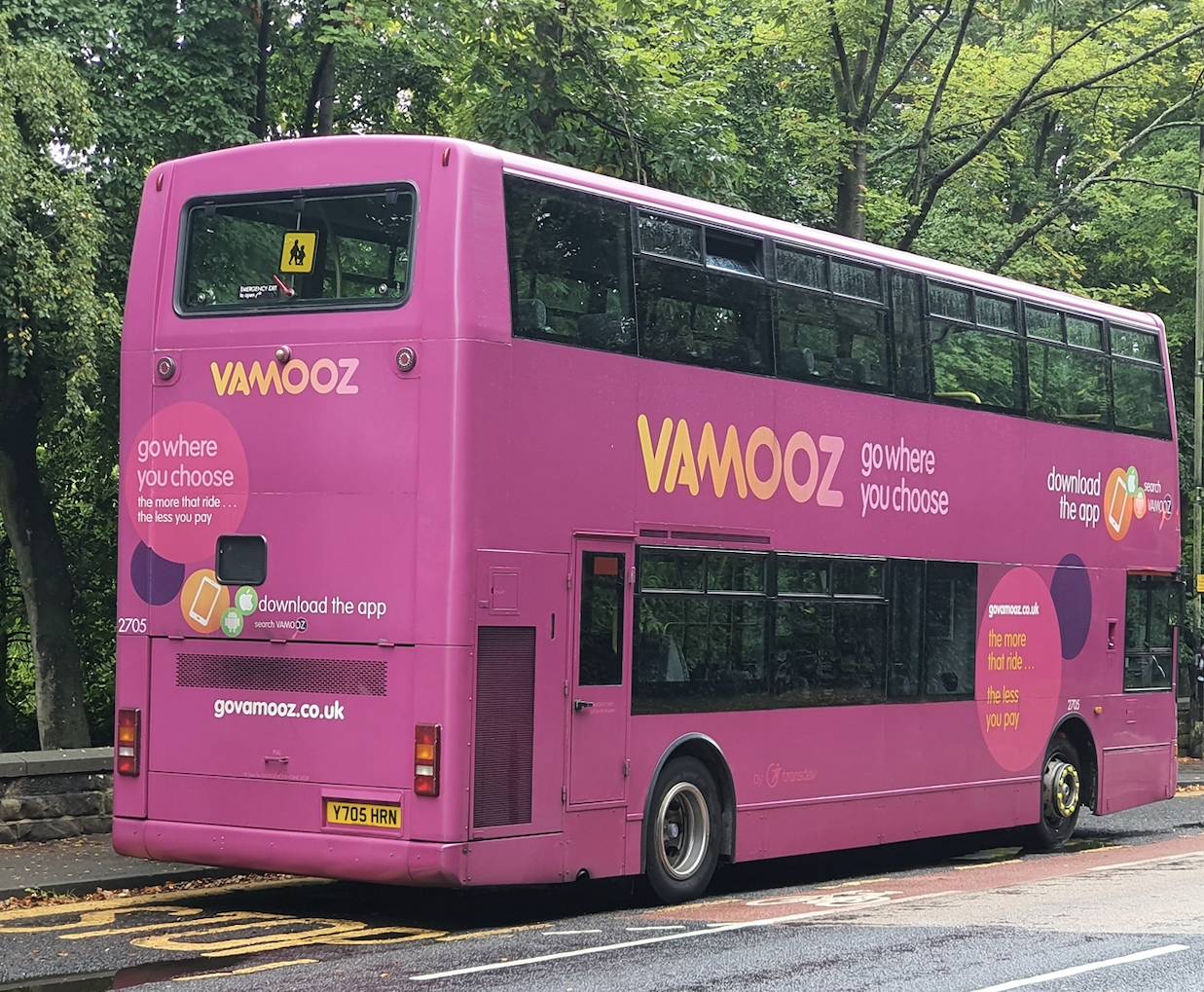
A 16-year-old Transdev bus on Hookstone Drive
Not only does air pollution have a potentially deadly impact on children’s lungs, but a 2019 US study also found it affects cognitive performance too.
It reported that children who went to school on diesel buses that had been retrofitted to make them cleaner achieved 10% better exam results at the end of the school year, particularly in English.
It also found that the children saw improvements in cardiovascular health, meaning cleaning up Harrogate’s school buses would have widespread benefits.
Prof Forster added:
“We certainly need a bus fleet that is ideally electric and kids biking and walking to school as much as possible, this is better than anything for both their health and their social development.”
Tomorrow we ask the council, schools and bus companies what they are doing to tackle air pollution on school buses.