
This story is sponsored by Harrogate College.
What does the term ‘T Levels’ mean to you? Work experience? A government initiative? Gobbledygook? If it’s the latter, you’re not alone. Even though most parents and carers of teenagers will have heard about T Levels, many will struggle to tell you what this technical qualification is about.
In this article, we get down to basics by answering the most common questions people ask about T Levels.
What is a T Level?
A T Level is a technical qualification that is the equivalent level as an A level. One T Level is the same size as three A levels due to the breadth and depth of learning it offers students in a specific area. A single T Level also provides the same amount of UCAS points as three A levels, providing students with another post-16 pathway to university.
T Levels vs A levels, which is better?
Neither. T Levels and A levels are both valid choices for post-GCSE study, they both require the same level of academic acumen. The crucial difference is that T Levels have a technical focus and include a work placement, whilst A levels are theoretical.
Whether studying a T Level is right for your child will depend on whether they want to focus on a specific subject in depth, or study a broader range of subject areas.
Can you progress to university with a T Level?
Yes, just like A levels, T Levels were designed as a route to higher education. The key thing to remember is that a single T Level provides the same amount of UCAS points as three A levels. This means that anyone who prefers to study a more hands-on course will still walk away with the right amount of points needed for entry to university.
Okay, so which universities accept T Levels?
You can find out which universities accept T Levels by checking the entry requirements on their website. Many universities now offer T Level applicants equal consideration on degree applications, including Russell Group institutions like the University of York, University of Warwick and King’s College London.
However, due to its technical nature, you may find that a university might accept a T Level as an entry qualification for one degree, but not another. For example, a student could apply for an undergraduate degree in environmental science, but not mathematics. Fortunately, colleges can advise your child further based on their chosen progression route.
How many subjects do you study on a T Level?
Students study one subject on a T Level. Although studying multiple subjects is helpful for those who are still making up their minds about the future, if your child already knows what they’d like to pursue, a T Level will allow them to specialise sooner.
This was the case for Claire, a student in one of Harrogate College’s 2022 cohorts. “When my tutor told me about the T Level in Digital and IT, I knew it would be perfect as tech has always been my passion. The T Level helped to expand my horizons as there were many aspects of IT I wasn’t aware of.”
Like Claire, being able to focus on and explore different aspects of a subject in detail can help 16 to 18 year olds to feel one step closer to their end goal, providing them with a headstart when it comes to building employability skills for their desired career or job role.
What subjects can you study on a T Level?
There are now 20 T Level subjects in total, but the subjects colleges choose to deliver depends on a couple of factors. The first is the local and regional industry demand for that subject, as well as the amount of tutors and employers available for the necessary teaching and work experience elements.
What are the T Levels at Harrogate College?
We offer students a choice of T Levels in Business, Engineering, Education and Childcare, Health, or Digital and IT. Students who successfully complete a T Level at Harrogate College will receive a nationally recognised qualification that readies them for higher education or employment.
Why does a T Level have a work experience element?
To provide students with real-world skills. Take a T Level in Childcare, for example. A T Level Education and Childcare student will spend the academic year familiarising themselves with the fundamentals of the sector – child development, safeguarding, behavioural management and so on. They will also spend one day a week, for 45 weeks, putting what they’ve learnt into practice on a compulsory work experience placement, usually in a nursery or early years setting. This combination of practical and theoretical teaching equips learners with hands-on skills and knowledge they can build upon, which is the hallmark of technical education.
Will T Levels eventually be scrapped because of the new Advanced British Standard?
No, the government’s recent announcement about a major reform of post-16 qualifications in England will see both T Levels and A levels merge into a single, new qualification. The hope is it will enable students to study a mix of technical and academic qualifications, providing better flexibility for future choices.
Are T Levels the same as BTECs?
T Levels and BTECs are two different qualifications. In fact, some might argue that the BTEC qualification is the predecessor of a T Level. 2024 will see thirty-eight BTECs discontinued where these subjects are now taught as T Levels.
The plus side is that T Levels feature a longer work experience period than BTECs (just over six weeks compared to the usual two to three weeks), allowing students more time to gain an insight into the working world.
What happens during a T Level work placement?
During their work experience, a student will be given tasks relating to technical areas in which they need to build experience. T Level work placements are hosted by employers, who will be made aware of each student’s objectives. This is so that they can ensure the student has access to the right type of work needed for each technical area.
I’m an employer, how can I host a T Level placement?
Students are assigned a designated employer by our Employee Engagement Officer. We contact all employers we work with during the spring term of each academic year. If being a T Level work experience host is something you would like to be considered for, please contact Susan.Roberts@harrogate.ac.uk to express your interest.
Ukrainian twin sisters in Harrogate excel in A levelsTwin sisters at Harrogate Ladies’ College are celebrating top A level grades today – from their home in Ukraine.
Diana and Sofiia Shypovych, from Cherkasy in Central Ukraine, achieved A*A*A* and A*A*A respectively.
The sisters arrived at Harrogate Ladies’ College to study as boarding pupils in September 2021. But just a few months later, Russia invaded Ukraine and the girls found themselves unable to return home to their parents.
Sofiia said she was delighted with her results:
“I am so happy about my results – and I am so grateful to my school for supporting me through the last two years. It was difficult being away from my family, but school actively promotes inclusion, diversity and being yourself. That really helped me.”
Diana added:
“University will be our next exciting chapter. Despite everything that has been happening in Ukraine, school has given me and my sister the confidence to mature into independent adults through the opportunities, challenges and freedoms it has offered. Living at school showed us the importance of contributing to the community and respecting our shared responsibilities.”
Following the invasion of their country, both sisters ran campaigns in Harrogate to fundraise for Ukrainians and helped Ukrainian families on the Homes for Ukraine scheme to settle into the community. They were also voted by their fellow pupils and teachers to be prefects at the school during their time in the sixth form.
Read more:
- Knaresborough man launches crowdfunder to send fire engine to Ukraine
- Harrogate Ladies’ College opens new theatre
- Support for plans to twin Knaresborough with town in Ukraine
Sylvia Brett, principal of Harrogate Ladies’ College, paid tribute to the sisters’ hard-working ethos and commitment to school life against the backdrop of war in their home country. She said:
“We’re incredibly proud of all of our pupils, but Sofiia and Diana deserve special recognition for the circumstances under which they’ve been studying for the last two years. Being here at the time of the outbreak of the war and knowing their family and friends were facing real dangers, was extraordinarily hard for the girls but they never lost focus on their studies or their optimism for the future.
“They are truly remarkable young women who always looked out for others in school and organised events such as the Ukraine Cultural Day to help us all understand and support their country.”
The sisters chose to return to Ukraine after finishing their exams this summer to await their results with their family and friends, despite ongoing security concerns. Cherkasy lies 200km south-east of Kyiv and the region is still frequently subjected to missile attack by Russia.
Speaking from Ukraine, the girls’ mother, Iana Shypovych, said she was thrilled by their results:
“When our then 16-year old daughters left Ukraine to study in Harrogate we were a little worried about how they would adapt to living so far away from home, but our concerns never came true. When the war broke out we were truly grateful that they were safe and being cared for. They were so warmly welcomed and supported by the school staff and the people of Harrogate.”
Harrogate Ladies’ College achieved 41% A*-A grades across the board – a 17% increase on the comparable figures from 2019.
Harrogate Grammar School awarded £50,000 to improve sixth form scienceHarrogate Grammar School has received a £50,000 grant from The Wolfson Foundation to improve the sixth form’s science facilities.
The grant-making charity, which focuses on supporting research and education projects, has awarded more than £2 million to organisations in Yorkshire and the Humber in its latest round of funding.
This is the second time the foundation has awarded funds to HGS’ science department.
Five years ago it issues a grant to the main school’s science laboratory facilities. This second award will be used to refurbish the biology lab, create an up-to-date space for students to conduct all practical elements of their studies and also provide a teacher demonstration area.
David Robson, assistant headteacher at HGS, said:
“I’m delighted that this award will aid the enhancement of our science facilities in sixth form, leading to a more engaging teaching environment. Flexible spaces will enable more effective delivery of the suite of science qualifications.”
Headteacher Neil Renton said:
“It is an honour to receive this funding, recognising our vision to create greater access to modern teaching spaces.
“The plans facilitate effective teaching of both theory and practical elements across the science qualifications”.
Read More:
- Some Harrogate Grammar School pupils to study at home during teacher strike
- 10 students at St Aidan’s and St John Fisher associated sixth form get Oxbridge offers
Open days crucial to choosing the right sixth form, says Harrogate Grammar School

This story is sponsored by Harrogate Grammar School.
Open days are crucial in helping students to determine their futures, according to the Director of a top Harrogate school’s Sixth Form.
Ben Twitchin, from Harrogate Grammar School, said the events allow prospective students the chance to make informed decisions.
He has offered his tips on what to ask and look out for at the open days.
He said:
“This is the first-time students have a really free choice in what they study, and this decision will help to determine their future.
“In order to do this in the most informed manner, it is really important they engage in open events. This is the best way for students to develop an understanding of the culture of a sixth form, and to find out crucial information about courses and facilities on offer. This helps to support them in making the right decision about their next steps.”
Whether you are a parent, carer or a student applying to Sixth Form there are several ways you can make the most of open events.
Mr Twitchin’s top tips on how to do this are:
- Do your research
Before attending open events, do your research and make a list of any questions you have, as well as a list of priorities that you are looking for in a Sixth Form. This will be useful if you talk with staff about your course and being prepared will help to ensure you make the most of the open event.
It is important that you are confident in your school choice. We are delighted to have been awarded an ‘outstanding’ judgement across all aspects of the school from Ofsted in March 2022, which reflects our consistently excellent academic provision over a number of years.
- Don’t be afraid to move
This year The Sixth Form at Harrogate Grammar School welcomed over 120 students who had previously attended different schools.
It is really common that students join us in the Sixth Form, they add to the vibrancy and diversity of the school. The Sixth Form provides a fresh start for all of our students, and students quickly feel settled within our community.
Transport doesn’t have to be a barrier either. The Sixth Form at Harrogate Grammar School is well serviced by public bus services and also offers bespoke bus services to help students travel to and from the school from the surrounding area.
- Check the results
When considering your post-16 options look for consistently excellent results rather than just one year. Harrogate Grammar School has achieved record breaking exam success with an average of 60 peer of A Level grades being A*- B over nine consecutive years.
- Look at the subjects on offer
As noted, Sixth Form is the first-time students have a true choice in what they are studying so it is important to look at the range on offer.
My three pieces of advice for future students are :
- Select a subject that you genuinely really enjoy.
- Select a subject that you are also good at because then you can make significant progress and develop at the higher level of study expected at A Level.”
- Make sure you select a subject that allows you to progress after Sixth Form to the next stage in your life.
- Look beyond the subjects
It is also important to consider what other opportunities a Sixth Form offers to help students develop and prepare for the next stage of their lives.
Are there active, student-led societies, leadership opportunities and a wide range of extra-curricular activities on offer?
No matter where your passion lies, whether it be in sport, art, drama, music or the academic side of school life, there is always something extra to take part in at Harrogate Grammar School.
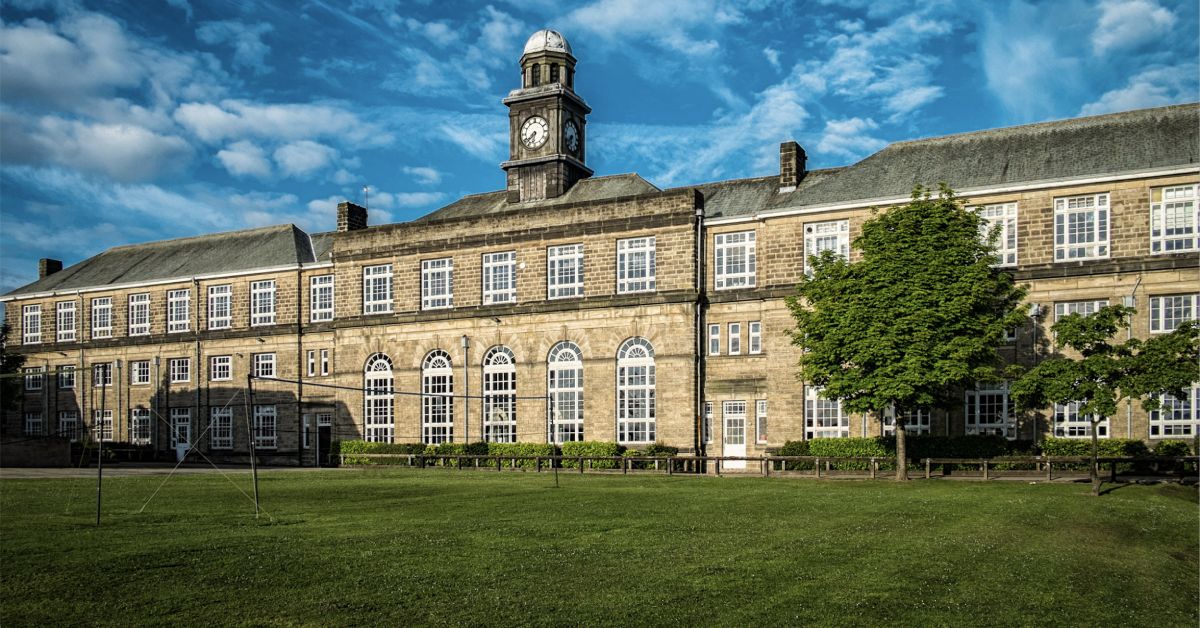
- Think about progression
What happens after Sixth Form is crucial, so check that there is a clear route to university, further education or apprenticeships. Find out if successful alumni visit to inspire current students and whether there is an active work-experience programme.
A key thing to also look out for is whether the Sixth Form has a Quality in Careers Standard Award, which recognises excellence in careers education, information and guidance. The Sixth Form at Harrogate Grammar School has this careers award and encourages excellence for all its students across 38 subjects, taught in first-class facilities.
- Look for strong pastoral and academic support
The step from GCSEs to A-Levels can sometimes be challenging. It is important to find out how students are supported in developing the strong independent study skills that are crucial to success in the Sixth Form.
A strong pastoral team and a clear commitment to student wellbeing are also essential elements to look out for when selecting your destination of study, especially for students who have had a disrupted school experience over the last two years.
Head student Harriet Winspear said:
“At Harrogate Grammar School, the staff really help to create a nurturing environment not only academically, but they also have a real care for the pastoral wellbeing of students and provide great guidance.”
Harrogate Grammar School holds the Carnegie School Mental Health Award, and the Sixth Form has an experienced and specialised team of staff in place to support students throughout their Sixth Form journey.
Harrogate Grammar School’s Sixth Form Open Evening is taking place on Thursday, November 17.
It will give potential students, parents and carers the opportunity to visit this ‘outstanding’ school, hear about the wide range of courses on offer from subject specialists, get an insight into the thriving culture, meet the students and experience the first-class facilities.
There will be two identical talks which will take place at 6.30pm and 7.20pm throughout both evenings from the Headteacher Neil Renton and Director of Sixth Form Ben Twitchin. The evenings are due to finish at 8.30pm.
To find out more information about the Sixth Form Open Evening on Thursday, November 17 call 01423 535235 or email hgs.sixthform@hgs.rklt.co.uk
Straight Talk: Life lessons from not getting the A level grades I wantedThis opinion column is written by Marilyn Stowe. Marilyn built the largest family law firm in the UK, which she ran from Harrogate. She sold her firm in 2017 to private equity left the law and is now a writer and speaker.
A level results are out. Across Harrogate and surrounding districts there are a high number of triumphant students. Hats off to them after two nightmare years. However, that might not be the case for every student, not accepted to their university or chosen course, wondering what to do next.
Do not despair! I doubt any student received the curt message I did from my sixth form tutor: “What are you going to do now?”
With poor results I lost my place to read law. It was my own fault. Why work hard? I was always a high achiever without much effort. On this occasion, I learned with a terrible shock. Hard work was required.
I finally obtained a place to read law by the skin of my teeth, at Leeds University, but to start a year later. I gratefully accepted the offer determined never to fail again.
I spent the year working at Boots in Leeds to earn some money, learning to type at night school and then working for my uncle, a criminal law specialist solicitor in Leeds.
I had my eyes opened to a world I had no idea existed. I typed letters to clients, and answered the phone, chatting to clients charged with offences that blew my mind, I went to prisons and met murderers and burglars, rapists and thieves. I met men and women with no chance in life from the get go. I spent a day listening to a woman on remand in prison, who described how she had murdered her baby in temper, repeatedly throwing it against the bedroom ceiling, as it went blind and slowly died. As she spoke, insects fell out of her long unkempt hair on a table between us.
I also assisted clients buying and selling houses, and even (under supervision) drafted their wills.
In a solicitor’s office I saw life in the raw and, as tough as it was, I loved it.
By the time I started university, I had a head start on the green students straight from school who had no idea what might be facing them once outside the cocoon called university. I knew I had found my future career and determined there would be no further slip ups. I flogged myself, then I went to law school to study for my finals, followed by a two year training contract with a solicitor specialising in corporate work, and finally I qualified. On my first day, proud as punch, I learned another hard lesson: no amount of studying can ever beat experience.
I was sent by a junior partner to apply for bail in a criminal case he knew he would lose and I was expendable. I had no clue what to say in front of a packed court of experienced criminal lawyers. All I could do was stand up, say in a terrified voice, “I am instructed to apply for bail” then sit down again, puce with embarrassment. Did it put me off? Short term it did. But law was my hard earned career and nothing was going to stop me. A couple of years later I found my own niche working in family law and never looked back. The stress never stopped but overall my career in law was worth the initial failure, embarrassment and sheer hard work.
So, if you have come up against a road block take heart. With enough determination you will always get there. Some of my colleagues never went to university and worked in law firms, studying part time. They too made it. Arguably they had the advantage. It was cheaper and they had experience of what they were reading about.
Read More:
- A Level results come in across district’s schools
- GCSE results reaction from Harrogate district schools
Ripon A-Level student who battled tumour aims to become a doctor
A Ripon student diagnosed with an ovarian tumour during her A-Levels has achieved the grades she needed to go to university and pursue her dream of becoming a doctor.
Amy Goodwin, who studied at Ripon Grammar School, missed several weeks of school and underwent surgery. Today she was awarded an A*, two As and a B in maths, biology, chemistry and physics.
She said staff at the Friarage Hospital in Northallerton had inspired her:
“I had such good doctors and nurses who looked after me well and put me at ease”.
Ms Goodwin had to wait nine weeks for confirmation her tumour was benign. Having made a good recovery, she is now looking forward to starting her course in medicine at the University of Sheffield in September.
She said her experience had given her new insight into her future career:
“It made me think about how doctors come across to patients and how they present information to them.
“I have always been interested in being a doctor, mainly because I want to be able to help people.”
Read more:
- Live: A-level results arrive in the Harrogate district
- Ripon police and fire station gets £1.2m upgrade
Meanwhile, fellow Ripon Grammar pupil Mena Scatchard will travel to the USA on a £250,000 sports scholarship after receiving an A* in geography and As in biology and chemistry.
Ms Scatchard is one of the fastest young middle-distance runners in the UK and will study liberal arts at the prestigious Ivy League university Princeton.
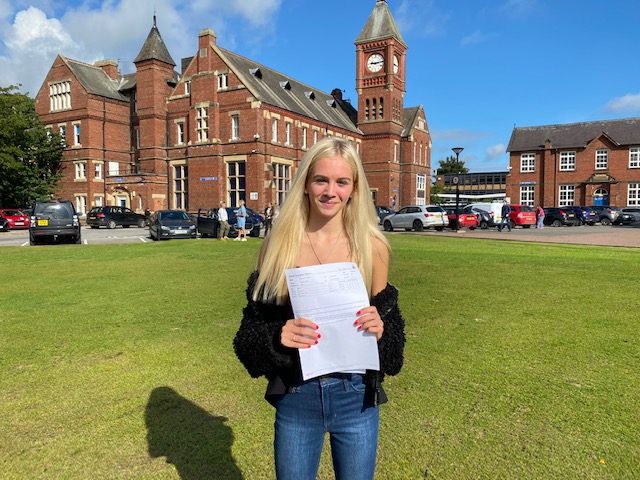
Middle distance runner Mena Scatchard, who is off to America.
Former Harrogate Ladies’ College student India Taylor, 19, was one of those caught up in the A level results fiasco in the summer. Throughout this year, she has learnt to expect the unexpected, as she tells the Stray Ferret.
Where do I start? This year has been one surprise after another.
I started the year coming back to school and hearing the usual “this is the time to start knuckling down and working hard” lecture that every student knows too well.
At this point, I still had my hopes set on studying Psychology with Criminology at Loughborough but that was about to change. Around mid-March, I chose to reapply to Leeds Beckett so I could stay close to home.
That same week was the first time I realised coronavirus would be sticking around. I went to two amazing gigs in Leeds but both bands were unsure whether they’d be able to finish their tour because of the spreading virus.
Within a week, my exams were cancelled and it was announced that schools would be closing on Friday. It all happened so quickly.
The atmosphere in my all-girls sixth form was dead. On our last day of school, we all sat in the common room and watched as Boris Johnson announced a full lockdown. We couldn’t believe what we were hearing: this was history in the making.
Read more:
- More than a third of all Harrogate A-level grades to be changed
- Video: students talk of uncertainty as schools close
During the next few months we all gave up hope and our online learning became pointless. By late May, that was it, we had officially finished our secondary education… It couldn’t have been any further form what we planned.
I took up running during the summer and focussed on looking for the positives in the world, even when it all seemed impossible.
Then came results day, a day I’d spent years working hard for. I opened my laptop the next morning and I saw B, C, E. I became another victim of the government’s algorithm.
I was distraught, but I channelled my energy into standing up for myself. I emailed my local MP as well as any media sources I could find contact details for.
I’m so proud of my generation for putting pressure on the government to make a U-turn just four days later. I now had BBB and was absolutely thrilled.
I deferred my place at Leeds Beckett as I knew I would miss out on so much due to the virus.
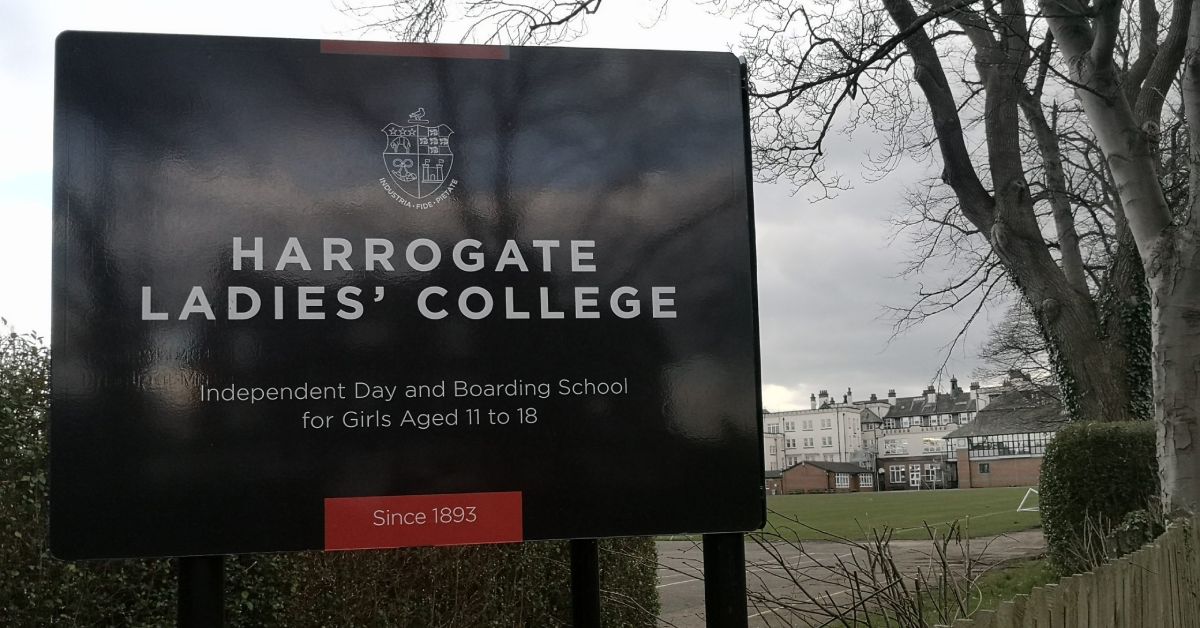
The final term at Harrogate Ladies’ College was not what anyone was expecting
Covid became even more real in September when I tested positive. It started with a tight chest and left me without my sense of smell for a month.
I wasn’t breaking any rules – I was simply babysitting a child for a working mother who needed to go to work.
In the new year, I am hoping to go to Munich to be an au pair for an Irish family, but as I am writing this, more and more travel bans are being introduced.
If 2020 has taught me anything, it’s that the entire world can change in just a matter of hours.