Commemorations marking the 700th anniversary of the Battle of Boroughbridge will end this month with the unveiling of a permanent battlefield trail.
The trail will guide people around sites where fighting took place in 1322.
The Battle of Boroughbridge was fought on March 20, 1322, between supporters of King Edward II and a rebellious group of barons led by Thomas, Earl of Lancaster. It ended in defeat for Lancaster, who was the king’s cousin and one of the wealthiest people in England.
A series of events have taken place this year marking the anniversary.
In March, Viscount Hereford, an ancestor of Humphrey de Bohun, who was killed in fighting across the original bridge over the River Ure, took part in a wreath laying ceremony at the Battle Cross in Aldborough.
Medieval combat by 3 Swords re-enactment group and medieval walks also took place on the anniversary weekend.
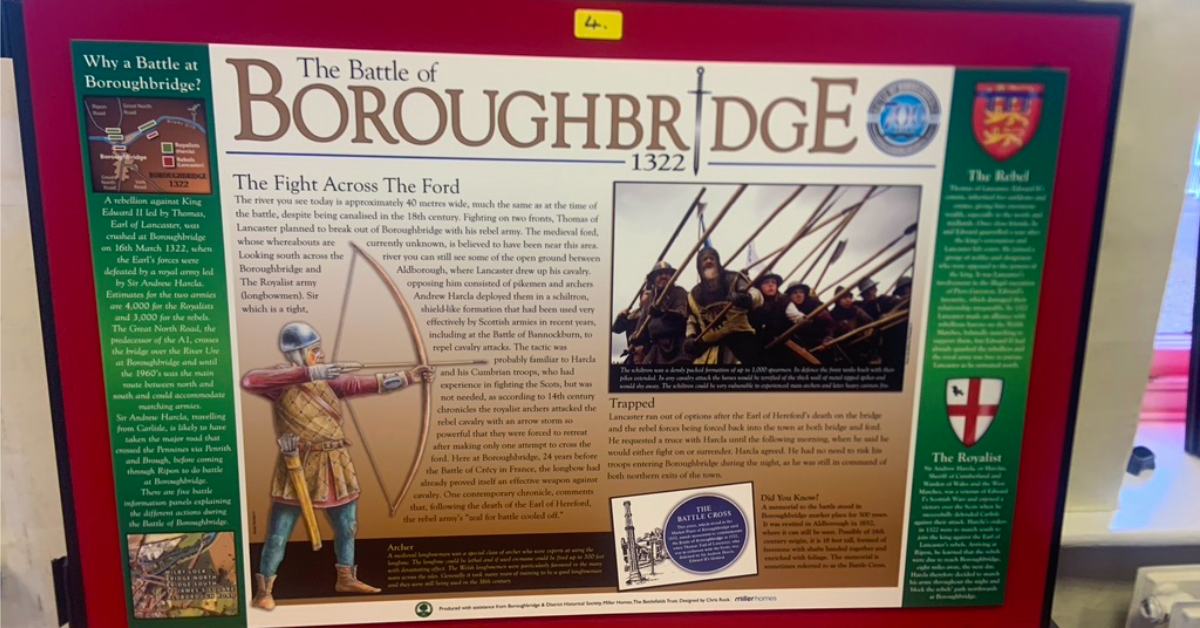
The trail will tell the story of Boroughbridge’s turbulent past.
On Saturday, August 13, 3 Swords, who make regular appearances at the Royal Armouries in Leeds, will return to give a demonstration of their arms and equipment at Hall Square in Boroughbridge at 10am before a parade to St James’s Square.
At 11am, Boroughbridge mayor Sean Hynes will unveil one of a series of display boards, which form the Battle of Boroughbridge interpretation trail.
The boards will be sited at either end of the bridge over the River Ure, on St James’s Square where Lancaster was captured after seeking sanctuary in the original church, on Aldborough Road and near the lock on the canal at Milby.
Read more:
- Medieval combat and walks mark 700th anniversary of Battle of Boroughbridge
- New battle trail to tell of Boroughbridge’s turbulent past
- Boroughbridge girls savour day to remember at Euro 2022 final
After the ceremony, Louise Whittaker, of Harrogate, a member of the Battlefields Trust, will lead a tour of the battlefield sites.
The 700th anniversary has been marked by Boroughbridge and District Historical Society, the Battlefields Trust and Boroughbridge Town Council, with funding from Miller Homes, which has built housing on part of the battlefield site.
Medieval artwork designed by the Yorkshire region chair of the Battlefields Trust, Chris Rock, has been incorporated into the display boards and an accompanying leaflet to provide a permanent battlefield trail around the town.
What was the Battle of Boroughbridge?
The king’s army was led by Sir Andrew de Harclay, who managed to prevent Lancaster’s forces fleeing north to Dunstanburgh Castle in Northumberland by blocking river crossings at the narrow, timber bridge and at a nearby ford.
After an overnight truce, during which Edward II’s army was reinforced, the royal troops entered Boroughbridge and arrested Lancaster. He was taken to his own castle at Pontefract and sentenced to death after a show trial. Lancaster was beheaded on March 22.
The rebellion had begun after Lancaster, a former member of the royal court, became disillusioned with Edward, whose reign was marked by military failure and constant internal disputes.
The Battle of Boroughbridge raged around a timber bridge crossing the River Ure and a ford, believed to be to the east of the present town, possibly between Milby and Aldborough.
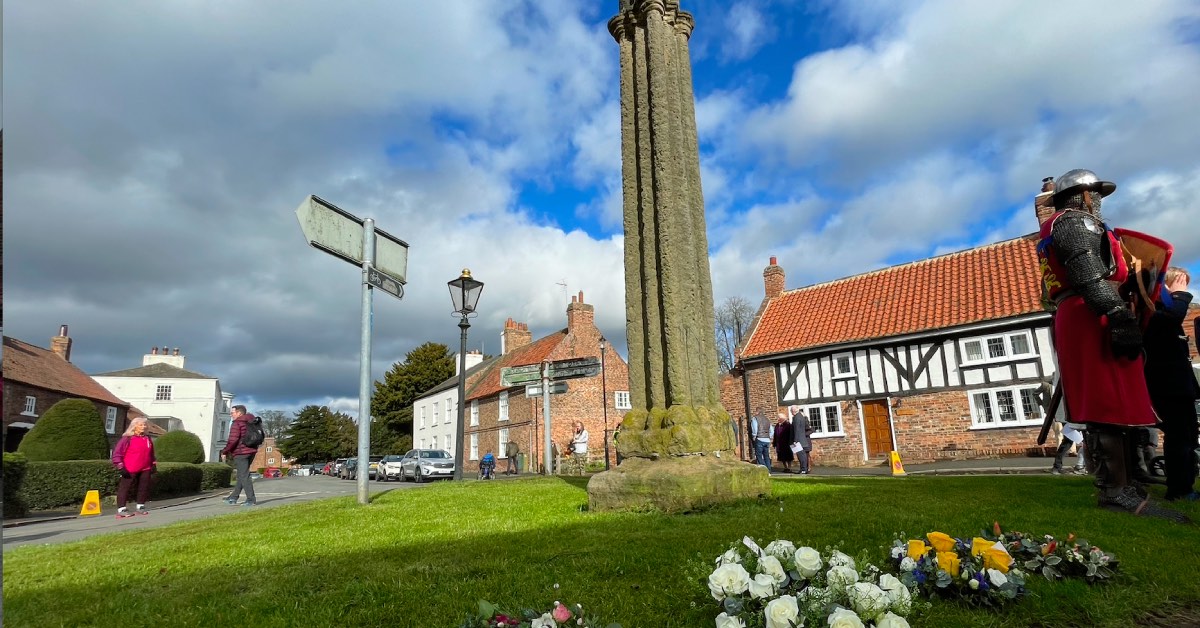
Wreath laying at the battle cross in Aldborough in March.
When Lancaster’s army, which probably amounted to a total of 3,000 men at arms with their followers, arrived at Boroughbridge, Harclay was already in possession of the bridge and the ford, which proved to be a strategic advantage.
The royal army numbered 4,000 men. At the ford its pikemen were deployed in a schiltron formation, a defensive shield, which they had learned from the Scots in the Scottish Wars. The king’s bowmen created mayhem against Lancaster’s cavalry.
The rebels divided into two columns, led by the Earl of Hereford and Roger de Clifford, of Skipton Castle, who attacked the bridge on foot, and Lancaster, who attempted a cavalry charge at the ford. Both ended in chaos.
One chronicle relates how Hereford was killed by a spearman, who thrust into him from below the bridge. Clifford also suffered serious injuries. Heavy archery fire from the bowmen forced Lancaster’s force to retreat before reaching the ford.
Lancaster negotiated an overnight truce with Harclay, but by morning many of the rebels had deserted. When the Sheriff of York arrived to reinforce the king’s army, Lancaster had to surrender.
He was taken to his home at Pontefract Castle where he was sentenced to death, originally to be hung drawn and quartered, but he was given a merciful beheading.
Thirty of Lancaster’s followers were executed in towns around England, including Roger de Clifford, Second Lord of Skipton, who was hung from Clifford’s Tower in York, which now bears his name.
Edward made Harclay the first Earl of Carlisle for his service at Boroughbridge. Only a year later Harclay was accused of treachery for making a peace treaty with Robert the Bruce without Royal approval.
Harclay was sentenced to death at a hearing in Carlisle and he was hung, drawn and quartered. His head was delivered to King Edward at Knaresborough Castle before being hung on London Bridge. Parts of his body were displayed in Carlisle, Newcastle, Bristol and Dover.
Plans revealed to mark 700th anniversary of Battle of Boroughbridge
Boroughbridge is set to mark the 700th anniversary of a historic battle in the town with a major programme of events.
Battlefield tours and medieval weapons demonstrations will form part of the commemorations for the Battle of Boroughbridge, which took place on March 16, 1322.
The battle, between Edward II and his cousin the Earl of Lancaster, who was in collusion with the Scots, featured several thousand soldiers. The majority supported the king.
A small army of retreating rebels under Lancaster’s control attempted to negotiate a truce but when this failed a one-sided battle resulted in the surrender and subsequent execution of Lancaster.
Thirty of Lancaster’s followers were executed, including Roger de Clifford, Second Lord of Skipton, who was hung from Clifford’s Tower in York, which now bears his name.
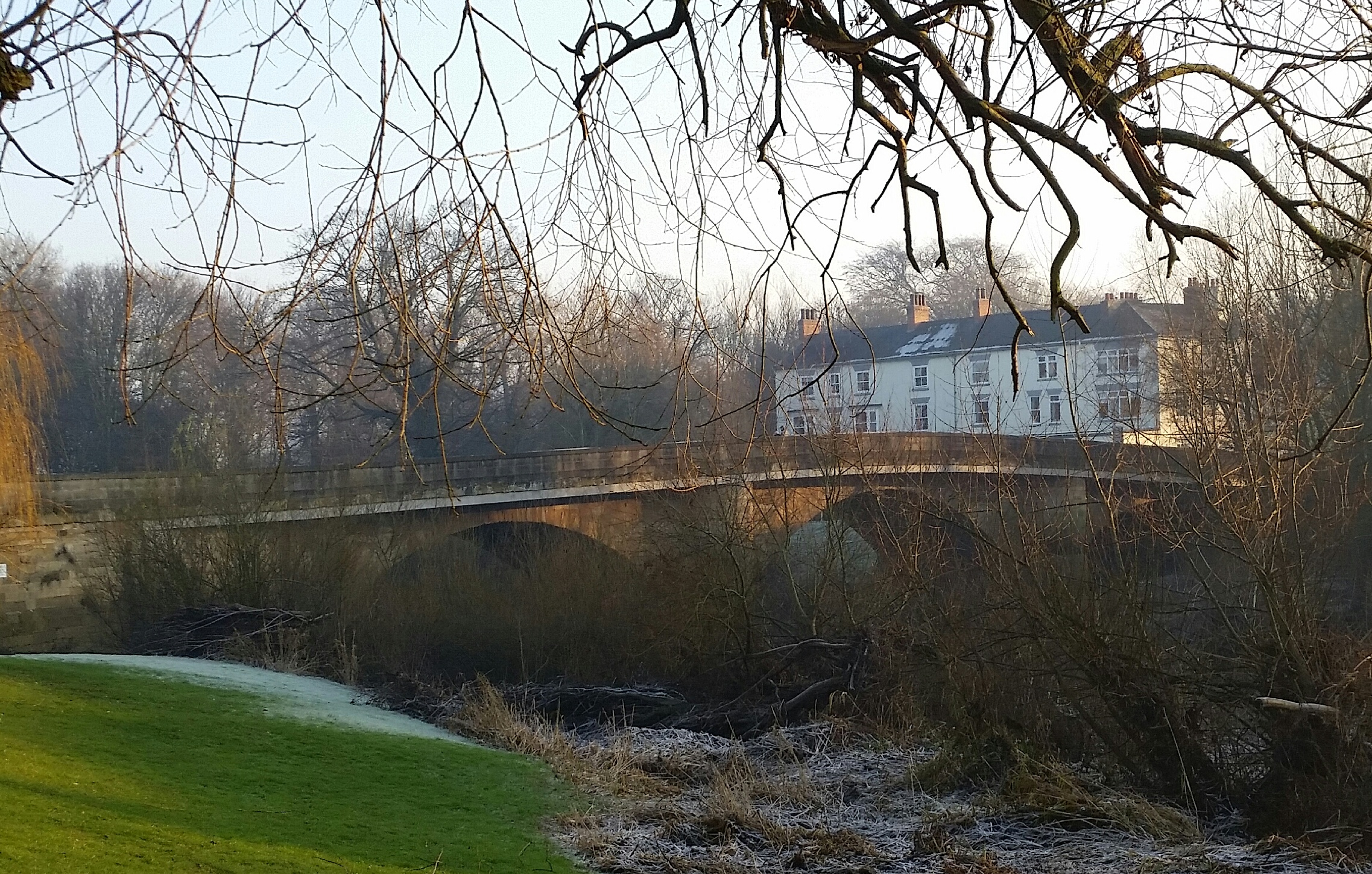
The bridge at Boroughbridge, which is believed to be more or less in the same place as the medieval one where part of the battle took place.
The battle raged around a timber bridge crossing the River Ure and a ford, believed to be to the east of the present town, possibly in the Milby area.
Read more:
- Boroughbridge care home turned into Graceland for Elvis-themed day
- Plan for 256 Boroughbridge homes recommended for approval
This year’s programme will begin with a wreath-laying ceremony at the battle cross in Aldborough at 9.30am on Saturday, March 12.
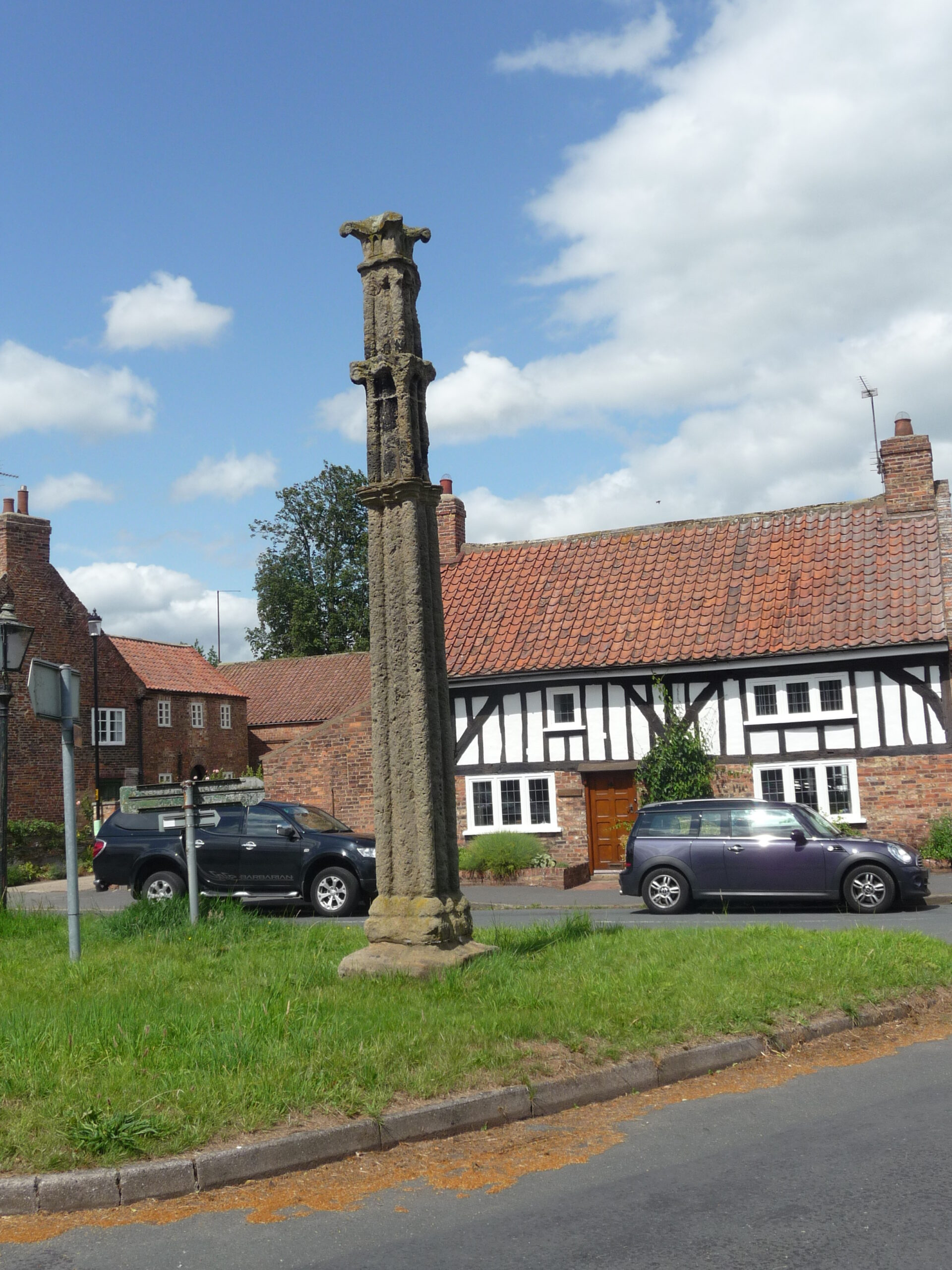
The battle cross at Aldborough
Later that day the 3 Swords Medieval Group will demonstrate weaponry skills and armour on the shared community space behind Boroughbridge car park.
The Battlefields Trust and Boroughbridge Historical Society will lead tours and battle exhibitions.
A new series of medieval artwork will be incorporated into display boards and leaflets for a permanent battlefield trail.
Further commemorative events to mark the anniversary will take place throughout the year.
Did you know that the Stray Ferret has teamed up with Harrogate Historian Malcolm Neesam to produce audio walking tours of Harrogate? The walks are sponsored by the Harrogate Business Improvement District (BID) and take you back to the Golden Age of the Harrogate Spa and a walk through the Commercial Heart of Harrogate.
Why not take a walk back in time and learn about Harrogate’s glorious past.. They’re easy to do and a great day out. For more information click here.