With three linked heritage attractions that bring thousands of visitors a year to Ripon, the city’s museum trust is looking to the future by building on a picture of the past that has increasing relevance to today’s society.
Having celebrated its 40th anniversary last month, Ripon Museum Trust (RMT) continues to develop its activities through community engagement and a volunteer programme that enables the museums to create a living history experience.
With almost £100,000 of Heritage Lottery money, RMT is assembling the team of professionals required to draw up a bid, seeking further funding that would enable it to open up parts of the Workhouse Museum, never before seen by visitors.
RMT director Helen Thornton told the Stray Ferret:
“If we are successful, we will be able to provide access to the women’s and men’s dormitory areas on the upper floors of the east and west wings of the master’s accommodation.
“Our plan also includes installation of a lift, that would increase accessibility for people in wheelchairs and families with young children.”
She added:
“We are keen to tell the full story of the lives of previous inmates, which has particular relevance to today and the financial difficulties that are faced by many.”
Echoes from the past
The current cost of living crisis, which is putting more families and individuals into poverty and reliance on charities, has echoes that go back to 1776, when the original Ripon Union Workhouse opened in Allhallowgate, prior to construction of the Victorian establishment on the site with its 1854 dateline set in stone.
The former hospital wing within the complex is home to Community House, a social enterprise which, among other vital services, provides food support through a foodbank to an ever-growing number of users.
Side by side, the buildings in the workhouse grounds exemplify the fact that history can and does repeat itself.
Some 246 years ago it opened its doors to men, women and children caught in the poverty trap and here in 2022, many families are facing the modern-day equivalent, through crippling debt, much of it caused by increasing gas and electricity charges.

RMT chair Richard Taylor at the Prison & Police Museum
A unique offer
Ripon Museum Trust has a unique offering, by virtue of the fact that the Workhouse is the most complete museum of its kind in the UK and the only one whose entire exhibit is dedicated to focusing on the lives and experiences of the destitute and downtrodden of former generations.
Through a trail that also takes in the Prison & Police and Courthouse museums, visitors can follow the journey from poorhouse to punishment cell as seen through the eyes of those whose impoverishment put their lives into a desperate downward spiral.
Richard Taylor, who has chaired the trust for 28 years, said:
“It’s a powerful story put into context through items that can be seen at the three museums.
“In liaison with the community and our volunteers, we have developed an exhibition, which runs until November 27, called Ripon Museums in 40 Objects.
“It has been designed to provide an insight into the hard times faced by former citizens unfortunate enough to find themselves in any of these establishments.”

These children were able to find out what it was like to face a magistrate before the courthouse became a museum
The blue lamp outside the Prison & Police Museum is one object not included in the list, but has special relevance to Mr Taylor.
He said:
“The P&P as we call it, was the first museum operated by the trust and I was delighted when my suggestion of adding the lamp was taken up many years ago.
“It has acted as a kind of guiding light directing visitors to the building ever since.
“We are currently looking for people to join our board of trustees and would like to hear from anybody who feels they can play a part in helping the trust to plan for its next 40 years.”
On April 24 1982, some 300 million people from 30 countries watched the Eurovision Song Contest in Harrogate.
It remains perhaps the biggest occasion in the town’s history but strangely, you’ll struggle to find any evidence today that it ever took place.
There’s no plaque, no museum exhibition, no statue. Visitors think you’re winding them up when you point to Harrogate Convention Centre and say it hosted the event associated with Abba, Lulu, Terry Wogan and the dreaded ‘nul points’.
But it happened and as the 40th anniversary looms, we have compiled a two-part feature based on the memories of three people who were closely involved on the day, starting today with BBC presenter Jan Leeming.
At Eurovision, whichever country wins gets to host the event the following year so Bucks Fizz’s dress-tearing routine in 1981 triggered a search to find a venue. It would be the fifth time the UK had hosted the event. Three of the previous occasions were in London and one — famously in 1974 when Abba won — in Brighton. Since 1982, the UK has only won Eurovision in 1997.
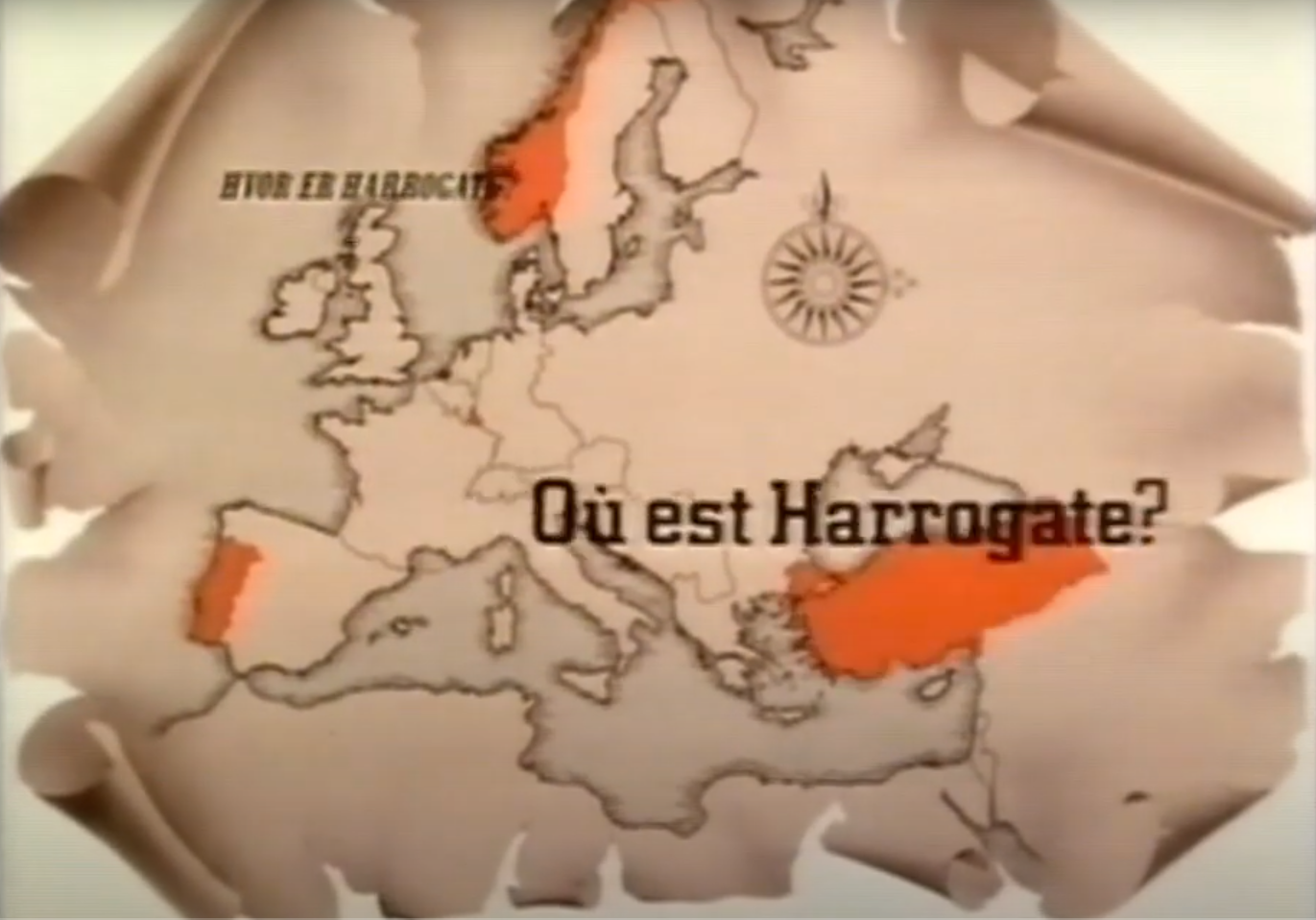
The opening sequence of the BBC coverage answered the question ‘Where is Harrogate?’.
Tomorrow’s article will look in more detail about why Harrogate was chosen.
But the decision to select a small, relatively unknown town prompted the BBC to begin its more than two-hour live broadcast, which can be viewed here, with a five-minute sequence enlightening viewers to the joys of places like the Stray and the Drum and Monkey.
The phrase ‘Where is Harrogate?’ was emblazoned across the screen in each of the languages of the countries taking part and was followed by a montage of scenes depicting Harrogate as some kind of middle England utopia full of beautiful people, elegant shops and idyllic countryside.
The sequence ended with smiling couples stepping out of limousines at the convention centre on the night of the big event to see if the British pop duo Bardo could win. They couldn’t, eventually fading to seventh behind Nicole, whose song A Little Peace became West Germany’s first ever success. Here are the memories from the woman who held the night together.
Jan Leeming: ‘I was thrilled, flattered — and very worried!’
Speaking to the Stray Ferret, Jan Leeming recalls:
“My agent rang up and said ‘the BBC would like you to present Eurovision’. I was thrilled, flattered and very worried because Katie Boyle had presented it previously and she was fluent in French. Back then the presenter had to speak in English and French. I am an actress and, apparently, I have a good French accent but I am not fluent.
I was told I’d got the job just as my husband and I were going on holiday to Hong Kong so I took the script in my suitcase and learned it while we were away because the camera at the event would be too far away to read the autocue.
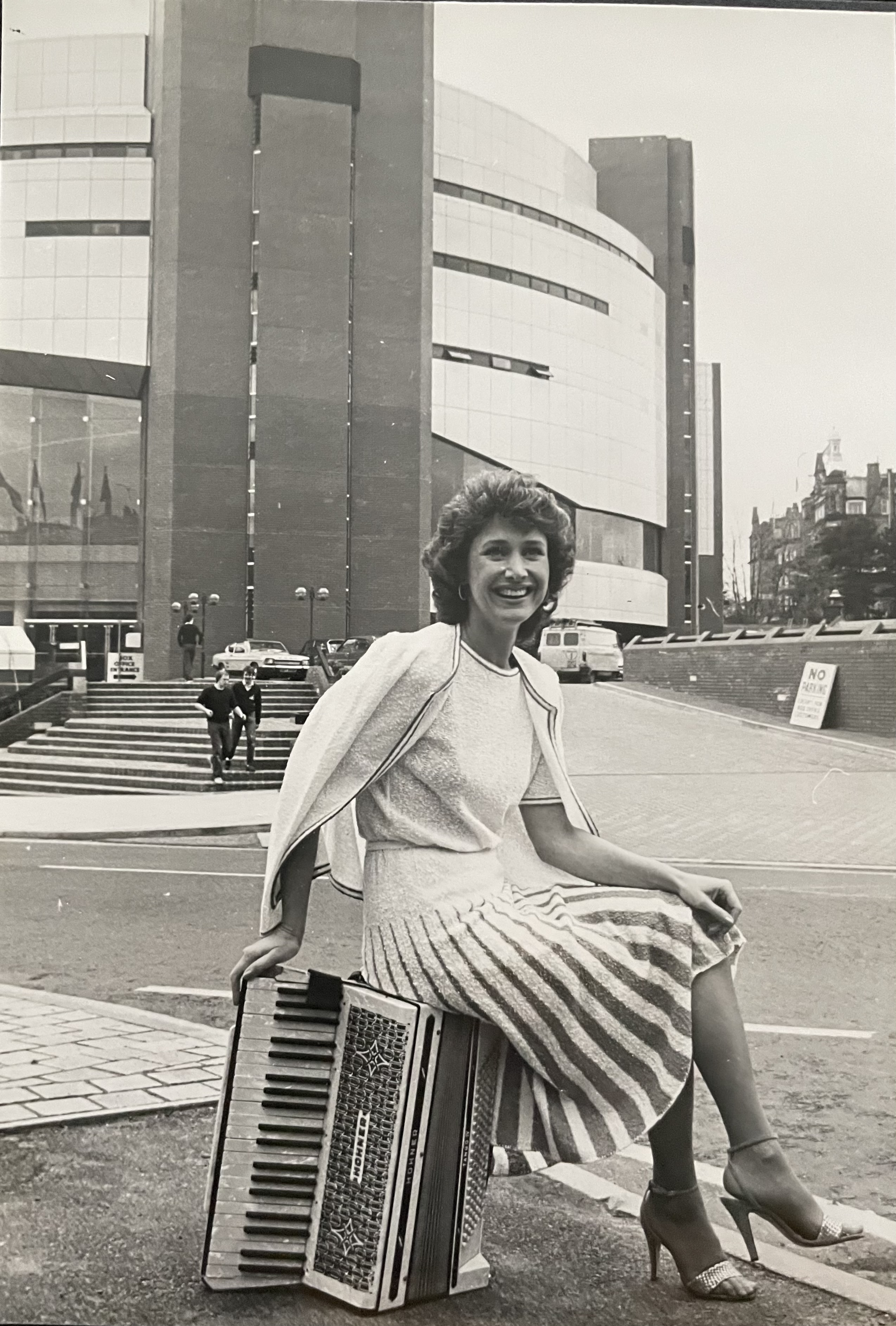
Sitting on an accordion outside the convention centre. Pic courtesy of Jan Leeming
I think I arrived in Harrogate a day, maybe two, in advance. There was only one proper rehearsal so we didn’t have much time. When I wasn’t working I was mainly ensconced in a hotel — I can’t remember which one — but I did get a flavour of Harrogate because they took all the contestants around town to do some filming. My best and oldest friend lives in Leeds and I have been to Harrogate with her several times since. It’s a really beautiful town.
Eurovision was the kind of thing the BBC did very well in those days. It was a huge production, with Michael Hurll as overall director. There were 18 countries taking part and 30 countries watching. Every country took their feed from the BBC and had people working on booths at the convention centre. Terry Wogan was working in one of the booths but our paths didn’t cross.
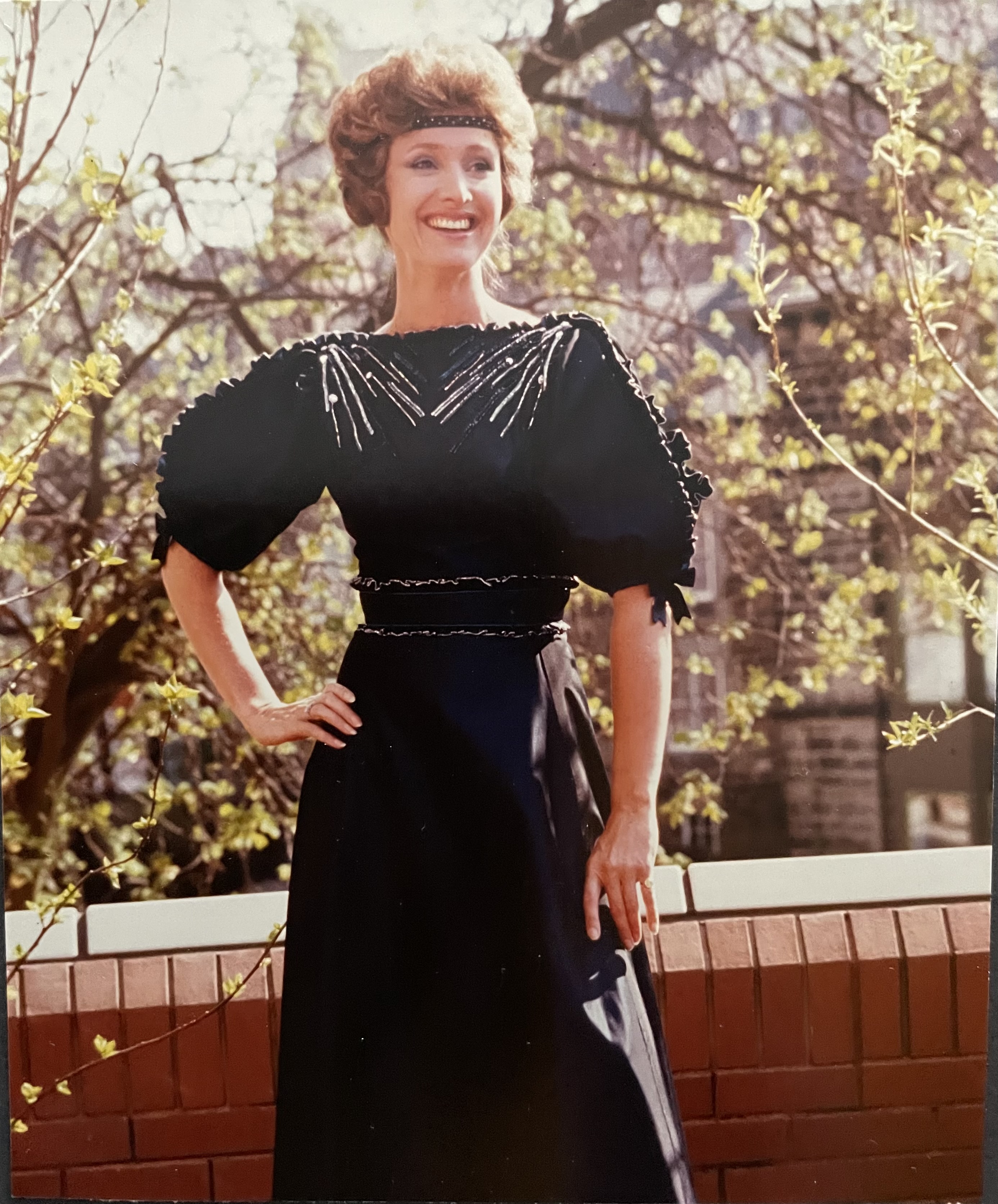
Jan in the dress she didn’t choose to wear. Pic courtesy of Jan Leeming
All 18 countries’ songs were accompanied by the BBC Radio Orchestra. The orchestra was led by Ronnie Hazlehurst but each country brought out their own conductor for their performance.
It was the only time the BBC ever paid for my wardrobe. I had to pay for the clothes I wore when I was reading the news and when I was representing the BBC at evening events. One of my favourite designers was Gina Fratini and I thought it was a wonderful opportunity to wear one of her dresses but the BBC said it would have been too much like an advert for her and I could have a dress made in-house instead. It was a very nice dress but not one I would have chosen, so it was a bit of a sore point. I wouldn’t have minded if the BBC had always paid for my clothes!
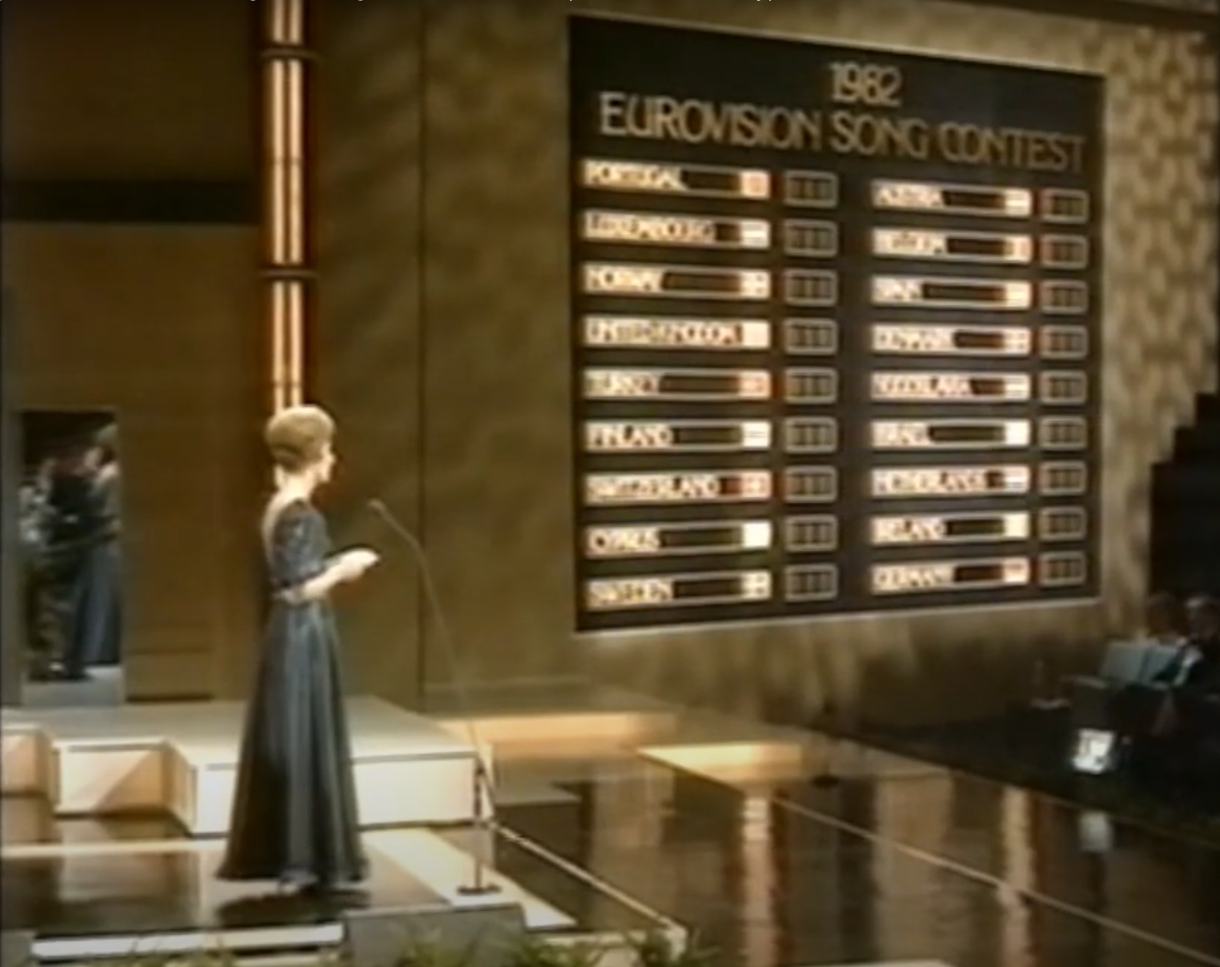
Looking up at the scoreboard.
I was paid £1,000 to present Eurovision. My salary when I went from radio to TV was £10,500 and then it gradually increased over several years. In 1982 I was earning about £13,000. So to be paid about £1,000 to present Eurovision was fantastic. In those days men were paid far more than women and we had to put up with it. As one person told me when I remonstrated — “if you don’t like it, Miss Leeming, there’s the door”.
My nerves were awful when I walked out at the start of the show. I do remember writing in my diary that I would have given anything for a train ticket home. Most actors and presenters tell you nerves never leave you and frankly, they’re what enhance your performance.
It turned out to be a wonderful occasion. I don’t remember much about the show but I remember the party afterwards because the Spanish guitarist asked me to dance. He tossed me around the floor and then wrote on my invitation to the party ‘mi casa, su casa’ (my house is your house) — and I never saw him again! I kept that invitation until a few years ago.
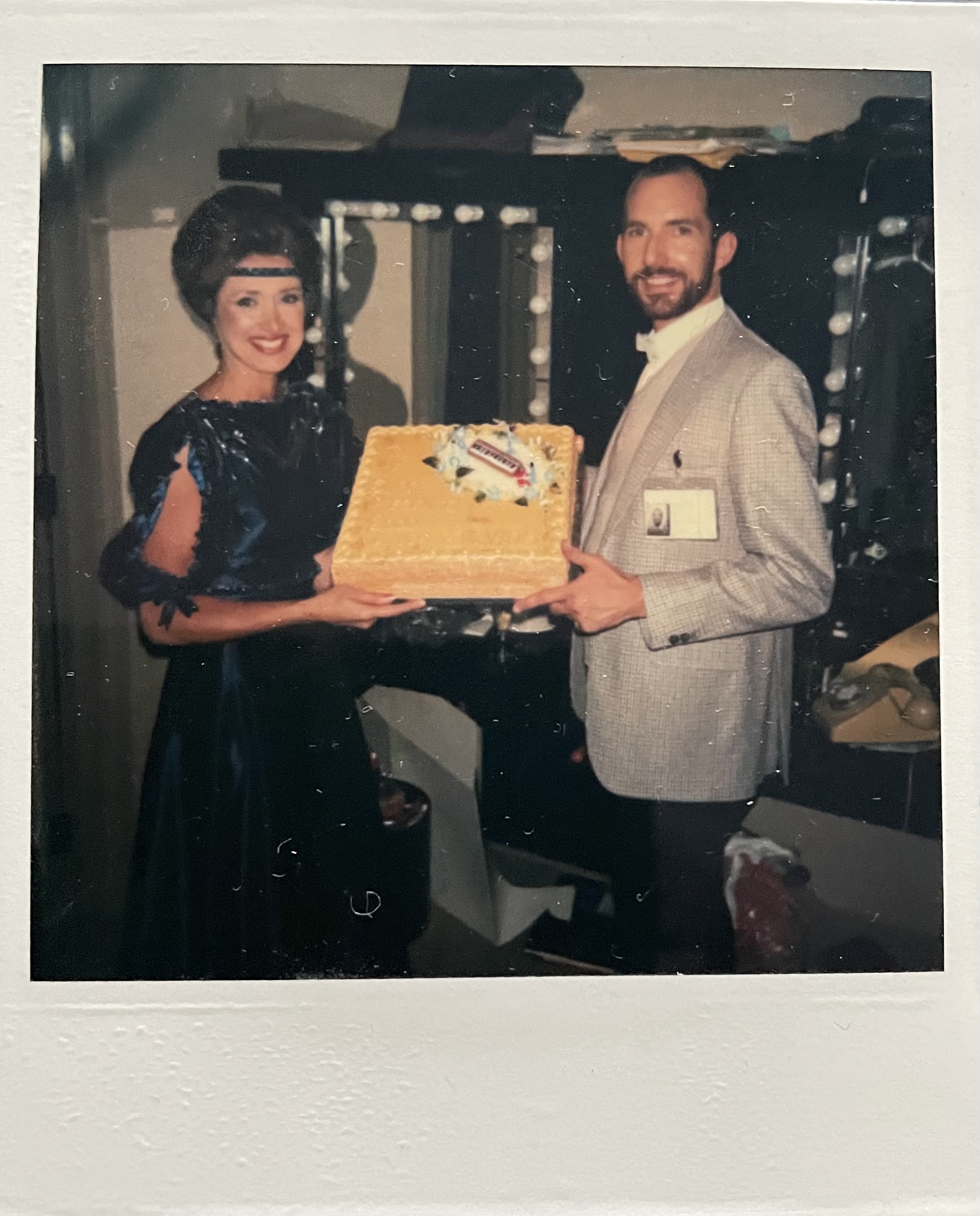
The cake sent by Silvio’s. Pic courtesy of Jan Leeming
There was a business in Harrogate called Silvio’s and it sent me the most beautiful cake, which obviously was shared out amongst the crew. But I didn’t stay long afterwards. I had a husband and a son to get home to.
The UK didn’t host Eurovision again for years because we didn’t win it again until 1997 and the winners got to host it the following year. Then in 2003 we got ‘nul points’.
I wouldn’t have chosen the winning song. I was very surprised that it won. It was called A Little Peace and it was sung by a German girl called Nicole who went on to have a long career, in fact I think she’s still going. But there was more variety and individuality to the songs then. They all seem to be written to the same format now. Everybody copies everyone else. But perhaps I’m only saying that because I’m an old lady now!
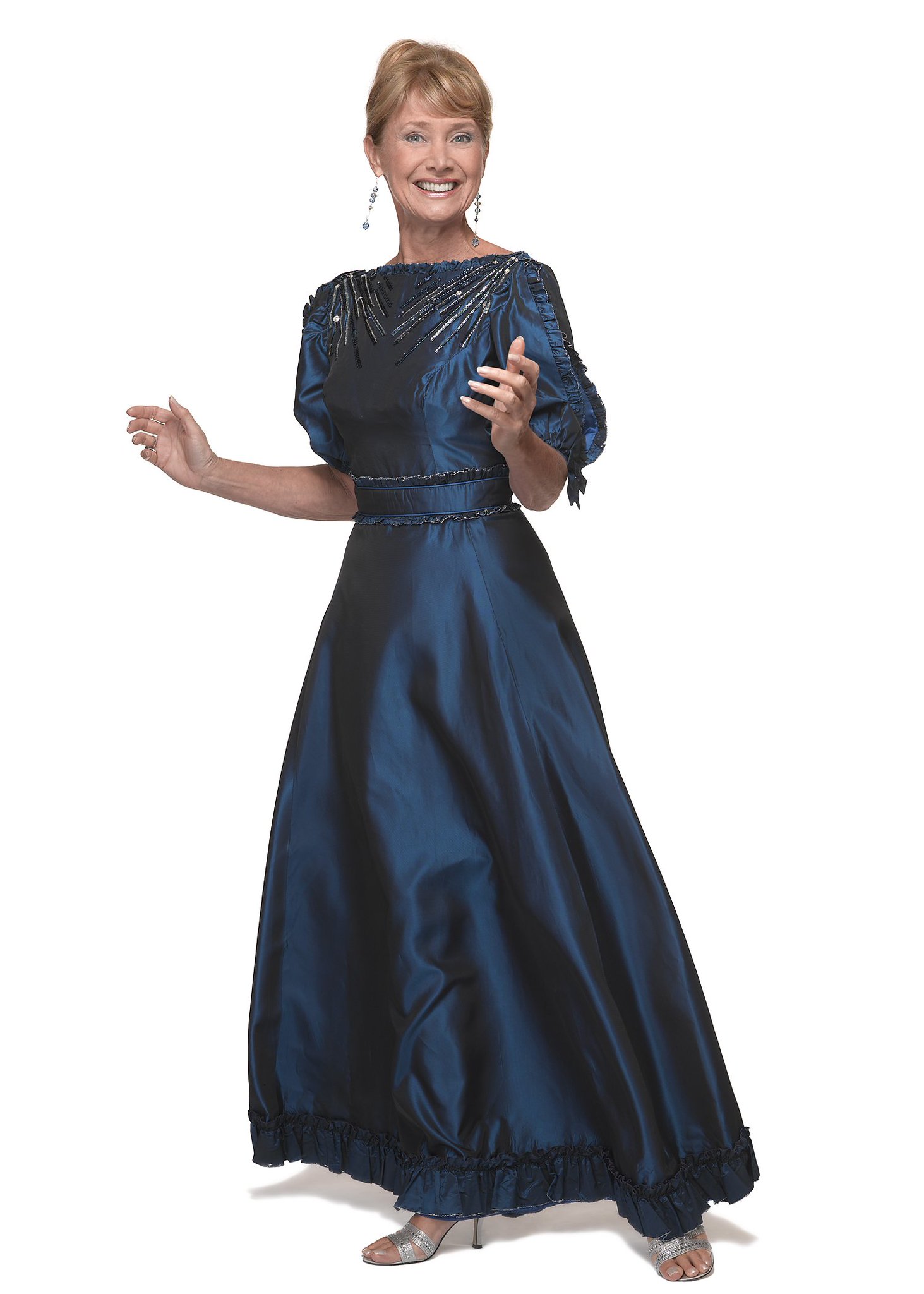
Wearing her Eurovision dress shortly before it was auctioned. Pic courtesy of Jan Leeming
The BBC gave me the Eurovision dress and I kept it for years, waiting to find it an appropriate home. Eventually I gave it to Celebrity Cash in the Attic to be sold by auction in 2014 because I wanted to promote the male testicular cancer charity Orchid. It was auctioned in Chiswick and went for £250.
Prior to 1982 the UK had won Eurovision five times. Since 1982 we have only won it once. Terry Wogan sort of made fun of it and I don’t think the English take it seriously enough. Sweden apparently runs six weeks of heats. Terry called it the Euro Yawn or the Euro Bore but back then it was watched by over 300m people. I looked up what it gets these days and now with all the hype it only gets 100m.
Mind you there wasn’t that much telly around back then. Now you have 360 channels and nothing to watch. Everything was a bit different in the 1980s. It was before the cult of celebrity and social media. I don’t seem to recall it having all the razzmatazz of Eurovisions today.
Eurovision wasn’t quite the pinnacle of my career: the pinnacle was a documentary I made after five years of research into a free French pilot called Rene Mouchotte whose name is on the Battle of Britain memorial. You can watch it here. That was the biggest achievement of my career. But Eurovision was very near the pinnacle. It was an absolute honour and privilege to present it.
Jan Leeming’s new podcast Addicted to Love is now available on Spotify, iTunes etc. Further information is available here or on Twitter @Jan_Leeming.
Ripon Farm Services to stage New Year Show next week
Ripon Farm Services is set to celebrate its 40th anniversary with the return of its annual show next week.
The New Year Show will be held over two days at the Great Yorkshire Showground in Harrogate on January 19 and 20.
The show, which is one of the key events on the northern agricultural calendar, will feature the largest combine harvester in Europe and the new John Deere 6R tractor.
More than 5,000 people are expected to attend.
The event was cancelled last year due to the coronavirus pandemic.
There will be some measures in place to prevent the spread of the virus, including a requirement for proof of full vaccination together with negative lateral flow tests.
Richard Simpson, commercial director of Ripon Farm Services, said the team had thought long and hard about whether to go ahead with the show. He said:
“In the end we believe the farming community needs and deserves our support.
“Farmers can’t cancel lambing time, they can’t cancel milking or cancel harvest, they have to carry on, no matter what.
“The nation relies on them. So it would be unfair of us to let farmers down.
“After last year’s cancellation, which was unavoidable, we are delighted to be back with one of the very finest shows we have ever held.”
Read more:
- Ripon MP ‘confident’ covid tests supply is improving after complaints
- Andrew Lupton, sales director of Ripon firm Econ, dies suddenly
- Ripon councillors call for Harrogate to return assets
Dan Robinson, who is heading up the preparations for the show, added:
“Apart from those two headline machines, we will be showcasing everything we do, including a huge range of used equipment which will be available to buy.
“This is the very best opportunity to see all the very latest and best farming machinery in one single location.
“The show is housed in the warm and dry Yorkshire Events Centre at the Great Yorkshire Showground and there is no better place to see all that we offer.
“Our specialists across all sectors will be available to answer any questions during the two days, and there will be seminars and presentations
“So the event is ultimately a one-stop shop for farmers across the north of England.”