14
Jul
Future of policing depends on AI technology, says North Yorkshire Police chief constable

The chief constable of North Yorkshire Police, Tim Forber, says the force must adopt new artificial intelligence technology, because “the future of policing depends on it”.
CC Forber was speaking yesterday (July 13) during an online public meeting chaired by Jo Coles, the York and North Yorkshire deputy mayor for police, fire and crime.
In a session concerning the use of AI and live facial recognition, CC Forber said the technology offered two main advantages: a reduction in the administrative burden and increased efficiency in the allocation of resources.
He said:
This technology can consume an amount of data that no analyst has ever been able to do, and actually gives us much greater predictive analysis around offenders, victims and locations.
It should in the fullness of time allow us to deploy resources in a precision-like manner that we’ve never been able to do before.
Providing that we do it in a transparent, accountable, lawful way, we must take advantage of this technology. The future of policing depends on it – because there’s not a huge pot of money coming in for more people to deal with more and more demand.
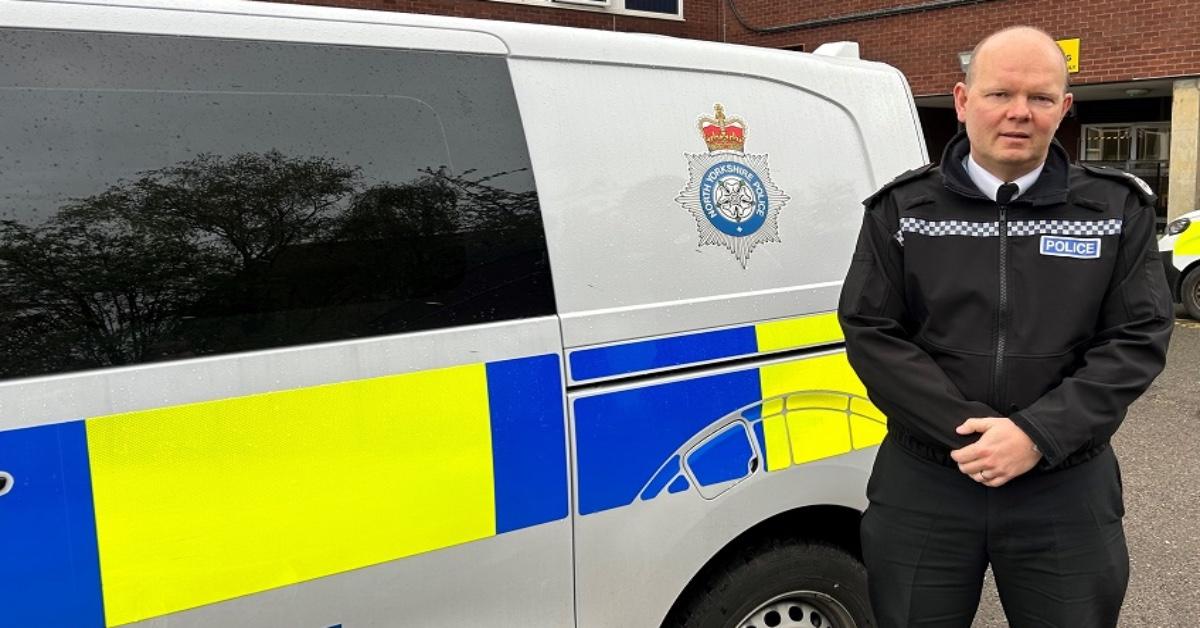
Tim Forber, chief constable of North Yorkshire Police.
North Yorkshire Police announced at the beginning of April that it was to start using LFR technology, which scans people's faces as they pass and compares them to a watchlist to find matches.
Its use is controversial, as it raises the prospect of mass surveillance in town and city centres and at other busy places, such as concerts and sporting events.
The civil rights group Liberty says parking police vans in town centres to scan the faces of thousands of people violates human rights and reinforces discrimination.
Because of this, during yesterday’s online meeting Ms Coles asked:
How will we ensure that transparency and accountability will be maintained in the North Yorkshire context?
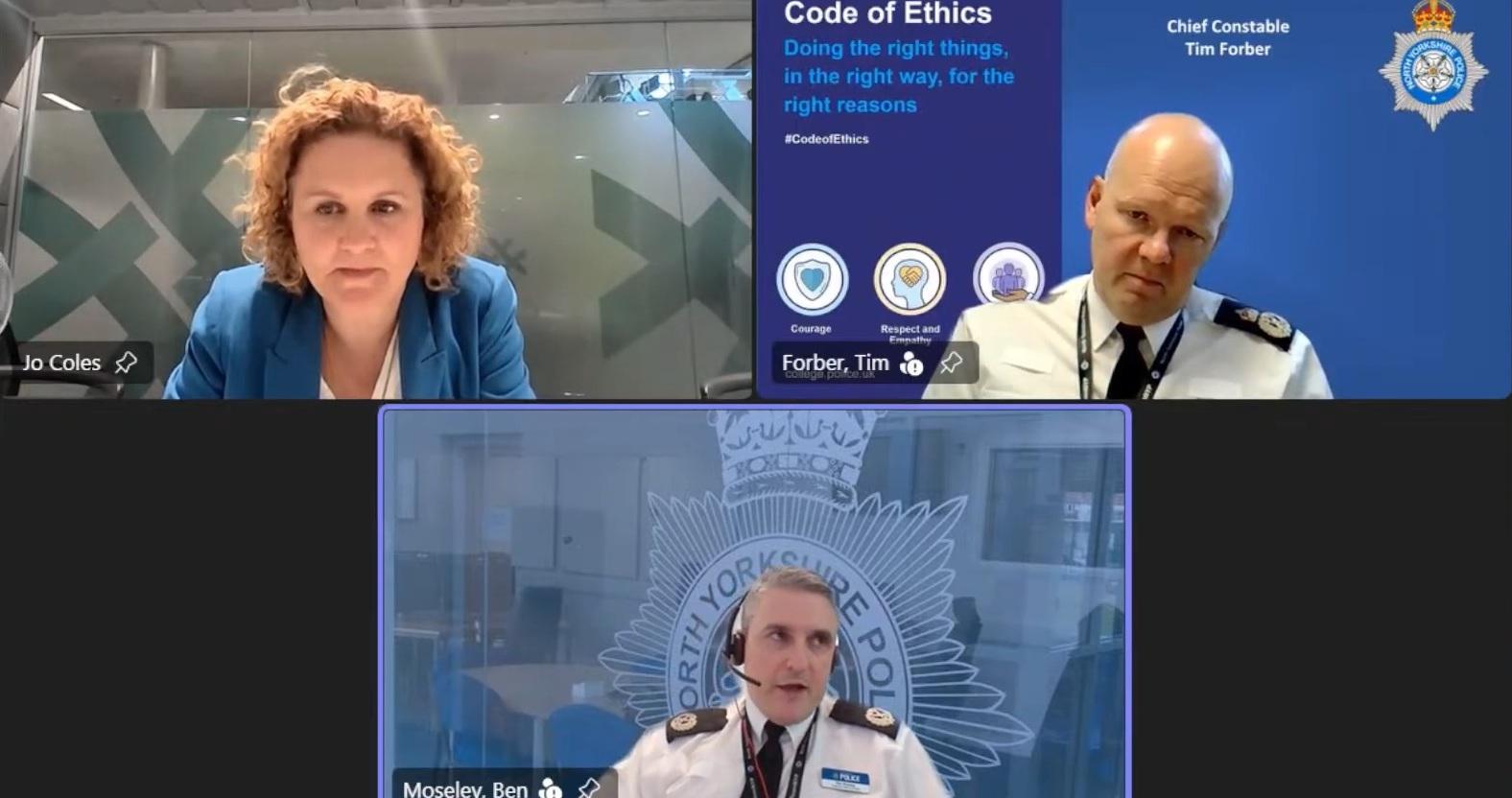
Deputy mayor Jo Coles, CC Tim Forber and ACC Ben Moseley all spoke during the online meeting.
In response, acting chief constable Jez Bartley told the panel that national authorised professional practice guidance ensured that LFR was deployed responsibly and proportionately.
He said LFR would only be used when less intrusive methods fail, and every instance of its deployment would be recorded, reviewed and published on the North Yorkshire Police website to ensure transparency.
The technology will be used to identify people wanted for criminal offences, to find people who posed a risk to themselves or other people, and to help bar admission to certain people, for example in the case of football banning orders.
Asked if people would have a choice about whether or not their image was captured by the force’s LFR vans, he said that everyone would have the option to use a different route:
We won’t be corralling and forcing people through the [LFR] capture. That goes against the authorised professional practice principles.
He added that if a face did not match anyone on a watchlist, it was deleted permanently within a fifth of a second. LFR would also be used as an intelligence prompt, not an automated decision-maker. All decisions would be made by trained officers.
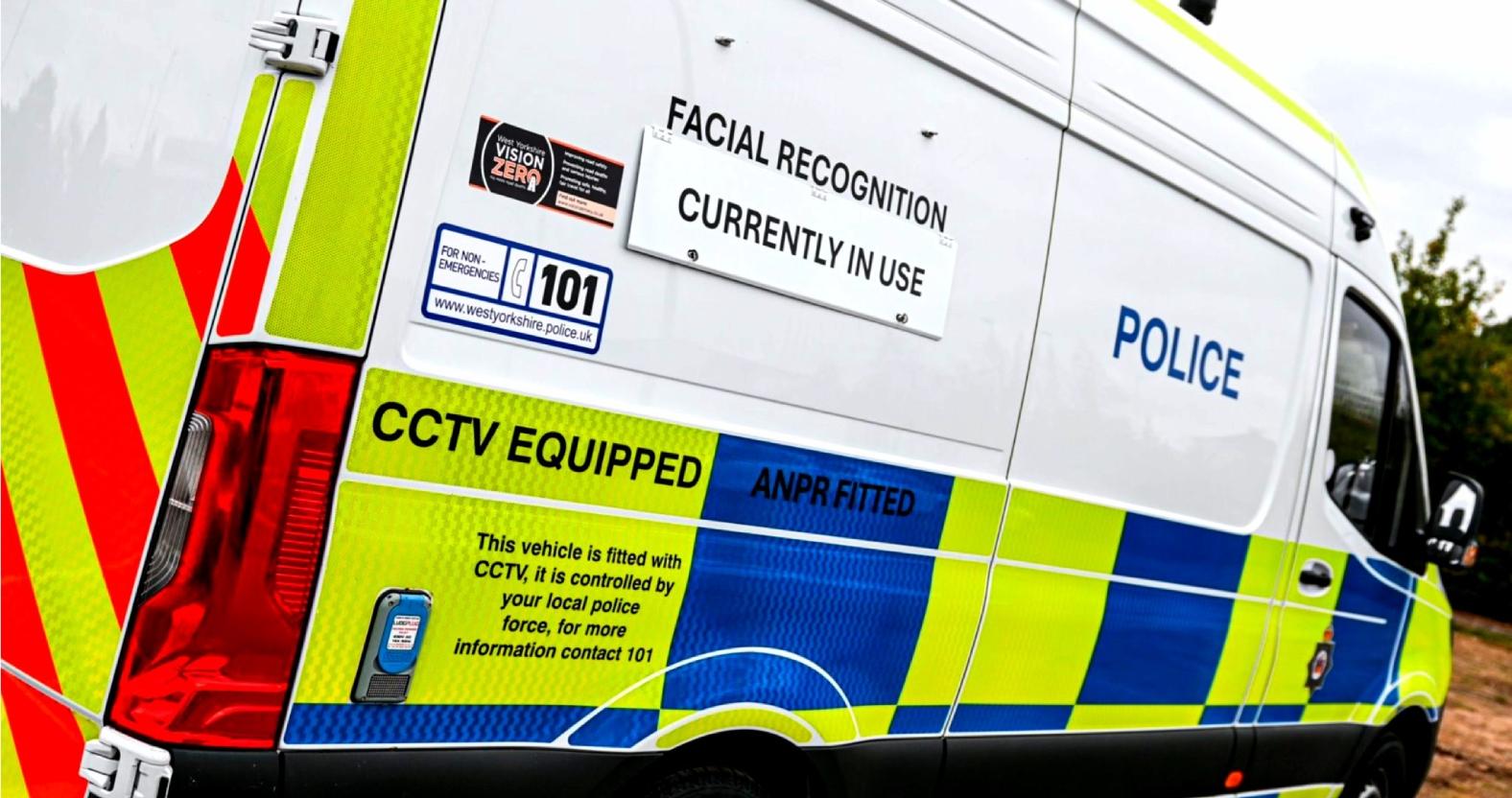
The Information Commissioner's Office says the public must be told when LFR is in use.
Widening the discussion beyond LFR, assistant chief constable Ben Moseley told the panel that North Yorkshire Police had recently acquired an AI-enabled CCTV analysis tool for a 12-month pilot. The technology will be used to support investigation into serious and organised crime.
ACC Moseley said:
It scans potentially evidential footage for further review by investigators, significantly reducing the initial manual examination.
For example, if we were looking for a man wearing a white shirt and black tie in York city centre, it could trawl through hundreds and hundreds of hours of CCTV footage in just a few minutes.
It’s an initial screening tool that will be of massive investigative benefit to our teams.
North Yorkshire Police’s use of LFR will be further discussed at a meeting of York and North Yorkshire’s Police, Fire and Crime Panel at 10.30am on Thursday (July 16) at County Hall in Northallerton.

4